Automatic Single-Head Crimping and Housing Insertion Machine with Tinning WM-362S
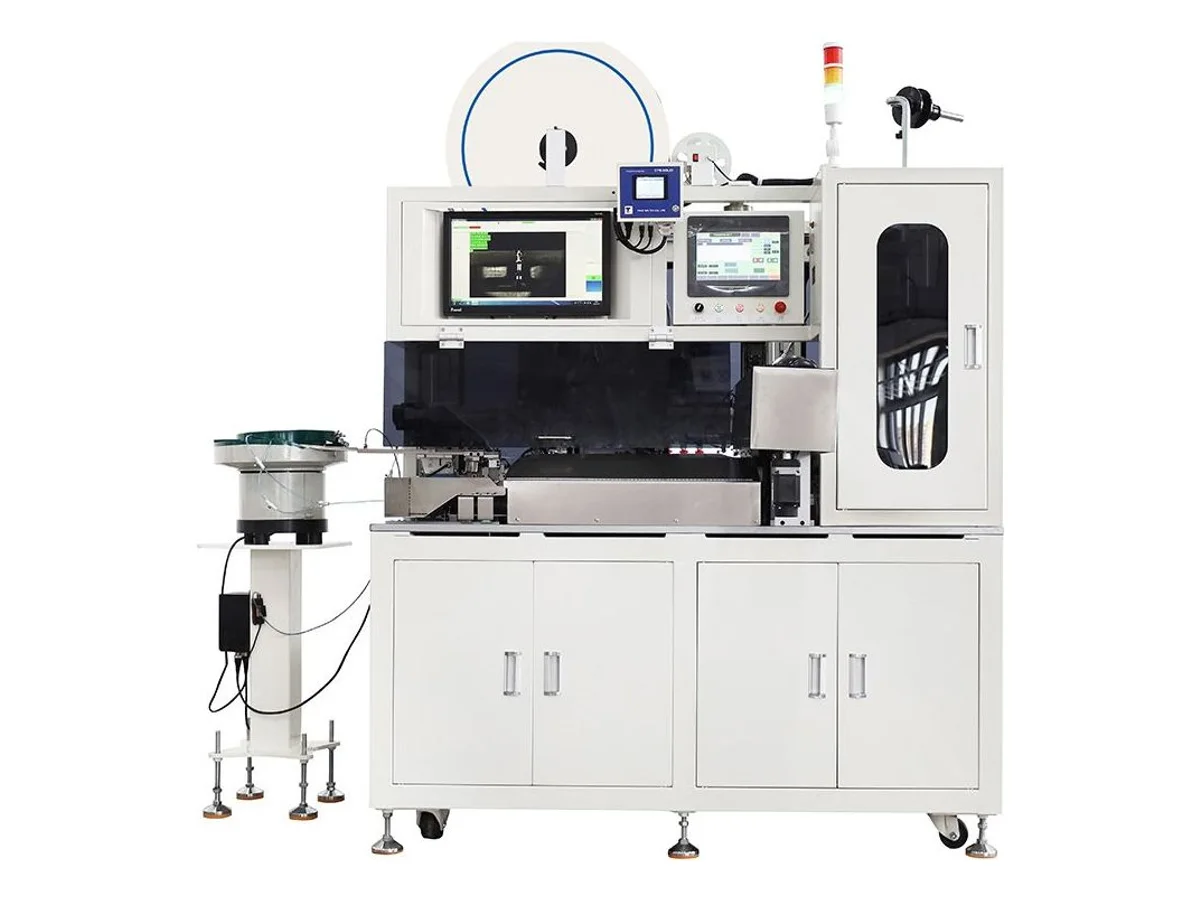
The WM-362S turns bulk wire into finished connector pigtails in one cell — it cuts, strips, crimps the terminal, inserts it into the housing and twists and tins the free end. It covers wire of 0.8–2.0 mm outer diameter (AWG 28–20), cut lengths from 40 to 2,000 mm and strip lengths of 0.5–10 mm, producing 2,200 pieces per hour at 1.6 seconds each. A 2 T crimping unit, vibratory housing feeder and vision inspection computer with terminal-presence and defect detection keep bad pieces out of the output tray.
Specifications
| Function | Wire cutting, stripping, crimping, tinning, twisting, housing inserting |
|---|---|
| Capacity | 2,200 pcs/h (single head crimping/tinning/housing inserting, 1.6 s/piece, L = 100 mm) |
| Wire size | Outside diameter 0.8 – 2.0 mm (AWG 28 – 20) |
| Cutting length | 40 – 2,000 mm |
| Stripping length | 0.5 – 10 mm |
| Crimping pressure | 2 T |
| Detectors | Air pressure alarm, defective product recognition, terminal presence detection, visual inspection computer |
| Power supply | AC 220 V, 50/60 Hz |
| Air pressure | 0.5 – 0.7 MPa |
| Dimensions | 1,500 × 1,200 × 1,650 mm (L × W × H) |
| HS Code | 8463.90 (common reference — final classification confirmed by your customs broker) |
| Certification | CE (certificate provided with shipment) |
Key features
- One cell replaces a bench line — cutting, stripping, crimping, housing insertion plus twisting and tinning of the free end come out as a finished pigtail every 1.6 seconds
- Vision inspection computer, terminal-presence check and defective-product recognition sort faulty pieces out automatically, so what reaches your assembly line is usable
- Vibratory bowl feeder orients and presents housings continuously — no operator loading connectors one by one
- Servo wire feed from a multi-spool pay-off stand covers AWG 28–20 wire and cut lengths up to 2,000 mm without changeover parts
What it processes
- Board-to-wire connector pigtails with the housing on one end and a tinned free end
- Appliance, fan and controller harness leads in the AWG 28–20 range
- Electronics factories replacing separate crimping, insertion and tinning benches with one automatic cell
Suited for: high-volume single-ended connector pigtails — small-pitch board-to-wire housings on AWG 28–20 wire with the free end twisted and tinned, produced unattended at 2,200 pieces per hour. Not suited for: double-end housing insertion or heavy power terminals beyond 2.0 mm wire OD — for double-end work, pick the WM-376 double-end crimping and housing insertion machine, which seats AWG 32–16 wire in housings on both ends; the larger models among the terminal crimping machines take the heavy terminals.
Connector fit is the make-or-break detail on this class of machine: send 2–3 meters of your wire plus samples of your terminal and housing, and we run them on this machine on video before you commit.
Engineering knowledge
Choose and troubleshoot this process
- How to Choose a Terminal Crimping MachineChoose a terminal crimping machine by terminal presentation, wire range, applicator standard, required process steps, inspection method and production mix.
- Terminal Crimp Defects: Causes, Inspection and Corrective ActionsTroubleshoot low pull force, incorrect crimp height, strand loss, bellmouth defects, insulation support problems and inconsistent terminal feeding.
WM-362S — common questions
What comes out of the machine — how finished is each piece?
A complete single-ended pigtail. One end is stripped, crimped and the terminal pushed into its housing cavity in the programmed order. The other end is stripped, twisted and dipped in the solder pot. Cut length runs 40–2,000 mm, so both short jumpers and long leads come out ready for assembly.
How does it stop bad crimps from reaching my line?
Four layers — an air-pressure alarm, terminal-presence detection at the crimp station, defective-product recognition and a visual inspection computer that checks pieces against the taught reference. Rejects are separated automatically instead of being counted into the batch.
Can it insert terminals into housings on both ends of the wire?
No — the WM-362S is a single-head machine, so only one end gets a housing while the other end is tinned. If your harness needs housings or terminals on both ends, see the double-end machines in the terminal crimping category.
Related machines in Terminal Crimping
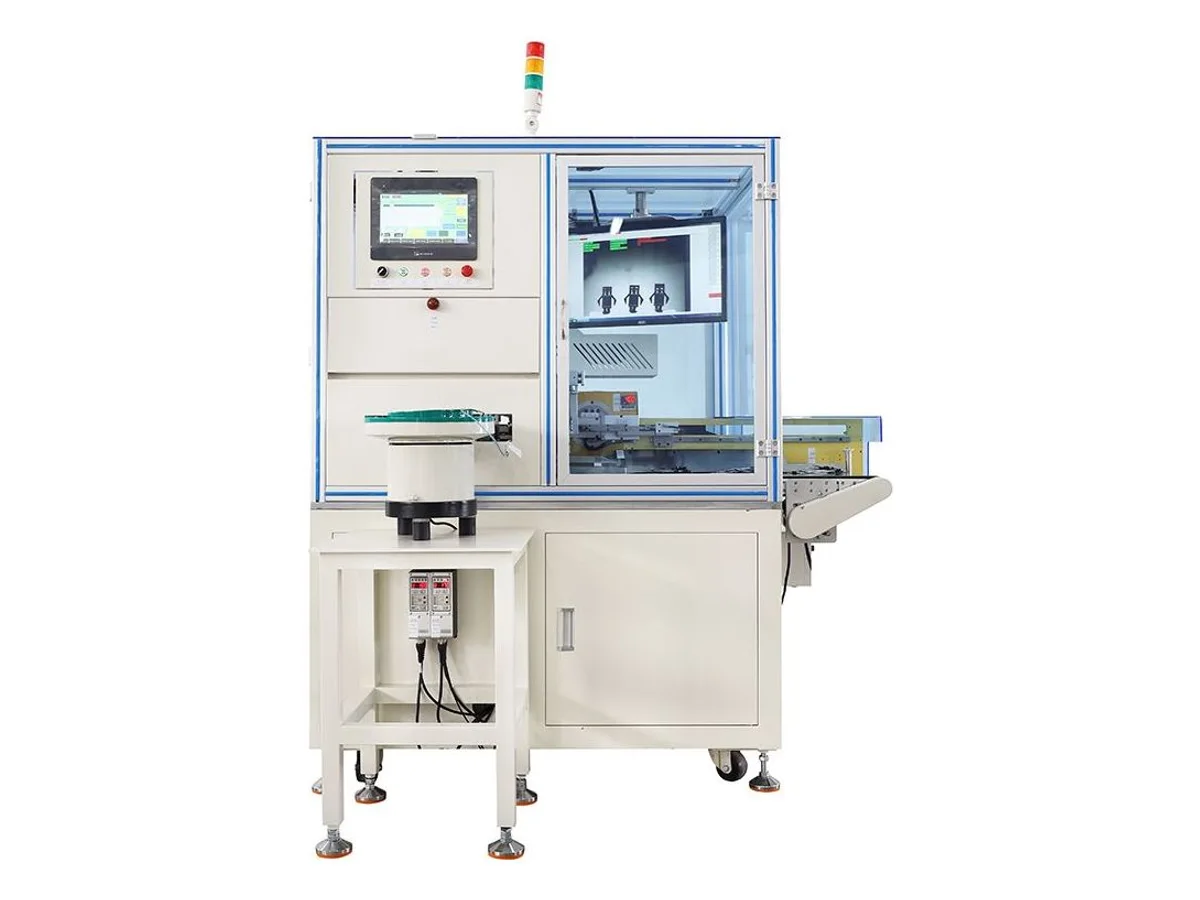
Automatic Connector Housing Insertion Machine with Tinning and Half-Stripping
Model WM-366
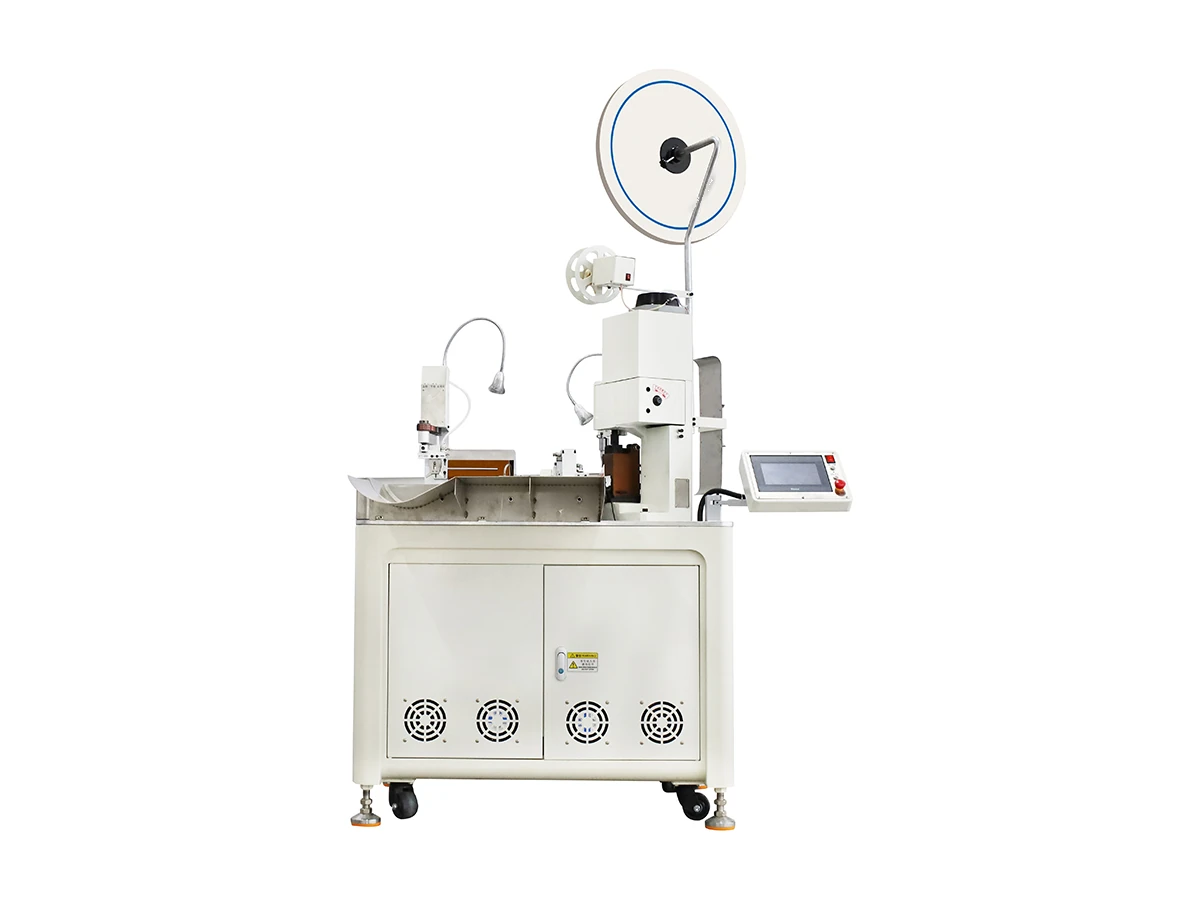
Automatic Wire Crimping and Tinning Machine for AWG 14–28 Leads
Model WM-3201
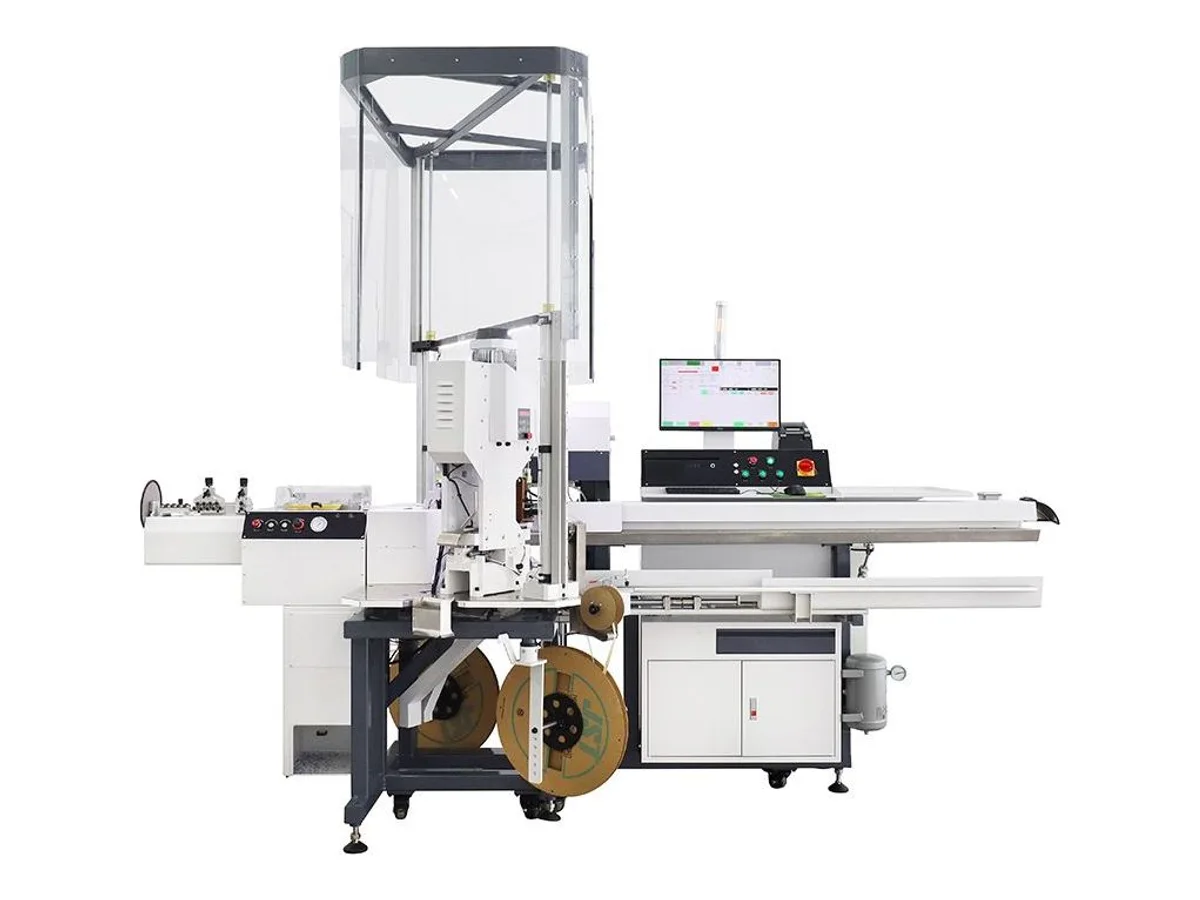
Fully Automatic Double-End Terminal Crimping Machine with Optional Waterproof Seal Stations
Model WM-390