Cable Coil Stretch Film Wrapping Machine, 420–550 mm Coil OD WM-4821
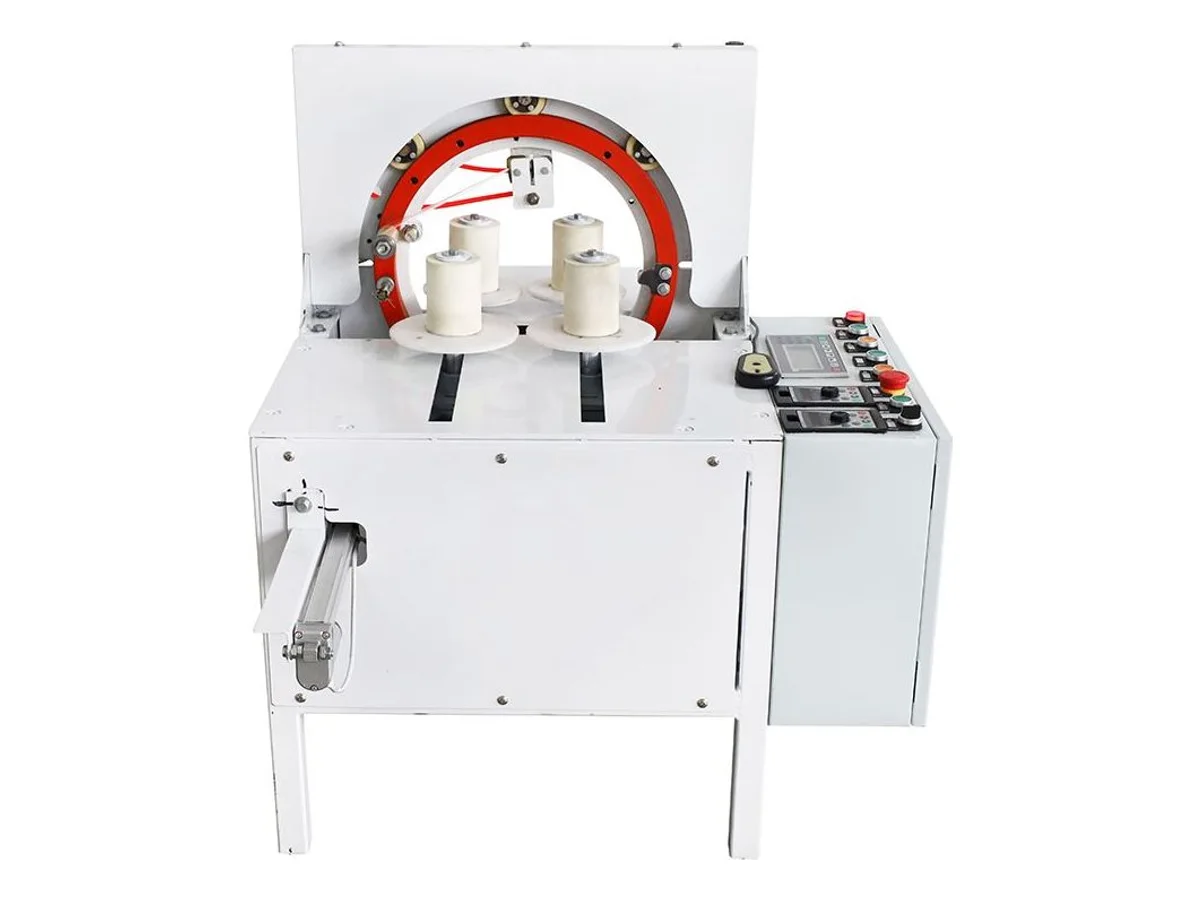
The WM-4821 wraps large finished cable coils in stretch film. It takes coils from 420 mm to 550 mm outer diameter and 110 to 125 mm high — the size class above a benchtop wrapper — and runs film up to 10 cm wide off a standard mini roll. An open C-shaped film ring passes through the coil bore while four powered support rollers index the coil round, so one continuous spiral of film covers the whole ring without the operator threading anything by hand.
Specifications
| Function | Stretch film wrapping of finished cable coils |
|---|---|
| Coil outer diameter | 420 – 550 mm (min. 420 mm, max. 550 mm) |
| Coil height | 110 – 125 mm |
| Stretch film width | ≤ 10 cm (100 mm) |
| Maximum weight | 40 kg |
| HS Code | 8422.40 (common reference — final classification confirmed by your customs broker) |
| Certification | CE (certificate provided with shipment) |
Key features
- Sized for the large coil class — 420 to 550 mm outer diameter, where a benchtop wrapper runs out of ring clearance
- Open C-shaped film ring passes through the bore of a closed coil, so nothing has to be cut, threaded or re-tied to load the coil
- Four support rollers on two driven discs carry the coil and index it forward between wrap cycles, laying the film as one continuous spiral around the full circumference
- Film carriage rides on cam rollers around the ring and pulls film off an ordinary mini stretch film roll, up to 10 cm wide — a consumable you can buy anywhere
- Run time and workpiece dwell delay are entered on the panel display; two keypad drives set ring speed and coil indexing speed independently
- Foot pedal starts the cycle after the coil is positioned; keep hands clear of the moving wrapping mechanism
- Powered discharge chute at the outfeed side rolls the wrapped coil off the machine
- Free sample test — send us a sample coil, we wrap it on this machine and send you the video before you order
What it processes
- Packing large finished ring coils of cable, hose and tube for shipment, 420–550 mm outer diameter
- Wire and cable plants shipping coils by the piece that need each coil sealed against dust, moisture and slack turns
- Irrigation and garden hose, welding cable and extension cable coils sold as a single wrapped unit
- Distribution and cut-to-length warehouses repacking drum stock into wrapped customer coils in the large size class
Suited for: stretch film wrapping of large finished ring coils — outer diameter 420 to 550 mm, coil height 110 to 125 mm, film up to 10 cm wide. Not suited for: coils below 420 mm outer diameter — those belong on the WM-4818 cable coil stretch film wrapping machine (coil bore ≥120 mm, outer diameter ≤400 mm, height 50–120 mm, ≈120 coils/h), which is the benchtop machine one size class down. It also does not wind or tie the coil: to wind it, use the WM-4810 wire coiling machine with meter counter (inner hole 30–350 mm, 380 mm reel standard, 420 mm on request); to hold the turns with a twist tie rather than film, the WM-4804 cable coil twist tie binding machine ties bundles of Ø 5–35 mm. For coils above 550 mm outer diameter, ask us about a custom build.
The size class this machine exists for
Ring wrappers are built around one number: how big a coil will clear the film ring. Below roughly 400 mm a compact benchtop unit does the job when its actual coil envelope is suitable. Above that the ring, the frame and the roller cradle all have to grow, and a coil of 500 mm and 100-plus turns is heavy enough that an operator should not be rotating it by hand while a second person walks film around it. The WM-4821 covers exactly that band — 420 to 550 mm outer diameter, 110 to 125 mm high. If your coils sit under 420 mm, the WM-4818 is a smaller configuration to assess against its stated coil limits.
How the wrap happens
The film carriage does not swing around the outside of the coil. It rides on an open C-shaped ring that passes straight through the coil bore, so the film goes around the coil’s cross-section the way tape goes around a doughnut. Because the ring is open at the top, an operator drops a closed coil onto the support rollers without cutting or threading anything. Four roller posts on two driven discs then index the coil forward between wrap cycles, so successive spirals of film overlap all the way around the circumference and close back at the starting point. A foot pedal starts the cycle, and the finished coil rolls off down the chute on the outfeed side.
Confirm the operating and shipping configuration
Confirm the coil envelope, workpiece weight and film first. We validate throughput with the actual coil and list the motor rating, machine footprint, permitted load and shipping weight separately on the quote. The listed 40 kg entry requires confirmation of its meaning before ordering.
Send us two or three of your actual coils. We wrap them on this machine, film the cycle, and send you both the video and the wrapped coils before you commit to an order.
Engineering knowledge
Choose and troubleshoot this process
- Cable Coiling Defects: Causes and Corrective ActionsTroubleshoot inconsistent coil diameter, crossed loops, stored twist, unstable lead length, loose binding and cable surface damage.
- How to Choose a Cable Coiling and Winding MachineChoose cable coiling equipment by cable construction, finished coil geometry, length control, binding method, product handling and batch mix.
- Spiral Cable Production: Winding, Heat Setting, Cooling and Reverse WindingPlan a retractile cable process around winding, heat setting, cooling and finishing. Define coil dimensions and accepted shift output before buying machines.
WM-4821 — common questions
What coil sizes does the WM-4821 take?
The specification lists an outer diameter from 420 mm minimum to 550 mm maximum and a coil height of 110 to 125 mm. The outer diameter is the hard limit — the coil has to clear the film ring as it turns. For coils under 420 mm outer diameter the WM-4818 cable coil stretch film wrapping machine requires a minimum 120 mm bore, a maximum 400 mm outer diameter and 50–120 mm height; above 550 mm, ask us about a custom build.
How is this different from the WM-4818?
Coil size, and that is the whole point. The WM-4818 is a benchtop wrapper for coils of 120 mm bore up to 400 mm outer diameter and 50–120 mm high, rated at about 120 coils per hour. The WM-4821 is a floor-standing frame with a much larger film ring, four powered support rollers instead of two and a discharge chute, and it starts where the WM-4818 stops — 420 mm outer diameter and up. Tell us the coil diameter, height and weight you actually run and we will tell you which of the two fits; if your range straddles both, we say so rather than sell you the wrong one.
What does the "maximum weight 40 kg" figure refer to?
The 40 kg entry requires confirmation of its meaning before ordering. Send the actual coil weight with your inquiry; we confirm the permitted workpiece load and machine weight separately on the quote.
What film does it use?
An ordinary mini stretch film roll, up to 10 cm wide. Film consumption per coil depends on the number of wrap turns you set and on the coil cross-section, so we measure it against your actual coil during the sample test instead of quoting a fixed figure.
What throughput and power figures do you have?
Throughput, motor rating, machine dimensions and shipping weight are confirmed on the quote. The listed 40 kg weight entry must not be used as a workpiece load rating until its meaning is confirmed. Send the coil dimensions, weight and film so we can validate output and provide the packing information.
Does it wind the coil as well?
No — the WM-4821 only wraps a coil that is already wound and held together. To wind it first, the WM-4810 automatic wire coiling machine with meter counter winds measured coils on a 380 mm reel (420 mm on request) with an inner hole of 30–350 mm, which builds out into the diameter class this machine wraps. To tie the coil instead of filming it, the WM-4804 cable coil twist tie binding machine ties bundles of Ø 5–35 mm.
Related machines in Winding, Coiling & Binding
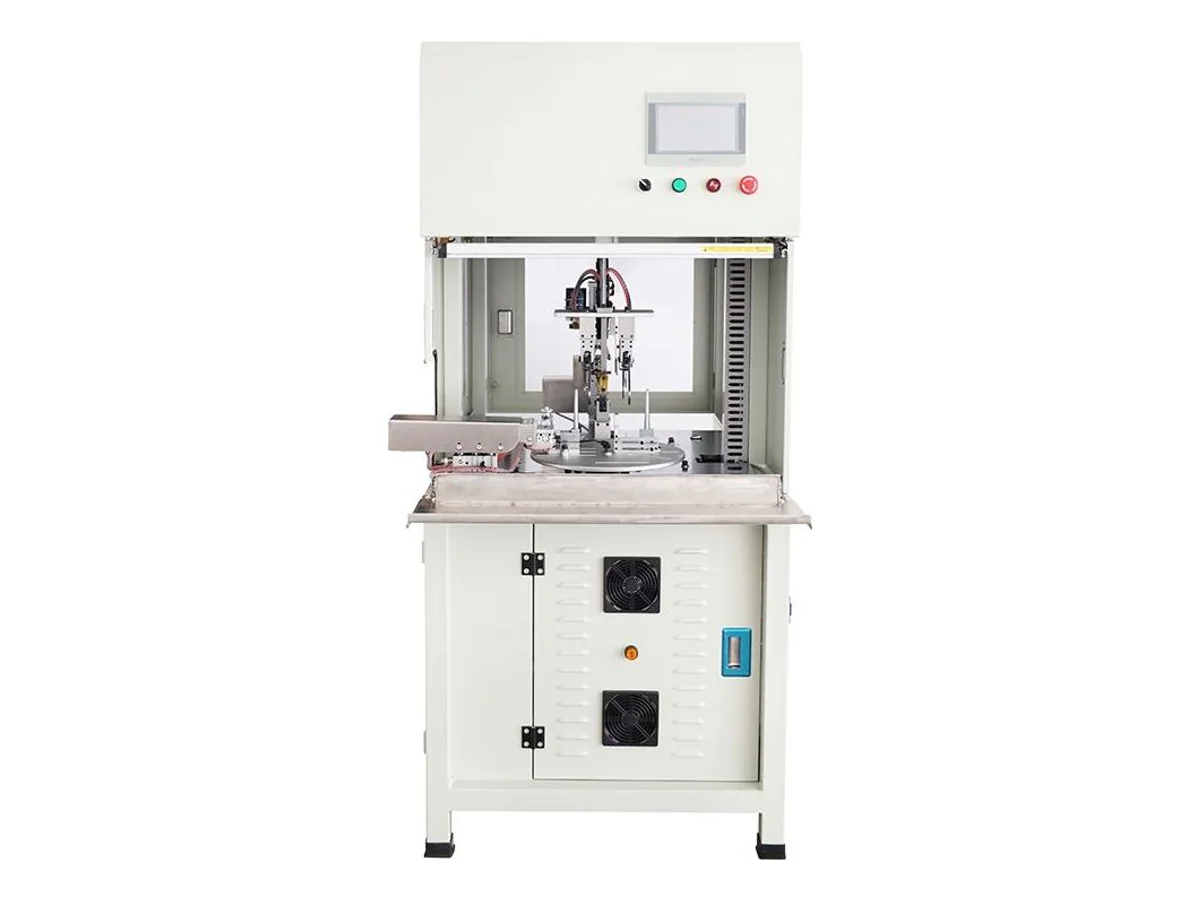
Automatic AC Power Cord Coiling and Twist Tying Machine
Model WM-4820
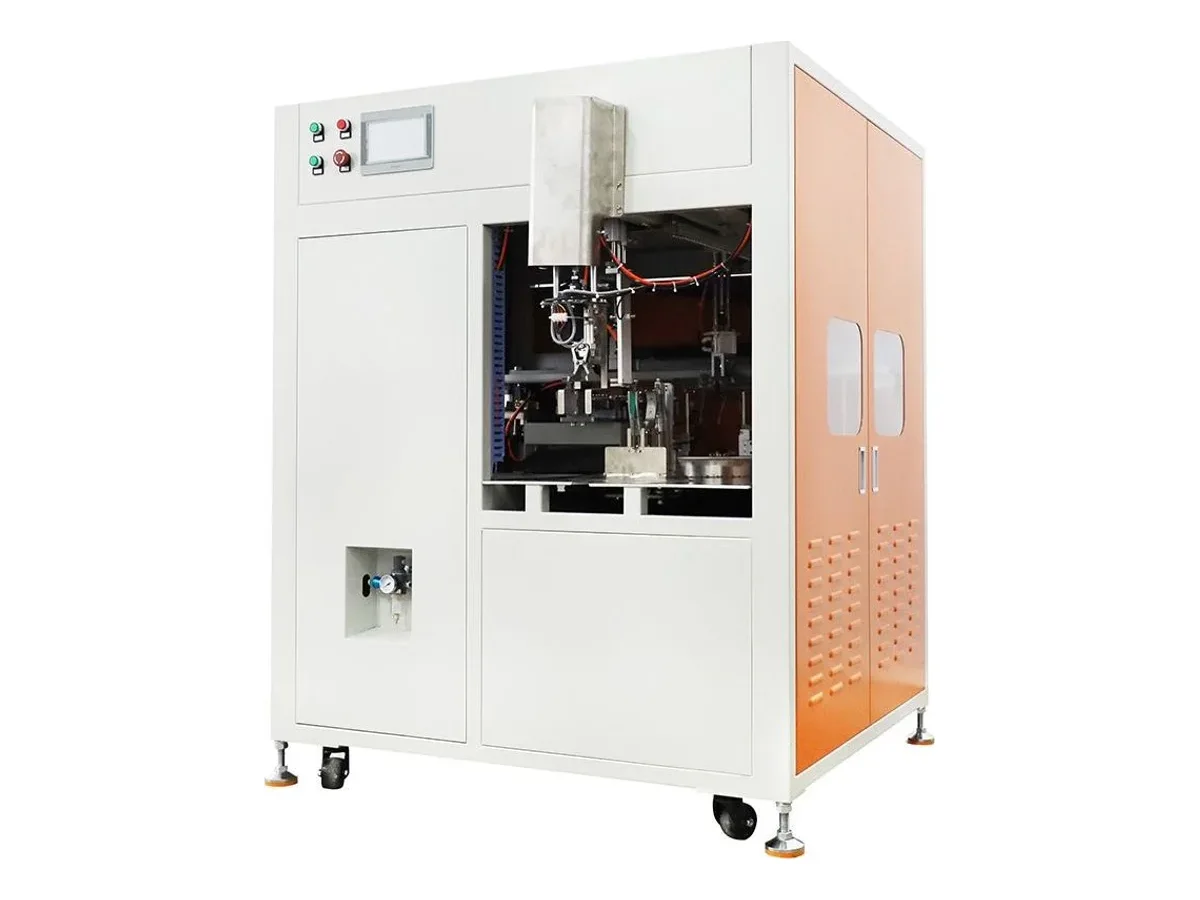
Automatic Cable Cutting, Figure-8 Coiling and Tying Machine
Model WM-4808
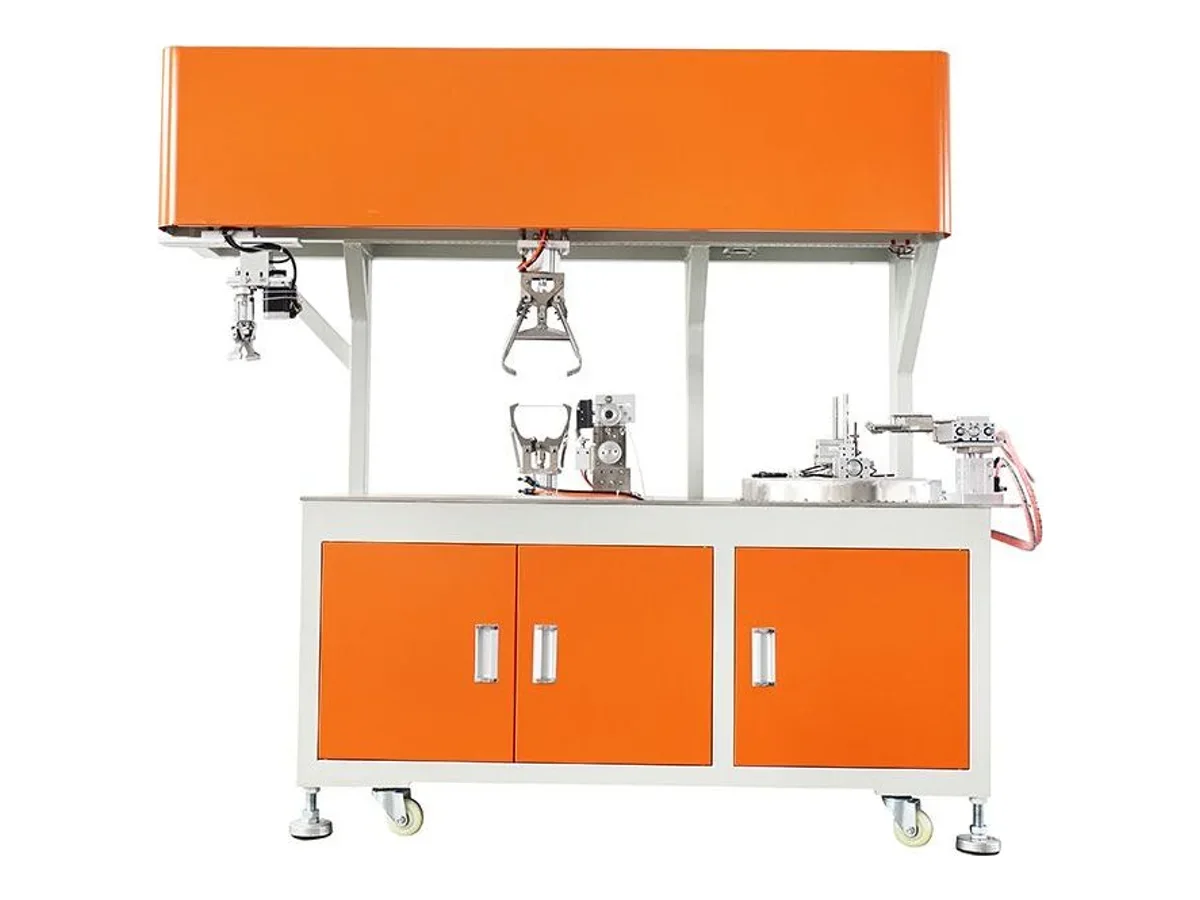
Automatic Cable Winding and Tying Machine for Figure-8 and Round Coils
Model WM-4811