Automatic Nylon Cable Tie Machine for Wire Harness and Conduit WM-4814
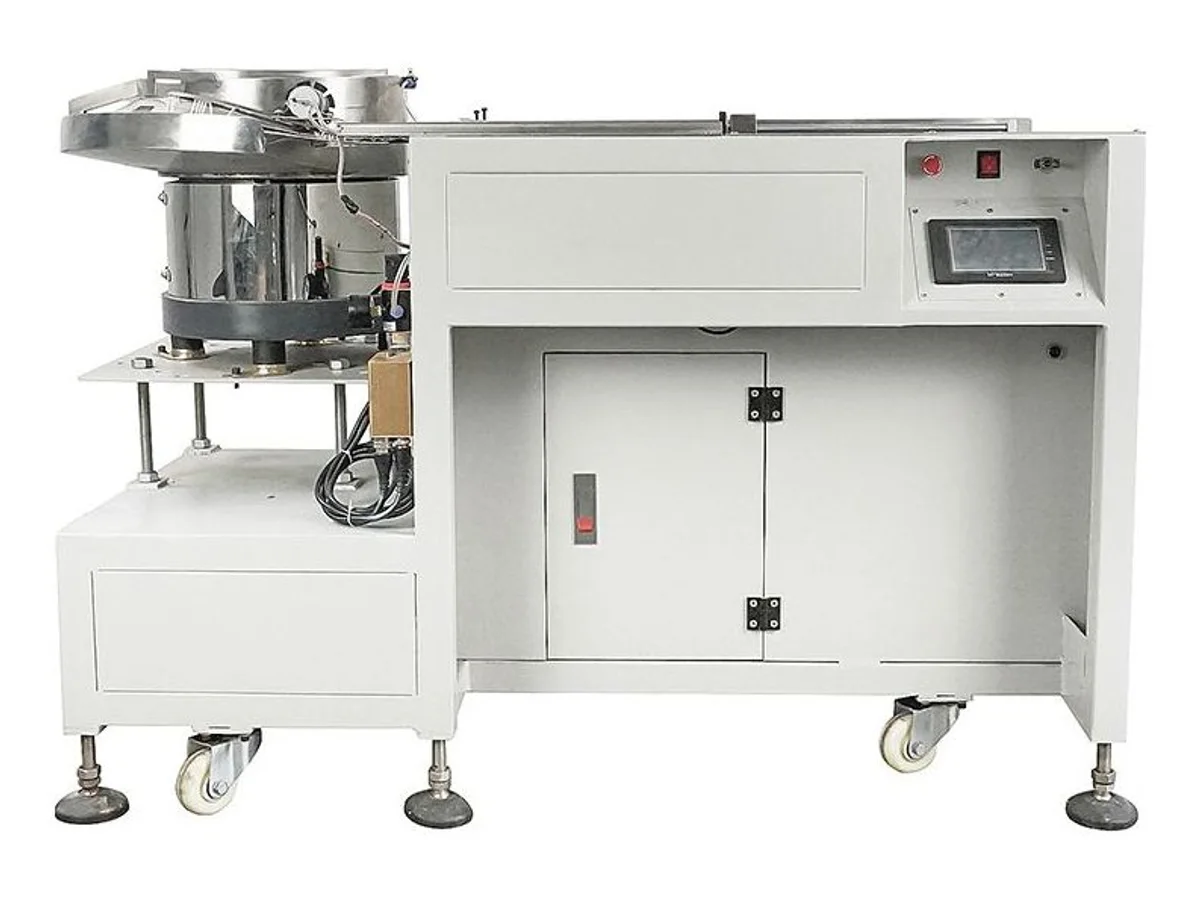
The WM-4814 is a floor-standing nylon cable tie station: loose ties are poured into a vibratory bowl, fed continuously to the tying position on the work table, and every press of the foot pedal runs one complete tying cycle. It takes standard ties of 60, 80, 100 or 120 mm length and 3–5 mm width (160 mm on request), ties bundles and conduit up to 11 mm diameter at 1,200–1,800 pieces per hour with up to 15 N strapping force, and sets tightness and tie length in the program on its PLC touchscreen. The cabinet measures 1,200 × 550 × 780 mm, weighs 125 kg, runs on AC 220/110 V, 50/60 Hz, 750 W plus 0.6 MPa shop air, and stays below 70 dB(A).
Specifications
| Function | Continuous nylon cable tie feeding and automatic tying, foot-pedal started |
|---|---|
| Applicable cable tie length | 60 mm, 80 mm, 100 mm, 120 mm (160 mm can be customized) |
| Applicable cable tie width | 3 – 5 mm |
| Max. strapping force | 15 N |
| Max. conduit diameter | 11 mm |
| Productivity | 1,200 – 1,800 pcs/hour |
| Power | 0.75 kW |
| Air pressure | 0.6 MPa |
| Noise level | < 70 dB(A) |
| Electrical connection | AC 220 V / 110 V, 50/60 Hz, 750 W |
| Starting system | Foot pedal |
| Weight | 125 kg |
| Dimensions | 1,200 × 550 × 780 mm |
| HS Code | 8479.89 (common reference — final classification confirmed by your customs broker) |
| Certification | CE (certificate provided with shipment) |
Key features
- Loose nylon ties go into the vibratory bowl by the handful — the bowl orients them and keeps the tying position fed continuously, so nothing is threaded, reeled or picked up by hand between cycles
- One pedal press per tie — the operator only positions the bundle at the tying mouth and the machine runs the cycle through to the finished tie
- Tightness and tie length are stored settings on the PLC touchscreen; we confirm achieved tie tension and consistency on your product sample
- Runs the standard tie sizes you already buy — 60, 80, 100 and 120 mm lengths at 3–5 mm width, with 160 mm available as a customization
- Rated for bundles and conduit up to 11 mm diameter at 1,200–1,800 ties per hour, with strapping force up to 15 N
- Aluminium work table with graduated steel scales at the tying mouth and an adjustable guide bar riding on a linear shaft, so a setting can be written down and reproduced by reading the scale instead of by eye
- Motor-driven brush wheel at the bowl outlet keeps the tie track clear of badly presented ties
- Under 70 dB(A) in operation, and the whole station rolls on casters with screw levelling feet at each corner
What it processes
- Nylon-tie bundling of automotive and appliance wire harness trunks and branches
- Corrugated conduit, hose and tube up to 11 mm diameter, tied at repeated positions along the run
- Cable assembly and packaging benches where every unit takes several ties in fixed places
- Any repetitive tie job where the product can be laid on the table and presented to the tying mouth
Suited for: repetitive nylon-tie work on product that can be laid on a table and pushed to the tying mouth — harness branches, corrugated conduit, hose and tube up to 11 mm diameter, at 1,200–1,800 ties per hour. Not suited for: tie points spread across a finished harness or a harness board, where the tool has to travel to the work — for that use the WM-4809 handheld automatic cable tie gun machine, which feeds loose ties by air to a gun in the operator’s hand at 1,500–1,800 ties per hour. For bulky round parts that must be rotated tie by tie against the head — motor stator coil ends and lead bundles — use the WM-4812 automatic cable tie machine for motor stator coils, whose tying head sits on its own gun table and completes a tie in 0.8 seconds. If what you actually need is to coil a finished cable and band the coil for packaging, start from the coil winding and binding category and tell us your coil size.
Hand-tying a conduit run is four movements per tie: pick a tie, thread it, pull it tight, cut the tail. Multiply by six ties per part and a shift’s output is decided by how tired the operator’s hands are. On the WM-4814 the movements collapse to two — position the part, press the pedal — and the tie itself arrives from the bowl already oriented. Tightness is a stored program setting rather than a manual adjustment; we check the achieved tension and finished appearance on your product sample.
The table is what makes the setup repeatable. A graduated steel scale sits at the tying mouth and an adjustable guide bar rides on a linear shaft beside it, so the position that worked on the first-off part is a number an operator can write on the job sheet and dial back tomorrow morning. That matters most on conduit and hose, where ties landing at uneven spacing are the first thing a customer’s inspector notices.
Because the feeder takes ordinary loose ties in four standard lengths, nothing about the machine locks you into a consumable. Tie geometry does decide how the feed track and the tying mouth are set up, though, so treat the sample trial as part of the quote: send a bag of your ties and two or three real parts with your inquiry, and we send back video of your own product coming off this machine before you commit to the order.
Engineering knowledge
Choose and troubleshoot this process
- Cable Coiling Defects: Causes and Corrective ActionsTroubleshoot inconsistent coil diameter, crossed loops, stored twist, unstable lead length, loose binding and cable surface damage.
- How to Choose a Cable Coiling and Winding MachineChoose cable coiling equipment by cable construction, finished coil geometry, length control, binding method, product handling and batch mix.
- Spiral Cable Production: Winding, Heat Setting, Cooling and Reverse WindingPlan a retractile cable process around winding, heat setting, cooling and finishing. Define coil dimensions and accepted shift output before buying machines.
WM-4814 — common questions
What cable ties does the WM-4814 run?
Standard loose nylon ties of 60, 80, 100 or 120 mm length and 3 to 5 mm width, poured straight into the vibratory bowl — 160 mm length can be customized. There is no bandolier or reel, so you keep buying ties from your current supplier. Send us a bag of the exact ties you use and we run them on the machine before you order.
How large a bundle can it tie?
The published figure is 11 mm maximum conduit diameter, with strapping force up to 15 N. A wider bundle range is not published for this model, so send two or three of your actual harnesses or hoses with the inquiry — we tie them on the machine and send you the trial video, which is the only honest way to confirm your parts fit the tying mouth.
How is tie tightness kept consistent?
Tightness and tie length are entered in the program on the PLC touchscreen rather than pulled by hand, so tension is a stored number instead of an operator's wrist judgement. The right value depends on your jacket hardness and bundle build-up and is confirmed on your own product during the sample trial.
What does the station need to run?
A single AC 220 V or 110 V supply at 50/60 Hz drawing 750 W (0.75 kW), plus compressed air at 0.6 MPa. The machine starts from a foot pedal, measures 1,200 × 550 × 780 mm, weighs 125 kg and stays below 70 dB(A), so it sits in a normal assembly bay without a noise enclosure.
Related machines in Winding, Coiling & Binding
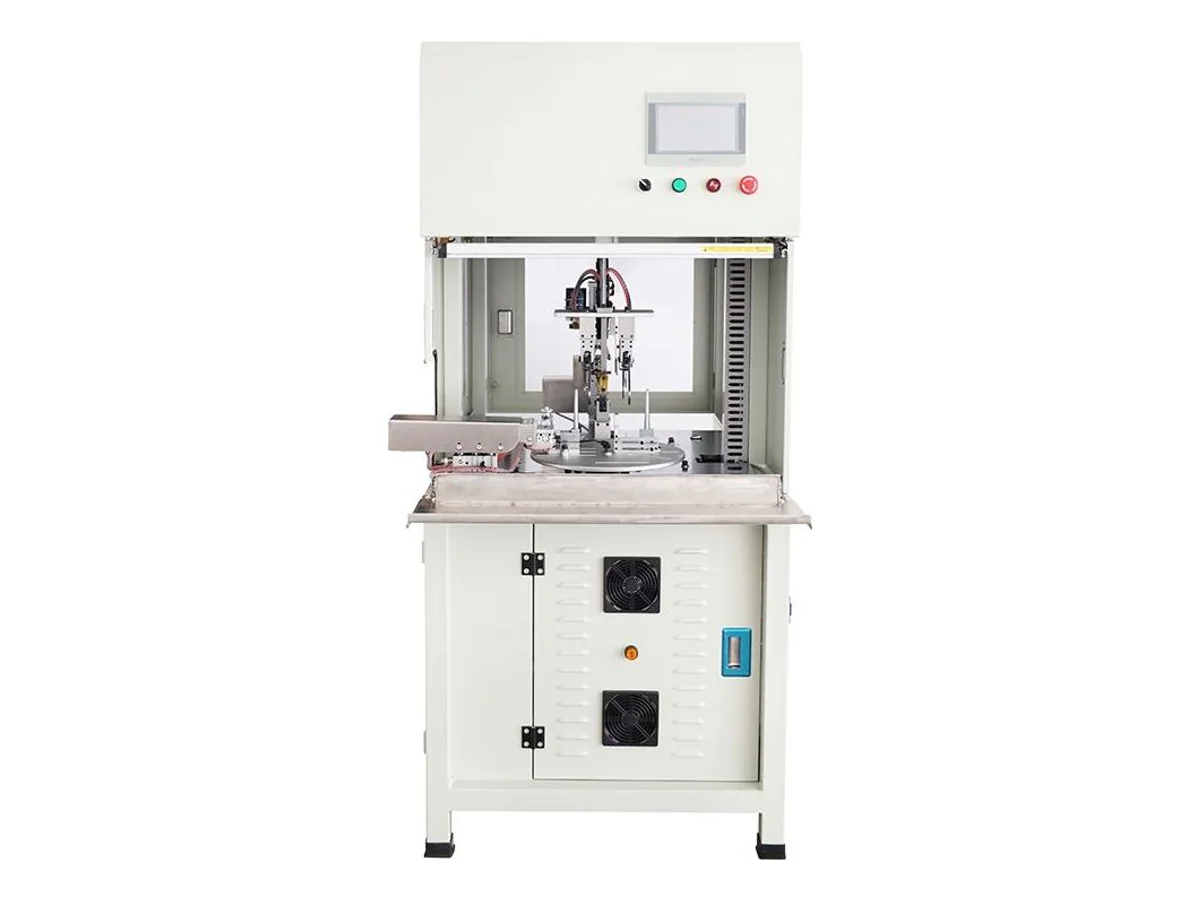
Automatic AC Power Cord Winding and Tying Machine
Model WM-4820
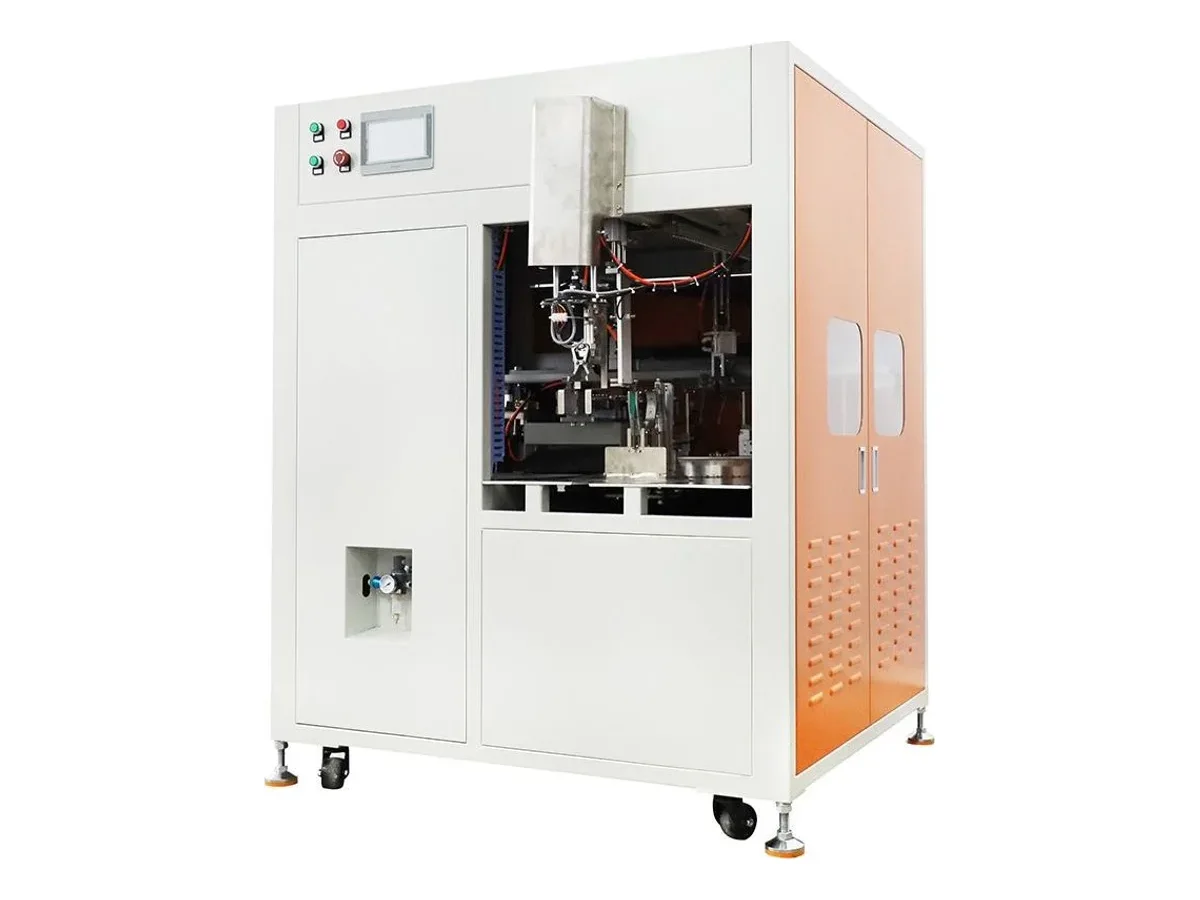
Automatic Cable Cutting, Figure-8 Coiling and Tying Machine
Model WM-4808
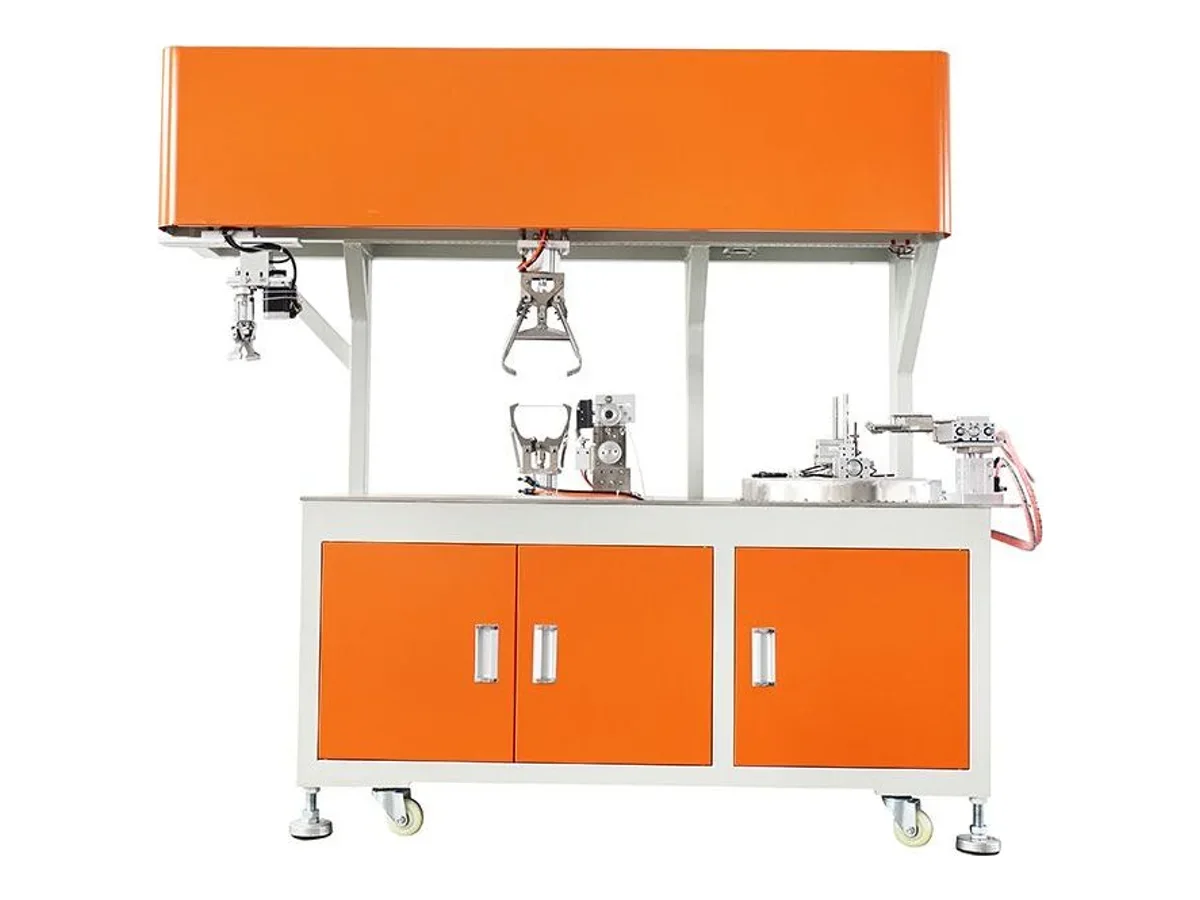
Automatic Cable Winding and Tying Machine for Figure-8 and Round Coils
Model WM-4811