Automatic Nylon Cable Tie Machine with Handheld Tie Gun WM-4809
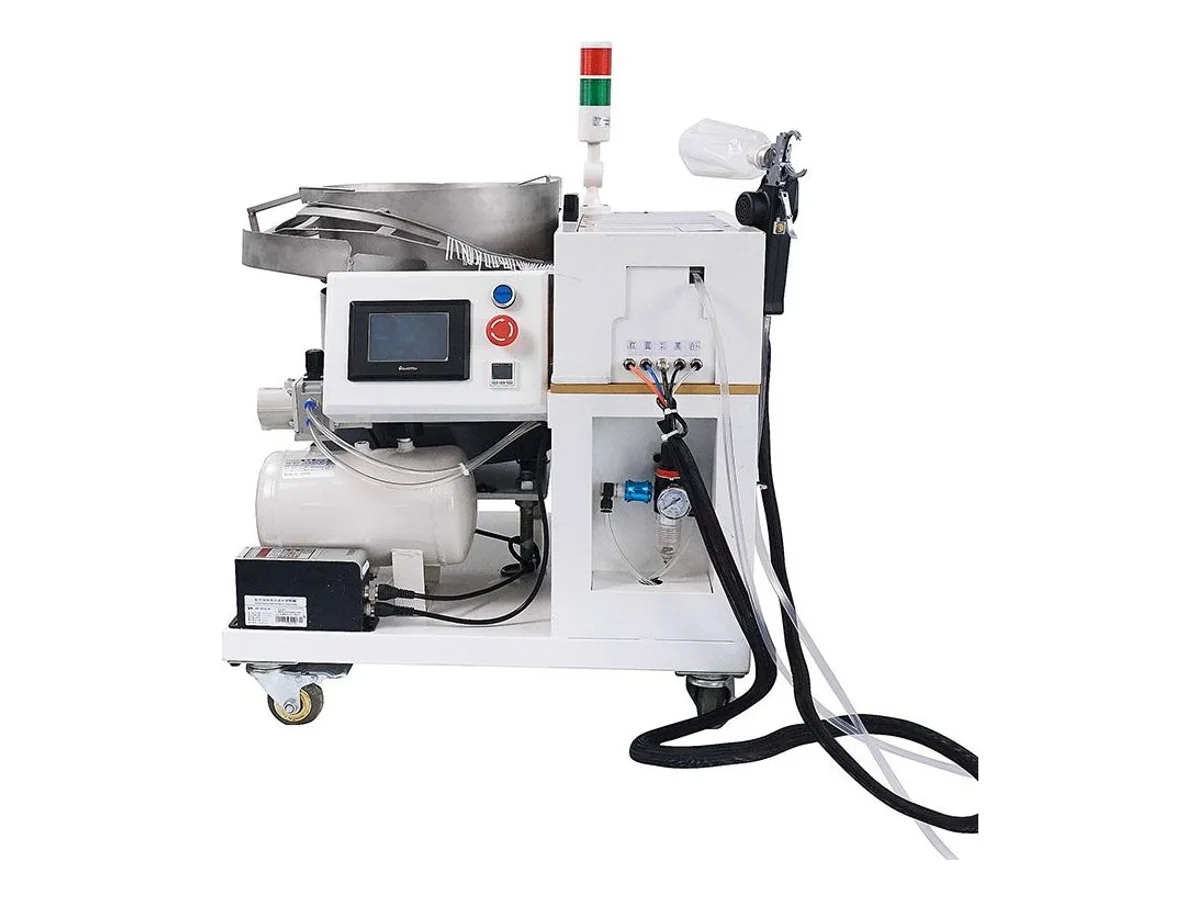
The WM-4809 pairs a mobile tie-feeding cabinet with a handheld pneumatic tie gun: loose nylon cable ties go into a vibratory bowl (up to 300 pieces per refill), are oriented and blown one at a time to the gun, and each trigger pull wraps, tensions and cuts one tie around the bundle. Source-listed output is 1,500–1,800 ties per hour depending on the bundled product. Tie tightness adjusts by knob; the station runs on AC 220 V, 50/60 Hz, 200 W with a 0.7 MPa air supply, measures 750 × 400 × 500 mm and weighs 50 kg.
Specifications
| Function | Automatic feeding, tensioning and cutting of plastic cable ties via handheld gun |
|---|---|
| Applicable cable ties | Loose plastic (nylon) cable ties, bulk-loaded into the bowl feeder — max 300 pcs per load |
| Production capacity | 1,500 – 1,800 pcs/hour (depending on the bundled products) |
| Voltage | AC 220 V |
| Frequency | 50/60 Hz |
| Air pressure | 0.7 MPa ± 0.5 (listed; tolerance unit and permitted operating range confirmed before installation) |
| Rated power | 200 W |
| Dimensions | L750 × W400 × H500 mm |
| Weight | 50 kg |
| HS Code | 8479.89 (common reference — final classification confirmed by your customs broker) |
| Certification | CE (certificate provided with shipment) |
Key features
- One trigger pull per tie — the gun jaws guide the tie around the bundle, tension it to the set tightness and cut the tail flush in a single cycle
- Runs on loose standard ties, not bandoliers — pour up to 300 ties into the stainless vibratory bowl and the feeder orients them, queues them in a track and shoots them down the air tube to the gun
- Tie tightness is set by an adjustment knob, so bundle tension stays repeatable from operator to operator
- Touchscreen with English interface covers piece count, production target, alarm query and manual debugging pages
- The cabinet does the feeding and tensioning work, so the gun itself stays light enough to hold all shift
- Casters under the cabinet let the station roll along a harness board or between assembly benches
What it processes
- Bundling automotive wiring harness trunks and branch take-outs with nylon cable ties
- Appliance and control-cabinet harness bundling at assembly benches
- Placing ties at regular spacing along sleeves, corrugated tubes and finished cable assemblies
Suited for: repetitive nylon-tie fastening on wiring harnesses and cable bundles — the operator points the gun at the bundle and pulls the trigger; feeding, tensioning and cutting run automatically at 1,500–1,800 ties per hour. Not suited for: coiling a finished cable and tying the coil for packaging — for operator-paced twist-tie packing of coils from 5 to 35 mm bundle diameter use the WM-4804 semi-automatic twist tie binding machine, and when raw cable must be measured, cut, coiled in figure-8 and tied in one automatic line, use the WM-4808 cutting, coiling and tying machine (cable Ø3–12 mm, lengths 3–10 m). When the product is small enough to come to the machine instead — conduit, hose or harness branches up to Ø11 mm laid on a work table — the fixed pedal station WM-4814 automatic nylon cable tie machine leaves both of the operator’s hands on the workpiece and runs 1,200–1,800 ties per hour on tie sizes from 60 to 120 mm.
The point of this station is what the operator’s hands stop doing. Hand-tying means picking a tie, threading it, pulling it tight and trimming the tail — four touches per tie, with tightness varying by operator and hour. Here the only touch is the trigger: ties travel from the bowl to the gun by air, tension is a knob setting instead of a wrist judgement, and the tail is cut flush in the same cycle, helping operators repeat the process. Check tie position, tension and jacket condition against the acceptance plan throughout the run.
Because the feeder runs on loose standard cable ties rather than bandolier stock, you keep buying ties from your current supplier — the bowl takes up to 300 at a refill. Tie dimensions matter to the feed track and the gun jaws, though, and we confirm the accepted tie range on the quote: send a bag of your ties and a few real bundles with the inquiry, and we run them on the actual machine and send the video before you order.
Engineering knowledge
Choose and troubleshoot this process
- Cable Coiling Defects: Causes and Corrective ActionsTroubleshoot inconsistent coil diameter, crossed loops, stored twist, unstable lead length, loose binding and cable surface damage.
- How to Choose a Cable Coiling and Winding MachineChoose cable coiling equipment by cable construction, finished coil geometry, length control, binding method, product handling and batch mix.
- Spiral Cable Production: Winding, Heat Setting, Cooling and Reverse WindingPlan a retractile cable process around winding, heat setting, cooling and finishing. Define coil dimensions and accepted shift output before buying machines.
WM-4809 — common questions
How are the cable ties fed to the gun?
Loose plastic ties are bulk-loaded into the vibratory bowl on top of the cabinet — the machine placard limits each load to 300 pieces. The bowl orients the ties, lines them up in a feed track and blows them one at a time through the feed tube to the gun, so the operator never touches a tie between bundles and there is no bandolier or reel to thread.
What tie sizes and bundle diameters does it accept?
Tie width, tie length and bundle diameter range are confirmed on the quote for your actual ties and workpieces. Send a bag of the exact ties you use plus two or three of your actual bundles — we set the machine up with them, run the ties and send you the video before you commit to the order.
How is tie tightness controlled?
Tension is set with an adjustment knob on the machine, and every cycle then tensions to that setting before the cut, which is what keeps tightness consistent across a shift. The right setting depends on your jacket hardness and bundle build-up, so it is confirmed on your own product during the sample trial.
What does the station need to run?
AC 220 V at 50/60 Hz, 200 W rated power and a compressed-air supply (0.7 MPa listed; confirm the permitted operating range before installation). The cabinet measures 750 × 400 × 500 mm, weighs 50 kg and rolls on casters, so it shares a standard bench-side footprint rather than a fixed line position.
Related machines in Winding, Coiling & Binding
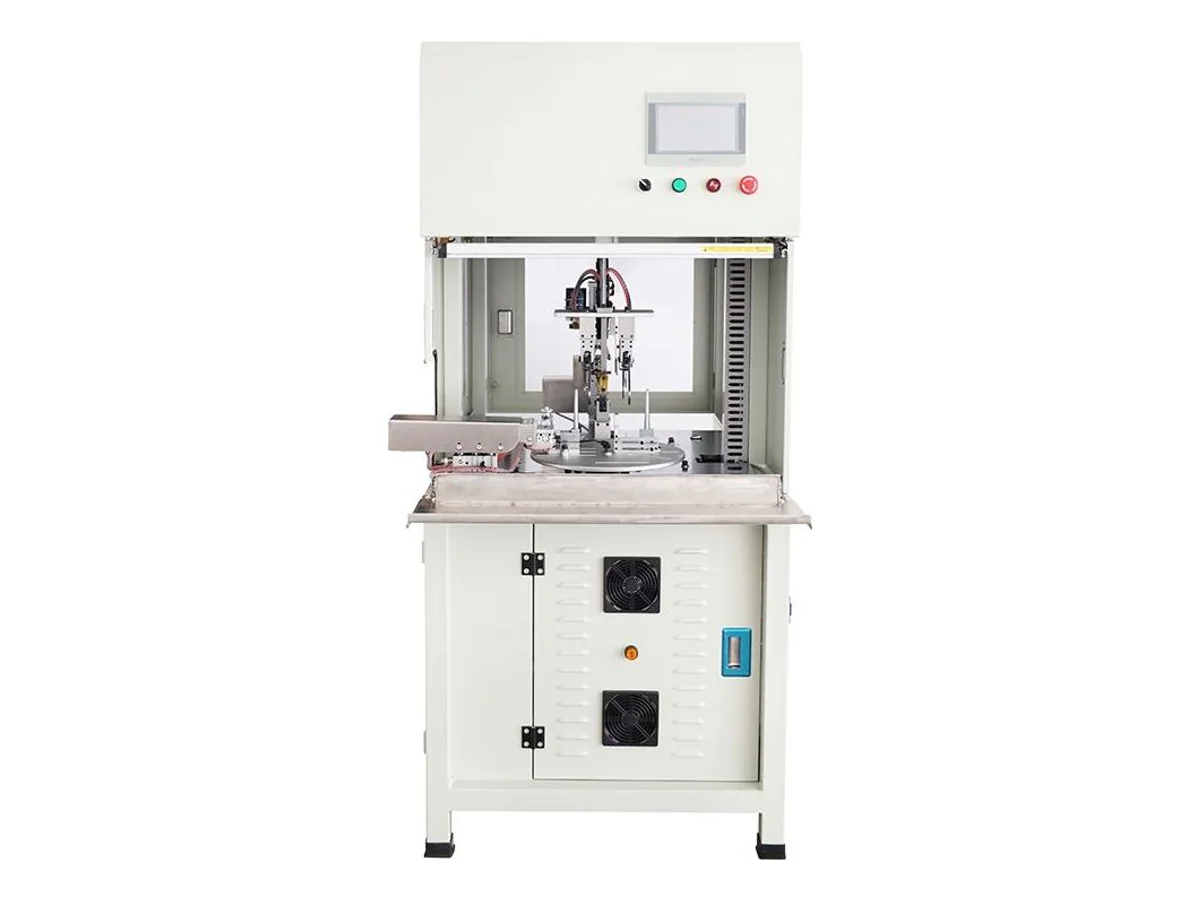
Automatic AC Power Cord Winding and Tying Machine
Model WM-4820
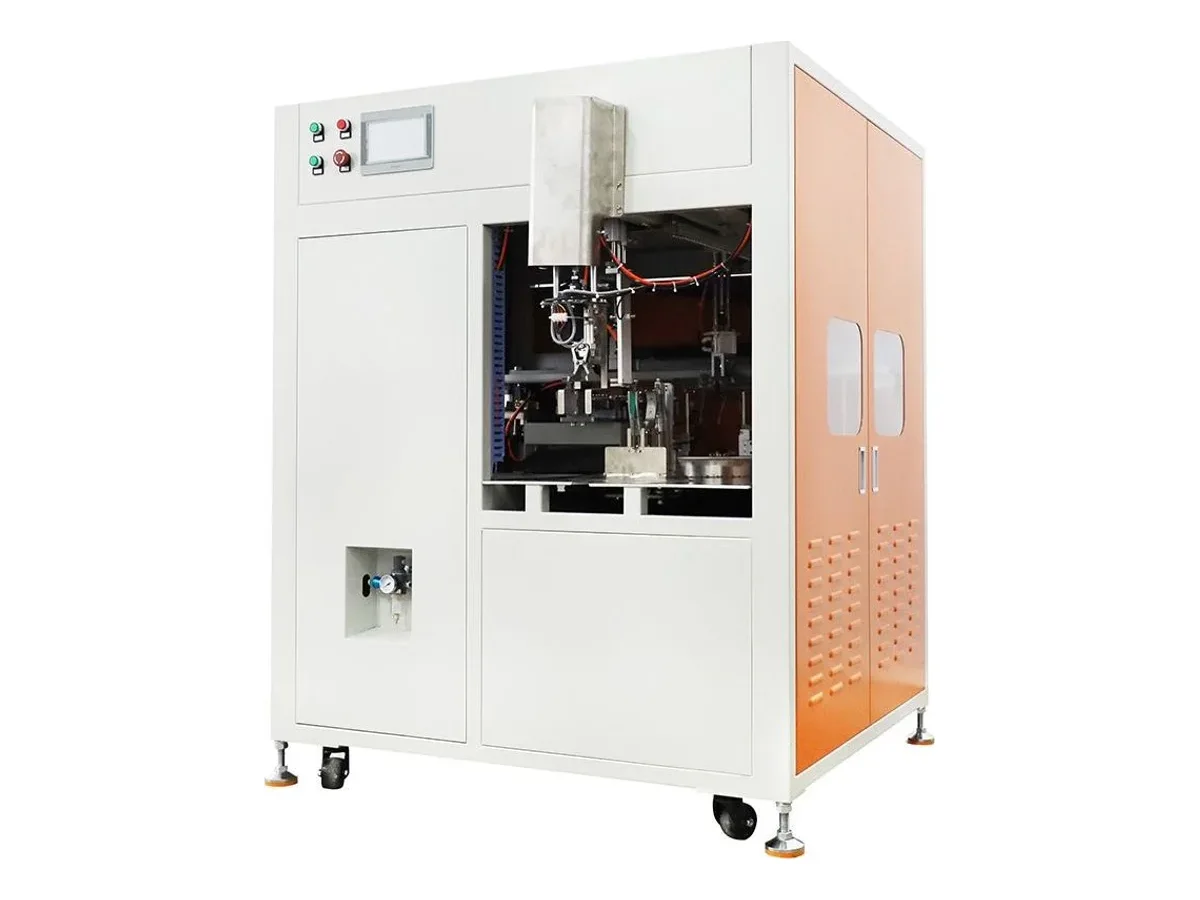
Automatic Cable Cutting, Figure-8 Coiling and Tying Machine
Model WM-4808
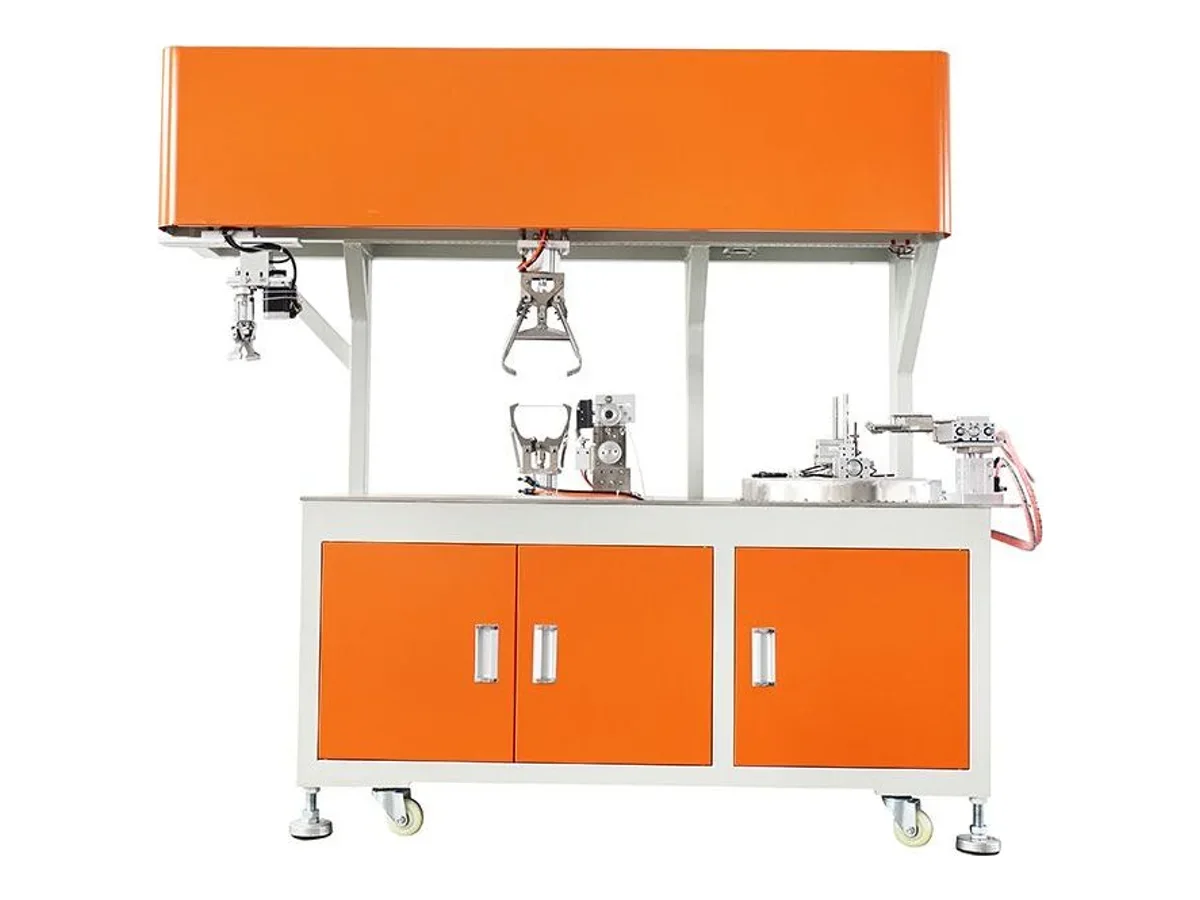
Automatic Cable Winding and Tying Machine for Figure-8 and Round Coils
Model WM-4811