Automatic Cable Tie Machine for Motor Stator Coils WM-4812
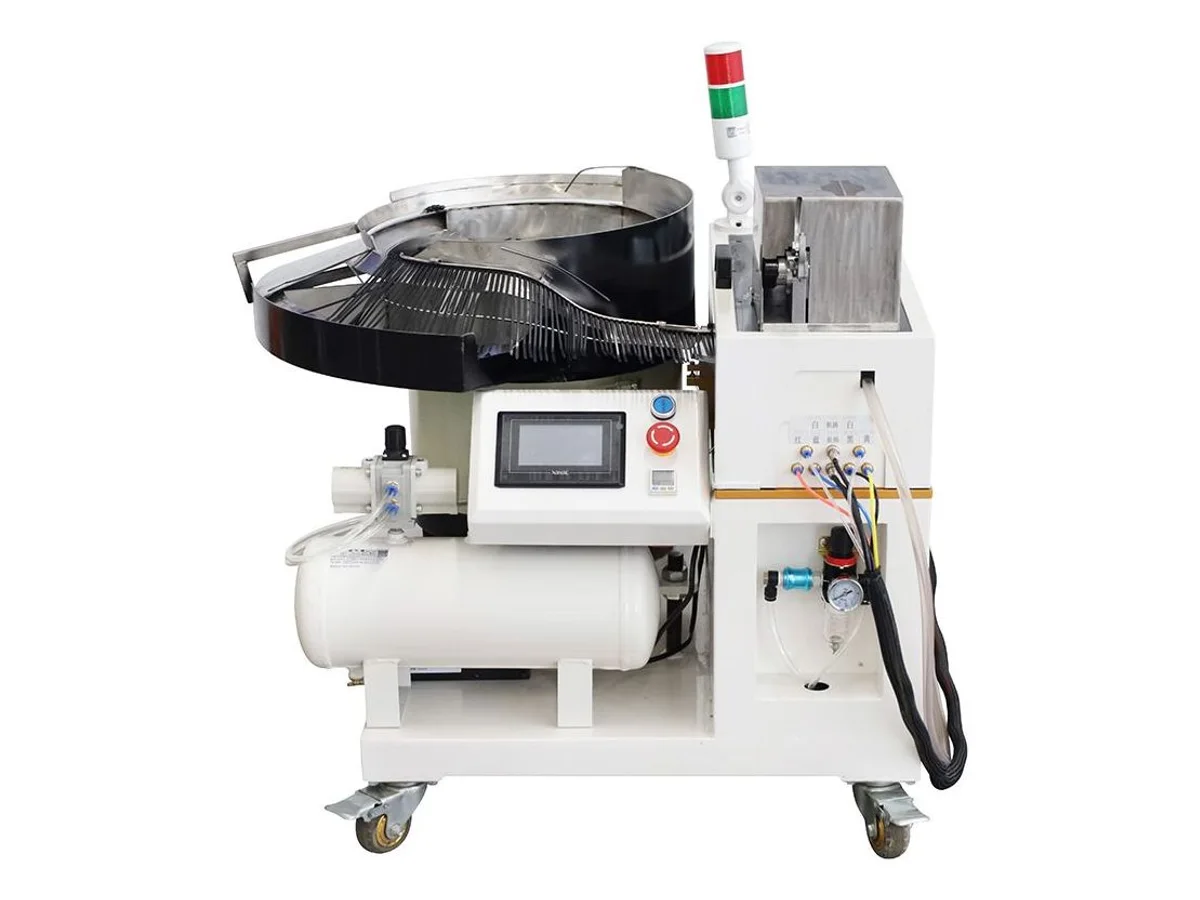
The WM-4812 ties nylon cable ties around motor stator coil ends at a foot-pedal workstation: loose 2.5 × 100 mm ties are bulk-loaded into a vibratory bowl, oriented and blown through a tube to the tying head, and each pedal press feeds, wraps, tensions, cuts and ejects the waste tail in a 0.8-second action — about 2 seconds per finished tie including handling. Tie tightness is set as a value on the PLC touchscreen, the cabinet measures 736 × 823 × 666 mm, weighs about 150 kg and rolls on casters.
Specifications
| Function | Automatic tie feeding, wrapping, tensioning, cutting and waste ejection for motor stator coils and similar bundles |
|---|---|
| Cable tie size | 2.5 × 100 mm (subject to the actual material) |
| Scope of bundling | Subject to the actual material, or customized |
| Tying action | 0.8 s per tie (about 2 s full cycle including auxiliary time) |
| Power supply | 220 V / 50 Hz |
| Air pressure | 5 – 6 kg/cm² |
| Dimensions | 736 × 823 × 666 mm |
| Gun table size | 326 × 295 × 335 mm |
| Weight | About 150 kg (with wheels, easy to move) |
| HS Code | 8479.89 (common reference — final classification confirmed by your customs broker) |
| Certification | CE (certificate provided with shipment) |
Key features
- Pour loose nylon ties into the vibratory bowl in any orientation — the bowl lines them up in a track and blows them one at a time through the feed tube to the tying head
- One pedal press per tie — feeding, wrapping, tightening, cutting and waste ejection run automatically in a 0.8-second action, about 2 seconds per tie with handling time
- Tie tightness is entered as a number on the touchscreen, so bundle tension stays repeatable instead of depending on the operator's wrist
- PLC control with touchscreen operation — the interface pages cover automatic run, counters, manual debugging and user settings in English
- Jam handling is built in — the machine detects a blocked tie, stops immediately with an alarm, and a one-button clear function restarts the feed
- A temperature control system conditions the nylon tie before tying, keeping ties from snapping in cold-workshop conditions
- The tying head mounts on its own compact gun table (326 × 295 × 335 mm) connected by the feed tube, so the head sits where the work is while the cabinet stays out of the way
- The whole station rolls on lockable casters at about 150 kg — one person moves it between winding lines
What it processes
- Tying the coil ends and lead bundles of motor stators after winding and lacing
- General nylon-tie bundling of small parts and wire bundles presented to the head by hand
- Pedal-paced bench stations in motor, pump and compressor assembly shops
Suited for: repetitive nylon-tie fastening where the part comes to the machine — motor stator coil ends, lead bundles and other handheld-size products presented to the fixed tying head at a pedal-paced bench. Not suited for: tying points spread across a large harness or harness board, where the tool must come to the work — for that, use the WM-4809 handheld automatic cable tie gun machine, which feeds loose ties to a gun in the operator’s hand at 1,500–1,800 ties per hour. For long straight product that is pushed along a table between ties — conduit, hose and harness runs up to Ø11 mm, with tie sizes from 60 to 120 mm — the WM-4814 automatic nylon cable tie machine is the better station, with a graduated guide on the table for repeatable setups. For coiling and banding finished cable for packaging, start from the coil winding and binding category and tell us your coil size — several dedicated models cover it.
Lacing a stator’s end windings by hand is slow; tying them with loose cable ties by hand is faster but uneven — every tie is threaded, pulled and trimmed by feel. The WM-4812 turns that into a two-motion job: hold the stator to the head, step on the pedal. The tie arrives by air from the bowl, wraps the coil, tensions to the number set on the screen, and the tail is cut and thrown to waste — all inside 0.8 seconds, so the pace is set by how fast the operator can index around the stator, not by the tying itself.
Because the head is a fixed station rather than a handheld gun, both of the operator’s hands stay on the workpiece, which is what you want when the workpiece is a stator that must be rotated tie by tie. The head sits on its own small gun table linked to the cabinet by the feed tube, so it can be positioned at the bench edge or into a rotate-and-tie fixture while the bowl, air tank and electricals stay in the cabinet below.
Tie size and bundling range are listed as subject to the actual material, with customization available — so treat the sample trial as part of the quote: send your ties and two or three real stators with the inquiry, and we send back the trial-run video before you order.
Engineering knowledge
Choose and troubleshoot this process
- Cable Coiling Defects: Causes and Corrective ActionsTroubleshoot inconsistent coil diameter, crossed loops, stored twist, unstable lead length, loose binding and cable surface damage.
- How to Choose a Cable Coiling and Winding MachineChoose cable coiling equipment by cable construction, finished coil geometry, length control, binding method, product handling and batch mix.
- Spiral Cable Production: Winding, Heat Setting, Cooling and Reverse WindingPlan a retractile cable process around winding, heat setting, cooling and finishing. Define coil dimensions and accepted shift output before buying machines.
WM-4812 — common questions
How do the cable ties get from the bowl to the tying head?
Loose ties are poured into the stainless vibratory bowl in no particular order. The bowl orients them, queues them in a feed track and shoots them one at a time through the tube to the head with compressed air, so the operator never handles a tie — the only inputs during production are the workpiece and the pedal.
What tie size does the WM-4812 use, and can it run my ties?
The listed tie specification is 2.5 × 100 mm, and both the tie spec and the bundling range are subject to the actual material — the machine can be customized for other sizes. Send a bag of the exact ties you buy plus a few of your actual stators, and we run them on the machine and send you the trial video before you commit to the order.
How fast is one tie?
The tying action itself — feed, wrap, tension, cut, eject the waste tail — takes 0.8 seconds. With the auxiliary time of presenting the coil to the head, a full cycle is about 2 seconds per tie.
What happens if a tie jams in the feed?
The machine detects the blockage, stops working immediately and raises an alarm, and a one-button clear function purges the jam — no tools or disassembly for a routine misfeed. The tie temperature control system also reduces jams and snapped ties caused by brittle nylon in cold workshops.
Related machines in Winding, Coiling & Binding
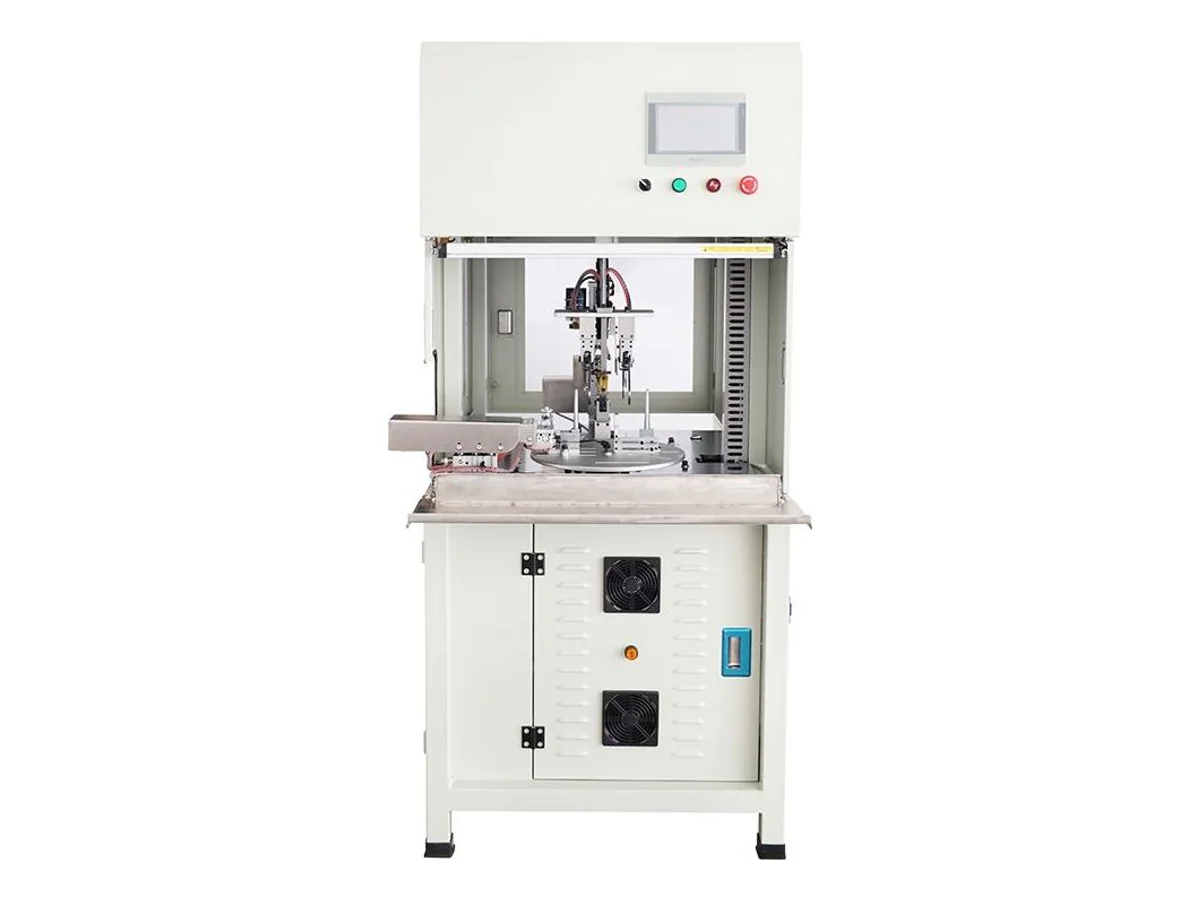
Automatic AC Power Cord Winding and Tying Machine
Model WM-4820
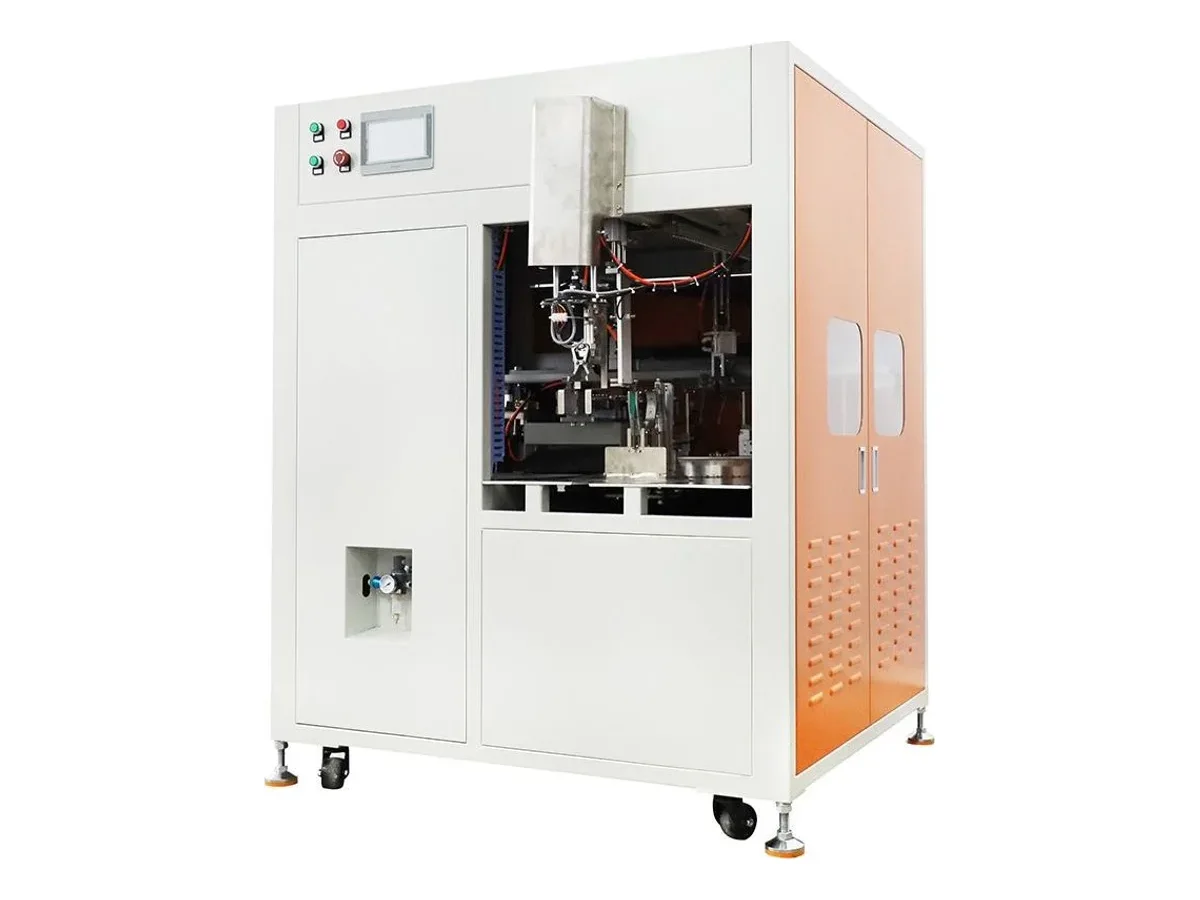
Automatic Cable Cutting, Figure-8 Coiling and Tying Machine
Model WM-4808
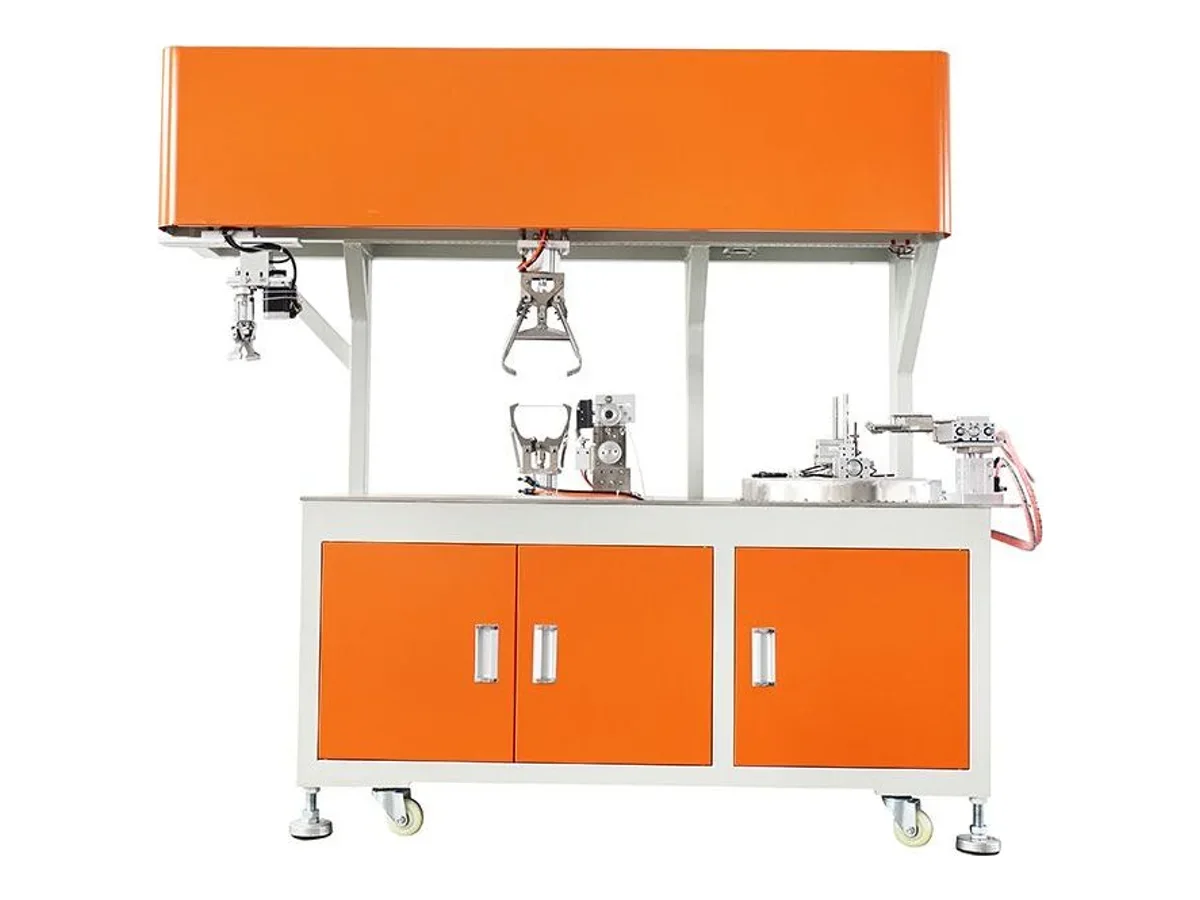
Automatic Cable Winding and Tying Machine for Figure-8 and Round Coils
Model WM-4811