13 kW Ultrasonic Terminal Welding Machine for Copper and Aluminum Cable WM-725
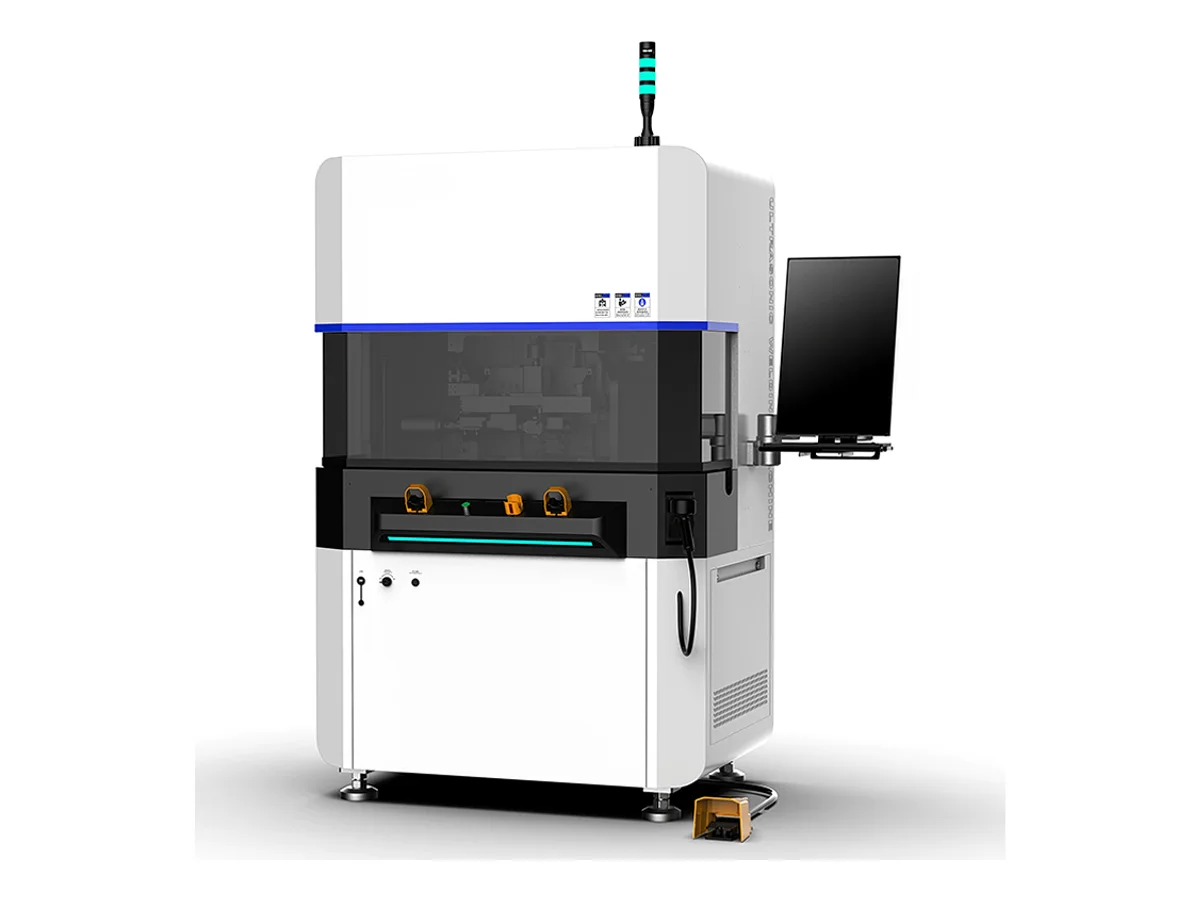
The WM-725 is a 13,000 W ultrasonic terminal welding machine for copper conductors from 16 to 120 mm² and aluminum conductors from 16 to 150 mm², using the terminal combinations specified for the application. It supports a 180° wire-to-terminal welding arrangement, two-hand or barcode-scan start, and configurable MES connectivity. The stated output is 120–150 pieces per hour; we verify the complete cycle and weld acceptance on your cable and terminal samples.
Specifications
| Process | Ultrasonic wire-to-terminal welding |
|---|---|
| Wire-to-terminal arrangement | 180° |
| Rated power | 13,000 W |
| Copper conductor range | 16–120 mm² |
| Aluminum conductor range | 16–150 mm² |
| Specified copper-wire terminal combinations | Silver-plated copper, nickel-plated copper and bare copper terminals |
| Specified aluminum-wire terminal combinations | Silver-plated copper, silver-plated aluminum and bare copper terminals |
| Rated production capacity | 120–150 pcs/h; actual output depends on parts and handling |
| Equipment dimensions | 2,060 × 1,650 × 1,300 mm; orientation and installation clearance confirmed on the quote |
| Equipment weight | 944 kg |
| Power supply | AC 380 V, 50 Hz |
| Air pressure | Greater than 0.5 MPa |
| Start modes | Two-hand start and barcode-scanner start |
| Production data | Welding power, stroke and time available for MES collection |
| MES interface | Customizable; interface scope confirmed on the quote |
| HS Code | 8515.80 (common reference — final classification confirmed by your customs broker) |
| Certification | CE (certificate provided with shipment) |
Key features
- The copper and aluminum cable ranges cover larger terminal joints, giving power-cable production a dedicated process beyond small-wire ultrasonic splicing.
- We match the horn, anvil and workholding to your cable and terminal coating, addressing weld consistency at the actual joint rather than selecting equipment from power alone.
- Two-hand and barcode-scan start modes provide alternatives for the agreed workstation sequence; the chosen setup is verified with the loading and safeguarding arrangement.
- Configurable MES collection of power, stroke and welding time helps link process records with production when the interface is included in the project.
- We trial your parts and agree joint strength, electrical and section checks before committing to the production tooling.
What it processes
- EV and battery-pack cable-to-terminal welding
- Energy-storage and inverter connection cables
- Charging, construction-equipment and rail power-cable assemblies within the qualified conductor range
Start with the joint, not the power rating
A 13 kW rating alone does not qualify a cable-to-terminal weld. We need the conductor material and strand construction, the terminal contact area and plating, and the joint requirements. Those determine the horn, anvil, support and welding recipe. We run your parts on video and agree the checks that establish a usable joint.
The gallery shows the machine from three angles and example wire-to-terminal joints. These are application examples, not measured test results for your parts. Joint material and coating follow the specification on the quote.
Define the complete production cell
The 120–150 pcs/h figure must be assessed with loading, scanning, welding and unloading included. We confirm the 380 V supply, compressed-air connection, installation envelope, tooling changes and the required MES interface before delivery. For wear and service items, every quote lists them with unit price and the location they ship from.
Our ultrasonic wire welding selection guide explains the sample information and acceptance checks to prepare. Use the sample-trial checklist to keep the joint criteria and recorded results together.
Engineering knowledge
Choose and troubleshoot this process
- How to Choose an Ultrasonic Wire Welding MachineChoose ultrasonic wire welding equipment by conductor material, gathered cross-section, splice geometry, weld power, tooling, recipe control and acceptance testing.
- How to Choose a Wire Twisting and Tinning MachineChoose wire twisting and tinning equipment by conductor construction, strip condition, tinning specification, flux control, finished-end geometry and automation level.
- Ultrasonic Wire Welding Defects: Causes and Corrective ActionsTroubleshoot weak wire splices, cut strands, excessive flash, incomplete bonding, unstable weld energy, tool marking and conductor contamination.
WM-725 — common questions
Can the same tooling weld copper and aluminum cables?
Do not assume so. Conductor material, strand construction, cross-section, terminal geometry and plating affect the tooling and weld recipe. We review each joint and identify change parts on the quote.
Can it weld aluminum cable to a copper terminal?
The application specification includes aluminum wire with silver-plated copper or bare copper terminals, and with silver-plated aluminum terminals. Send the exact material and coating specifications for a trial; the listed combinations do not establish acceptance for every terminal.
Is 120–150 pieces per hour guaranteed for my product?
It is the stated production range. Loading, barcode handling, weld settings, inspection and unloading affect actual output. We time the complete cycle with your parts and agree the expected production rate.
Is the MES connection included?
The machine supports collection of welding power, stroke and time, and the MES interface can be customized. Protocol, field mapping, record storage and integration work are confirmed on the quote.
How is this different from a wire-to-wire ultrasonic splicer?
This machine is specified for a 180° wire-to-terminal arrangement and the larger conductor ranges shown in the table. For wire-to-wire joints, compare the systems in our ultrasonic welding category.
What samples are required before ordering?
Send cables and terminals for every intended material, size and coating, plus drawings, joint acceptance criteria and target output. We establish the fixture and recipe, record a trial and confirm which tooling and tests are included.
Related machines in Tinning, Soldering & Welding
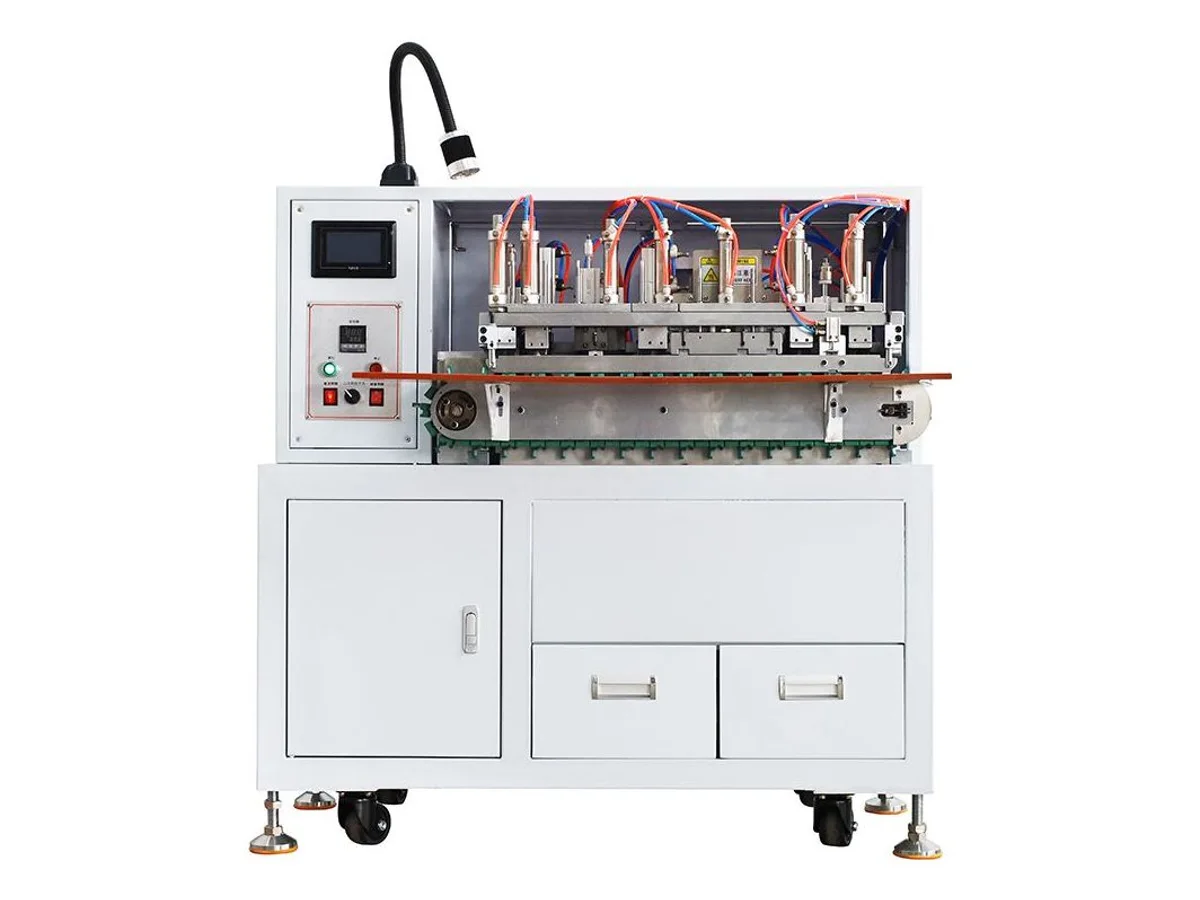
Automatic 3-Core Cable Cutting Stripping Twisting and Tinning Machine
Model WM-4710T
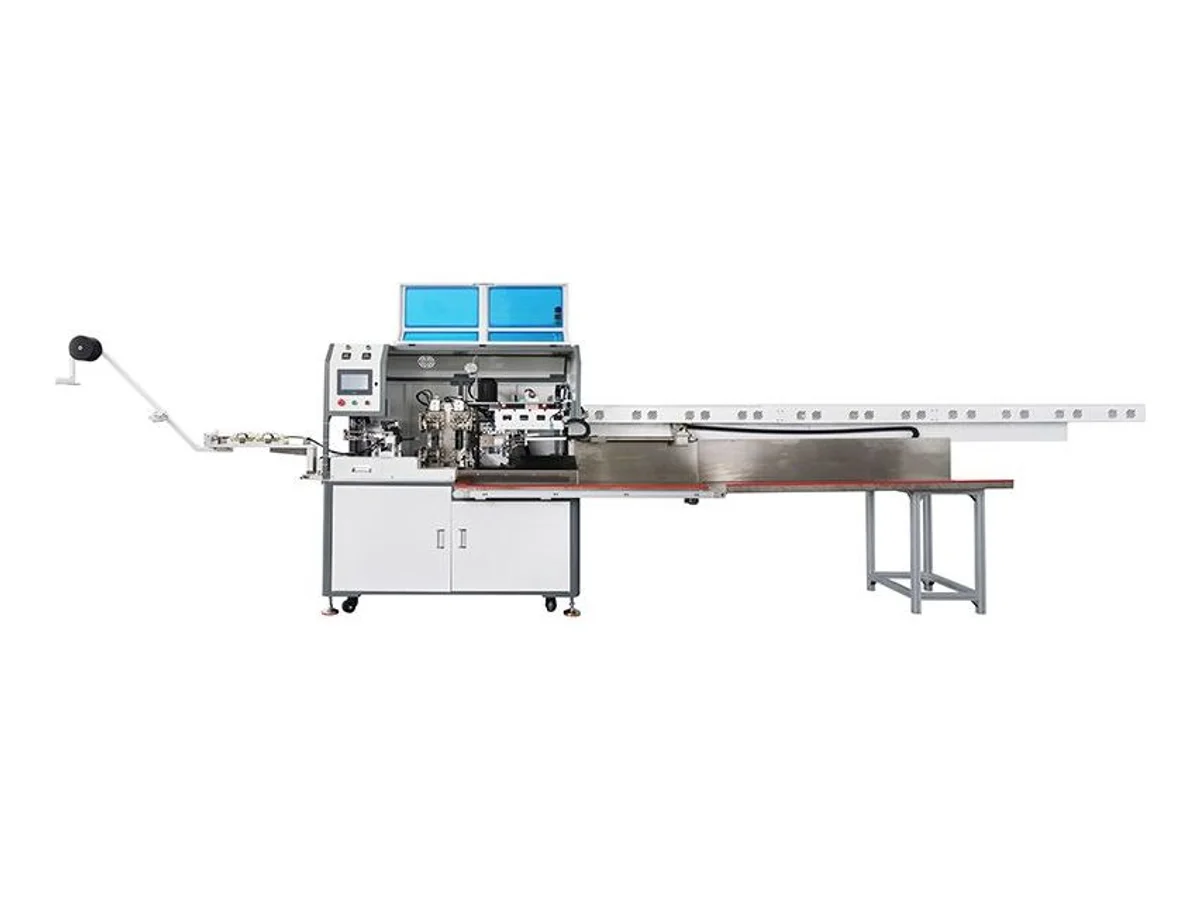
Automatic Multicore Cable Cutting Stripping and Two-End Tinning Machine
Model WM-4706S
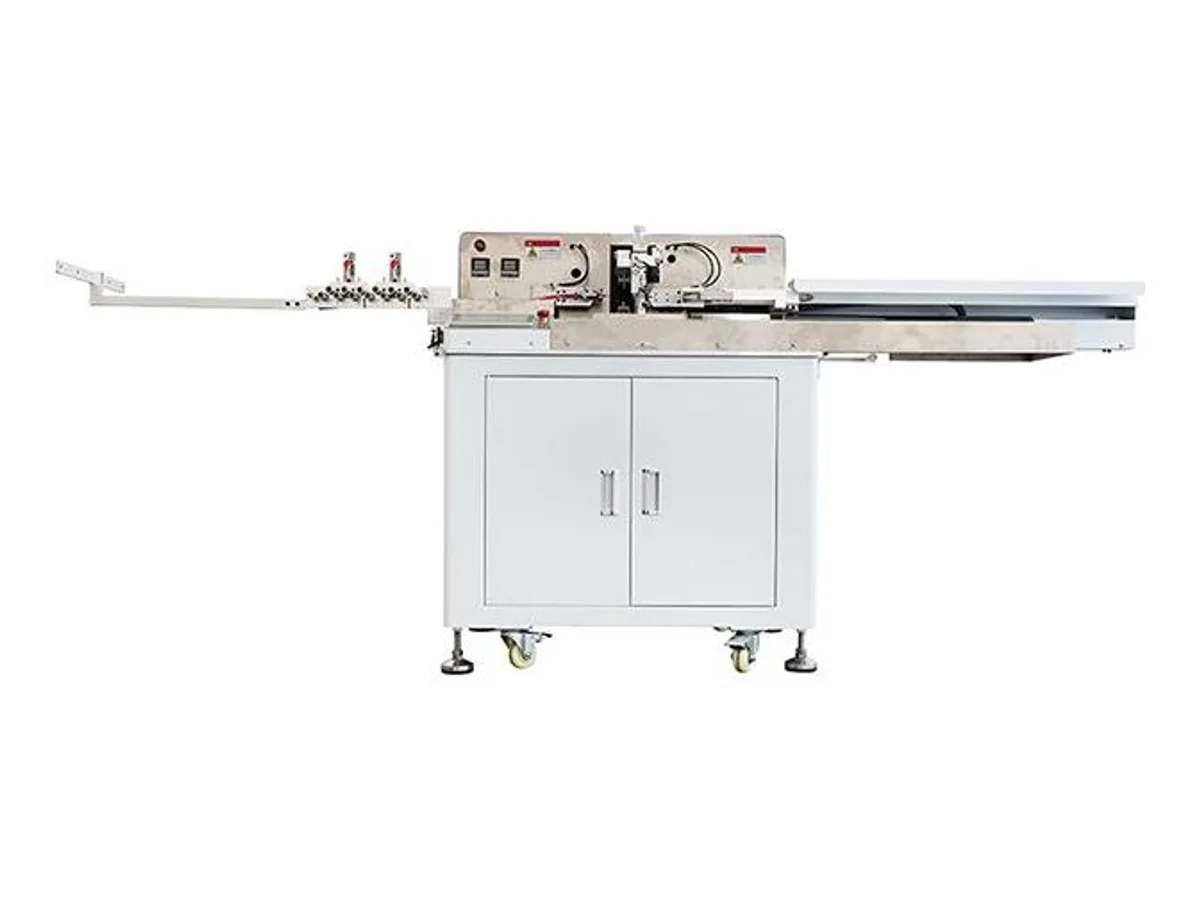
Automatic Multiple-Wire Stripping Twisting and Tinning Machine for 18–28 AWG
Model WM-4706W