Ultrasonic Plastic Welding Machine, 1–15 mm Spot Diameter WM-714
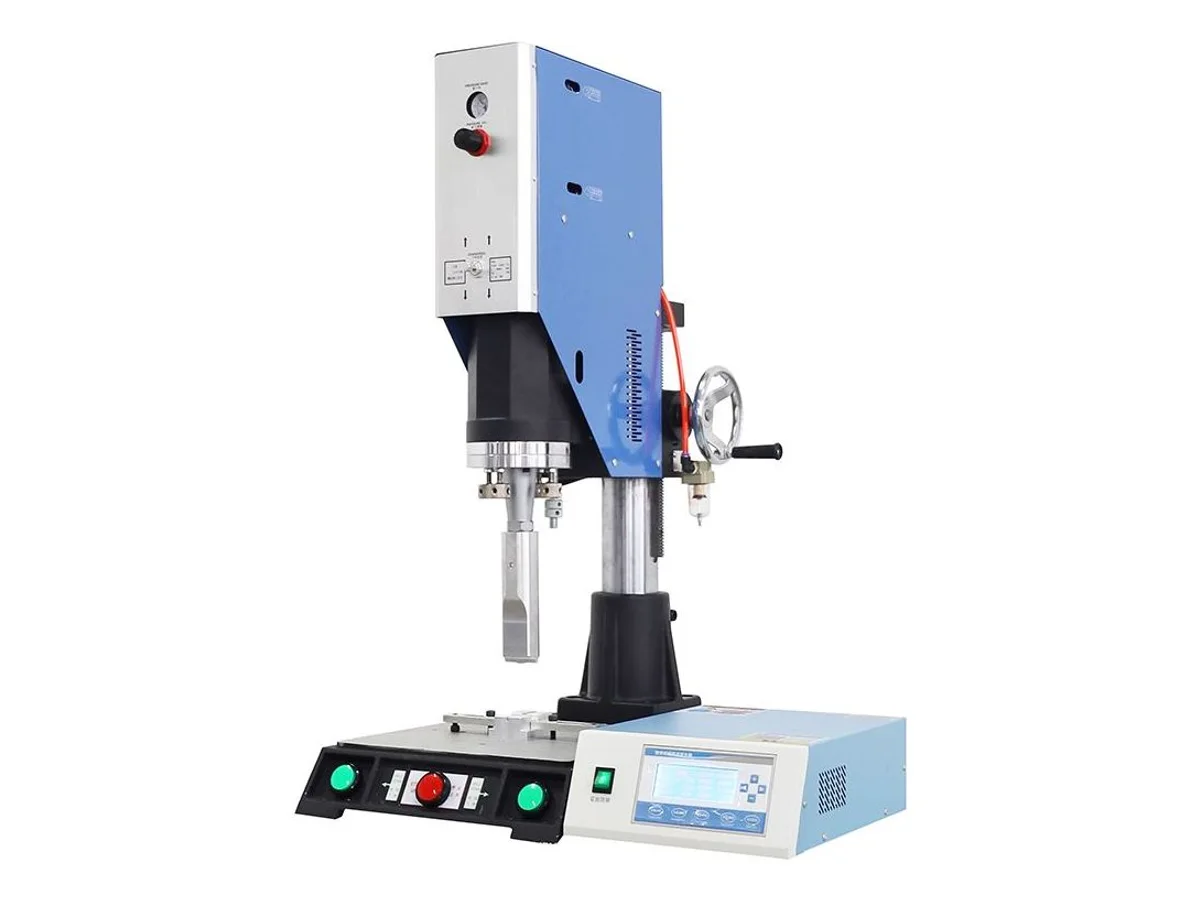
The WM-714 joins small plastic parts by ultrasonic friction welding — the generator delivers 2,000 W through a phase-shifted full-bridge topology, with weld time settable from 0.001 to 9.999 seconds for millisecond-level control on delicate housings. The press column gives a 75 mm stroke with hand-wheel height adjustment, runs on single-phase 220 V and 0.1–0.7 MPa shop air, and suits spot welds from 1 to 15 mm diameter. Typical parts are SD card and USB shells, antennas, earphone housings and the plastic clips and covers used in electronic assemblies. The unit weighs 80 kg.
Specifications
| Model | WM-714 |
|---|---|
| Function | Ultrasonic welding of thermoplastic parts |
| Output power | 2,000 W |
| Power topology | Phase-shifted full bridge |
| Weld time | 0.001 – 9.999 s |
| Spot weld diameter | 1 – 15 mm |
| Stroke | 75 mm |
| Air pressure | 0.1 – 0.7 MPa |
| Power supply | Reference configuration: Single-phase AC 220 V, 50/60 Hz |
| Weight | 80 kg |
| Dimensions | 700 × 400 × 1,300 mm |
| Electrical configuration | We configure the machine’s electrical supply for your installation before shipment. Your quote confirms the voltage, phase, frequency, current and the power cord with plug or industrial connection for your site. Common site supplies are 120 V, 60 Hz with grounded Type B outlets in the US and Canada, with 208 V or 240 V also found at industrial sites. The UK and Ireland use 230 V, 50 Hz with Type G. Australia and New Zealand use nominal 230 V, 50 Hz with Type I, and some Australian sites list 240 V. Three-phase installations in the UK, Ireland, Australia and New Zealand commonly use 400 V at 50 Hz, with 415 V at some Australian sites. |
| Lead time | Your quote confirms the machine configuration, included accessories and dispatch date. |
| Warranty and support | One-year machine warranty and free remote video support for the life of the equipment. |
| Wear parts | For wear parts, every quote lists them with unit price and the location they ship from. |
| HS Code | 8515.80 (common reference — final classification confirmed by your customs broker) |
| Certification | CE (certificate provided with shipment) |
Key features
- Phase-shifted full-bridge generator holds amplitude steady, so weld strength repeats part after part instead of drifting with the mains
- Weld timer resolves to 0.001 s — enough control to bond thin-walled shells without flash or scorch marks
- Hand-wheel column adjustment plus 75 mm stroke makes fixture and product changeovers a minutes job, not a rebuild
- Twin start buttons flank a central emergency stop, keeping both operator hands on the controls during the press cycle
What it processes
- SD card, USB and memory-module shell welding in microelectronics plants
- Phone antennas, communication modules and earphone housings
- Plastic covers, clips and connector shells in electronic and harness assemblies
Suited for: spot-welding small thermoplastic parts — 1 to 15 mm weld diameter — such as card and USB shells, antennas, earphone housings, and the plastic clips and covers around electronic assemblies. For other jobs and machine options: metal joining of any kind — copper splices belong to the WM-711 ultrasonic wire welding machine, its metal-welding counterpart for 0.75–20 mm² splices, and solder work to the WM-712 soldering machine.
Horn and fixture are matched to your part, so send 10–20 pieces of your actual product and we tool up and weld them on video before you order — you judge the seam, not a brochure photo. To get a WM-714 quote, share the conductor size and show us the joint or finished end you need. We can use a photo to start the configuration review.
Engineering knowledge
Choose and troubleshoot this process
- How to Choose an Ultrasonic Wire Welding MachineChoose ultrasonic wire welding equipment by conductor material, gathered cross-section, splice geometry, weld power, tooling, recipe control and acceptance testing.
- How to Choose a Wire Twisting and Tinning MachineChoose wire twisting and tinning equipment by conductor construction, strip condition, tinning specification, flux control, finished-end geometry and automation level.
- Ultrasonic Wire Welding Defects: Causes and Corrective ActionsTroubleshoot weak wire splices, cut strands, excessive flash, incomplete bonding, unstable weld energy, tool marking and conductor contamination.
WM-714 — common questions
What parts is the WM-714 sized for?
Small thermoplastic assemblies with spot welds of 1 to 15 mm diameter — card shells, USB housings, antennas, earphone parts and similar microelectronics. Larger horn tooling and clear locating fixtures are machined to match each product.
What utilities does it need on the bench?
Single-phase 220 V (50/60 Hz) and clean compressed air between 0.1 and 0.7 MPa. The machine stands 1,300 mm tall on a 700 × 400 mm footprint and weighs 80 kg, so a solid workbench or its own stand is enough.
What can it not weld?
Metal — copper wire splices, terminals and tinned joints are a different process. For those, see the ultrasonic metal welder and the soldering machines in our wire soldering and welding category. It is also not meant for large housings beyond the 15 mm spot-weld class.
Related machines in Tinning, Soldering & Welding
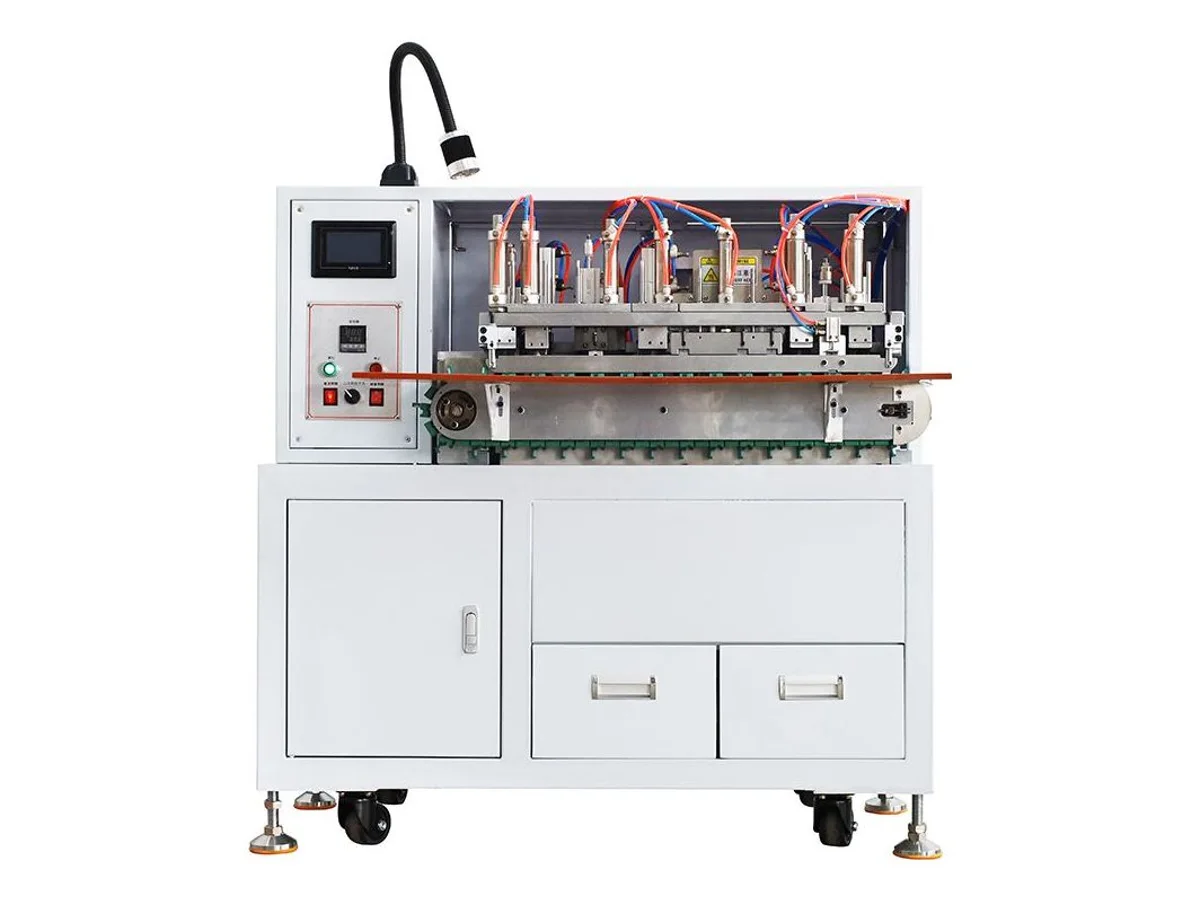
Automatic 3-Core Cable Cutting Stripping Twisting and Tinning Machine
Model WM-4710T
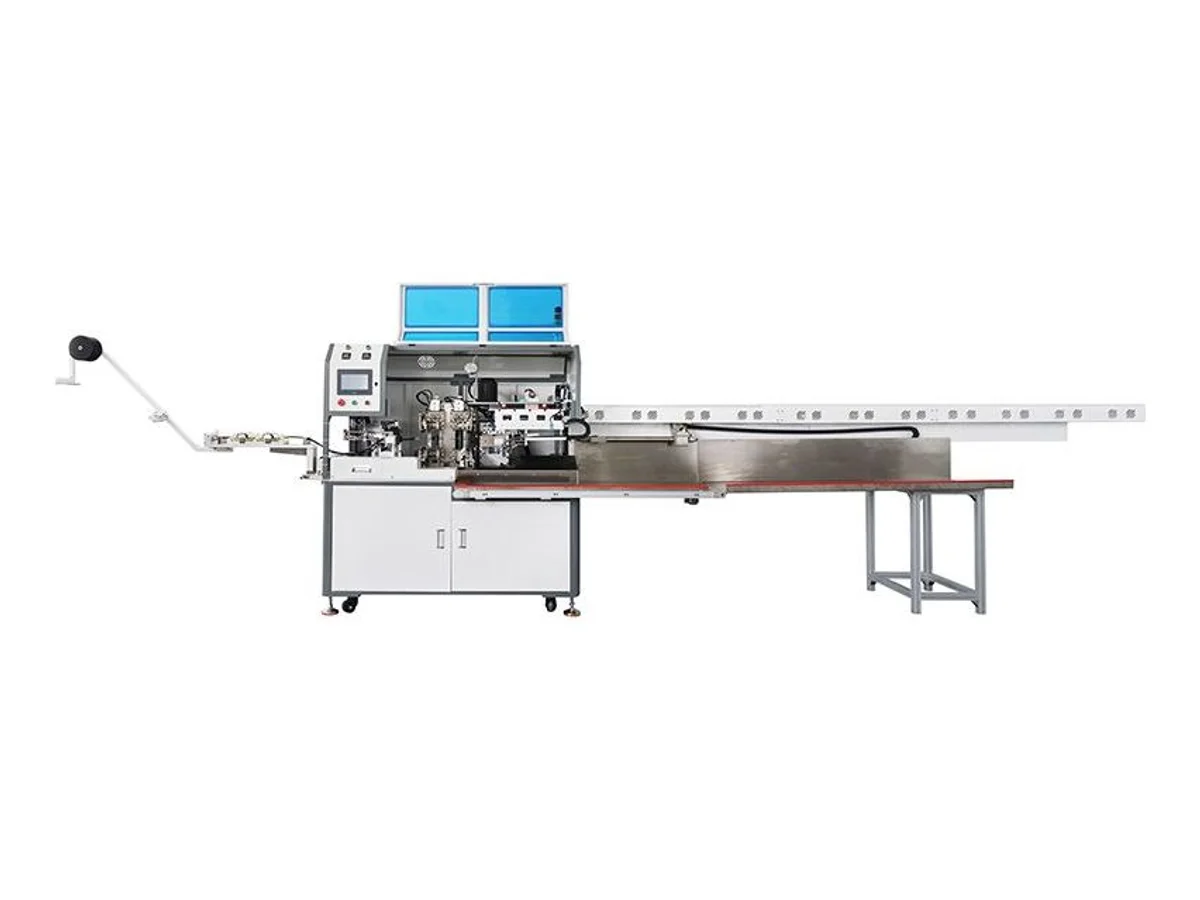
Automatic Multicore Cable Cutting Stripping and Two-End Tinning Machine
Model WM-4706S
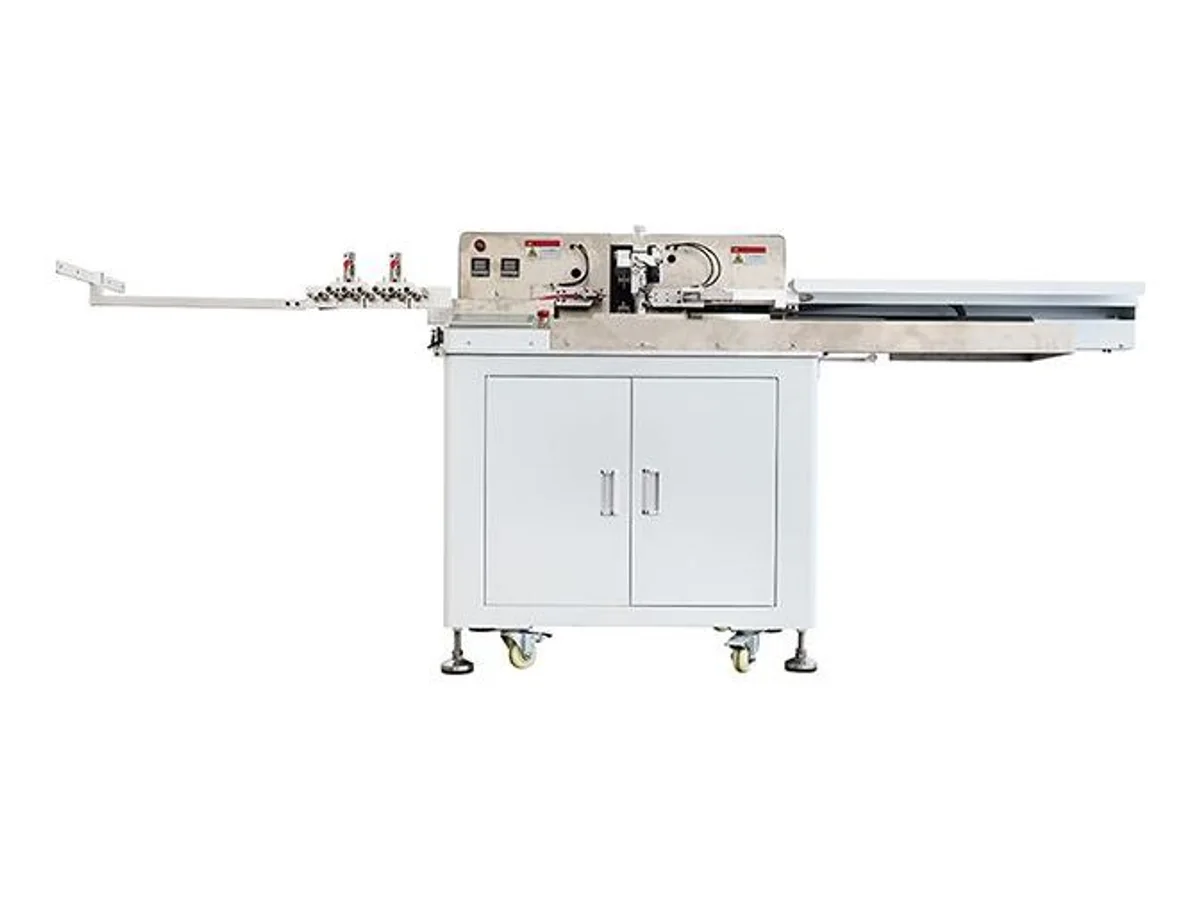
Multi-Wire Cutting, Stripping, Twisting and Tinning Machine, Up to 10 Wires
Model WM-4706W