Semi-Automatic USB Cable Soldering Machine with Automatic Solder Feed WM-712
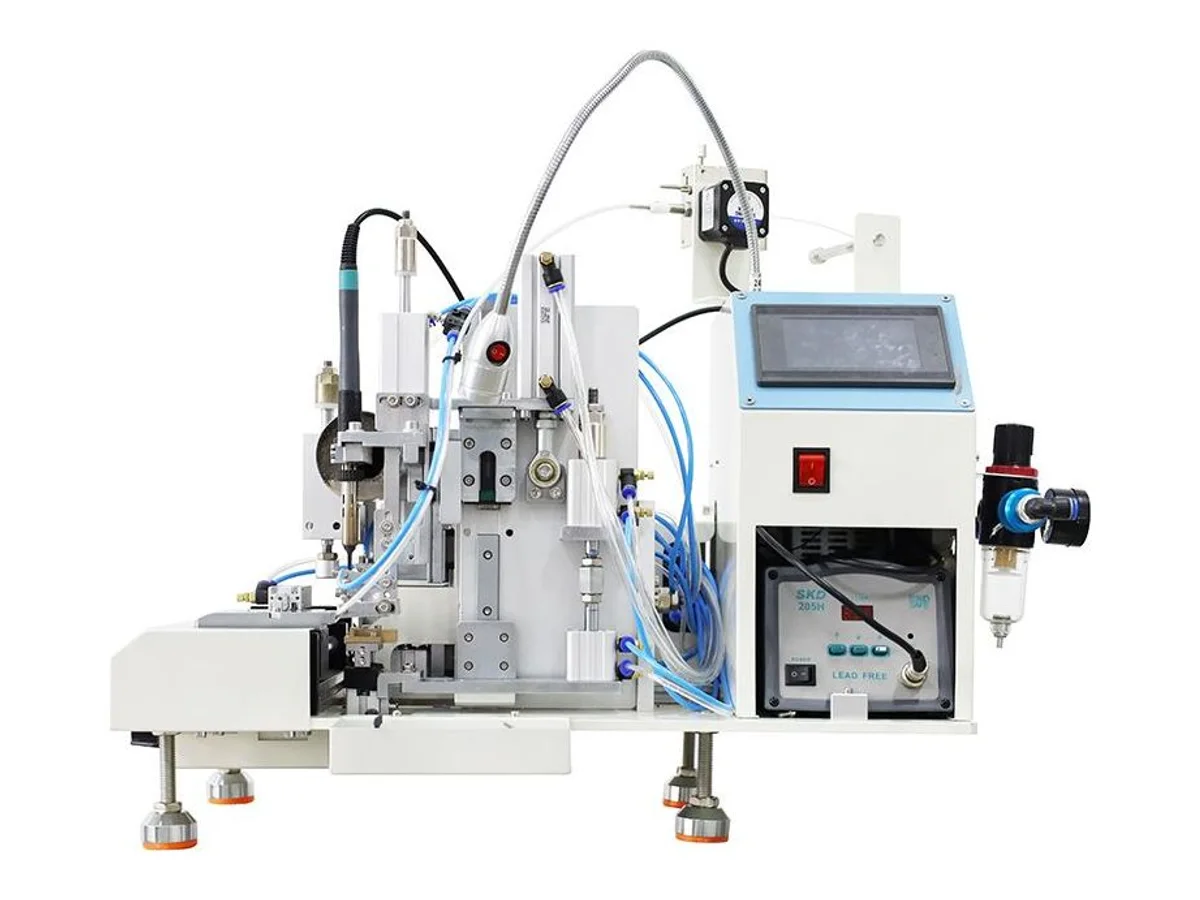
The WM-712 solders USB cables to plug cores semi-automatically — the operator loads the connector and cable, and the machine runs its four stations of wire clamping, pulling, stripping and soldering in sequence with automatic solder-wire feed. One person keeps output at 300–600 pieces per hour with programmed solder feeding; joint quality is verified on the actual parts. The bench unit measures 700 × 420 × 500 mm, weighs 40 kg, and needs only single-phase 220 V power plus 0.4–0.6 MPa compressed air, rated for shop floors from -20 to +50 °C.
Specifications
| Function | Semi-automatic soldering of USB cables and connector cores |
|---|---|
| Working voltage | Single-phase AC 220 V, 10 A, 50 Hz |
| Air pressure | 0.4 – 0.6 MPa |
| Ambient temperature | -20 °C to +50 °C |
| Operator | 1 person |
| Soldering speed | 300 – 600 pcs/h |
| Dimensions | 700 × 420 × 500 mm |
| Weight | 40 kg |
| HS Code | 8515.80 (common reference — final classification confirmed by your customs broker) |
| Certification | CE (certificate provided with shipment) |
Key features
- Four stations in one bench — wire clamping, wire pulling, stripping and soldering run as a single semi-automatic cycle
- Automatic solder-wire feed lays the same amount of solder on every pin, so joints stay uniform across shifts
- Touchscreen in English shows production count and cycle period, with manual and setting modes for quick changeovers
- Compact 40 kg bench format — one operator runs it on 220 V and shop air, confirm fixture clearance and fume-extraction connection for the workstation
What it processes
- USB plug soldering for data and charging cable assembly lines
- Connector-core soldering jobs where hand-iron quality drifts between operators
- Small production cells adding consistent soldering next to cut-and-strip equipment
Suited for: USB cable and connector-core soldering where consistent solder feed and steady pace beat hand irons — data cables, charger leads and small-signal connector assembly. Not suited for: copper-to-copper splice welding — for that, pick the WM-711 ultrasonic wire welder, which bonds 0.75–20 mm² strand splices with no solder at all.
Send 2–3 meters of your cable together with a bag of your USB cores and we run a soldering trial on this machine on video before you commit.
Engineering knowledge
Choose and troubleshoot this process
- Wire Soldering Defects: Causes and Corrective ActionsTroubleshoot non-wetting, excessive solder wicking, bridging, burnt insulation, unstable tinning depth, residue and contaminated wire solder joints.
- How to Choose an Ultrasonic Wire Welding MachineChoose ultrasonic wire welding equipment by conductor material, gathered cross-section, splice geometry, weld power, tooling, recipe control and acceptance testing.
- How to Choose a Wire Twisting and Tinning MachineChoose wire twisting and tinning equipment by conductor construction, strip condition, tinning specification, flux control, finished-end geometry and automation level.
WM-712 — common questions
What does semi-automatic mean on this machine?
The operator places the connector core and cable into the fixture; the machine then clamps, pulls, strips and solders automatically. One person sustains 300–600 pieces per hour depending on the cable and pin count.
What utilities does the WM-712 need?
Single-phase 220 V at 10 A plus clean compressed air at 0.4–0.6 MPa. The bench body is 700 × 420 × 500 mm and 40 kg, and it is rated for ambient temperatures from -20 to +50 °C, so it fits unconditioned workshops.
What can it not do?
It solders — it does not crimp terminals and it is not an ultrasonic welder for copper splices. For crimped connections see the terminal crimping machines, and for strand-to-strand splices see the ultrasonic welders in this category.
Related machines in Tinning, Soldering & Welding
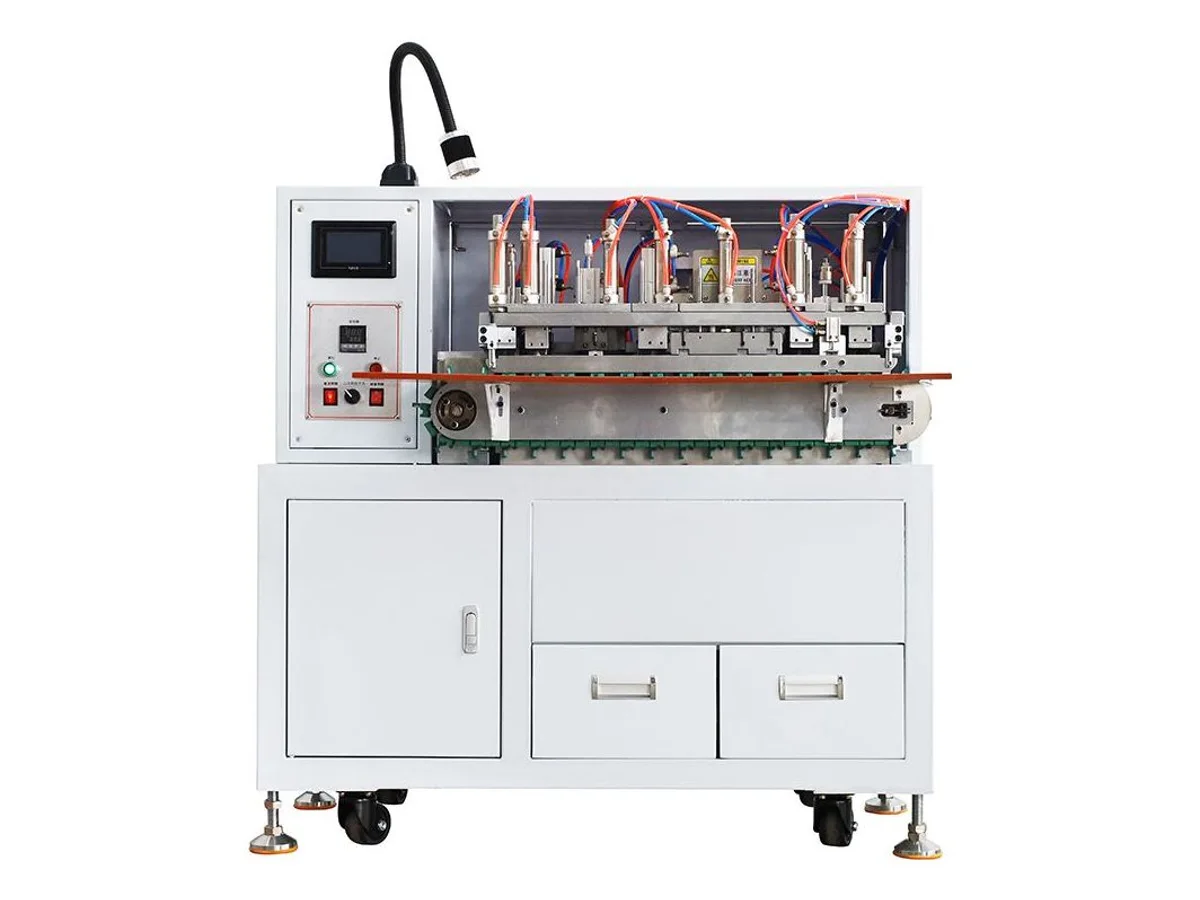
Automatic 3-Core Cable Cutting Stripping Twisting and Tinning Machine
Model WM-4710T
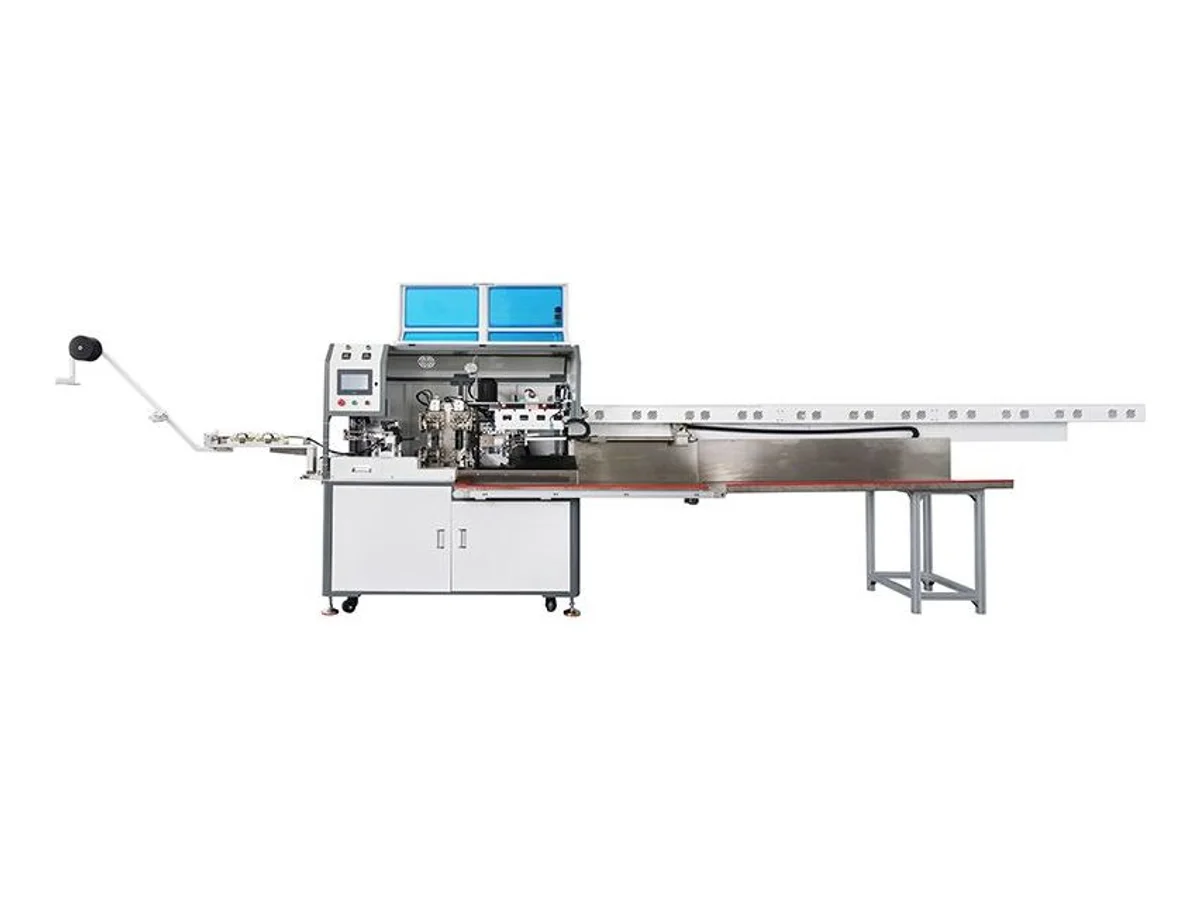
Automatic Multicore Cable Cutting Stripping and Two-End Tinning Machine
Model WM-4706S
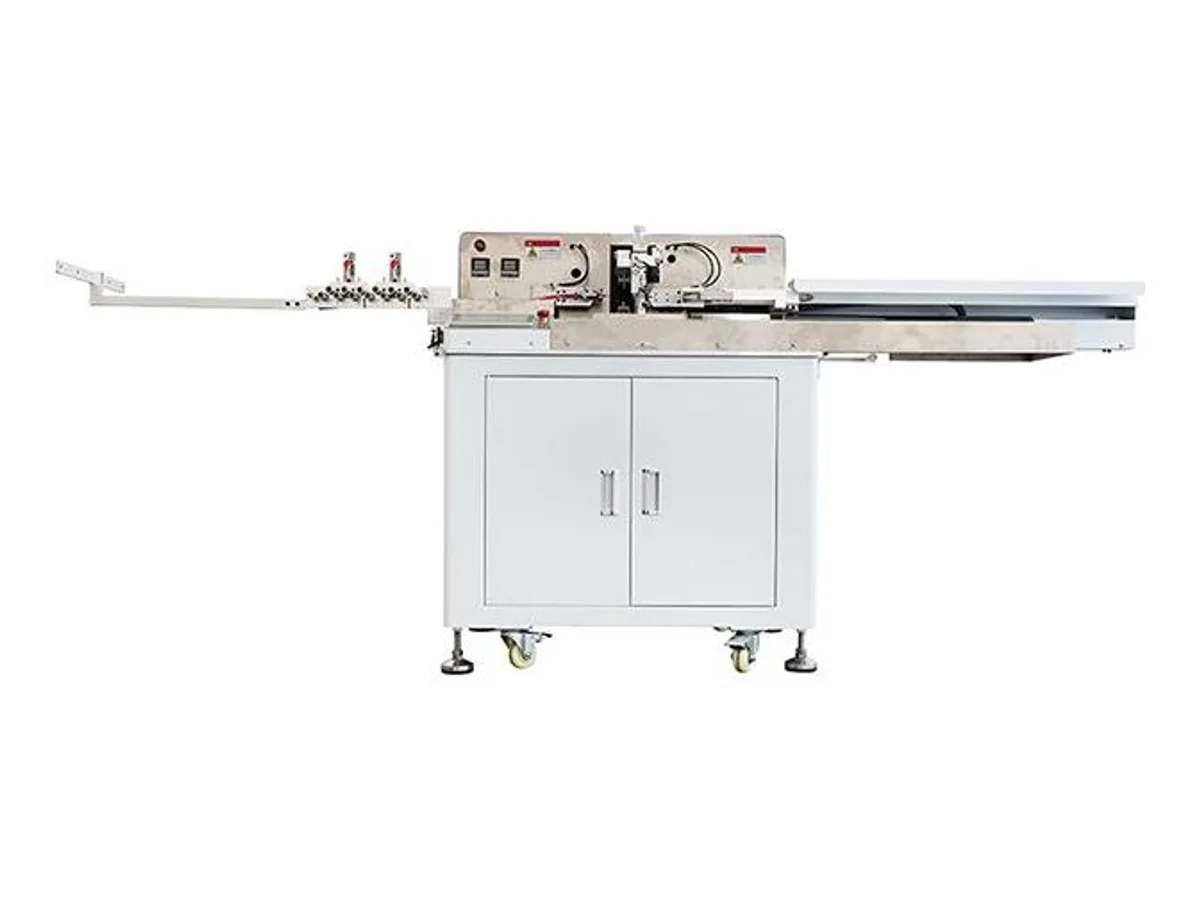
Multi-Wire Cutting, Stripping, Twisting and Tinning Machine, Up to 10 Wires
Model WM-4706W