128-Point Wire Harness Continuity, Insulation and Component Tester WM-814
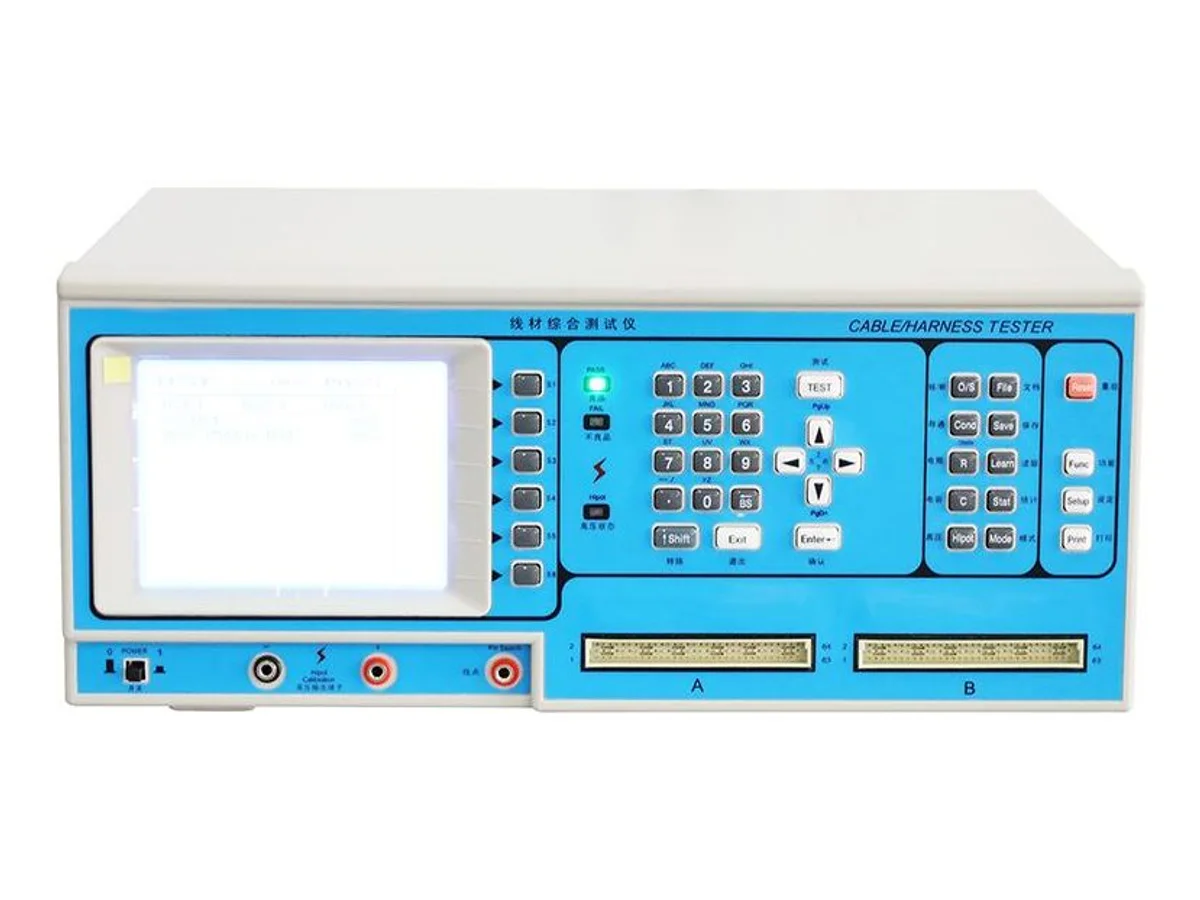
The WM-814 finds opens, shorts, miswires and intermittent faults on wiring harnesses and cable assemblies with 1 to 128 test points. Beyond continuity at 0.1–50 Ω, it runs insulation tests from 1 MΩ to 1 GΩ under DC 200–700 V or AC 100–500 V, measures resistance up to 1 MΩ, capacitance from 10 pF to 500 μF and diode drops from 0.1 to 7.0 V. Learn a golden sample once, and every test ends in a PASS or FAIL verdict with light-and-buzzer prompts, reported through RS-232, remote-control and printer ports.
Specifications
| Function | Harness conduction, insulation and component testing |
|---|---|
| Test points | 1 – 128 points (PIN) |
| Conduction resistance test | 0.1 Ω – 50 Ω |
| Insulation impedance setting | 1 MΩ – 1 GΩ |
| Test high voltage | DC 200 – 700 V; AC 100 – 500 V |
| Resistance test | 0.1 Ω – 1 MΩ |
| Capacitance test | 10 pF – 500 μF |
| Diode test | 0.1 V – 7.0 V |
| Test modes | Standard, multi-stage and unilateral automatic test with probe point finding |
| Self-check | Automatic scanning and self-test |
| Result indication | LCD readout with sound-and-light PASS / FAIL prompts |
| Interfaces | RS-232, remote control and printer ports |
| HS Code | 9031.80 (common reference — final classification confirmed by your customs broker) |
| Certification | CE (certificate provided with shipment) |
Key features
- One learn cycle from a known-good harness programs the full point map — no netlist typing before a new assembly goes on test
- Catches instantaneous opens and shorts that a plain continuity buzzer misses, so vibration-sensitive faults stop escaping to customers
- Insulation testing to 1 GΩ under up to 700 V DC proves the gaps between circuits, not just that the right pins are connected
- PASS / FAIL light-and-buzzer verdicts let line operators test without reading numbers, while RS-232 and printer ports keep the paper trail
What it processes
- End-of-line electrical test on automotive, appliance and industrial wire harnesses
- Multi-core cable assemblies and connector-to-connector looms up to 128 points
- Incoming inspection where opens, shorts and miswires must be caught before installation
Suited for: connectorized harnesses and multi-core cable assemblies up to 128 points — automotive, appliance and equipment looms where every piece must leave with opens, shorts, miswires and insulation verified. Not suited for: mechanical crimp verification — pull-off forces are covered by the WM-811 terminal tensile tester, which pulls joints up to 10,000 N with printable curves, and cross-sections by the WM-813 crimp cross-section analysis system. Finished AC power cord sets are a different job again — plug polarity, cross-versus-parallel wiring and 0–5 kV withstand testing in a clamped jig belong on the WM-823 double-head power cord plug tester.
Send two or three finished harnesses with their mating connectors and we program the tester and run your assemblies on camera before you commit. Electrical test is the last gate on an EV wire harness line.
Engineering knowledge
Choose and troubleshoot this process
- How to Choose Wire Harness Testing EquipmentSelect harness testing equipment by test points, two-wire or four-wire resistance measurement, insulation and withstand limits, fixtures and inspection scope.
- Wire Harness Electrical Test Failures: Causes and Corrective ActionsDiagnose open circuits, shorts, high resistance, insulation failures, intermittent contacts, wrong cavity insertion and unstable harness test fixtures.
- Crimp Force Monitoring vs Pull Testing, Crimp Height and Cross-SectionBuild a crimp quality plan that combines force monitoring, pull testing, crimp-height measurement and cross-section analysis without confusing their limits.
WM-814 — common questions
What fault types does the WM-814 detect?
Open circuits, short circuits, miswired (dislocated) pins and instantaneous opens or shorts that only appear for a moment, plus insulation impedance up to 1 GΩ under DC 200–700 V or AC 100–500 V. It also measures conduction resistance from 0.1 Ω, resistance to 1 MΩ, capacitance from 10 pF to 500 μF and diode forward drops from 0.1 to 7.0 V, so in-line components get checked in the same pass.
How do I set up a new harness type?
Connect a known-good sample to the test-point boards and let the automatic scan learn its point map — the tester stores it as a numbered file you recall from the keypad. Probe point finding identifies which pin is which when you build fixtures, and standard, multi-stage or unilateral test modes cover assemblies that must be tested stage by stage.
What does it not test?
Anything mechanical — it verifies circuits, not crimp strength or strip quality. Terminal pull-off forces belong on a pull tester and crimp cross-sections on an analysis system, both found with the other wire harness testing equipment. It is also not a production hipot for voltages beyond 700 V DC / 500 V AC.
Related machines in Testing & Quality Inspection
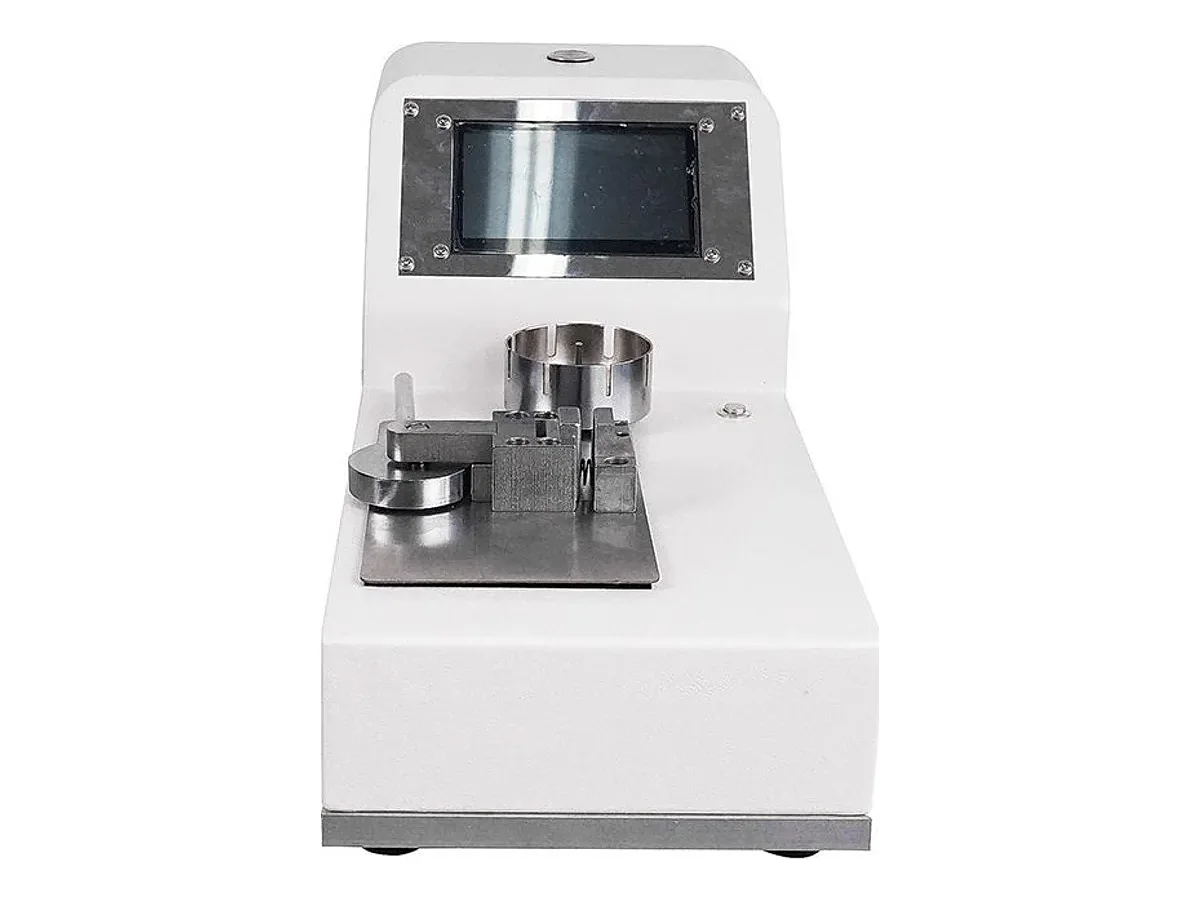
Motorized Crimp Terminal Pull Tester, 500 N
Model WM-820
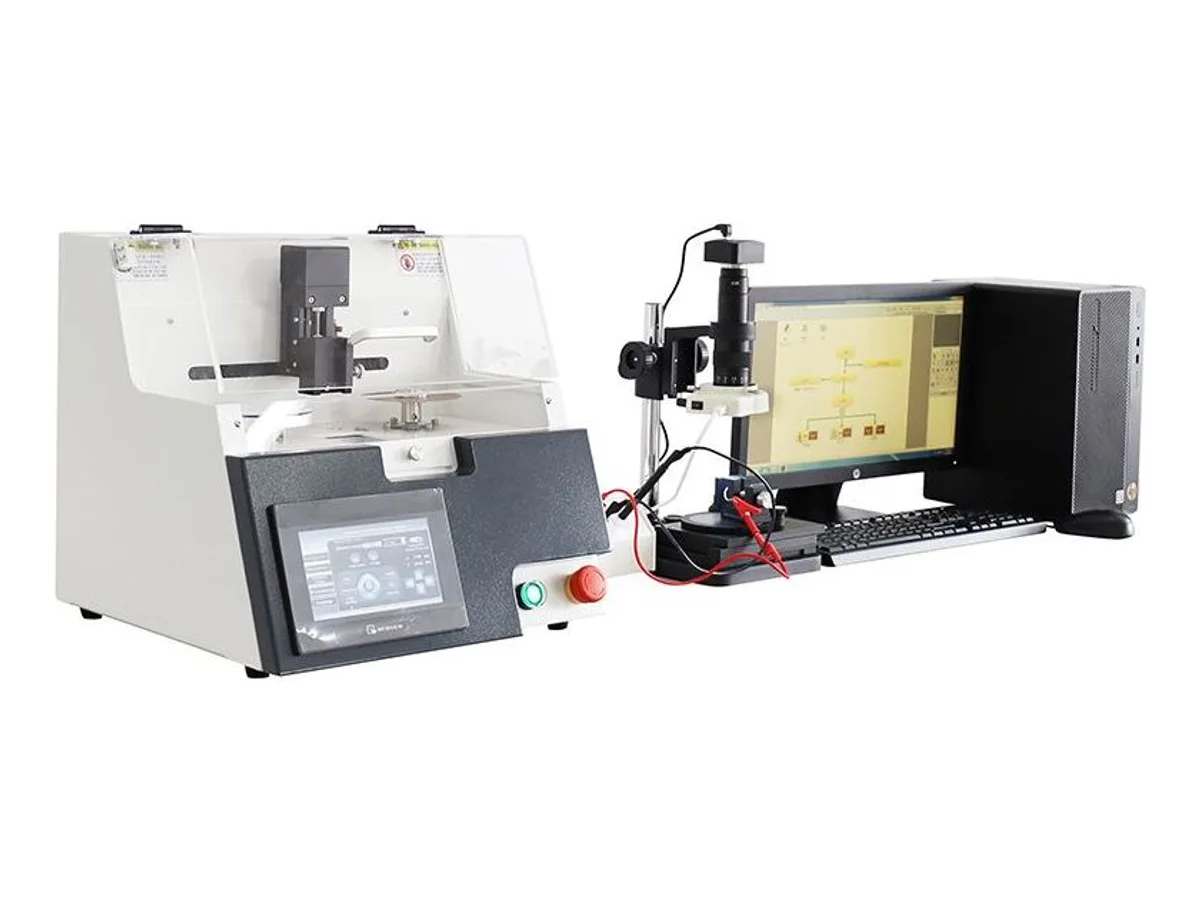
Crimp Cross-Section Cutting and Analysis System, 0.01–30 mm²
Model WM-813
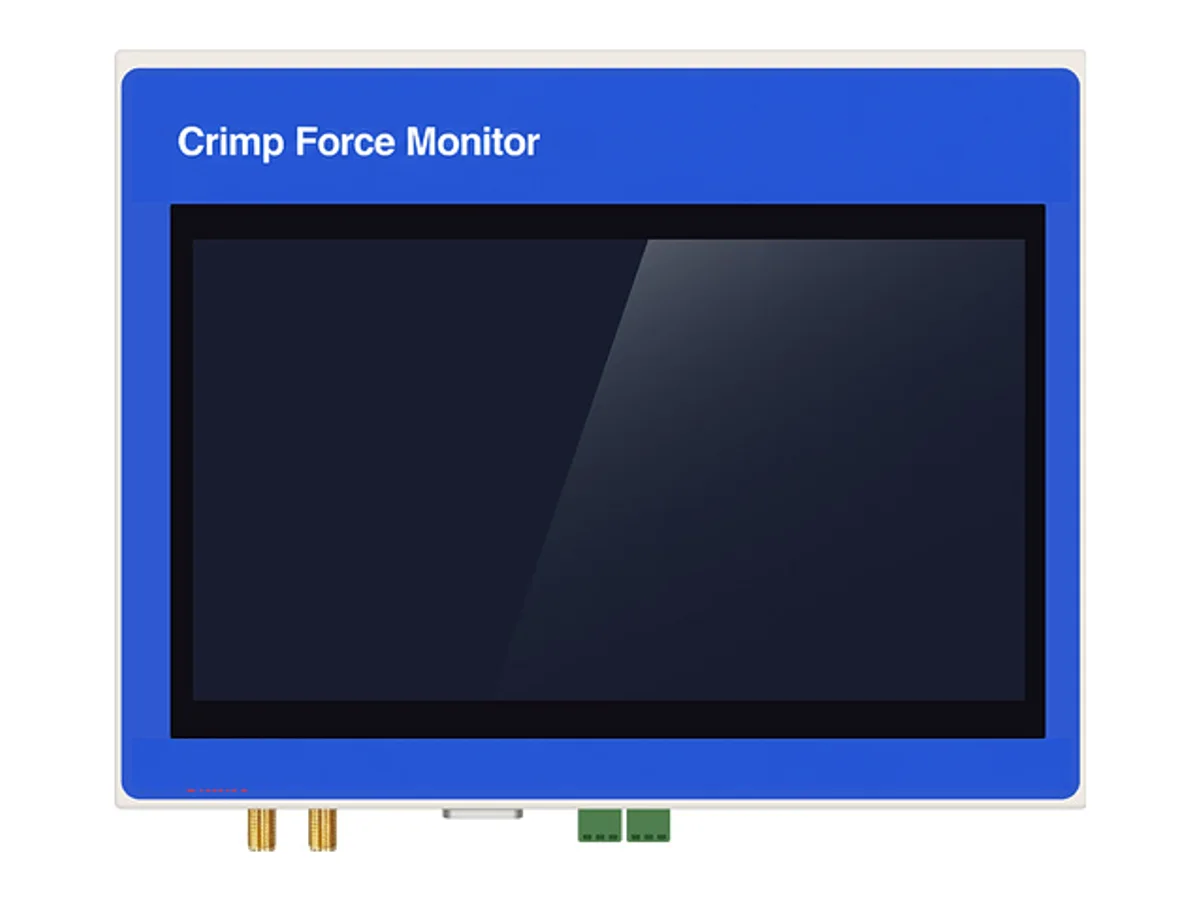
Crimp Force Monitoring System, Single or Dual Channel
Model WM-834