Rotary Cable Cutting and Stripping Machine for 30–300 mm² EV and Power Cable WM-175
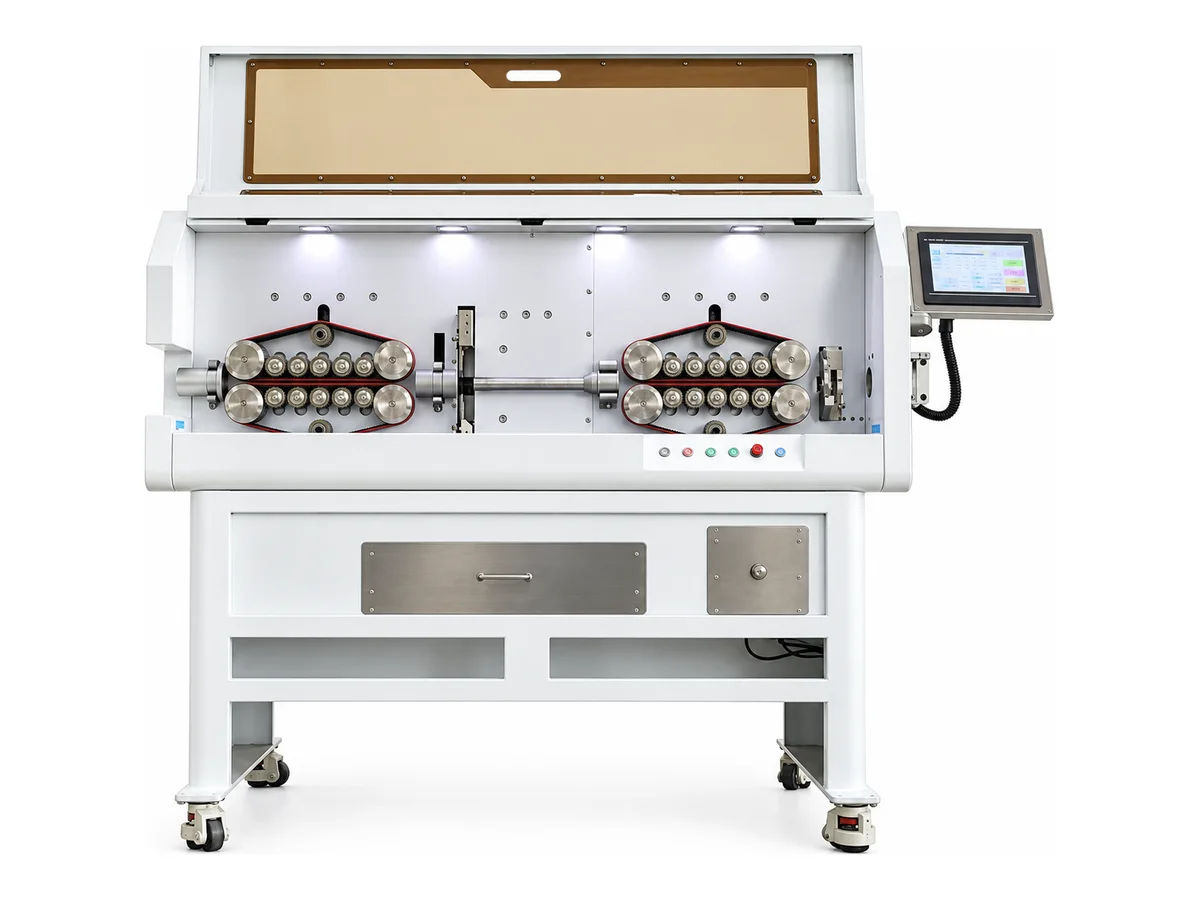
The WM-175 cuts and strips large-gauge cable from 30 to 300 mm² — including hard-to-strip jackets such as EV charging pile harnesses, charging gun cables and high-voltage shielded wire. A rotary blade holder with axial positioning strips heads up to 1,000 mm and tails up to 300 mm, at cutting lengths from 10 to 99,999.99 mm with ±0.2% (0.002×L) accuracy and an output of 100–700 pcs/hour depending on cable length and size.
Specifications
| Wire type | Hard-to-strip cables: EV charging pile harnesses, charging gun cables, high-voltage shielded wires |
|---|---|
| Stripping range | 30 – 300 mm² |
| Head stripping | 1 – 1,000 mm |
| Tail stripping | 1 – 300 mm |
| Cutting length | 10 – 99,999.99 mm |
| Cutting tolerance | Within 0.002 × L (L = cutting length) |
| Guide tube diameter | Φ15 – 50 mm |
| Blade material | Imported high-speed steel (HSS) |
| Capacity | 100 – 700 pcs/h (depending on cable length and size) |
| Power supply | 220 V, 50 Hz |
| Power | 11.7 kW |
| HS Code | 8463.90 (common reference — final classification confirmed by your customs broker) |
| Certification | CE (certificate provided with shipment) |
Key features
- Rotary blade holder with axial positioning — the blades circle the cable instead of dragging through it, so thick and stubborn jackets come off clean at speed
- Double-blade design swaps in a fresh blade set without recalibration, cutting changeover downtime
- Automatic machining-center detection aligns each cable before the cut, keeping output steady
- Digital display of the cutting wire diameter — the operator sees the measured size on screen
- Menu-driven touchscreen control (English interface) for length, strip depth and batch programs
- Quality imported pneumatic components for stable, energy-efficient clamping
- Free sample test — send your cable, we run it on this machine and send you the video before you order
What it processes
- EV charging pile harnesses and charging gun cables (new-energy charging infrastructure)
- High-voltage shielded cable for new-energy vehicles
- Large-gauge power and welding cable, 30–300 mm² cross-section
Suited for: large-gauge cable from 30 to 300 mm² (OD Φ15–50 mm), especially hard-to-strip jackets — EV charging pile harnesses, charging gun cables and high-voltage shielded wire. Not suited for: wire below 30 mm² — for 1.5–50 mm² cable the WM-163 vertical cable cutting and stripping machine is the better match, and for 10–150 mm² power cable at higher throughput see the WM-1450 thick cable cutting and stripping machine. For cables above 300 mm², custom sourcing is the route — tell us your spec.
Engineering knowledge
Choose and troubleshoot this process
- Automatic vs Semi-Automatic Wire Processing EquipmentCompare automatic lines and semi-automatic wire-processing cells using batch size, changeover, process integration, inspection and labor content.
- Cut Lengths Drifting on a Full Spool: Pay-Off Tension, Straightener Bearings and MisfeedWhy a cut-and-strip machine that held length on a loose coil walks 10–20 mm once a heavy reel goes on, how misfeed detection works, and how to check reel tension, straighteners, feed grip and encoder calibration.
- How to Choose a Wire Cutting and Stripping MachineSelect a wire cutting and stripping machine by conductor size, cable construction, strip geometry, length tolerance, batch size and downstream process.
WM-175 — common questions
What is the largest cable the WM-175 can process?
The stripping range covers 30 to 300 mm² conductor cross-section, with a guide tube accepting cable outer diameters from Φ15 to 50 mm. For cables above 300 mm² or unusual constructions, tell us your spec — our custom sourcing service can locate the right machine.
Can it strip EV charging gun cable and high-voltage shielded wire?
Yes — that is what the machine is built for. The rotary blade holder scores around the jacket rather than pulling through it, which is what hard-to-strip TPU and rubber charging cable jackets need. Send us a 2–3 meter sample and we will run it and send you the trial video before you order.
Why is the capacity quoted as a 100–700 pcs/h range?
Throughput on large cable depends heavily on cutting length and conductor size — short pieces of 30 mm² cable run near the top of the range, long pieces of 300 mm² cable near the bottom. Tell us your cable spec and target lengths and we will estimate your real output.
Related machines in Wire Cutting & Stripping
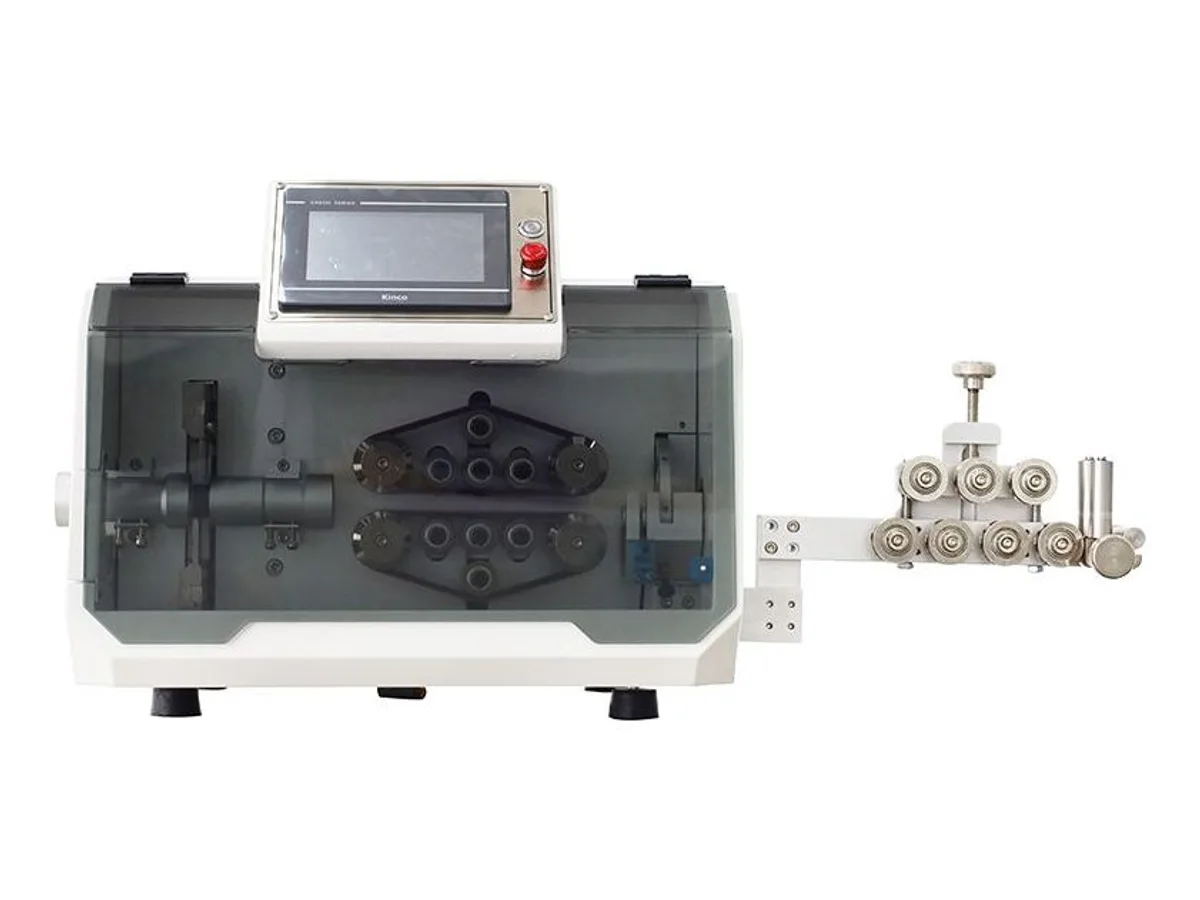
Automatic Cable and Hose Cutting Machine with 800 mm Front Cable Stripping
Model WM-1222
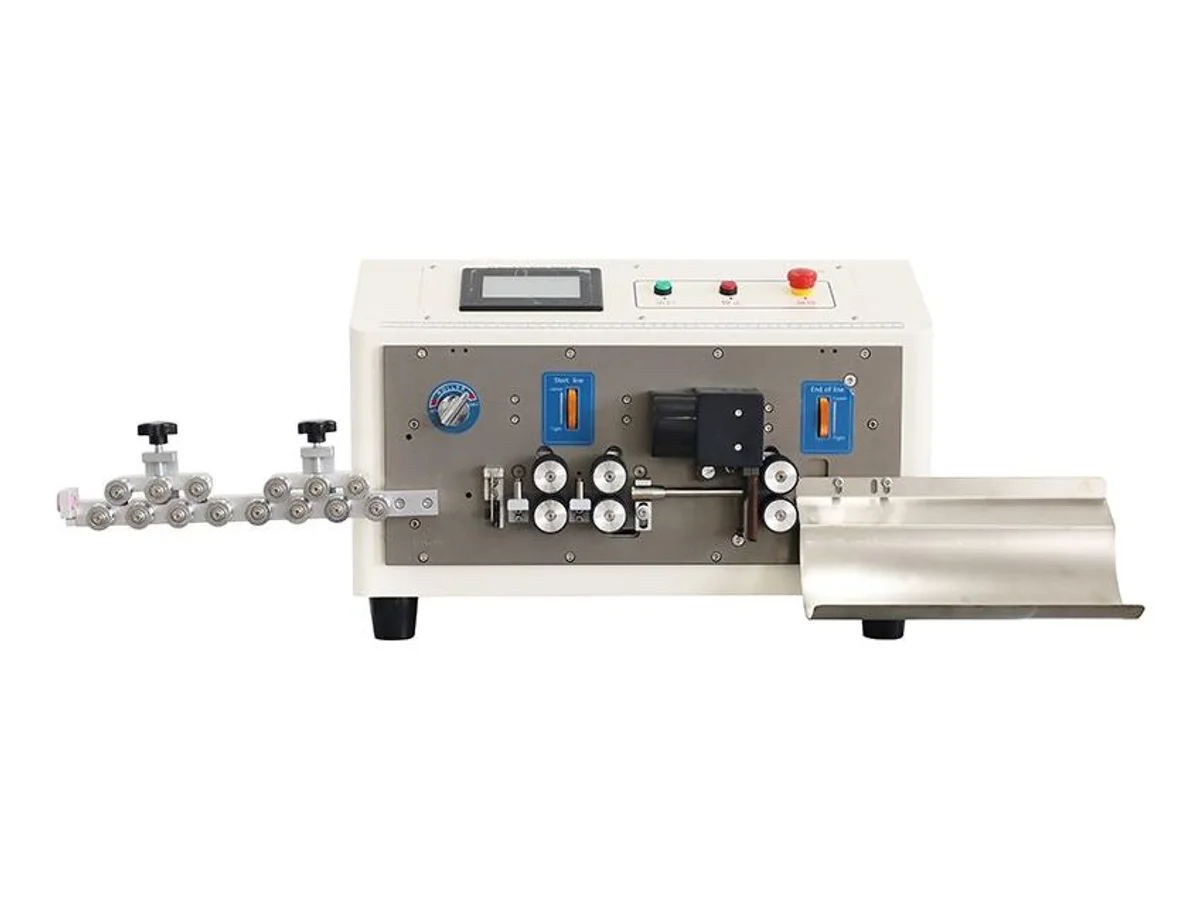
Automatic Sheathed Cable Cutting and Jacket Stripping Machine, Ø1–12 mm
Model WM-1306
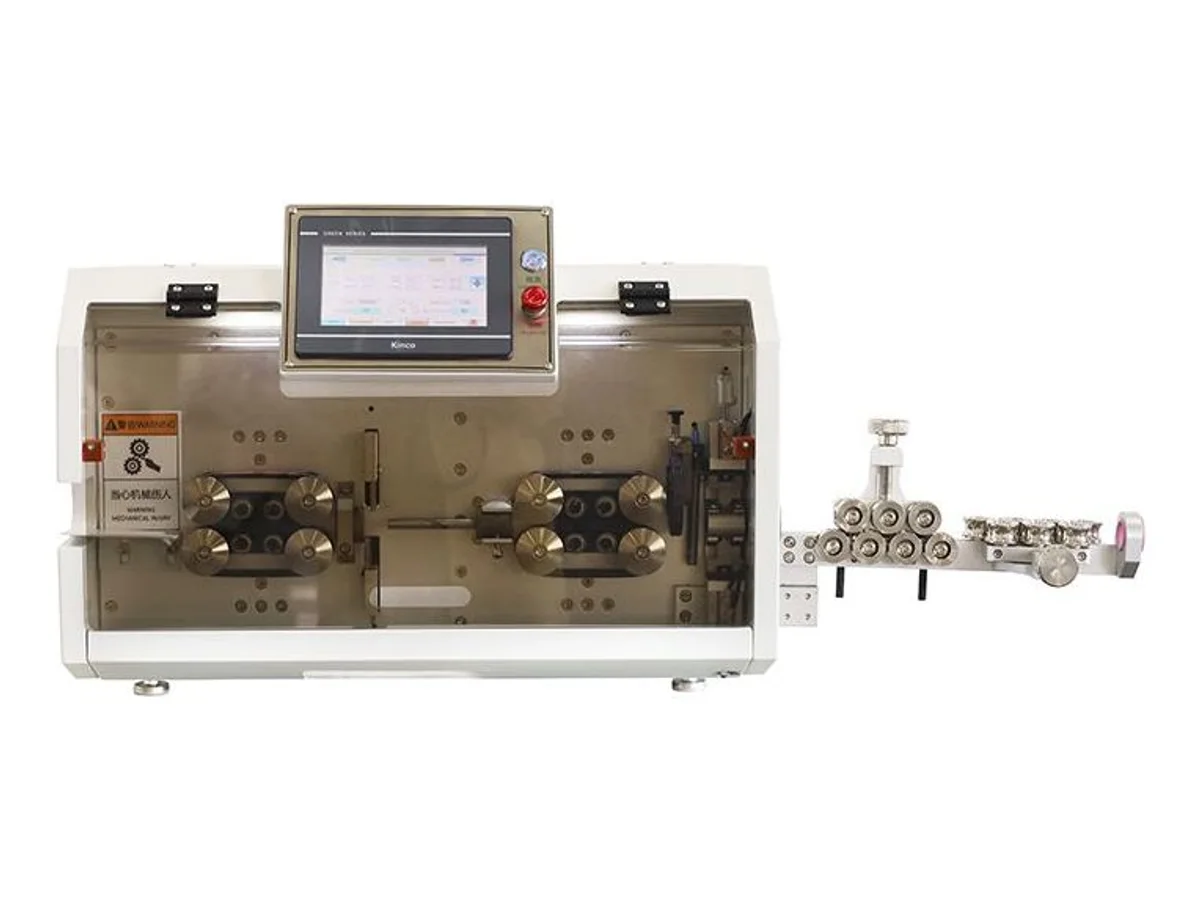
Automatic Cable Cut and Strip Machine with 50-Segment Middle Stripping
Model WM-190