Dual Wire Cutting Stripping and Twisting Machine — Alternate Build WM-187B
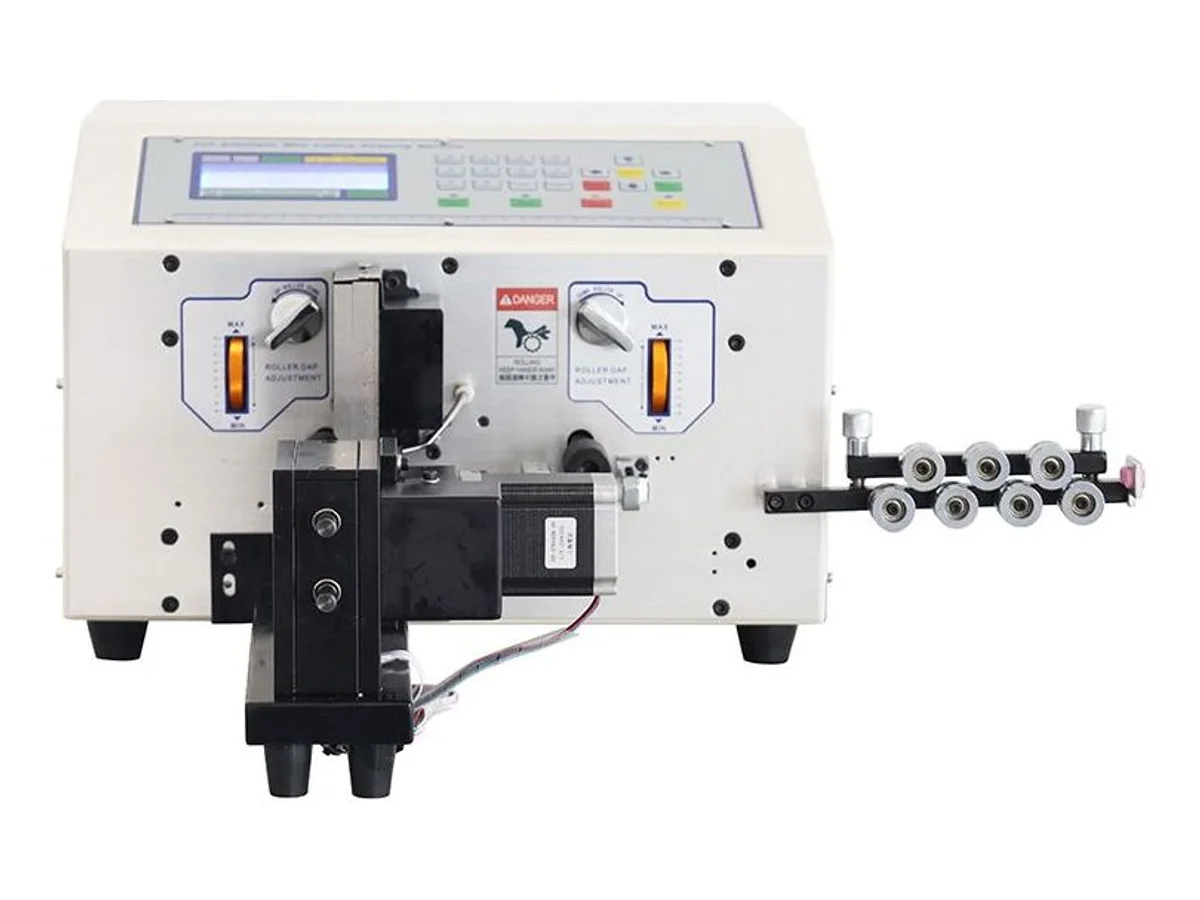
Our WM-187B combines wire cutting, insulation stripping and end-strand twisting to reduce hand preparation before soldering. It handles one wire at 0.1–4.5 mm² or two wires at 0.1–2.5 mm² each. This is an alternate build of our WM-187, quoted separately; the specified output is 4,000–10,000 pcs/h, with the working rate checked on your wire and program.
Specifications
| Function | Wire cutting, stripping and end-strand twisting |
|---|---|
| Wire materials | PVC, PTFE, silicone and glass-fiber insulated wire |
| Single-wire range | 0.1–4.5 mm² |
| Double-wire range | 0.1–2.5 mm² per wire |
| Production rate | 4,000–10,000 pcs/h |
| Display | English / Chinese LCD |
| Guide tube diameter | Φ13 mm |
| Cutting length | 0.1–100,000 mm |
| Cutting tolerance | 0.002 × L (L = cutting length) |
| Middle stripping | Up to 13 sections |
| Stripping length | Head 0.1–250 mm; tail 0.1–150 mm |
| Accessories | Wire tray, rubber roller, wire straightener |
| Power | 200–450 W |
| Power supply | 220 V / 110 V |
| Dimensions | 420 × 390 × 280 mm |
| Gross weight | 40 kg |
| HS Code | 8463.90 (common reference — final classification confirmed by your customs broker) |
| Certification | CE (certificate provided with shipment) |
Key features
- Keep end preparation in one process: cutting, stripping and strand twisting reduce the repeated handling between the cutter and the soldering bench.
- Prepare two matching wires in the same program at up to 2.5 mm² each, helping repeat orders move through the bench with fewer loading cycles.
- Program up to 13 middle strip sections for wiring that needs several exposed connection points, reducing separate measuring and manual stripping steps.
- Match the setup to your insulation: we run your sample wire and show the stripped ends and twist on video so you can judge strand condition before ordering.
- Start with usable controls: we set the voltage for your country and ship the English interface and manual.
What it processes
- Stranded hookup wire preparation before soldering in appliance, lighting and electronic assemblies
- Repeated pairs of single-insulation wires at 0.1–2.5 mm² per wire
- Jumper leads with programmed middle stripping sections
A soldering bench loses time when each cut wire still needs its ends stripped and gathered by hand. Our WM-187B brings those steps into one programmable process. For repeat runs, use the same wire construction in both paths and check the prepared ends against your assembly drawing.
Clean stripping comes before a tidy twist. We set up the blades and guides around the insulation on your actual wire, then show you the prepared ends on video. This makes the trial useful for judging the issues that stop assembly: incomplete insulation removal, damaged strands and an end that does not fit the next operation.
Send your wire specification, finished length, head and tail strip lengths, and the next assembly step. Include a sample for fine-stranded or difficult insulation. We use that information to confirm the setup, useful production rate and wear parts in your quote.
Engineering knowledge
Choose and troubleshoot this process
- Automatic vs Semi-Automatic Wire Processing EquipmentCompare automatic lines and semi-automatic wire-processing cells using batch size, changeover, process integration, inspection and labor content.
- Cut Lengths Drifting on a Full Spool: Pay-Off Tension, Straightener Bearings and MisfeedWhy a cut-and-strip machine that held length on a loose coil walks 10–20 mm once a heavy reel goes on, how misfeed detection works, and how to check reel tension, straighteners, feed grip and encoder calibration.
- How to Choose a Wire Cutting and Stripping MachineSelect a wire cutting and stripping machine by conductor size, cable construction, strip geometry, length tolerance, batch size and downstream process.
WM-187B — common questions
How is this different from WM-187?
WM-187B is an alternate build of our WM-187 and is quoted separately. Both offer single-wire and double-wire cutting, stripping and end-strand twisting. Use the specifications on this page for WM-187B, including its cutting tolerance; we confirm the supplied configuration and sample settings with your quote.
Does it twist two insulated wires together?
The twisting operation gathers the exposed strands at a stripped wire end. Double-wire mode means processing two wires in parallel; it does not mean making a twisted pair along their insulated length. Tell us whether you need end twisting or a finished twisted pair so we can select the right process.
Will it run my smallest wire without damaged strands?
The nominal range alone cannot settle that. Insulation thickness, conductor strand count, guide fit and blade setting all matter. Send your actual wire and required strip lengths; we prepare a trial and show the conductor after stripping, before twisting hides its surface.
Can I plan production around 10,000 pieces per hour?
The specified range is 4,000–10,000 pcs/h. Cut length, strip length, twisting and single- or double-wire operation change the working rate. We check your program on your material and report the observed rate for production planning.
Should every stripped end be twisted before crimping?
Follow the terminal and applicator requirements. Some terminations require untwisted strands. Tell us the next operation so we can confirm the appropriate end preparation instead of treating twisting as suitable for every connection.
What should I arrange for wire feeding and spare parts?
Tell us the reel dimensions and weight so we can match the incoming feed and avoid excessive pull on the wire. For blades, rollers and other wear parts, every quote lists them with unit price and the location they ship from.
Can it remove an outer jacket and then strip the inner cores?
For a defined outer-jacket and inner-core stripping sequence, see our WM-190N two-layer stripping and twisting machine. Send the cable construction and end drawing so we can check the required layers and lengths.
Related machines in Wire Cutting & Stripping
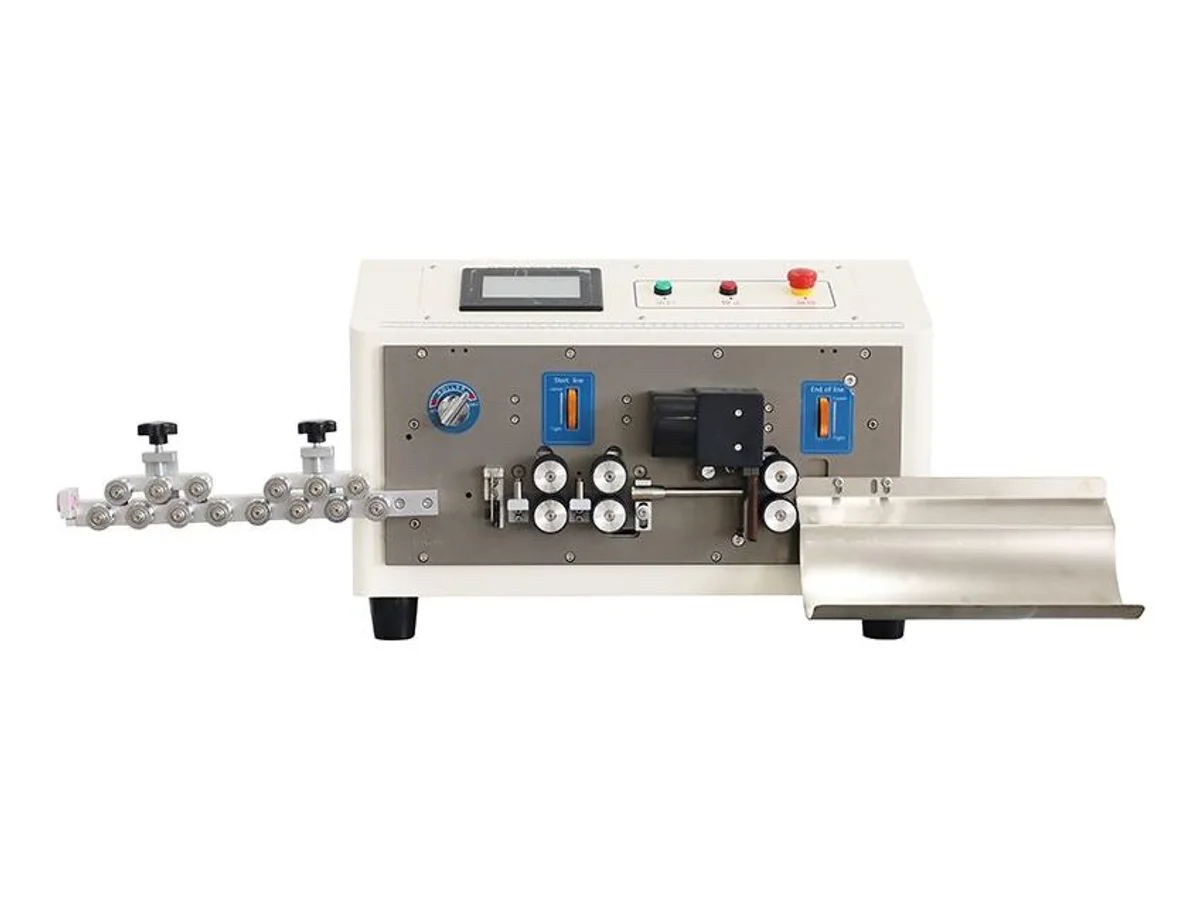
Automatic Cable Cutting and Stripping Machine for 1–12 mm Sheathed Cable
Model WM-1306
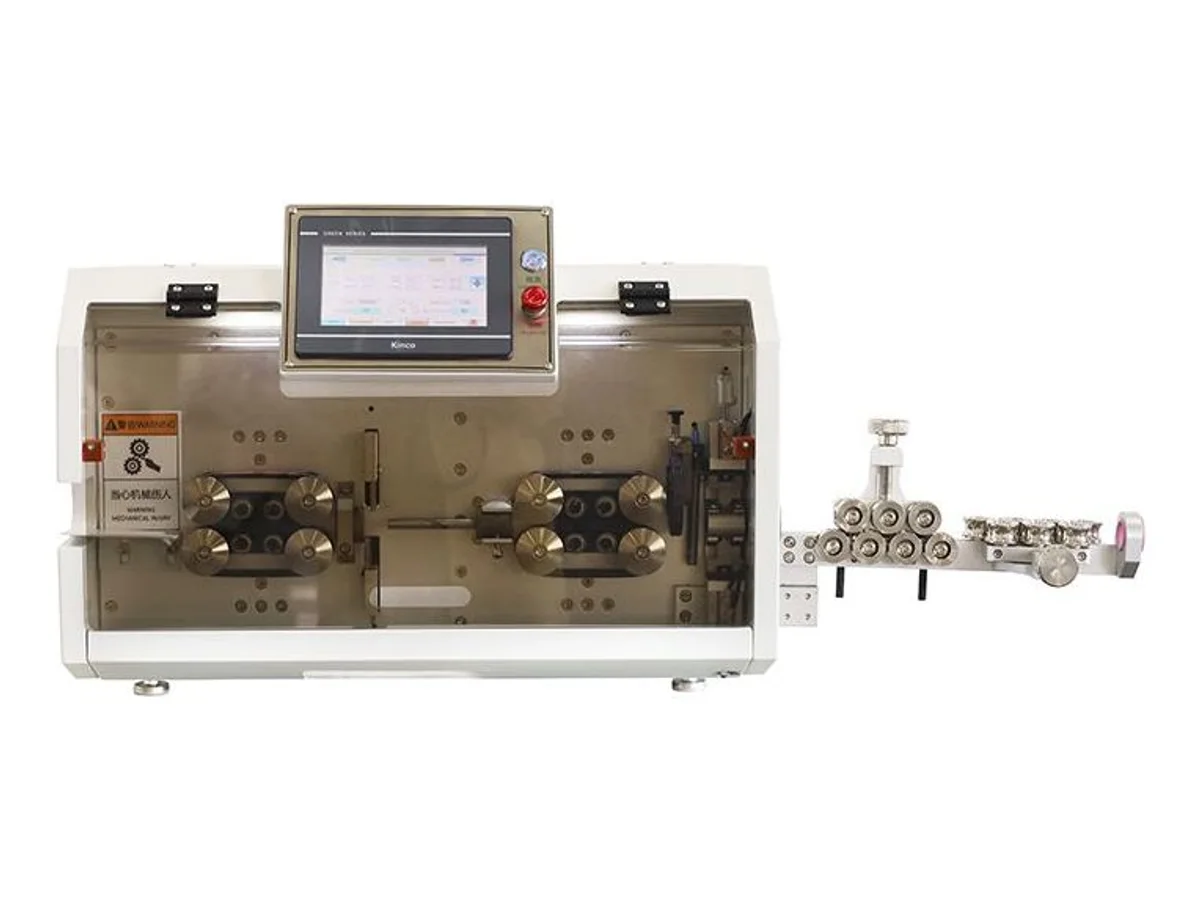
Automatic Cable Cut and Strip Machine with 50-Segment Middle Stripping
Model WM-190
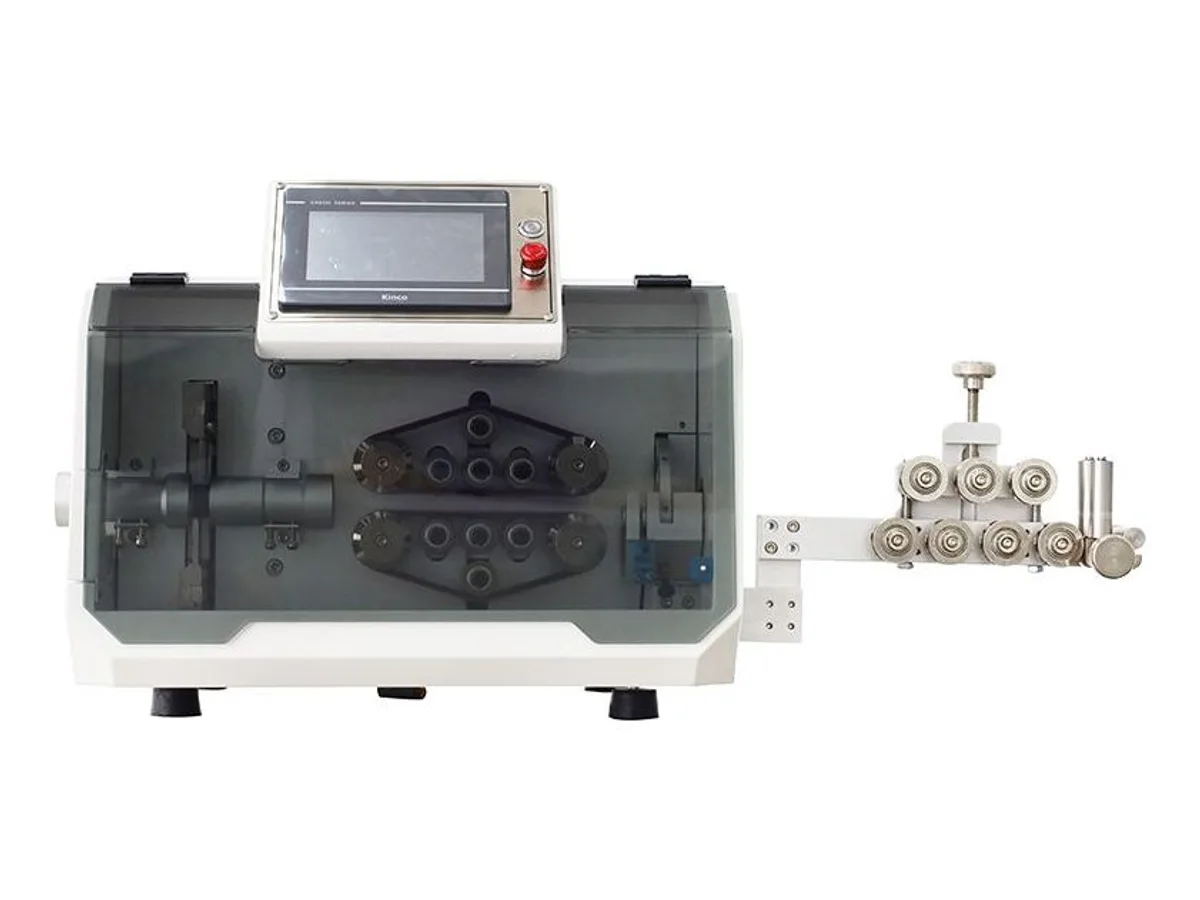
Automatic Cable Cutting Machine for 1–150 mm² Wire, Cable and Hose
Model WM-1222