Rotary Die Cutting Machine for Hook-and-Loop Shapes and Holes, up to 150 mm WM-589
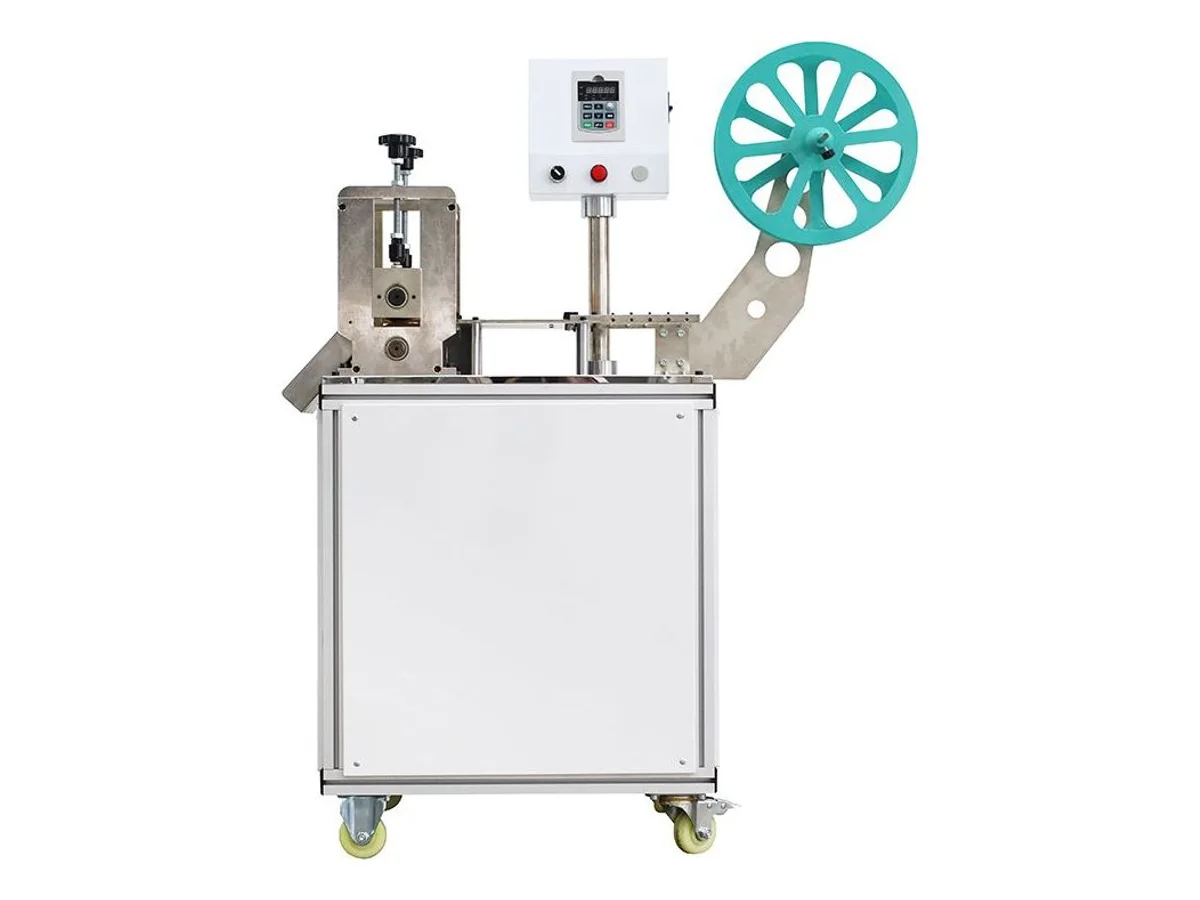
The WM-589 die-cuts hook-and-loop (Velcro) tape, non-woven fabric, leather and lace on the roll: an engraved cylindrical die turns against a rubber anvil roller at 1–30 rpm and the material is cut without ever stopping. It takes web up to 150 mm wide and under 5 mm thick, and the die outline plus every mounting hole come off the same tool in one revolution, so shaped patches need no second punching station. Rolling dies from 50 to 180 mm diameter are engraved to your drawing in high-hardness titanium alloy. The machine weighs 80 kg, measures 92 × 72 × 125 cm and draws 1.5 kW at 220/110 V.
Specifications
| Function | Rotary die (roll) cutting of tape and web material |
|---|---|
| Applicable materials | Leather, hook-and-loop (Velcro) tape, non-woven cloth, lace edge material, cotton, etc. |
| Cutting width | ≤ 150 mm |
| Rolling mold diameter | 50 – 180 mm |
| Material thickness | < 5 mm |
| Working speed | 1 – 30 rpm |
| Rolling mold | High-hardness titanium alloy, engraved to the required cutting shape; shoulders at both ends protect the engraving from wear |
| Tool change | Loosen the clamp screws — no special tooling |
| Power | 1.5 kW |
| Voltage / frequency | 220/110 V AC, 50/60 Hz |
| Weight | 80 kg |
| Dimensions | 92 × 72 × 125 cm |
| HS Code | 8451.50 (common reference — final classification confirmed by your customs broker) |
| Certification | CE (certificate provided with shipment) |
Key features
- Rotary die cuts on the roll — the web runs continuously between die and anvil instead of indexing and stopping for every cut, so output is set by die speed rather than by a chopping cycle
- Outline and holes come from one tool — the engraved die cuts the profile, the radiused corners and every mounting hole in the same revolution, with no separate punching station to register
- Cold cutting, no heater — nothing melts, so the cut face keeps the soft hand of the tape with no hardened bead along the edge and no burnt smell on the shop floor
- Dies are engraved in high-hardness titanium alloy to your drawing, from 50 to 180 mm diameter; the shoulder rings at both ends carry the load and keep the engraved area off the anvil
- Screw-down pressure adjusters over the die shaft set cut depth by hand, and the clamp screws release the die for a shape change without special tooling
What it processes
- Hook-and-loop cable ties, wrap straps and cable-management patches for wire harness and cable assembly plants
- Die-cut Velcro pads with mounting holes for footwear, medical braces, sports and protective gear
- Non-woven, leather, cotton and lace pieces cut to a repeating profile for garment, bag and packaging work
Suited for: hook-and-loop (Velcro) tape, non-woven fabric, leather, cotton and lace up to 150 mm wide and under 5 mm thick, cut into a repeating shape — rounded patches, profiled straps, pieces with mounting holes — where the same part runs by the thousand and the web should never stop.
Not suited for: work where the piece length is a number you program rather than a shape you tool. Straight cut-to-length of webbing and tape belongs on the WM-569 cold and hot blade tape cutting machine (up to 120 mm wide, 1–9,999 mm programmable), or on the WM-572A hot knife webbing cutting machine for material up to 220 mm wide. If the cut end must be fused so synthetic fibers cannot unravel, this cold die will not do it — the WM-574 ultrasonic rope and webbing cutting machine seals the fibers as it cuts on material 1–80 mm wide, including hook-and-loop. For angled ends — parallelograms, trapezoids, points — on material up to 100 mm, the WM-566 rotary blade webbing shape cutting machine swings its blade from 45° to 135° instead of using an engraved die; for an angled, heat-sealed end across webbing up to 170 mm wide — wider than this die takes — on pieces up to 2,000 mm long, use the WM-594 automatic oblique angle webbing cutting machine. Nothing here cuts round tube or cable; those live in the tube and pipe cutting category.
The die is the part that matters, and it is made per drawing — so send the piece you actually need, not a description. We cut your tape on this machine, film it, and you see the corners, the holes and the edge before any money moves.
Engineering knowledge
Choose and troubleshoot this process
- How to Choose a Tube and Pipe Cutting MachineChoose tube and pipe cutting equipment by material, diameter, wall thickness, rigidity, cut mechanism, tolerance, end quality and chip-control requirements.
- Spiral Cutting vs Rotary Cut-Off for Silicone TubeA 5 mm silicone-tube inquiry shows why a rotating blade does not prove spiral-cut capability. Define the helix, support and sample acceptance.
- Soft Hose Cutting: Control Stretch, Length and Cut EndsControl soft-hose cut length by checking relaxation, reel drag, feeding and measurement. Assess open bore and cut quality alongside length.
WM-589 — common questions
How is roll cutting different from a blade or hot-knife tape cutter?
A blade or hot-knife cutter indexes the tape forward, stops it, and drops a knife across it — one straight cut per cycle. The WM-589 does not stop the web at all: the shape is engraved around a cylindrical die that rolls against a rubber anvil roller, and the tape is cut as it passes through the nip at 1–30 rpm. That is why it produces profiles, radiused corners and punched holes rather than square-ended lengths, and why speed is set by die rpm and the number of shapes engraved around the die.
What decides the size and shape of the pieces?
The die does. Piece outline, corner radius and hole pattern are all engraved into the rolling mold, and the repeat length is fixed by the die circumference — it is not a length you type in. Dies are made in high-hardness titanium alloy from 50 to 180 mm diameter to your drawing, and change over by loosening the clamp screws. Send us the piece drawing with your inquiry and we quote the die together with the machine. If you need a programmable cut length instead of a fixed shape, this is the wrong machine — see the alternatives listed below.
What material sizes does it accept?
Web up to 150 mm wide and under 5 mm thick — hook-and-loop tape, non-woven fabric, leather, cotton and lace edge material. Wider or thicker material and hard round stock are outside its range. Send us 2–3 meters of your actual tape with the shape you want and we cut it on this machine on video before you commit to the order.
Related machines in Tube, Tape & Material Cutting
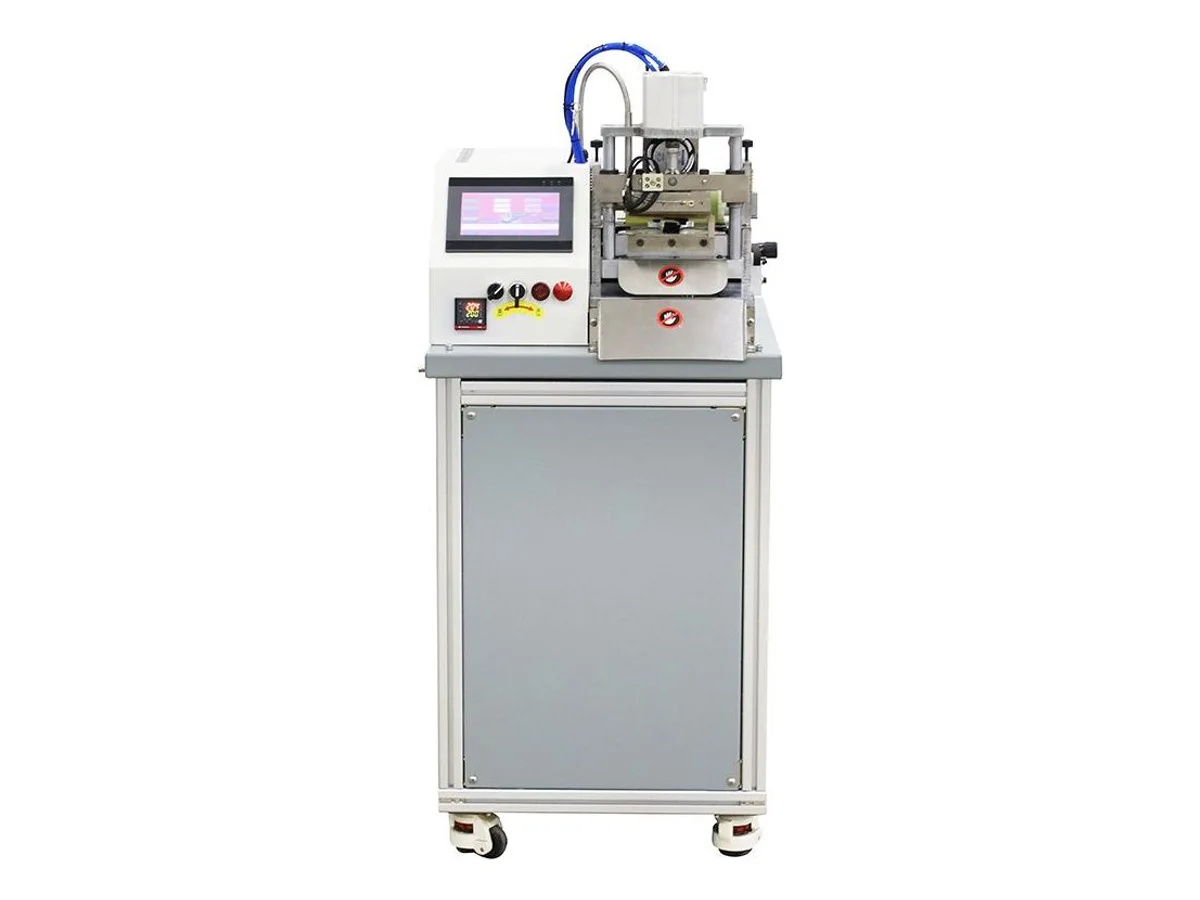
Hot and Cold Webbing Shape Cutting Machine, 45–135°
Model WM-566
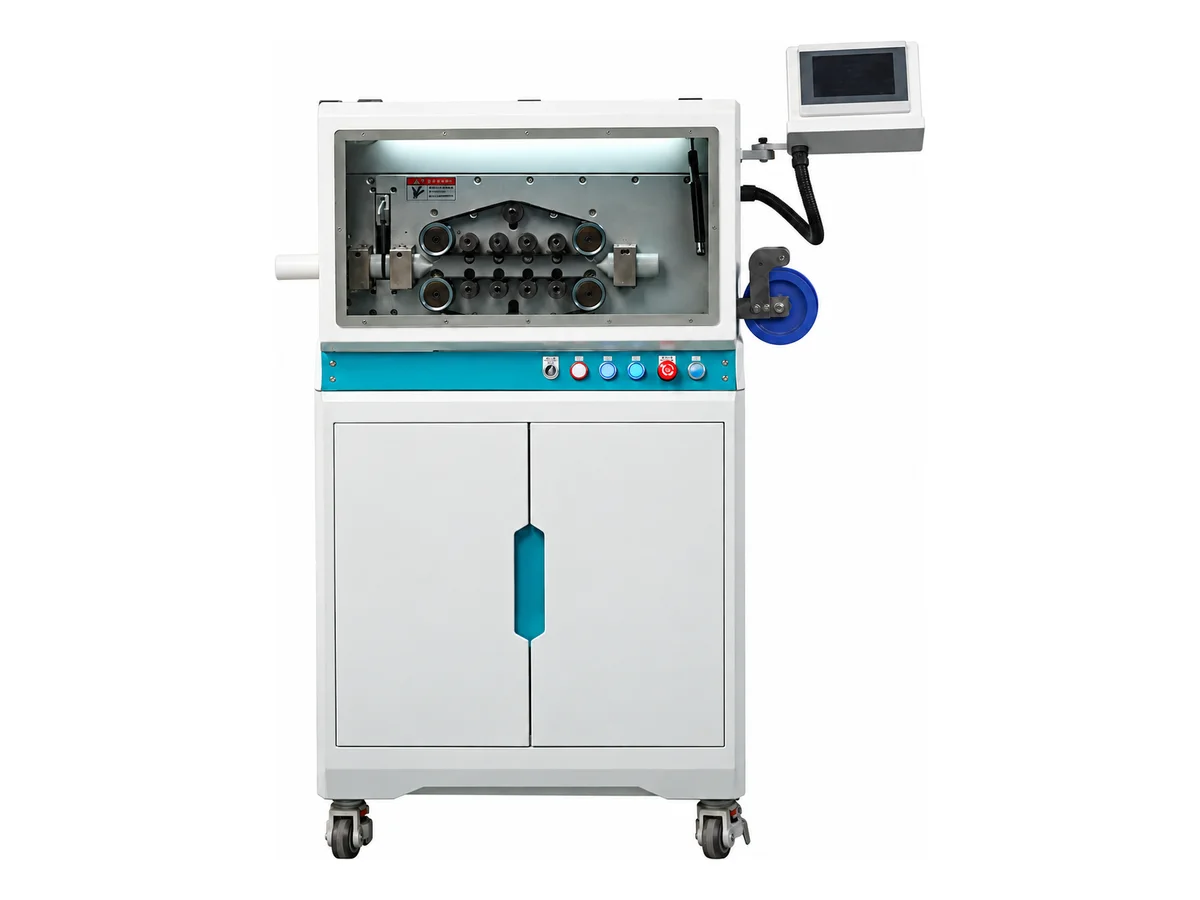
Automatic Plastic Tube Cutting Machine for Ø4–30 mm Tube
Model WM-606
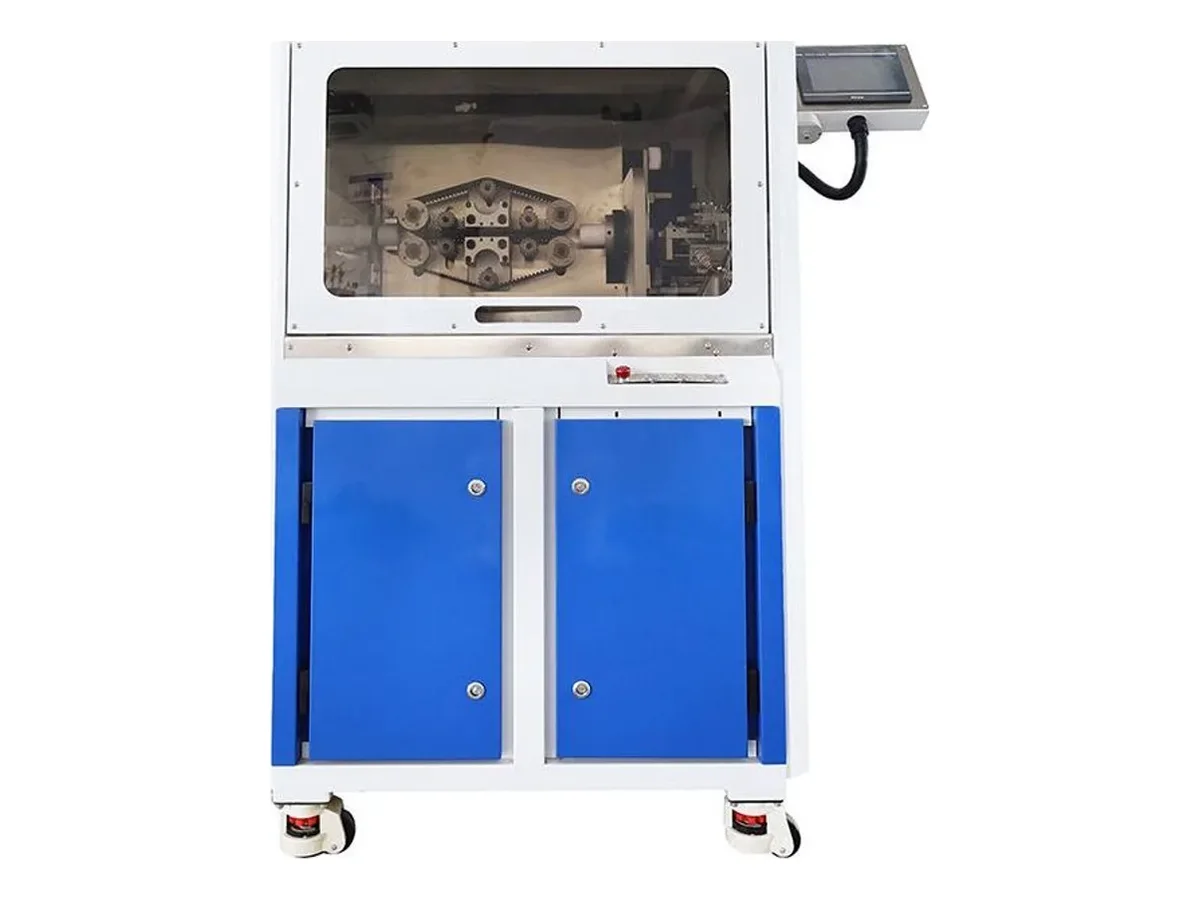
Automatic Braided Sleeve Taping and Cutting Machine for OD 8–30 mm Tube
Model WM-177