Hot-Knife Angle Cutting Machine for Webbing up to 170 mm Wide WM-594
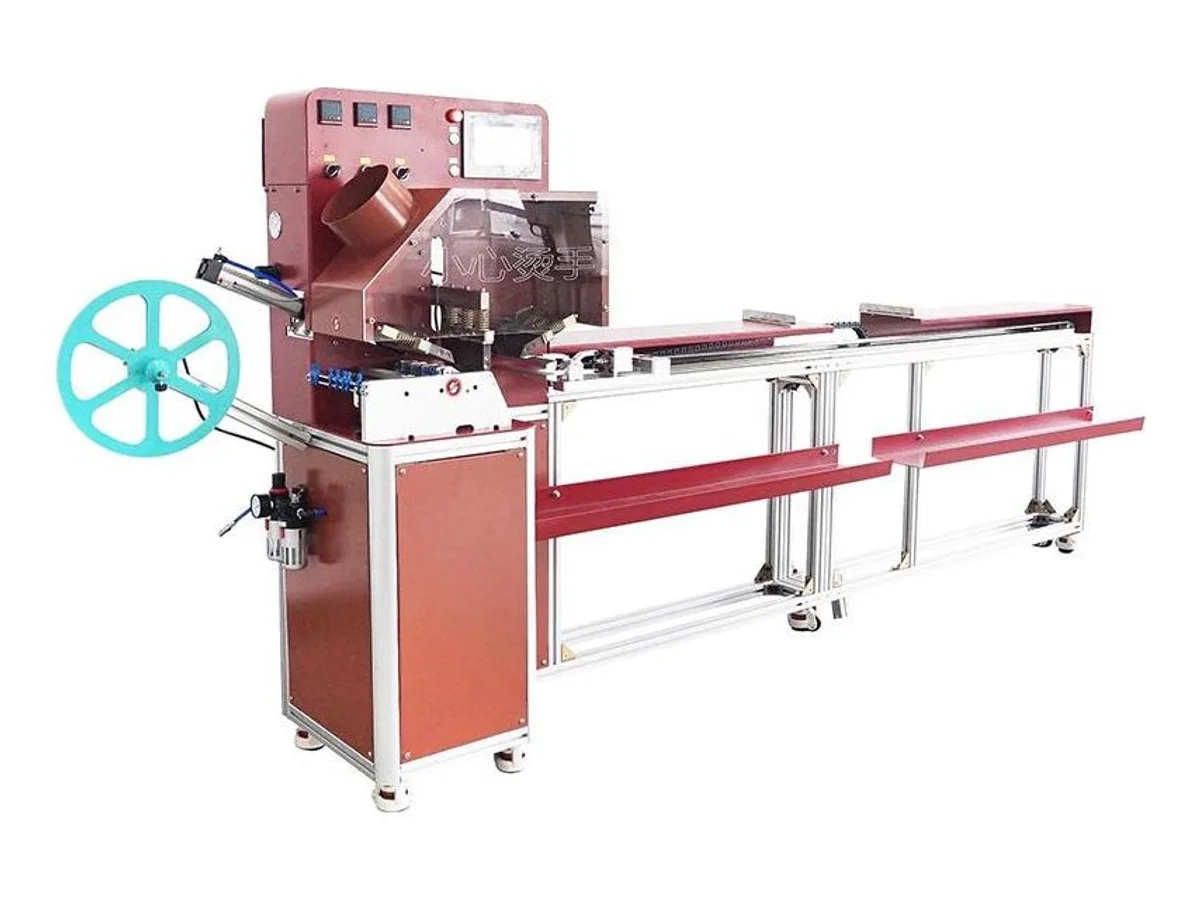
The WM-594 cuts woven webbing and strap at an oblique angle across widths up to 170 mm, in pieces up to 2,000 mm long. Three separately heated blade stations — left, centre and right, each with its own temperature controller and its own jog control on the touch screen — put an angled or square end on the piece and fuse the cut face as they sever it. A servo puller runs the full length of a 3,250 mm supported outfeed table, so a two-metre strap is drawn out flat instead of dropping in a coil. Rated 3.5 kW at 220 V with 4 Kgf/cm² air, the line weighs 237 kg and measures 3,250 × 550 × 1,550 mm.
Specifications
| Function | Oblique (angle) and square cutting of woven webbing and strap, heated blade |
|---|---|
| Cutting length | 2,000 mm |
| Cutting speed | 3 times/minute |
| Max. cutting width | 170 mm |
| Voltage | 220 V |
| Power | 3.5 kW |
| Air pressure | 4 Kgf/cm² |
| Weight | 237 kg |
| Dimensions | 3,250 × 550 × 1,550 mm |
| HS Code | 8461.50 (common reference — final classification confirmed by your customs broker) |
| Certification | CE (certificate provided with shipment) |
Key features
- Oblique cutting at full 170 mm width — the angled cut is not narrowed down to a thin chamfer, so wide backpack, sling and harness webbing gets the same slanted end as narrow tape
- Three separately heated blade stations, left, centre and right, each with its own temperature controller on the panel and its own control on the screen — angled ends and square ends come off the same head
- Heated blade fuses the cut face as it severs, so the angled end leaves the machine sealed and does not unravel along the bias
- Servo puller on a full-length linear rail draws each piece out along a 3,250 mm supported table, keeping straps up to 2,000 mm flat and measured instead of coiled
- PLC touch screen with an English interface — piece counter, target quantity, pull position and reject position are all set on the page, no parameter box on the side
What it processes
- Pet leads, collars and harness straps cut to length with an angled, sealed end
- Luggage, backpack and sports equipment webbing where the strap tip is angled to thread a buckle or slider
- Wide woven strap and flat braid for clothing, plush toy and general assembly work
- Hook-and-loop and identification webbing for wire harness shops, where an angled tip threads a loop or keeper more easily than a square one
Suited for: woven webbing and strap that has to leave the machine with an angled, sealed end — up to 170 mm wide and up to 2,000 mm long, drawn out flat on a supported table. We designed it for pet leads and harness straps; luggage, sling and sports webbing run the same way.
Not suited for: short, fast piece work. At 3 cuts/min this is a long-piece machine, not a volume tape cutter. For narrow tape at speed with a programmable blade angle, the WM-566 rotary blade webbing shape cutting machine swings its blade from 45° to 135° and stores parallelogram, trapezoid and pointed-end programs — note its chamfer cut is limited to 50 mm wide material, which is where the WM-594 takes over. For bevelled and arrow ends on reel-fed ribbon at 60–80 pieces per minute with an 18 kHz ultrasonic head instead of a hot blade, use the WM-567 ultrasonic ribbon and tape cutting machine. For a shape machined into hardened tooling and rolled through a hook-and-loop web up to 150 mm wide, use the WM-589 rotary die velcro tape roll cutting machine. And if the end only has to be square, the WM-572A hot knife webbing cutting machine takes material up to 220 mm wide at 121 pieces per minute. Wire and cable are not webbing — those belong on the wire cutting and stripping machines.
Blade angle, blade temperature and material thickness limits are confirmed on the quote. Send your webbing specification and target end shape; we run cut samples and confirm the configuration before you order.
Engineering knowledge
Choose and troubleshoot this process
- How to Choose a Tube and Pipe Cutting MachineChoose tube and pipe cutting equipment by material, diameter, wall thickness, rigidity, cut mechanism, tolerance, end quality and chip-control requirements.
- Spiral Cutting vs Rotary Cut-Off for Silicone TubeA 5 mm silicone-tube inquiry shows why a rotating blade does not prove spiral-cut capability. Define the helix, support and sample acceptance.
- Soft Hose Cutting: Control Stretch, Length and Cut EndsControl soft-hose cut length by checking relaxation, reel drag, feeding and measurement. Assess open bore and cut quality alongside length.
WM-594 — common questions
What cut angle does the WM-594 produce?
The blade angle is confirmed on the quote for your requested end shape, within the specified width and length limits. The sample pieces shown have slanted, sealed ends. Send your webbing and target angle; we confirm the blade setting and return cut samples before ordering.
Why is it three metres long when the cut is only 170 mm wide?
Because the piece can be up to 2,000 mm long. The cutting head sits at one end and a servo puller draws the cut length out along a supported outfeed table, so a two-metre lead or sling strap stays flat and straight while it is measured and cut. Benchtop tape cutters count the same length but drop it into a bin, which is fine for a 100 mm label and useless for a two-metre strap.
Will it cut cotton or other natural-fibre webbing?
It will sever it, but the seal comes from melting synthetic fibre. Polyester, nylon and polypropylene webbing fuse along the cut and stay closed; cotton and cotton blends are cut cleanly but the face behaves like a scissor cut and can still fray. Send us a roll and we will cut it on this machine and post the pieces back so you can judge the edge yourself.
Does it come with a CE certificate?
Yes. We ship the CE certificate with the machine.
Related machines in Tube, Tape & Material Cutting
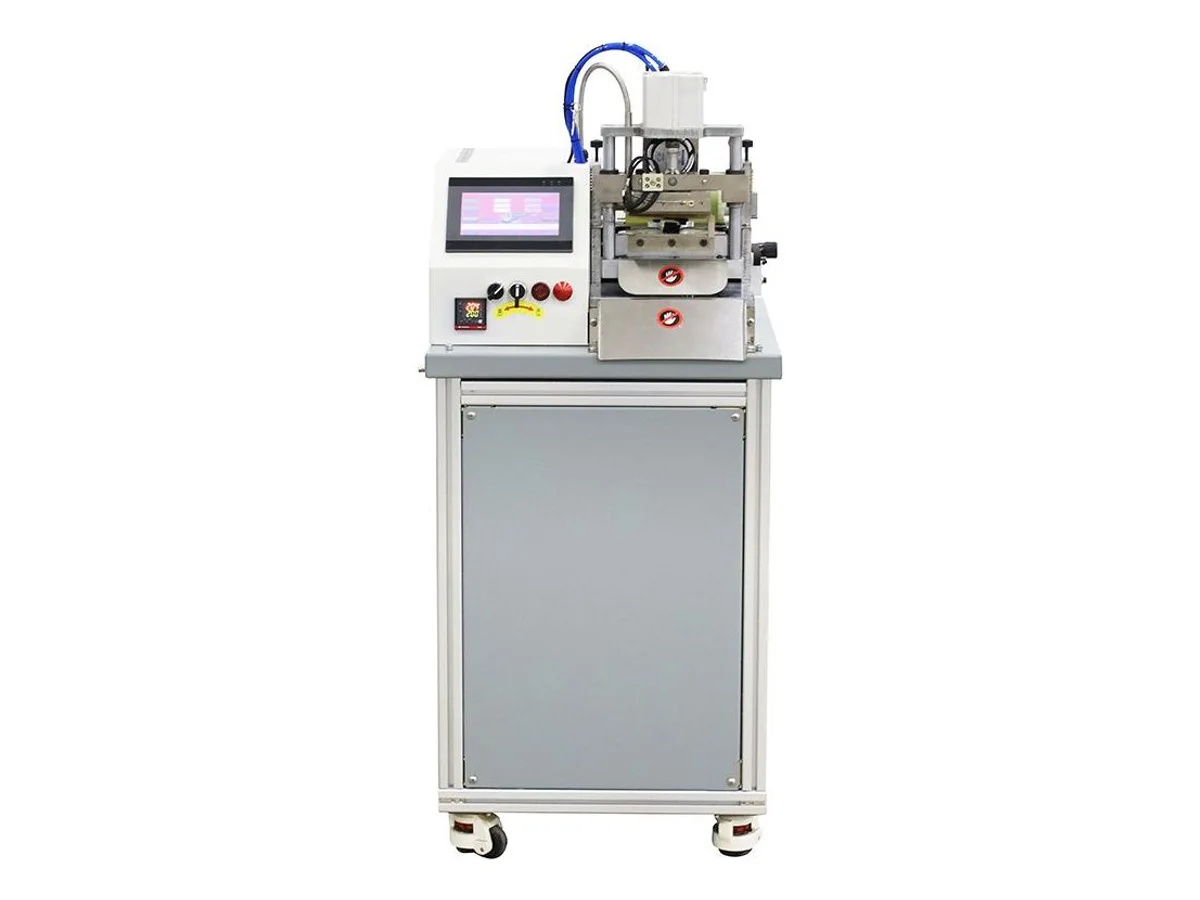
Hot and Cold Webbing Shape Cutting Machine, 45–135°
Model WM-566
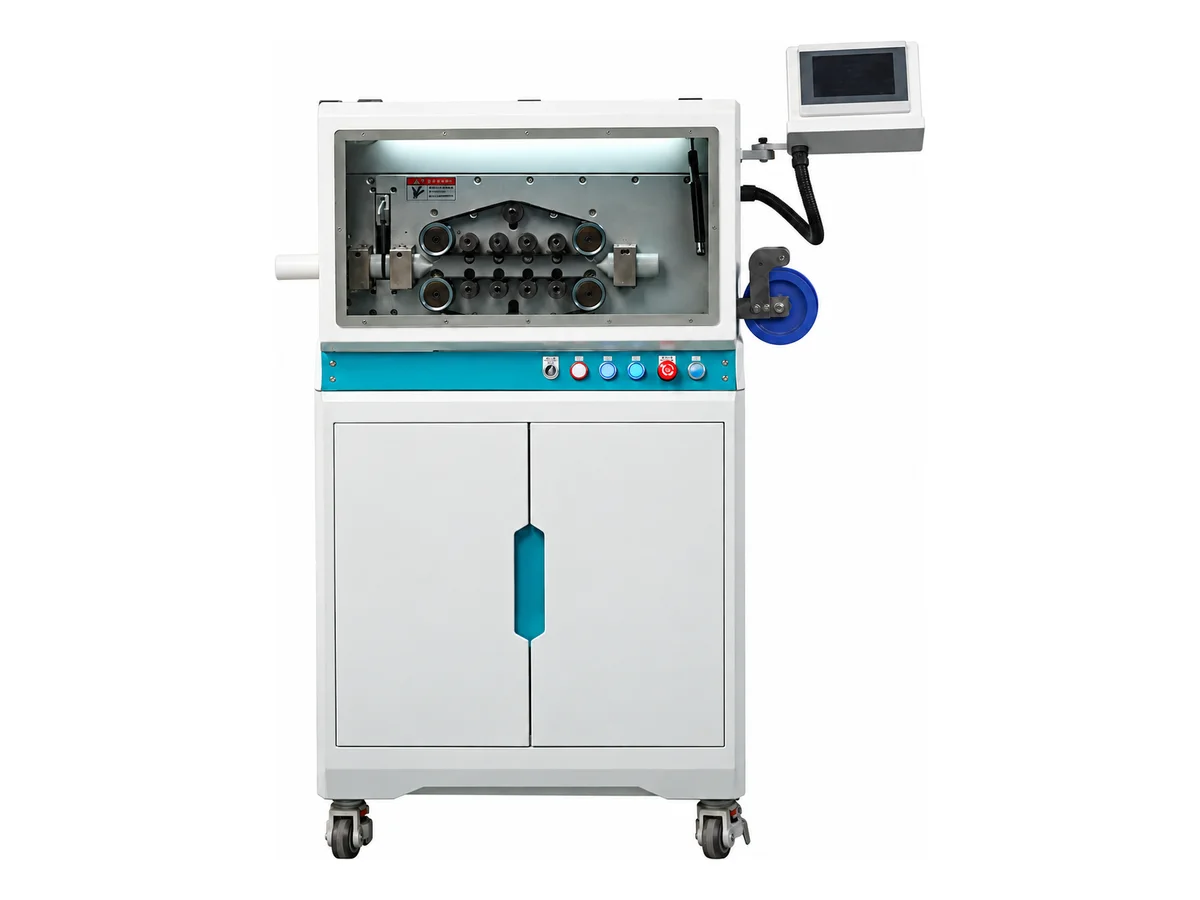
Automatic Plastic Tube Cutting Machine for Ø4–30 mm Tube
Model WM-606
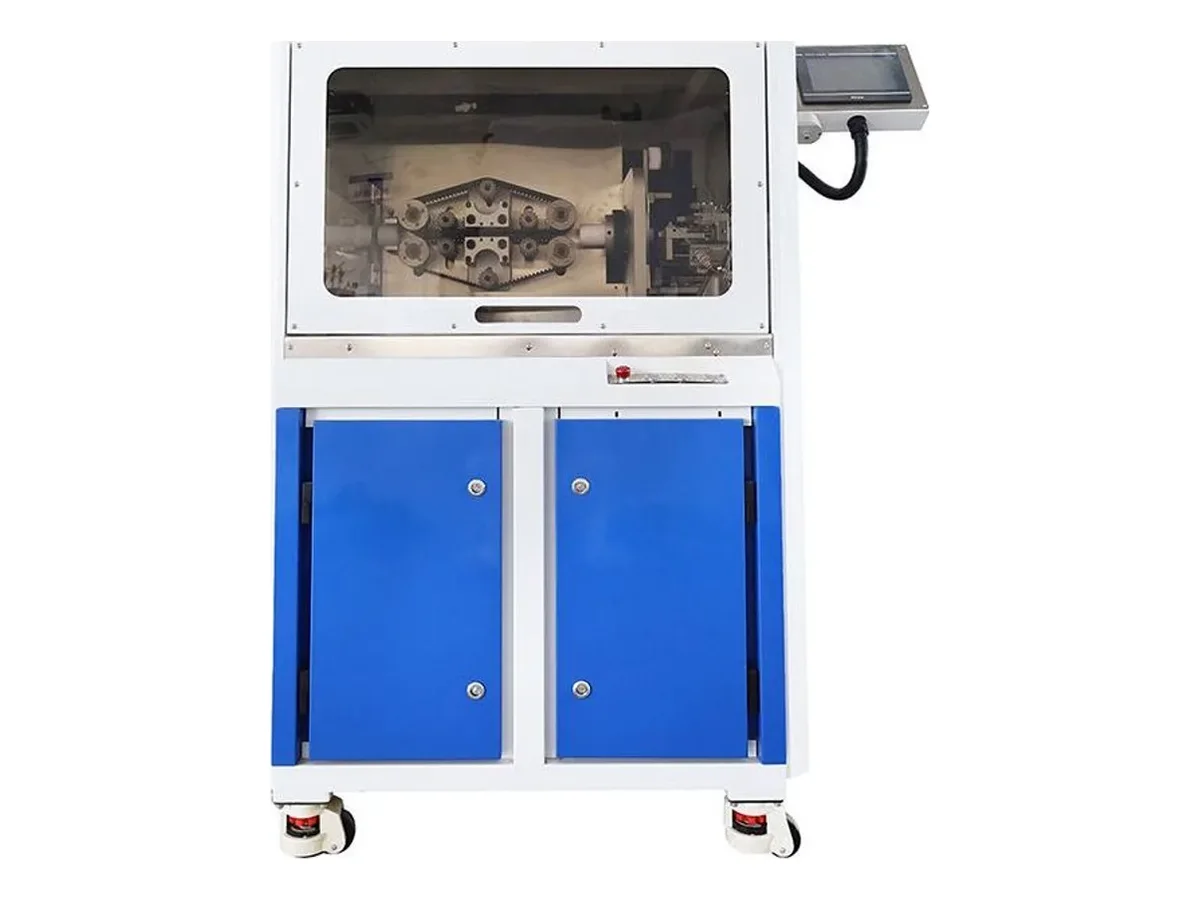
Automatic Braided Sleeve Taping and Cutting Machine for OD 8–30 mm Tube
Model WM-177