Semi-Automatic Wire Seal Insertion Machine for Waterproof Harnesses, 0.6–3.0 mm Seal Bore WM-3221
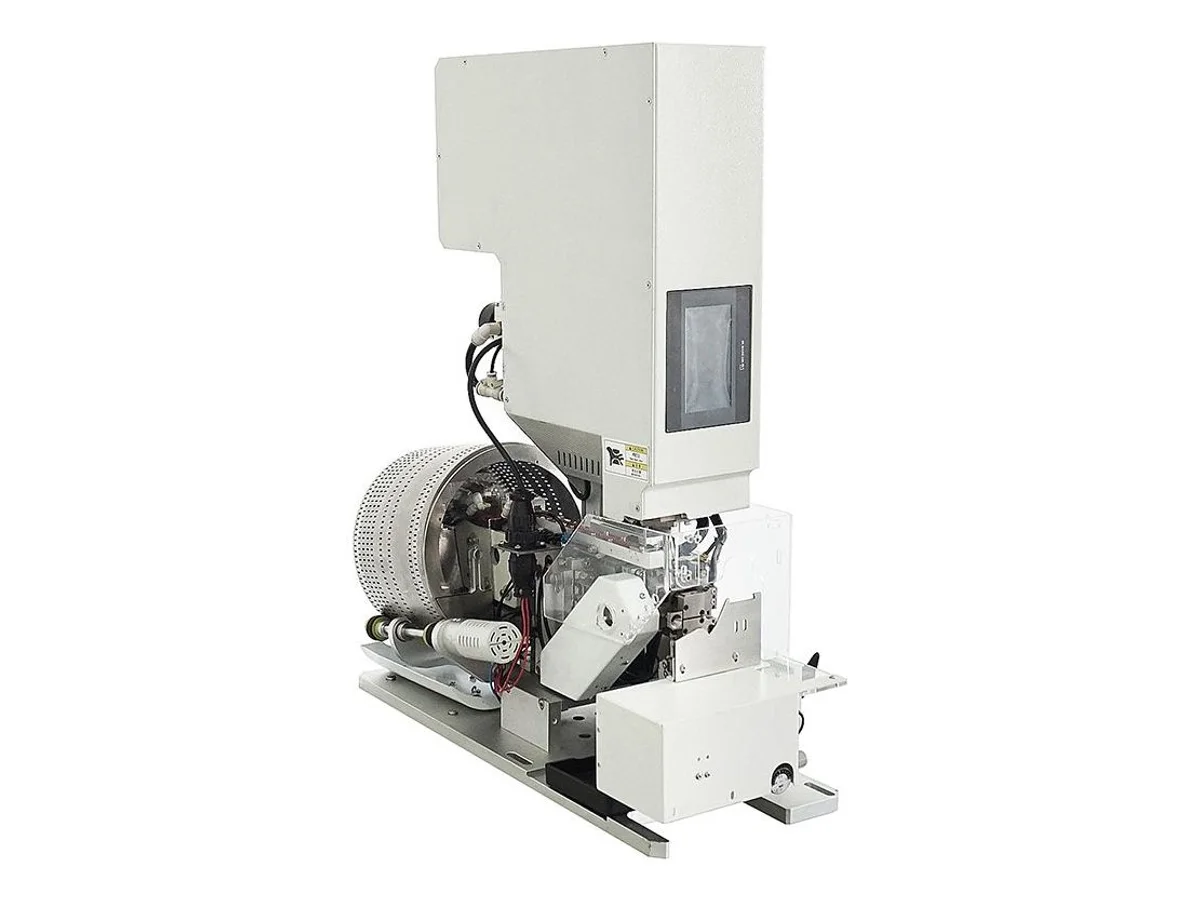
The WM-3221 is a single-purpose seal station: it fits waterproof rubber seals onto wire ends and does nothing else, so shops that already own crimping presses can add the seal step without buying another crimper. It handles seals up to 9 × 10 mm with a 0.6–3.0 mm bore on wire of 1–3.5 mm outer diameter, pushing the seal up to 10 mm along the wire to within ±0.3 mm. The rotary drum feeds and orients the seals; the operator only presents the wire, at up to 50 insertions per minute of machine cycle.
Specifications
| Function | Waterproof rubber seal insertion onto wire ends (semi-automatic) |
|---|---|
| Size of seals | Max. 9 × 10 mm (outer diameter × length) |
| Inner diameter of seals | 0.6 – 3.0 mm |
| Max. insertion length | 10 mm |
| Outer diameter of the wire | 1 – 3.5 mm |
| Inner sheath length of multi-core wire | > 38 mm |
| Working efficiency | 50 times/min (not counting manual handling speed) |
| Accuracy | ±0.3 mm |
| Power supply | 200 V, 50 Hz, < 150 W |
| Cycle trigger | Foot pedal or timed automatic repeat |
| Seal feeding | As pictured — rotating perforated stainless steel drum with a transparent front baffle, feeding a straight rail to the insertion head |
| Changeover | Interchangeable seal tracks and insertion modules |
| Display | As pictured — colour touchscreen HMI, English interface |
| Guarding | As pictured — transparent safety cover over the insertion head |
| HS Code | 8463.90 (common reference — final classification confirmed by your customs broker) |
| Certification | CE (certificate provided with shipment) |
Key features
- One job only — seal insertion, so it drops in beside the crimping presses you already run instead of replacing them
- Rotary perforated drum feeds and orients bulk seals automatically; the transparent baffle lets the operator see the seal level and top it up without stopping to open a hopper
- Foot pedal for hand-paced work or timed repeat for steady batch running — the same machine suits a prototype bench and a production cell
- Seal tracks and insertion modules swap out by hand, so a change of seal size is a tooling change rather than a rebuild
- ±0.3 mm insertion accuracy keeps the seal at the same distance from the wire end across a batch, which is what makes the downstream crimp repeatable
- Free sample test — send your wire and seals, we run them on this machine and send you the video plus the sample leads before you order
What it processes
- Automotive waterproof connector leads — engine bay, lighting and sensor harnesses built on single-wire rubber seals
- Harness shops that already crimp in-house and only need the seal step mechanised
- Prototype and low-volume sealed leads where a fully automatic seal-and-crimp line cannot be justified
- Repair, service and after-market harness work where seals are fitted onto pre-made leads
Suited for: adding a mechanised seal station to a harness shop that already crimps — single wires of 1–3.5 mm outer diameter, rubber seals up to 9 × 10 mm with a 0.6–3.0 mm bore. If your seals are larger than 9 × 10 mm, the same job is done by the WM-3231 large rubber seal insertion machine, which takes seals up to 13 × 14 mm at 60 cycles per minute on a 36 kg bench frame. If the seal has to be fitted and crimped at one station, the WM-3222 strip, seal and crimp machine adds stripping and a 2 T press on a single-position bench, at 1,200–1,500 pieces per hour.
Not suited for: jobs that need the seal fitted and the terminal crimped in one pass — that is the WM-3140FS double wire seal insertion and crimping machine, which runs 0.2–2.5 mm² wire with seals up to φ 10 × 10 and a 3 T press at 1,000–1,200 pcs/h. For a fully automatic line that cuts, strips, seals and crimps both ends unattended, pick the WM-377 double-end wire seal insertion and crimping machine at 3,000 pcs/h for AWG 28–16.
The published data sheet gives no machine dimensions or weight, and no air-pressure figure — the machine carries an onboard filter-regulator unit, so tell us your shop air supply in the inquiry and we will confirm both the footprint and the air requirement in writing before you commit.
Engineering knowledge
Choose and troubleshoot this process
- Ferrule Crimping: Strip Length, Terminal Fit and Chain-Fed vs Loose-Fed MachinesCompare chain-fed and loose-ferrule crimping machines by wire preparation, changeover, terminal fit and batch output. Check WM-3243 and WM-3246 specifications.
- How to Choose a Terminal Crimping MachineChoose a terminal crimping machine by terminal presentation, wire range, applicator standard, required process steps, inspection method and production mix.
- Terminal Back-Out After Housing Insertion: What to CheckFind why a crimped terminal backs out of its connector housing. Check part matching, orientation, crimp shape, primary retention and secondary locks.
WM-3221 — common questions
Does the WM-3221 crimp terminals as well?
No. It inserts the waterproof seal and stops there — the wire then goes to your existing crimping press. That is the point of the machine: if you already own crimpers and applicators, you only pay for the missing station. If you would rather have both operations in one frame, the WM-3140FS fits the seal and crimps the terminal in the same cycle.
Which seals and wires will it take?
Seals up to 9 × 10 mm (outer diameter × length) with a bore of 0.6 to 3.0 mm, on wire of 1 to 3.5 mm outer diameter, pushed up to 10 mm along the wire. Feeding is the part that decides yes or no for any given seal shape, so send us a bag of your seals with matching wire — we run them, film the feeding and insertion, and send the sample leads back before you order.
How fast is it in practice?
The machine cycle runs at up to 50 insertions per minute, and the published figure explicitly excludes the operator's handling time. Real throughput therefore depends on how quickly the wire is presented and removed — treat 50/min as the ceiling of the machine, not a shift output, and tell us your batch size so we can estimate honestly.
Why does the data sheet mention a 38 mm inner sheath length?
On multi-core cable the individual inner wire has to stand clear of the outer jacket by more than 38 mm for the head to grip it and drive the seal on. Shorter breakouts than that will not feed. Single-core wire has no such restriction.
What does changing to a different seal size involve?
The seal track and the insertion module are replaceable parts, so a new seal size means fitting the matching track and module rather than modifying the machine. Send the seal drawings or samples with your inquiry and we will quote the tooling you need alongside the machine.
Related machines in Crimping & Connector Assembly
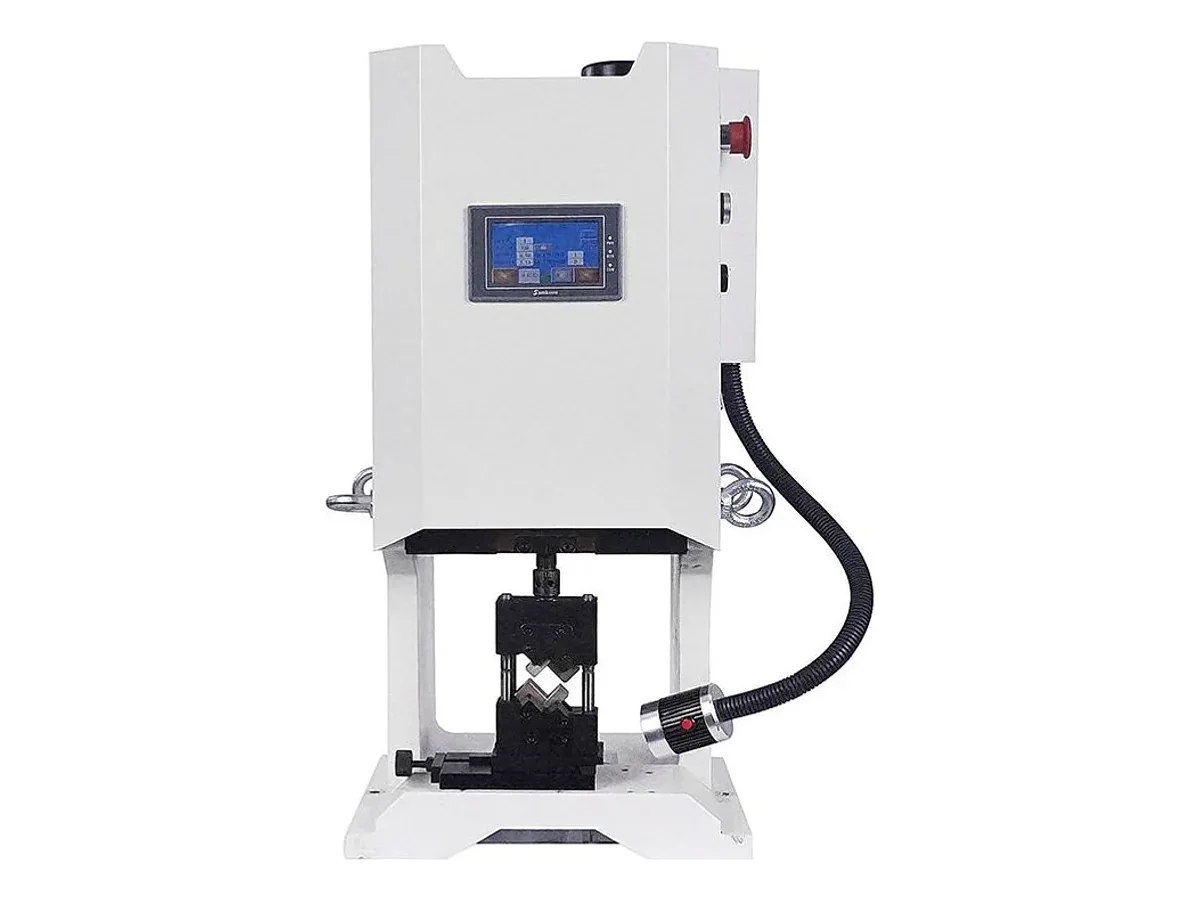
100 kN Semi-Automatic Servo Terminal Crimping Machine
Model WM-3110T
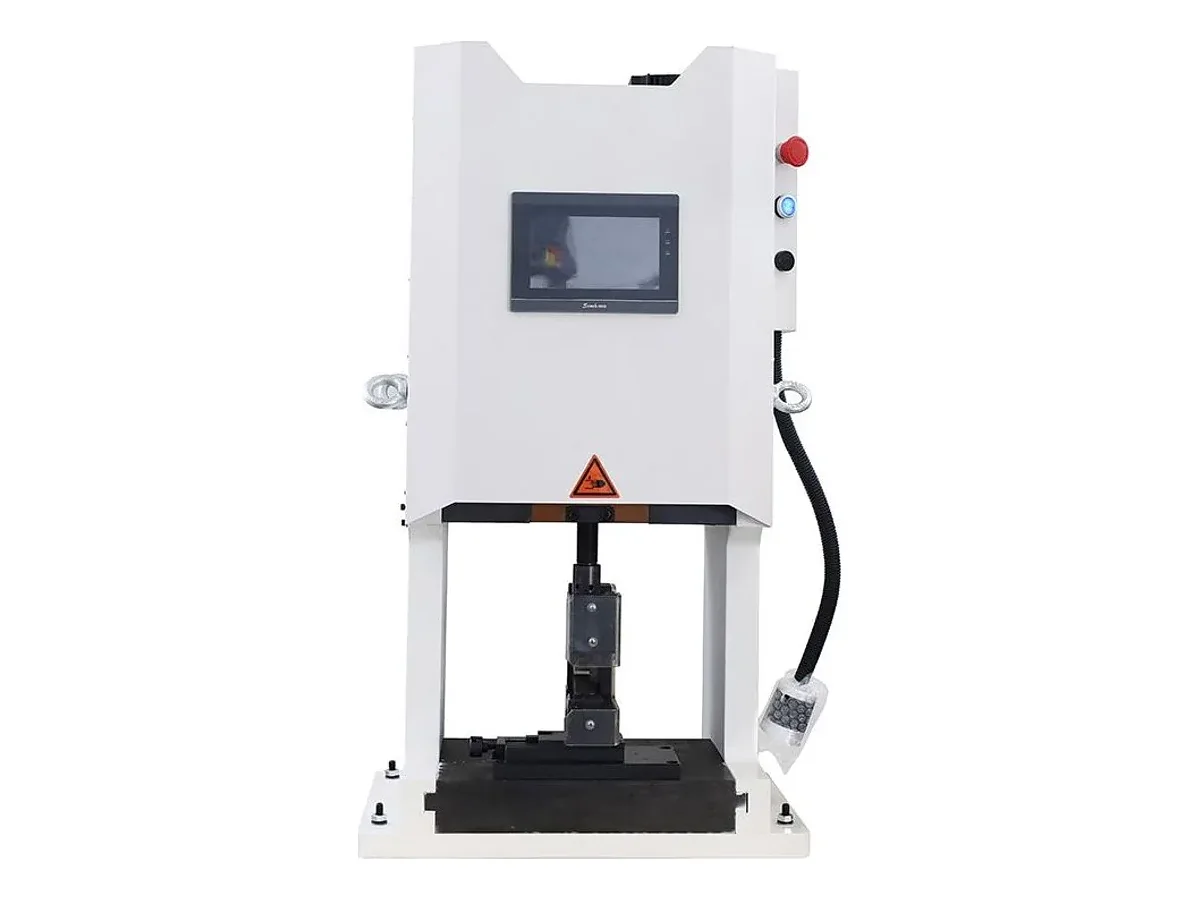
200 kN Semi-Automatic Servo Cable Lug Crimping Machine
Model WM-3120T
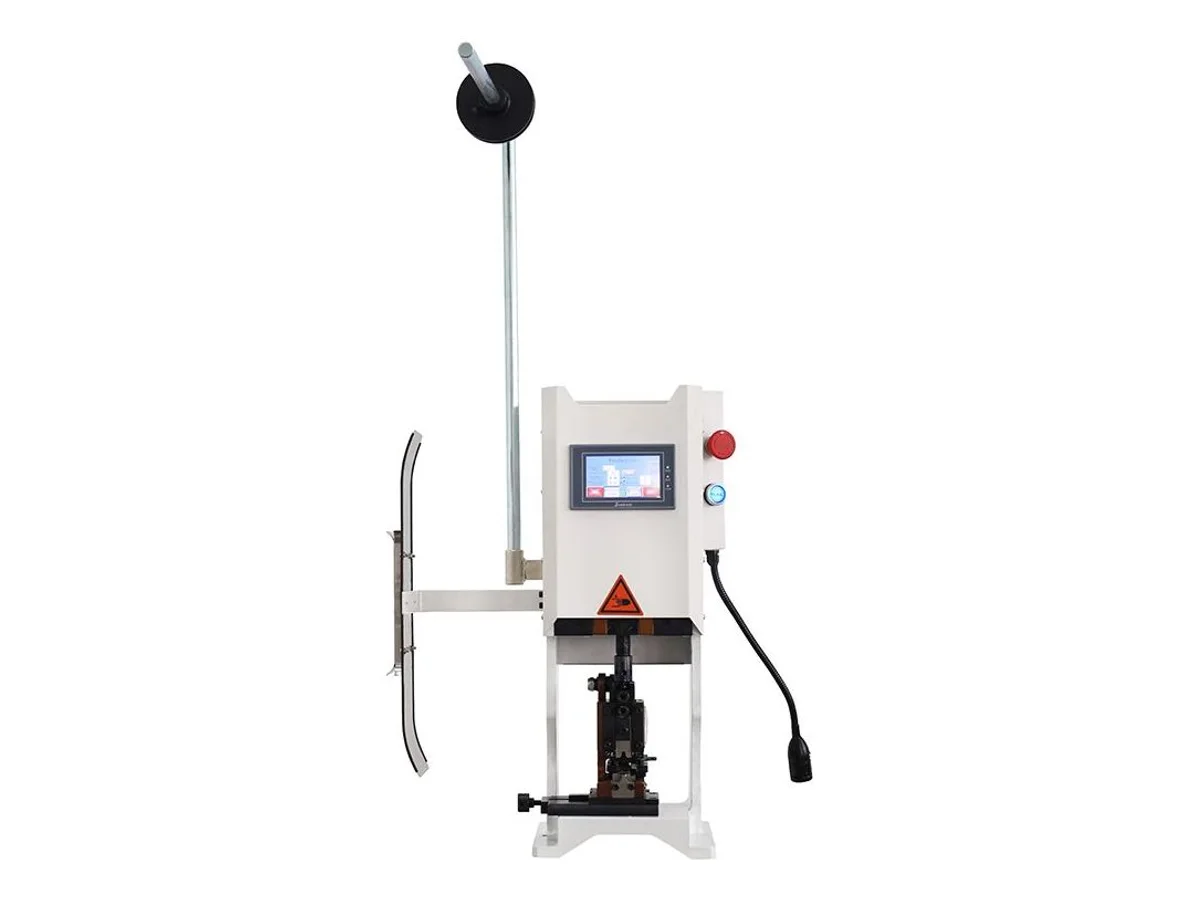
20 kN Semi-Automatic Servo Terminal Crimping Machine
Model WM-3102S