Automatic IDC Piercing Connector Crimping Machine for AWG 30–18 Wire WM-386
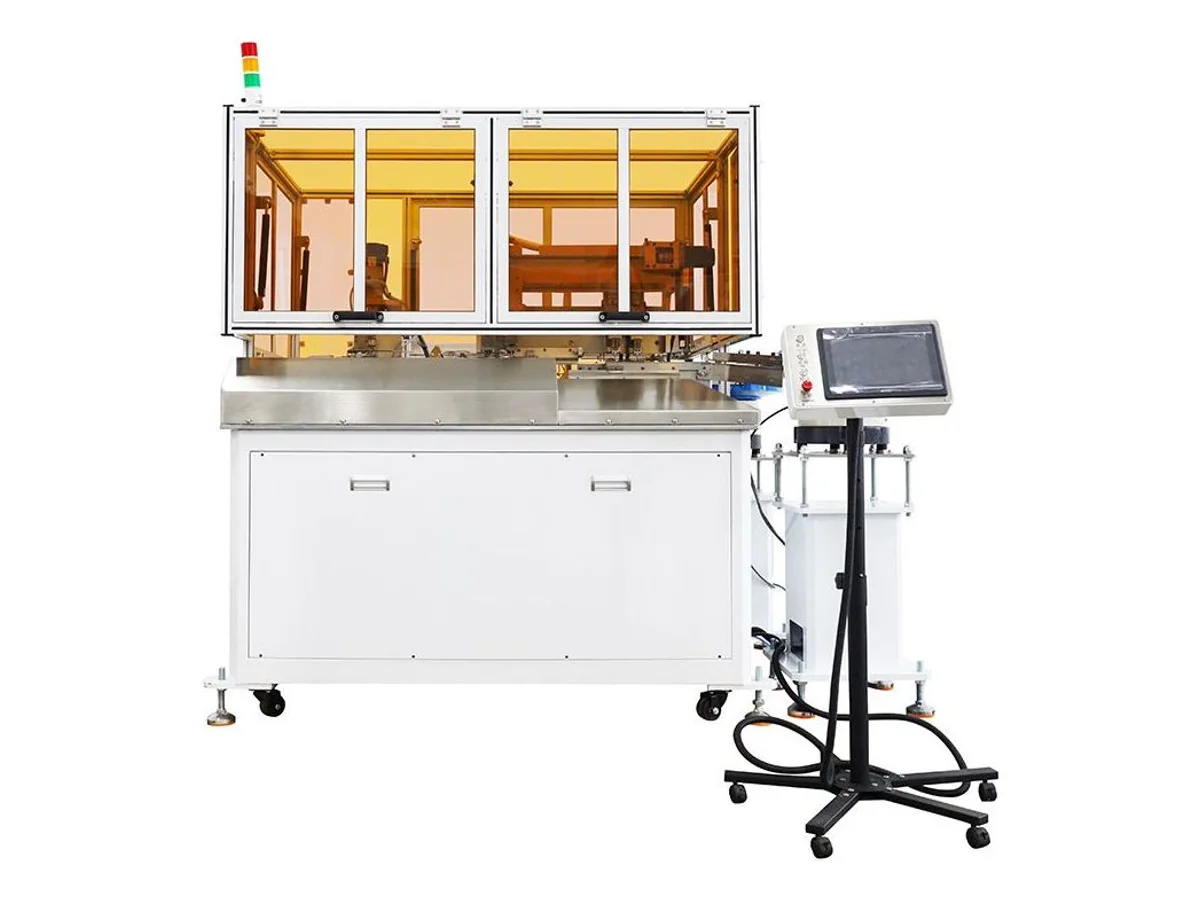
The WM-386 presses insulation-displacement connectors straight onto unstripped wire — it cuts to length and pierce-crimps housings on one end or both ends in the same cycle. It runs AWG 30–18 wire at 600 cycles per hour depending on length and pin count, across total lengths from 30 to 650 mm in double-end mode. Five Mitsubishi servo motors and three stepper motors drive the stations, with part-position, air-pressure and motor monitoring standard and crimp-quality detection optional. It draws 1,500 W from a 220 V supply and needs 0.5 MPa of compressed air.
Specifications
| Function | Wire cutting, single-end piercing crimping, double-end piercing crimping |
|---|---|
| Wire range | AWG 30 – AWG 18 (special wire can be customized) |
| Productivity | 600 cycles/h (depending on wire length and number of PIN positions) |
| Total cutting length | 30 – 650 mm (double-end piercing) |
| Crimping machine | Mitsubishi servo motor crimping |
| Motor | Mitsubishi servo motor (5 sets), stepper motor (3 sets) |
| Detection function | Abnormal induction of each part, crimping abnormality (optional), air pressure abnormality, motor abnormality |
| Power supply | AC 220 V, 50 Hz |
| Power | 1,500 W |
| Air pressure | 0.5 MPa |
| Dimensions | L 2,100 × W 800 × H 1,400 mm (excluding wire unwinding machine) |
| Weight | 420 kg (including vibration plate) |
| HS Code | 8463.90 (common reference — final classification confirmed by your customs broker) |
| Certification | CE (certificate provided with shipment) |
Key features
- Pierce-crimps IDC housings straight onto unstripped wire, removing stripping and loose-terminal handling from every lead
- Single-end and double-end piercing on one platform — pigtails and both-end jumpers run without changing machines
- Five Mitsubishi servo axes plus three steppers position wire and housings repeatably at up to 600 cycles per hour
- Vibratory bowl feeds housings while sensors watch part position, air pressure and motors on every cycle
What it processes
- LED lighting, cooling-fan and small-appliance jumpers with multi-pin IDC housings
- Signal harnesses in AWG 30–18 where unstripped termination cuts cost per lead
- Electronics plants replacing separate cut, strip and crimp benches with one piercing station
Suited for: multi-pin IDC leads in AWG 30–18 — LED, fan and appliance jumpers where housings pierce unstripped wire on one end or both, cut anywhere from 30 to 650 mm. Not suited for: open-barrel terminal crimping on stripped wire or connectors without piercing contacts — for those leads, pick the WM-376 double-end crimping and housing insertion machine, which builds the same multi-pin jumpers the strip-crimp-insert way across AWG 32–16; the other terminal crimping machines cover single-end and heavier-gauge work.
Piercing dies are matched to your exact housing, so acceptance happens on your parts: send 2–3 meters of your wire together with your IDC housings, and we run single-end and double-end cycles on this machine on video before you commit.
Engineering knowledge
Choose and troubleshoot this process
- Ferrule Crimping: Strip Length, Terminal Fit and Chain-Fed vs Loose-Fed MachinesCompare chain-fed and loose-ferrule crimping machines by wire preparation, changeover, terminal fit and batch output. Check WM-3243 and WM-3246 specifications.
- How to Choose a Terminal Crimping MachineChoose a terminal crimping machine by terminal presentation, wire range, applicator standard, required process steps, inspection method and production mix.
- Terminal Crimp Defects: Causes, Inspection and Corrective ActionsTroubleshoot low pull force, incorrect crimp height, strand loss, bellmouth defects, insulation support problems and inconsistent terminal feeding.
WM-386 — common questions
How is piercing termination different from ordinary crimping?
The connector's contacts cut through the insulation and bite the conductor directly, so the wire is never stripped and no loose terminal is fed. That removes two classic failure points on thin wire — strip nicks and misfed terminals — which is why IDC dominates low-voltage signal leads in this gauge range.
Can it put a connector on one end only?
Yes. Single-end piercing produces pigtail leads with the far end left plain, and double-end piercing produces jumpers with housings on both ends across total lengths of 30–650 mm. Housings feed automatically from the vibration plate in both modes.
What is the WM-386 not the machine for?
Crimping open-barrel terminals onto stripped wire is a different process — see the other terminal crimping machines for that. Wire outside AWG 30–18 needs a custom review, and your connector must be a piercing-type design for the process to work at all.
Related machines in Crimping & Connector Assembly
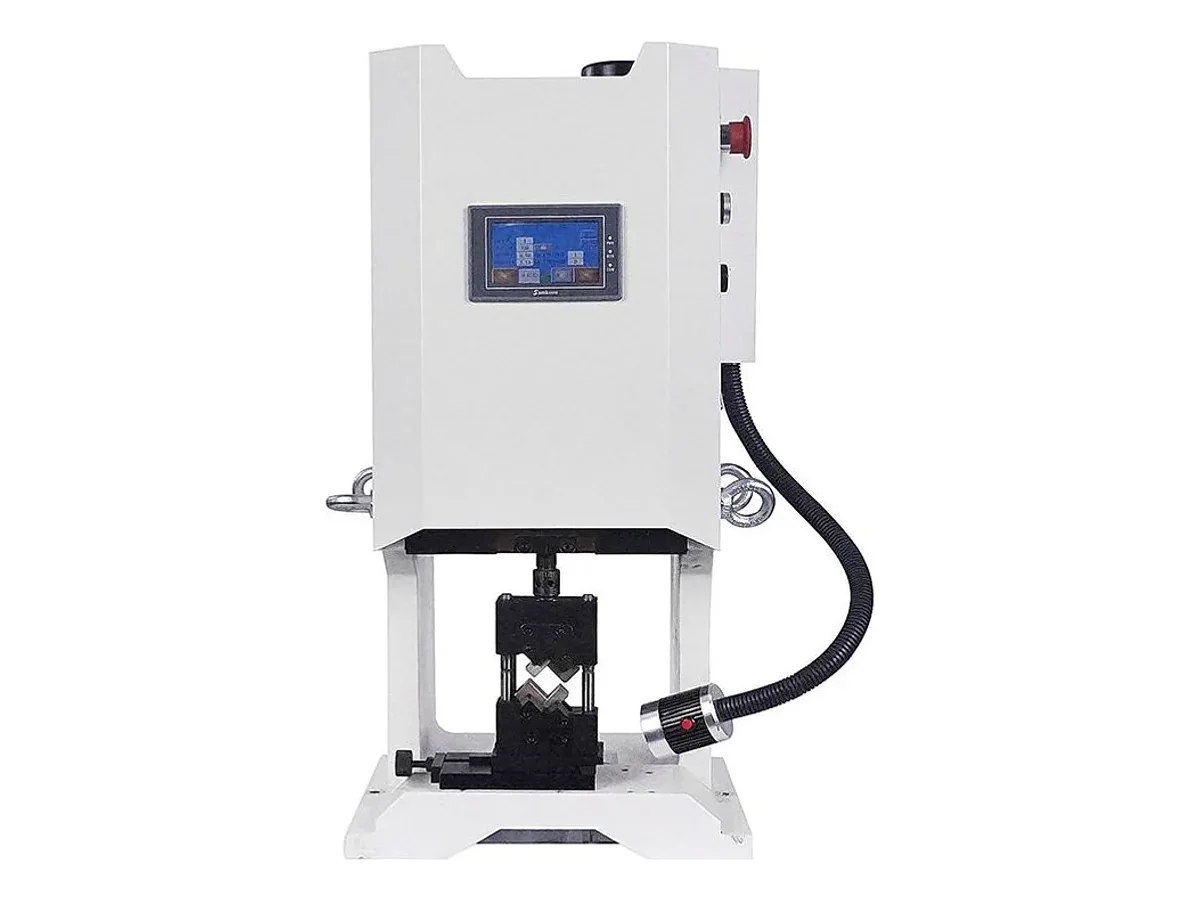
10-Ton Servo Terminal Crimping Machine, 100 kN Bench Press
Model WM-3110T
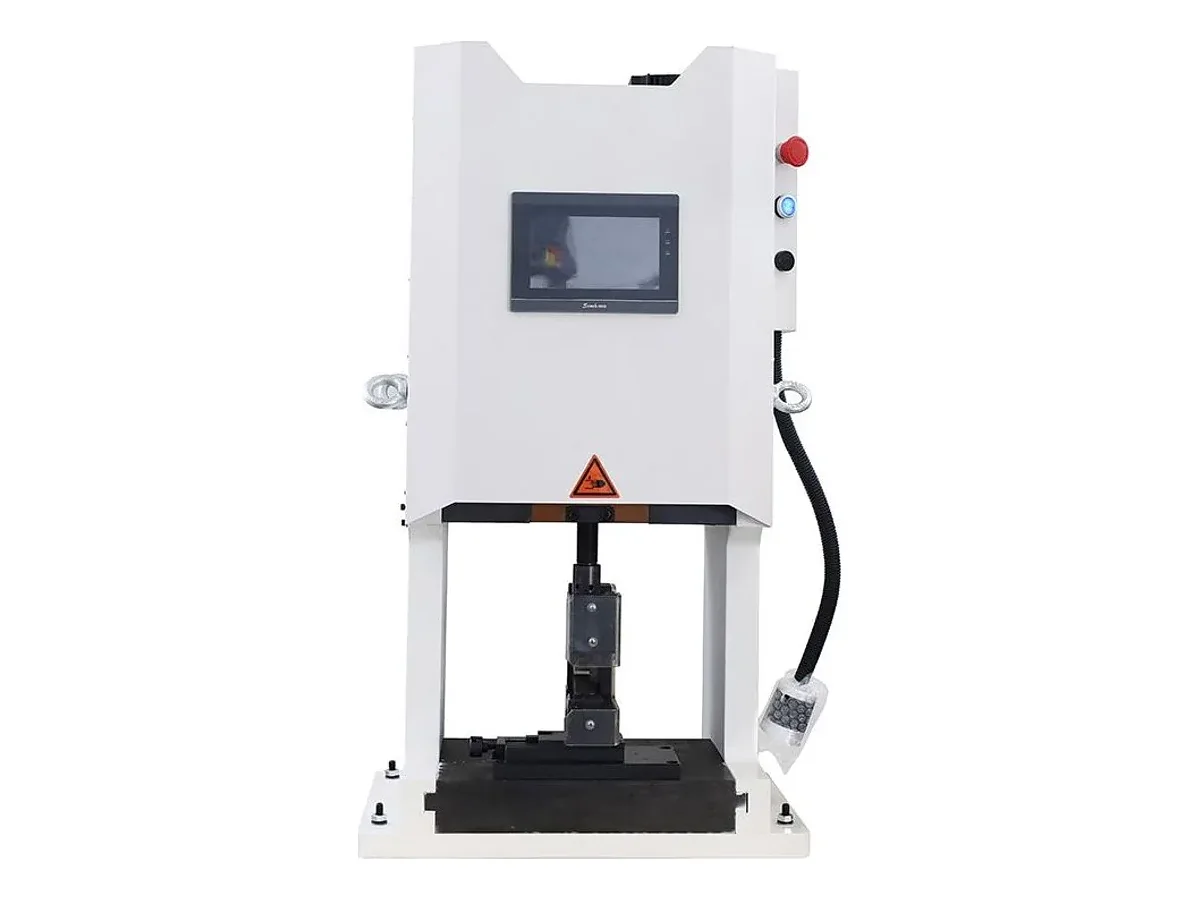
20-Ton Servo Cable Lug Crimping Machine, 200 kN and 40 mm Stroke
Model WM-3120T
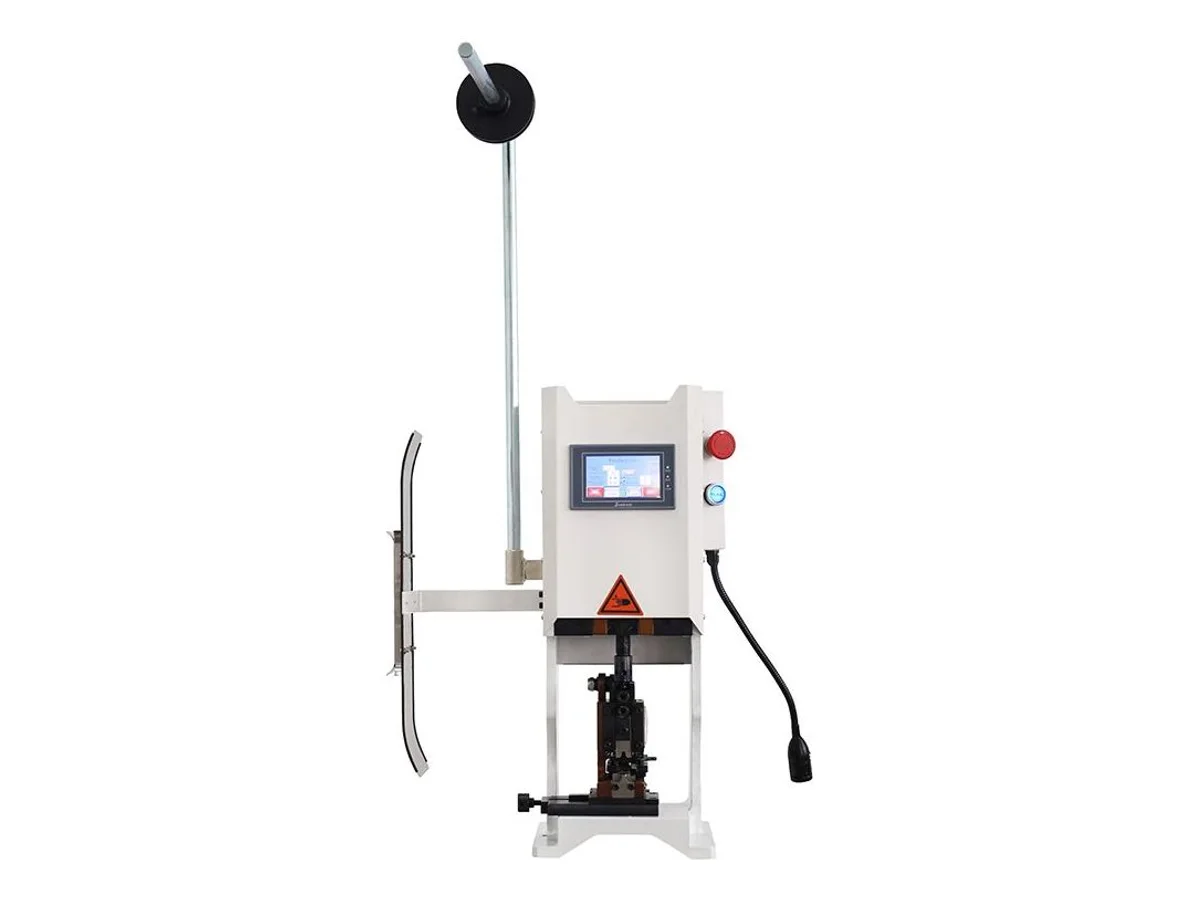
2-Ton Servo Terminal Crimping Machine, 20 kN Touchscreen Bench Press
Model WM-3102S