Ultrasonic Copper Wire-to-Terminal Welding Machine, Under 30 mm² WM-713
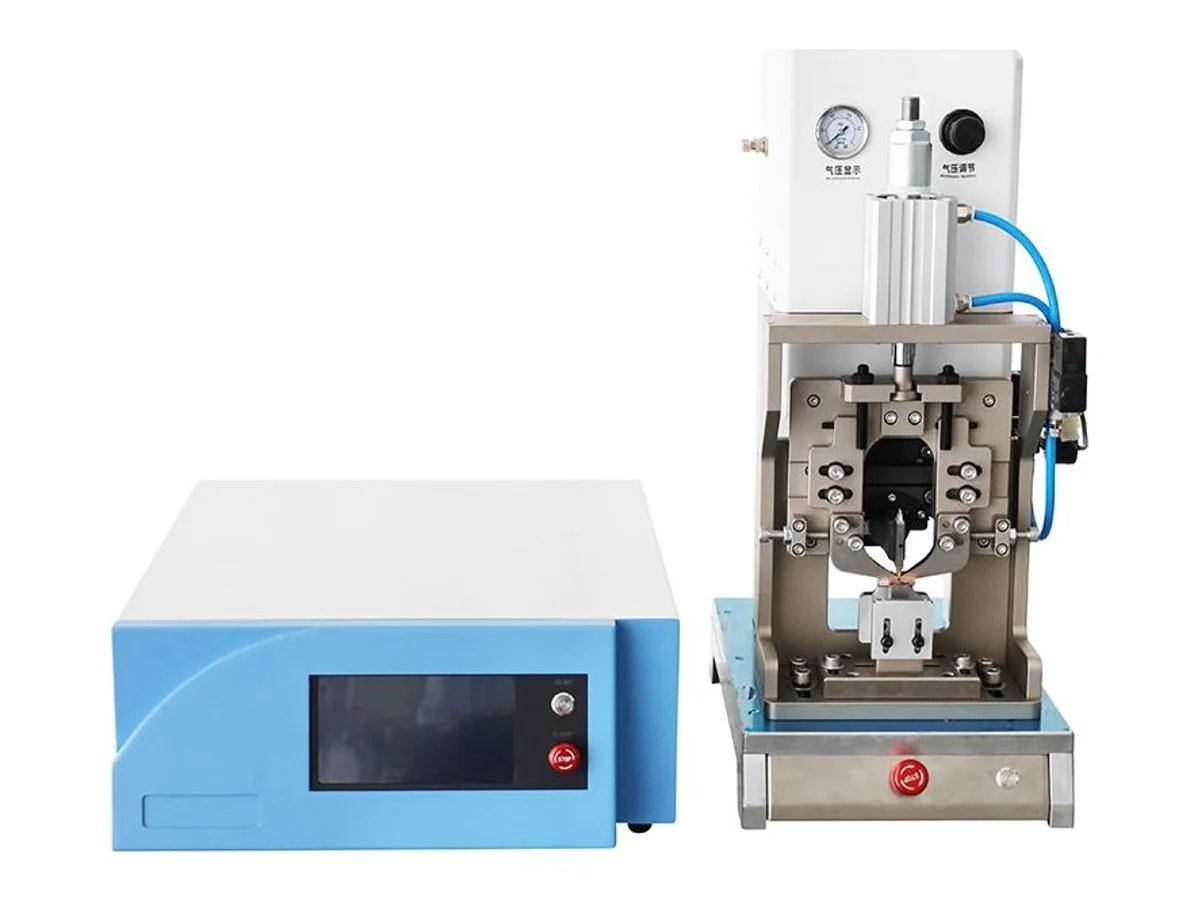
The WM-713 welds stranded copper wire directly onto terminals by 20 kHz ultrasonic vibration — no solder or flux, for joints requiring stable contact resistance. Its 5,000 W generator covers gathered cross-sections under 30 mm² and closes each joint in 0.5 to 2 seconds under 0.2–0.8 MPa air. The English touchscreen stores recipes and shows counters, power, temperature and amplitude live, with quality monitoring and weld records built in. The pneumatic weld head sits on a 46 × 15 × 14 cm bracket beside a 58 × 18 × 46 cm generator cabinet; the set weighs 80 kg.
Specifications
| Function | Ultrasonic welding of stranded copper wire to terminals |
|---|---|
| Maximum output power | 5,000 W |
| Working frequency | 20 kHz |
| Welding time | 0.5 – 2 s |
| Welding area | < 30 mm² |
| Working air pressure | 0.2 – 0.8 MPa |
| Operation | Semi-automatic — operator loads terminal and wire, cycle runs itself |
| Display | English touchscreen with recipes, weld records, quality monitor and live amplitude |
| Input voltage | 220 V |
| Bracket dimensions | 46 × 15 × 14 cm |
| Electric box dimensions | 58 × 18 × 46 cm |
| Machine weight | 80 kg |
| HS Code | 8515.80 (common reference — final classification confirmed by your customs broker) |
| Certification | CE (certificate provided with shipment) |
Key features
- Metallurgical wire-to-terminal bonds replace solder pots and flux fumes — for joints requiring stable resistance under vibration and thermal cycling
- 5,000 W of output closes gathered sections just under 30 mm² in 0.5–2 s, a class above what small wire splicers can handle
- Recipe storage on the English touchscreen changes terminal types in seconds, with weld records and a quality monitor for process audits
- Separate generator cabinet keeps the electronics off the press, so the compact weld head fits tight cells while the screen sits at eye level
What it processes
- Welding battery, motor and inverter lead wires onto lugs and terminals in EV and automotive harnesses
- Stranded wire and braid terminations in switchgear and energy-storage assemblies
- Replacing solder or crimp terminations where low, stable contact resistance is specified
Suited for: welding stranded copper wire onto terminals and lugs with gathered sections under 30 mm² — battery, motor and inverter leads where solder is not permitted and contact-resistance variation must be controlled. Not suited for: wire-to-wire splicing below 20 mm² — for that, pick the WM-711 ultrasonic wire welding machine, the dedicated 3,000 W splicer that covers 0.75–20 mm² joints — nor plastics or any solder and tinning work, which live with the other wire soldering and welding machines.
Send your terminals plus 2–3 meters of each wire and we weld your actual joints on video — including a peel-back of the weld — before you commit. Terminal welds like these anchor the power side of an EV wire harness line.
Engineering knowledge
Choose and troubleshoot this process
- How to Choose an Ultrasonic Wire Welding MachineChoose ultrasonic wire welding equipment by conductor material, gathered cross-section, splice geometry, weld power, tooling, recipe control and acceptance testing.
- How to Choose a Wire Twisting and Tinning MachineChoose wire twisting and tinning equipment by conductor construction, strip condition, tinning specification, flux control, finished-end geometry and automation level.
- Ultrasonic Wire Welding Defects: Causes and Corrective ActionsTroubleshoot weak wire splices, cut strands, excessive flash, incomplete bonding, unstable weld energy, tool marking and conductor contamination.
WM-713 — common questions
How is the WM-713 different from an ultrasonic wire splicer?
A splicer welds wires to each other; the WM-713 welds the wire gather flat onto a terminal, which needs more power and a press-style head. Its 5,000 W generator covers sections under 30 mm², while our wire-to-wire splicer WM-711 runs 3,000 W up to 20 mm² — if your work is splices rather than terminations, that machine is the better fit.
What joints can it weld?
Stranded copper wire onto terminals that offer a flat weld zone, with the total gathered cross-section under 30 mm² and a cycle of 0.5 to 2 seconds. It is a copper-to-copper process at heart — for plated terminals or anything other than bare copper strands, send us your terminal drawing and wire spec and we confirm on your actual parts.
What is it not designed to do?
It does not weld plastics, does not solder or tin, and wire-to-wire splices are better served by a dedicated splicer. For those processes, browse the other wire soldering and welding machines in this category.
Related machines in Tinning, Soldering & Welding
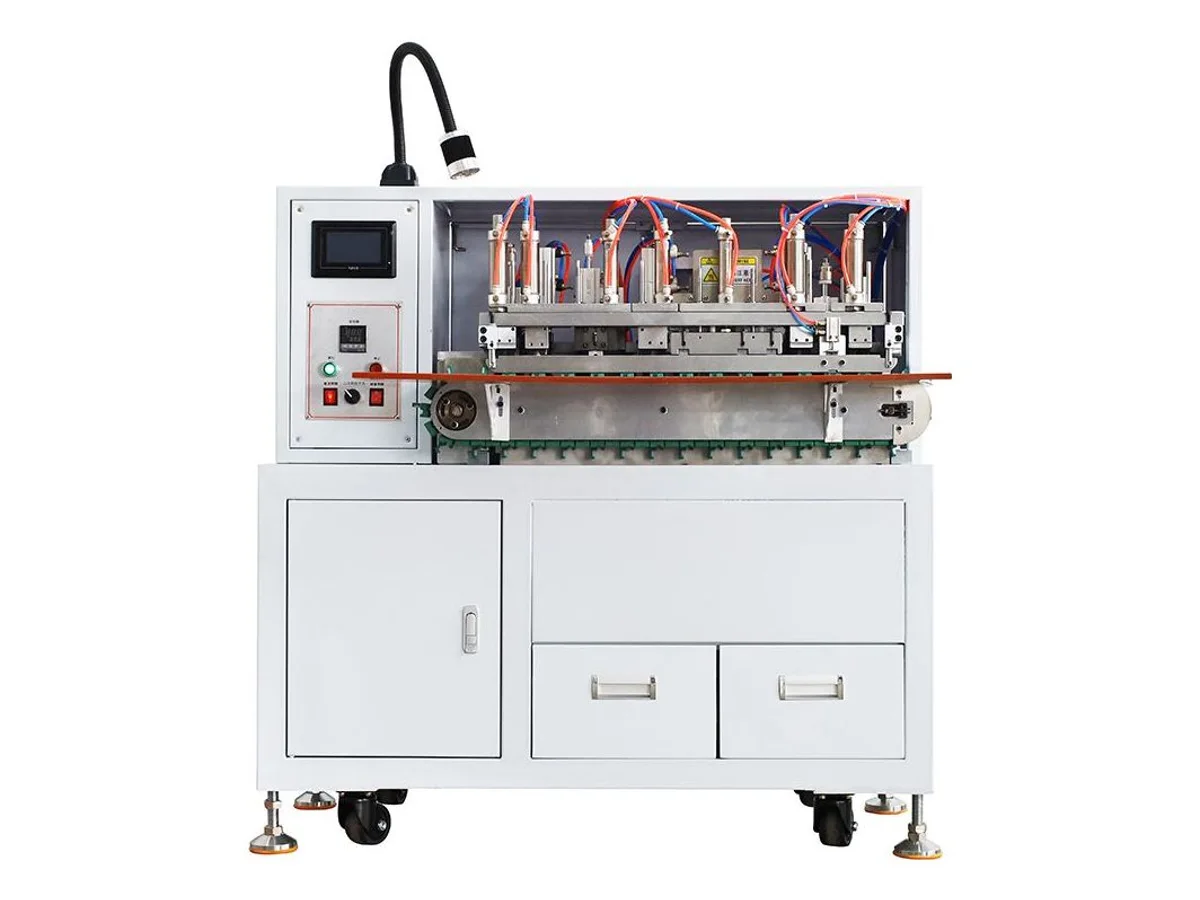
Automatic 3-Core Cable Cutting Stripping Twisting and Tinning Machine
Model WM-4710T
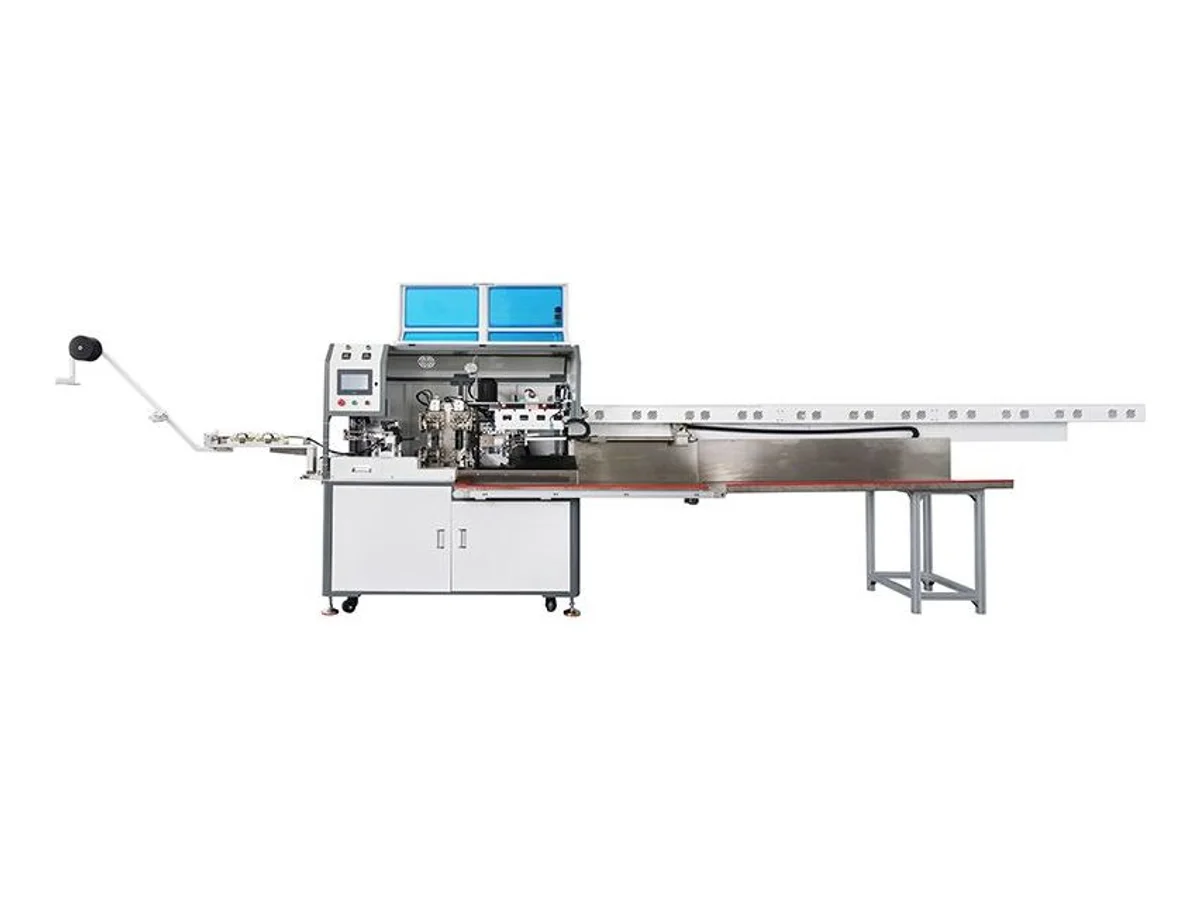
Automatic Multicore Cable Cutting Stripping and Two-End Tinning Machine
Model WM-4706S
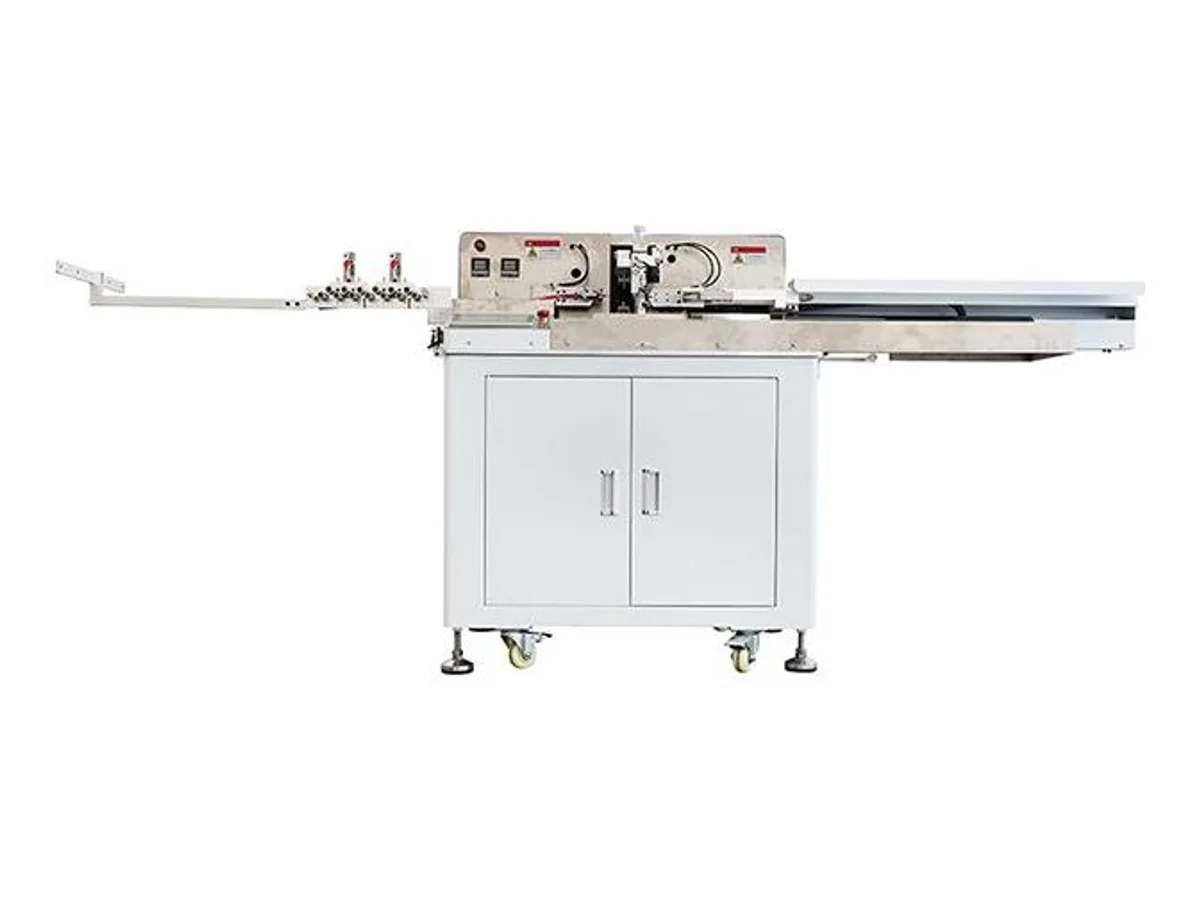
Multi-Wire Cutting, Stripping, Twisting and Tinning Machine, Up to 10 Wires
Model WM-4706W