Semi-Automatic Wire Flag Labeling Machine - Touchscreen Configuration WM-9304T
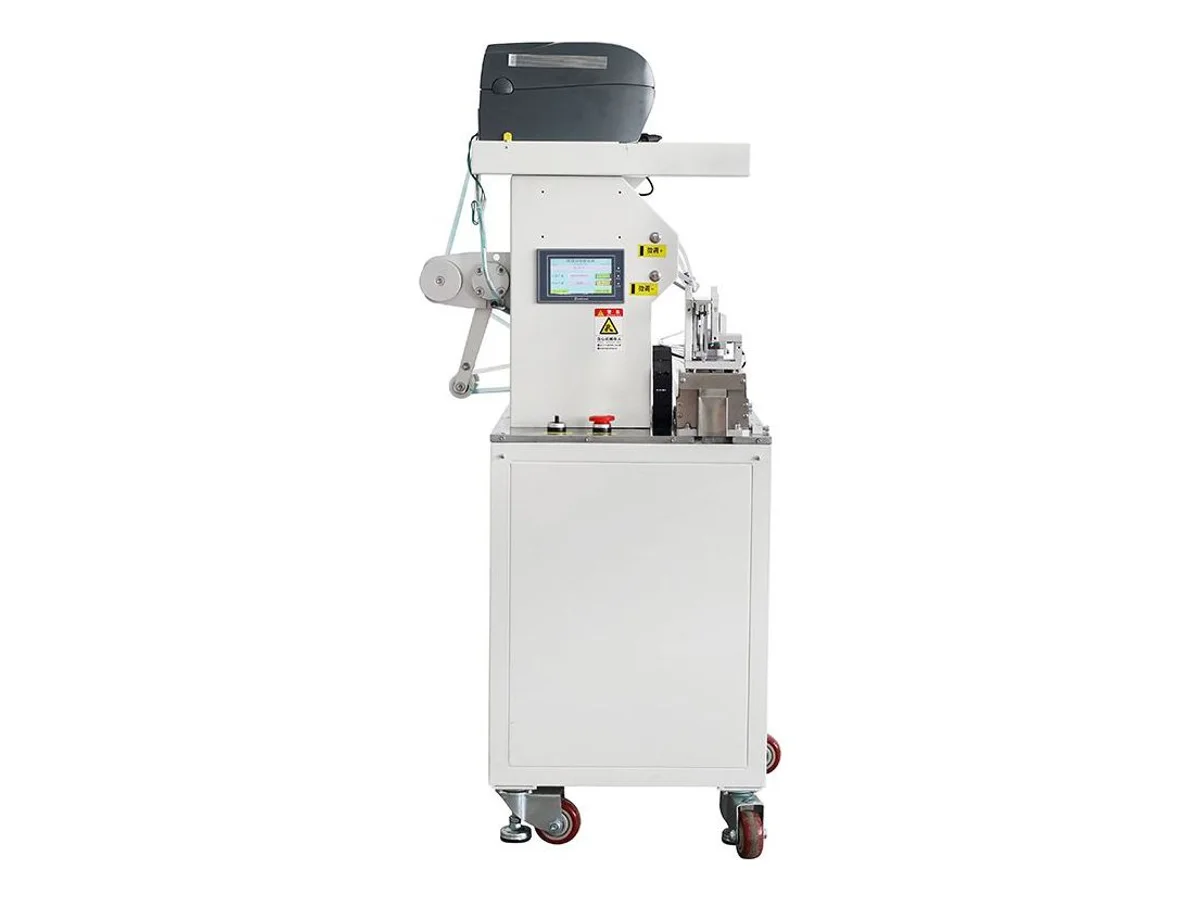
Our WM-9304T is a semi-automatic wire flag labeling machine with touchscreen setup and optional printing. It folds labels 20–180 mm long and 5–45 mm wide around wire using guide groups up to Ø10 mm, at a stated 1,500–1,800 pcs/h depending on label size and manual loading speed. This touchscreen configuration shares the listed processing ranges with our IPC-controlled WM-9304F and is quoted separately.
Specifications
| Function | Semi-automatic flag label application and folding; optional label printer |
|---|---|
| Control | Touchscreen entry of label dimensions and wire diameter |
| Standard wire guide ranges | Ø0–3.5 mm, Ø3.0–5.5 mm and Ø4.0–10 mm; above Ø10 mm requires customization |
| Applicable products | Round wire, flat wire, water pipe and other suitable products |
| Labeling accuracy | ±0.2, excluding product and label errors; tolerance unit confirmed on the quote |
| Labeling speed | 1,500–1,800 pcs/h, depending on label size and manual operation speed |
| Label length | 20–180 mm standard; customization outside this range |
| Label width | 5–45 mm standard; customization outside this range |
| Standard positioning ruler | 200 mm; customization beyond this range |
| Maximum label roll outer diameter | 240 mm |
| Maximum label roll inner diameter | 76 mm |
| Dimensions (L × W × H) | About 580 × 680 × 1,000 mm |
| Weight | About 86 kg |
| Power supply | 220 V, 50 Hz |
| Power | 0.25 kW |
| Air pressure | 4–6 bar |
| Relative humidity | 20–90% RH |
| Ambient temperature | +5 to +40 °C |
| HS Code | 8479.89 (common reference — final classification confirmed by your customs broker) |
| Certification | CE (certificate provided with shipment) |
Key features
- Spend less time adjusting between cable sizes: enter label dimensions and wire diameter on the touchscreen to set the folding process without screw adjustments for those settings.
- Give the operator a repeatable folding step: servo positioning and the folding head bring the adhesive halves together, reducing the hand alignment involved in making each flag label.
- Feed each label from its gap: a SICK label-gap sensor detects the next label so the feed sequence follows the stock; we test sensing and release with your actual roll.
- Choose printing to suit the workflow: use prepared labels, or specify the optional printer when identification needs to be printed at the station. The printer shown in the photos is an optional configuration.
- Check the result before committing to production: send cable and label samples; we run a trial and send a video showing feeding, folding and the finished flag.
What it processes
- Projecting identification flags on USB cables, power cords and wire harnesses
- Circuit and part-number labels that should remain visible beside the cable
- Self-adhesive warning labels on suitable round wire, flat wire and tubing, subject to sample testing
Suited for: manually loading wires for adhesive flag labeling, with touchscreen size entry and optional printing at the station. Not suited for: labels that must lie flush around the cable — see our WM-9328 desktop wrap-around label applicator, whose specified cable range is Ø3–12 mm. For wire above Ø10 mm or labels outside the standard size ranges, send samples through our custom machine inquiry.
Is changing jobs taking longer than applying the labels?
A short batch can spend more time in setup than in production. Compare how many cable diameters and label formats you change in a shift before using an hourly output figure to justify the purchase. Our touchscreen setup lets the operator enter the dimensions for the next job. The sample trial should include a change between two of your regular jobs so you can assess both the first acceptable label and the steady run.
The stated 1,500–1,800 pieces per hour depends on label size and manual operation speed. Cable loading, handling a finished harness and changing label rolls still take operator time. We use your cable and label roll to demonstrate the workflow so you can estimate useful output for your own batch sizes.
Judge the finished flag with your own materials
A label that feeds correctly still needs to fold cleanly on the cable you ship. Send the wire outside diameter, jacket material, label drawing and a roll of the actual adhesive stock. Tell us the required distance from the wire end, the flag orientation and what counts as acceptable edge alignment. For printed codes, include the print content and your reading method in the trial.
We run the sample trial and send the video before the order. Agree the acceptance tolerance in its required unit and check the finished flag against that requirement. The supplied labeling accuracy value excludes product and label errors, so it should not replace acceptance testing with your materials.
Touchscreen or industrial PC?
Choose the control configuration around your label workflow. The WM-9304T provides touchscreen setup on the cabinet, with a printer available as an option. Our WM-9304F IPC flag label printing and folding machine provides the industrial-PC configuration. The listed processing ranges are shared; the control and printing configuration are confirmed on the individual quote.
Send an example of the information you need on the label, whether it changes between pieces, and how the operator receives that information. We confirm the printing arrangement against that workflow.
WM-9304T — common questions
How is this different from WM-9304F?
The WM-9304T uses a touchscreen on the machine; our WM-9304F uses an industrial PC for its printing and folding workflow. The listed processing ranges are the same. This touchscreen configuration is quoted separately, with printing optional. Send your print-data requirements so we can quote the appropriate configuration.
Is the label printer included?
The printer is optional. Tell us whether you use prepared labels or need printing at the station. We confirm the printer, label stock and required print workflow on the quote. Photos show the machine fitted with a printer.
What wire and label sizes does it accept?
Standard labels are 20–180 mm long and 5–45 mm wide, with wire guide groups Ø0–3.5, Ø3–5.5 and Ø4–10 mm. Send your actual wire outside diameters, jacket material and finished-label drawing. Wire above Ø10 mm or label sizes outside the standard ranges require customization.
Is 1,500–1,800 pieces per hour guaranteed for every job?
The stated range depends on label size and manual operation speed. Cable loading, handling a finished harness and roll changes take operator time. We demonstrate the workflow with your cable and label roll so you can assess useful output for your batch sizes.
Can we specify an acceptance tolerance?
Yes. Tell us the permitted flag-position and edge-alignment error on your actual cable and label. The listed ±0.2 excludes product and label errors; the acceptance tolerance and its unit are confirmed on the quote. Include your print-reading method if the job uses codes.
Will we receive an English interface and setup information?
Before dispatch, we set the voltage for your country and ship the English interface and manual. We demonstrate setup using the agreed cable and label samples.
How do we arrange replacement wear parts?
For the wear parts needed by your configuration, every quote lists them with unit price and the location they ship from.
Related machines in Labeling & Marking
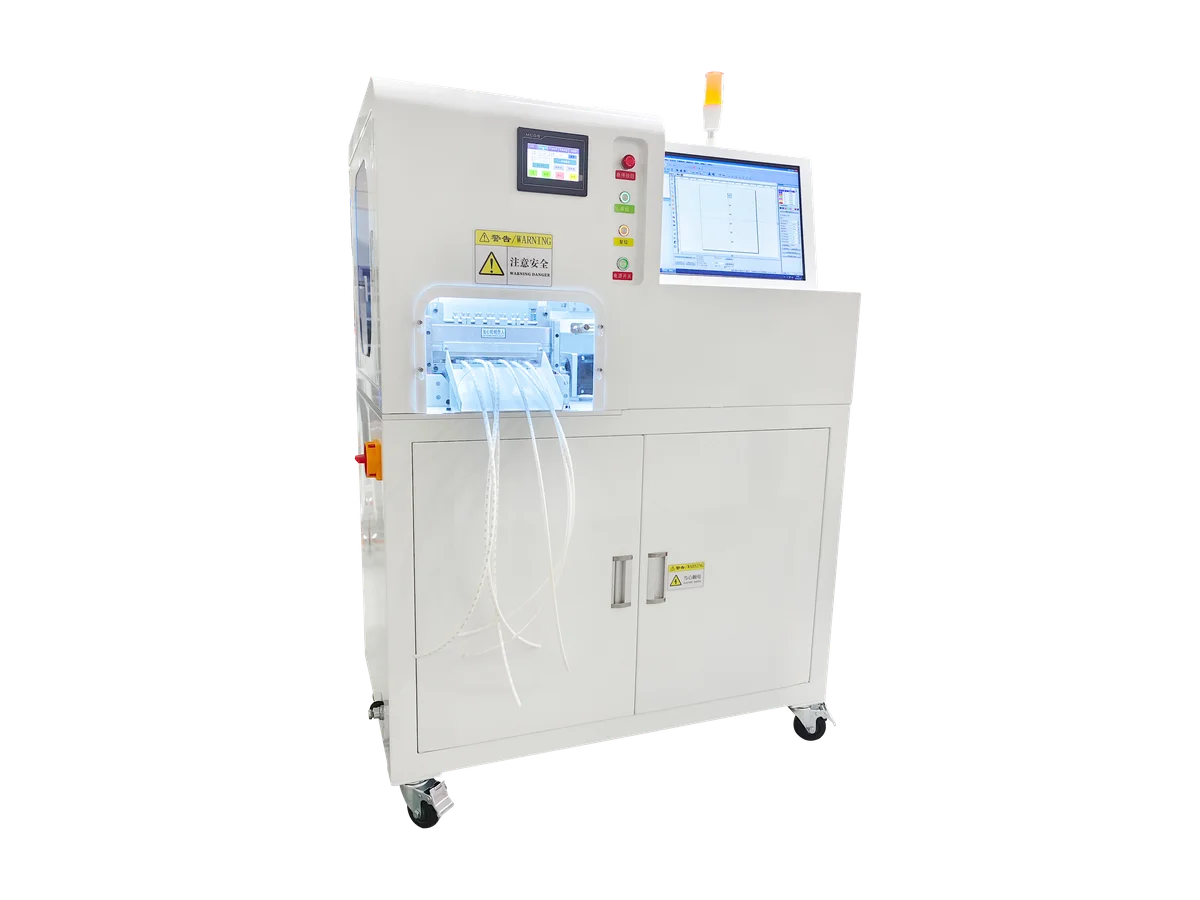
Automatic 6-Channel Laser Printing Machine for Heat Shrink Marker Tubes
Model WM-672
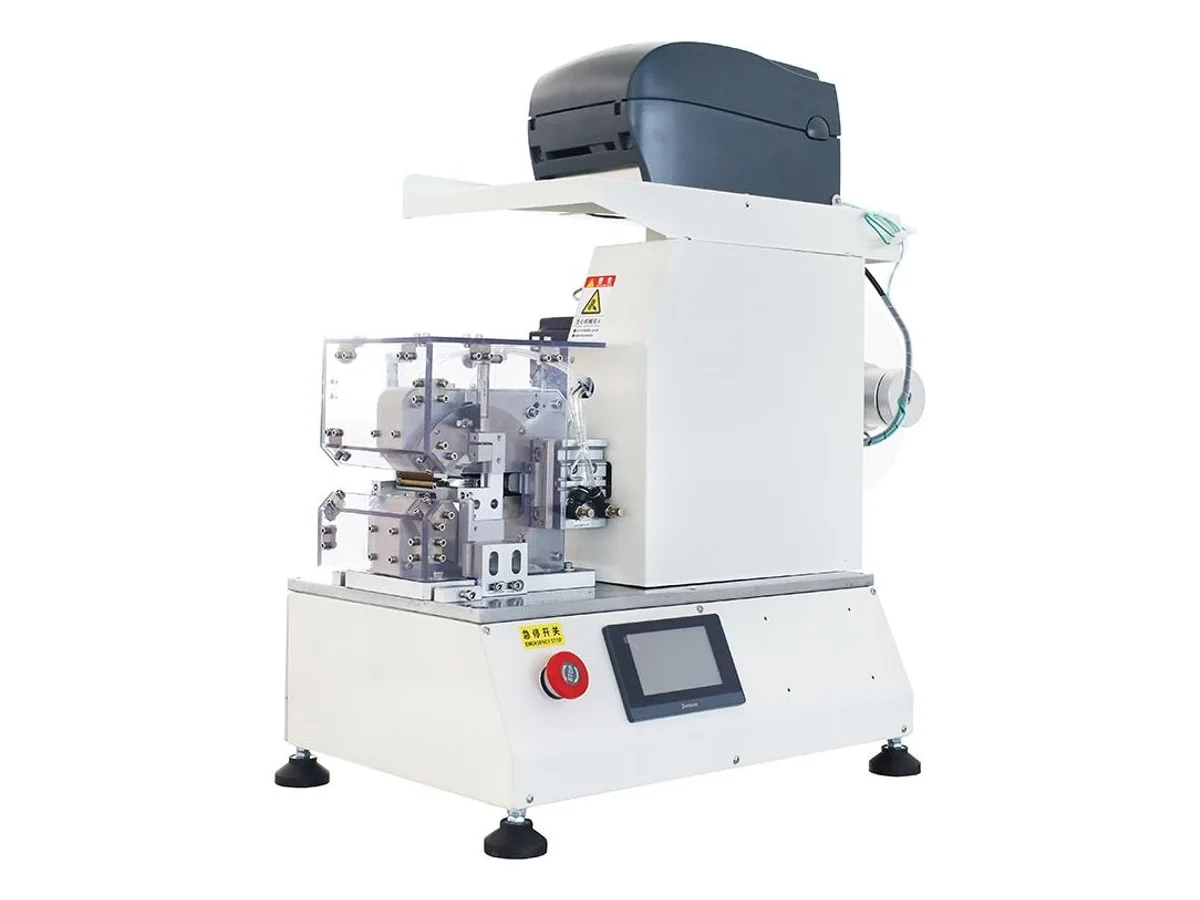
Desktop Wire Label Printing and Wrap-Around Applicator Machine
Model WM-9328
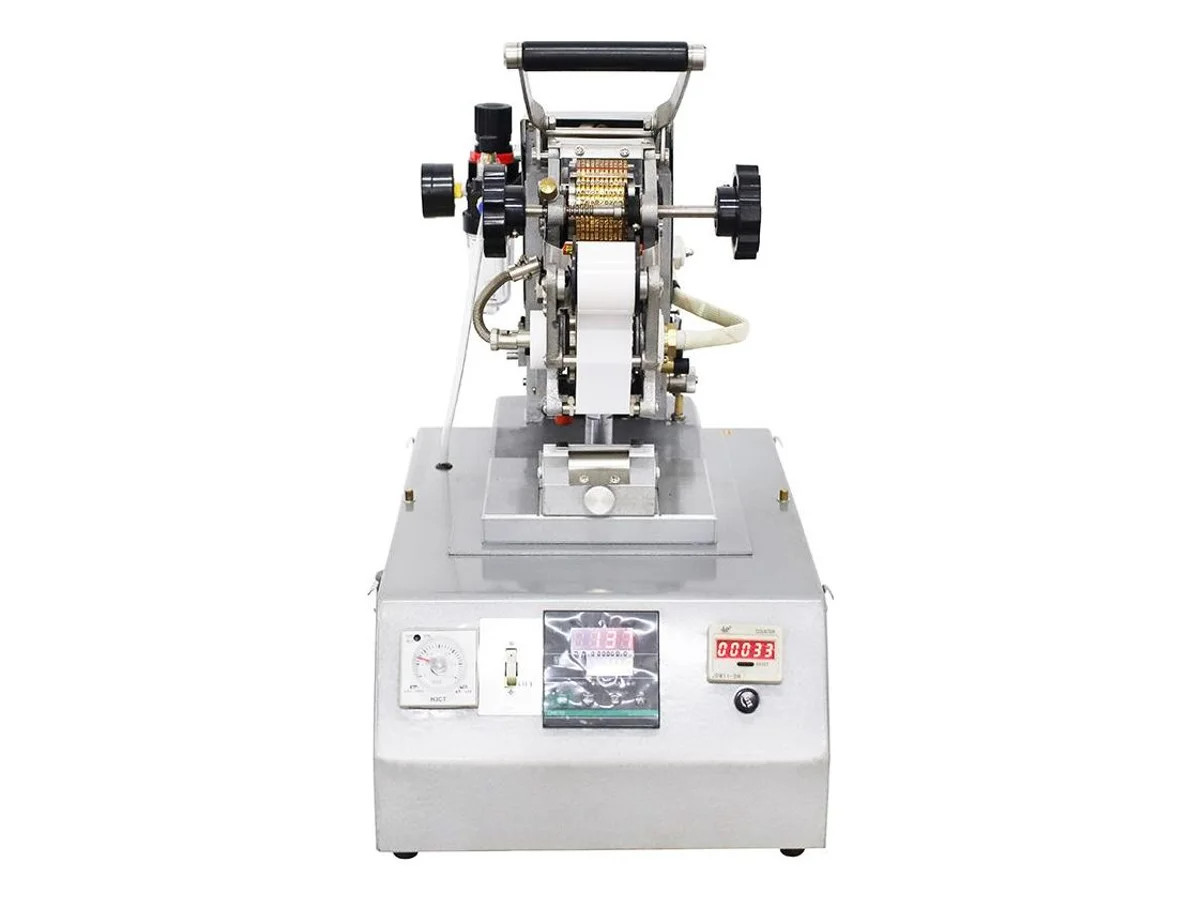
Hot Stamp Wire Marking Machine with Rotating Character Discs
Model WM-9310