Rotary CO2 Laser Wire Stripping Machine, 30 W, 360° U Axis WM-1240
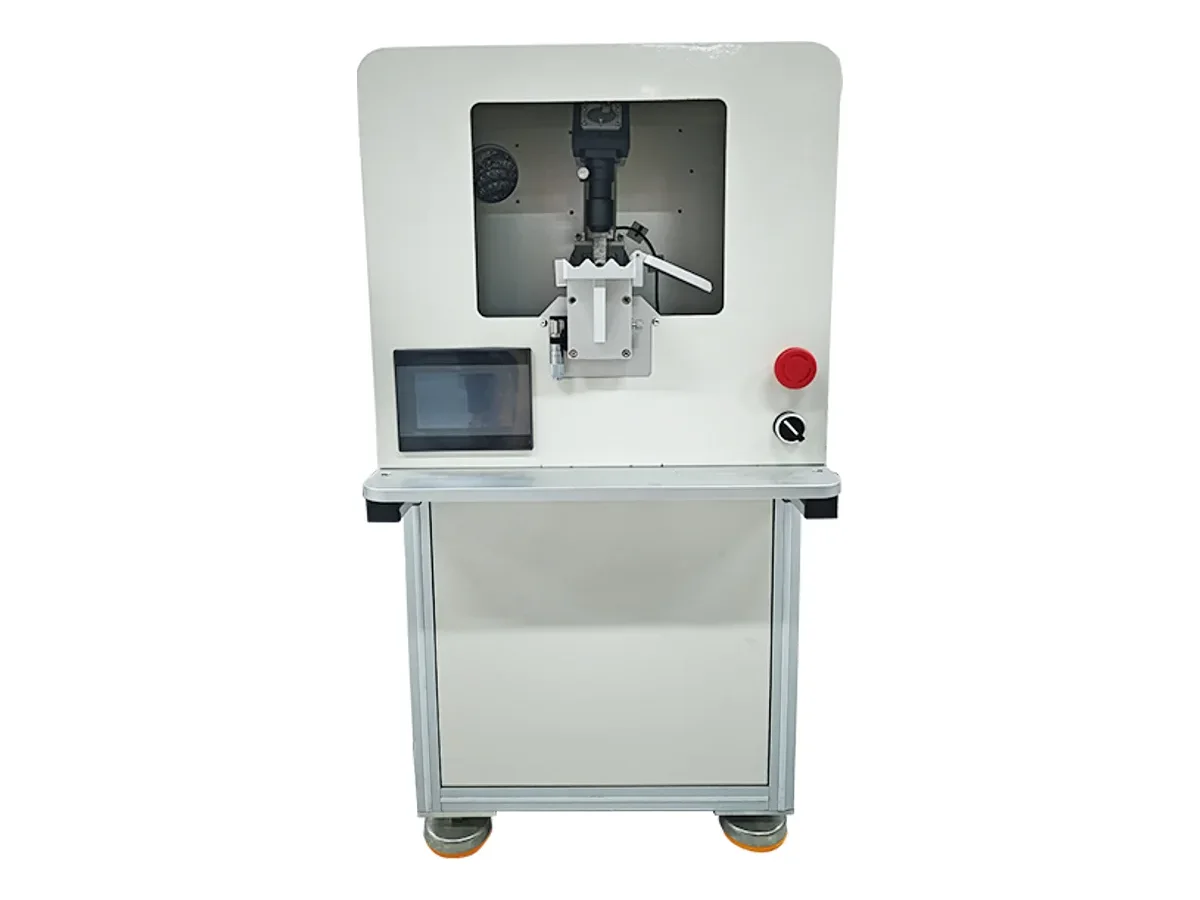
The WM-1240 is a 30 W rotary CO2 laser wire stripping machine with a 0–360° U axis and adjustable laser energy from 0 to 100%. We use its rotary motion and cable fixture to develop circumferential stripping patterns without a mechanical blade contacting the wire. The specified 0.01 mm positioning accuracy describes the motion system; finished strip quality is checked on your cable.
Specifications
| Laser source | CO2 laser |
|---|---|
| Laser power | 30 W |
| Laser wavelength | 10,640 nm |
| Laser energy adjustment | 0–100% |
| Cutting speed adjustment | 0–100 mm/s |
| U-axis movement | 0–360° |
| Positioning accuracy | 0.01 mm (motion positioning, not finished-strip tolerance) |
| Cooling | Air cooling |
| Power supply | 220 V, 50 Hz |
| Rated input power | 1 kW |
| Exterior dimensions | 870 × 450 × 924 mm |
| Motion control | PLC with subdivided industrial motor drive |
| Cable range and strip length | Confirmed on the quote after cable and fixture review |
| Certification | CE (certificate provided with shipment) |
Key features
- The rotary axis gives the laser access around the cable for circumferential processing, reducing reliance on a blade-depth setting that can be difficult to repeat on thin insulation.
- Energy and travel-speed adjustment let us tune the process to the actual insulation rather than treat every cable of the same diameter as identical.
- PLC motion control helps repeat the agreed stripping position once the cable location and fixture are established.
- Air cooling avoids a separate water-cooling circuit for this configuration, simplifying the installation layout.
- We check the trial for residue, conductor condition and repeatable positioning before using the sample result to define your production configuration.
What it processes
- Circumferential cable insulation stripping
- Fine-wire and multilayer cable preparation after sample qualification
- Dedicated stripping stations for cable assemblies requiring repeatable workholding
Choose the rotary process from the cable geometry
The useful question is whether the required opening can be made around your cable while holding the conductor and remaining layers in position. We review the cable cross-section, smallest strip feature and loading method, then run your samples on video. A nominal gauge alone does not establish a reliable laser recipe.
For a compact tabletop arrangement, compare the WM-1239 benchtop laser stripper. Our stripping-method comparison explains when blade, thermal and laser processes address different failure points.
Define the acceptance check and the running cost
We check residue and conductor condition alongside strip position. The 0–100 mm/s motion setting does not include manual loading or unloading, so we determine output from the agreed complete cycle. For wear and service items, every quote lists them with unit price and the location they ship from.
The gallery includes example cable results. These do not establish a universal cable-size range or a completed trial on your material.
Engineering knowledge
Choose and troubleshoot this process
- Laser vs Mechanical vs Thermal Wire Stripping: Which Process Fits?Compare laser, blade and thermal wire stripping by insulation, conductor protection, strip geometry and sample evidence before choosing equipment.
- Automatic vs Semi-Automatic Wire Processing EquipmentCompare automatic lines and semi-automatic wire-processing cells using batch size, changeover, process integration, inspection and labor content.
- Cut Lengths Drifting on a Full Spool: Pay-Off Tension, Straightener Bearings and MisfeedWhy a cut-and-strip machine that held length on a loose coil walks 10–20 mm once a heavy reel goes on, how misfeed detection works, and how to check reel tension, straighteners, feed grip and encoder calibration.
WM-1240 — common questions
Is 0.01 mm the guaranteed stripping accuracy?
No. It is the stated positioning accuracy of the machine. Insulation thickness, cable straightness, fixture location and laser settings also affect the finished strip. We agree the finished-part tolerance and inspection method after the sample trial.
Does the cable itself have to rotate?
The specification gives a 0–360° U-axis movement. The required cable support, fixture and handling arrangement depend on the cable assembly. Send the full part drawing, including any connector already fitted, so we can confirm loading and rotation clearance.
Can one setup handle different cable materials?
Laser energy and motion speed are adjustable, but a change in insulation or layer construction needs a new trial and settings review. We check the actual material rather than assume that equal outside diameters behave the same.
Is it an automatic cable cutting line?
This configuration is a dedicated laser stripping station. Cable feeding, automatic length cutting and downstream termination are separate requirements to define in the quote. See our cutting and stripping category for integrated cut-and-strip machines.
What must be confirmed before installation?
We confirm the workholding, laser guarding, extraction, electrical supply and operator instructions for your application. Send sample cables, strip drawings, target output and the available work area so the quote covers a usable station.
Related machines in Wire Cutting & Stripping
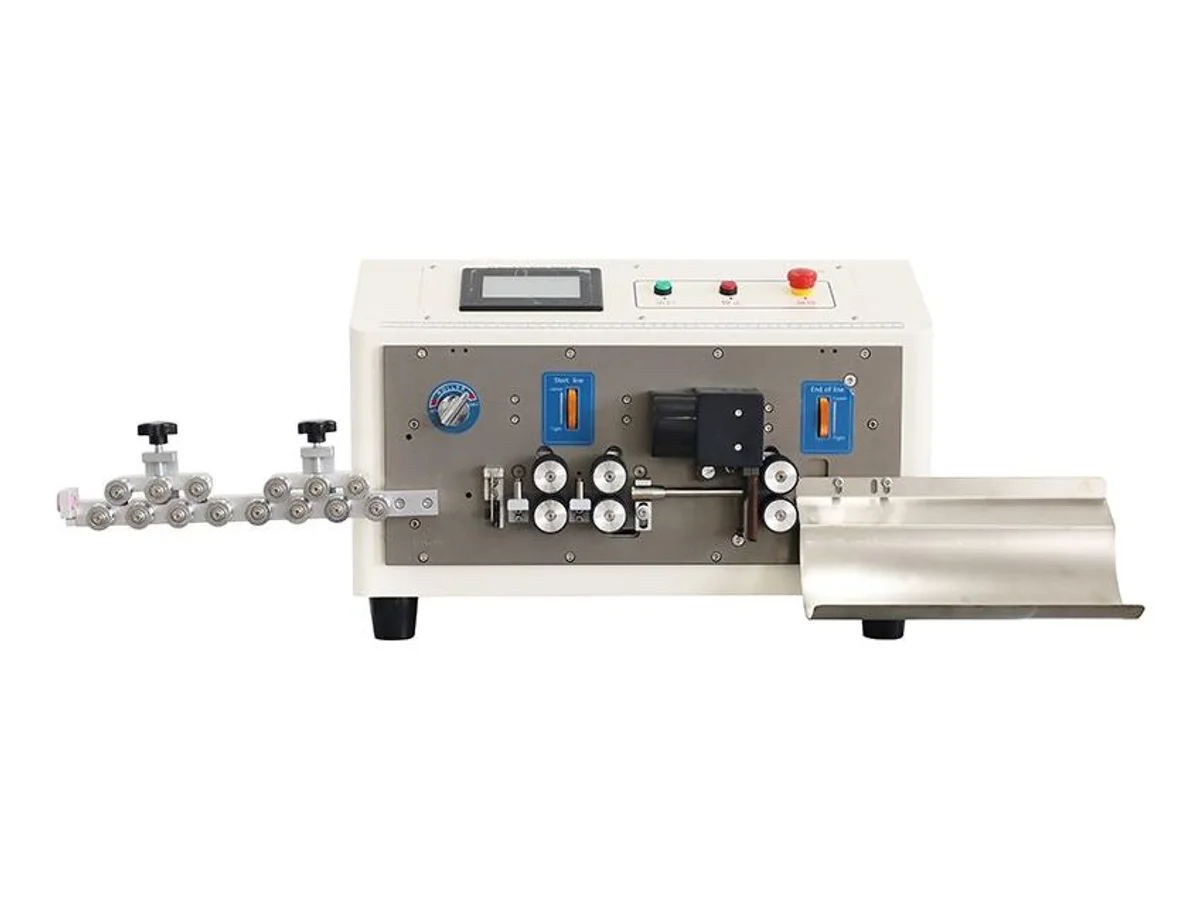
Automatic Cable Cutting and Stripping Machine for 1–12 mm Sheathed Cable
Model WM-1306
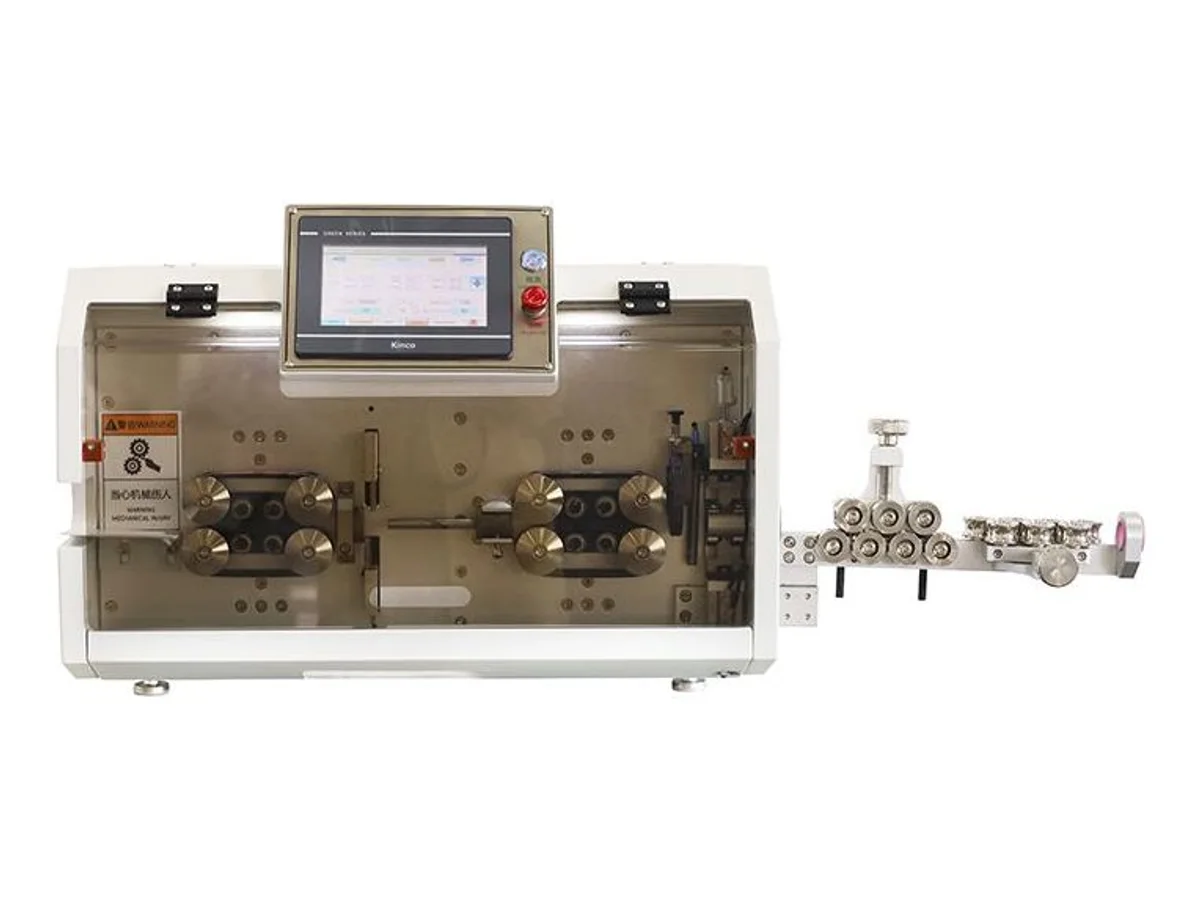
Automatic Cable Cut and Strip Machine with 50-Segment Middle Stripping
Model WM-190
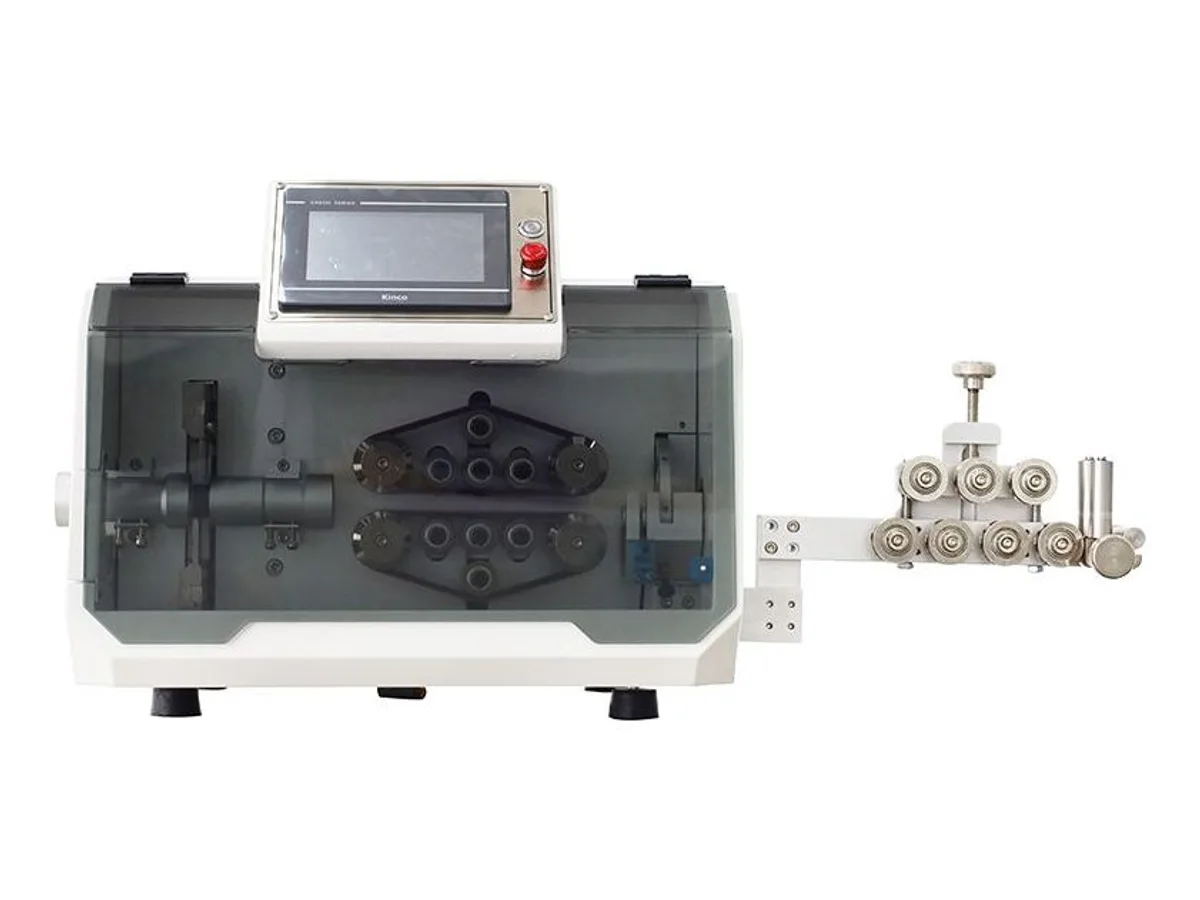
Automatic Cable Cutting Machine for 1–150 mm² Wire, Cable and Hose
Model WM-1222