Benchtop CO2 Laser Wire Stripping Machine, 30 W WM-1239
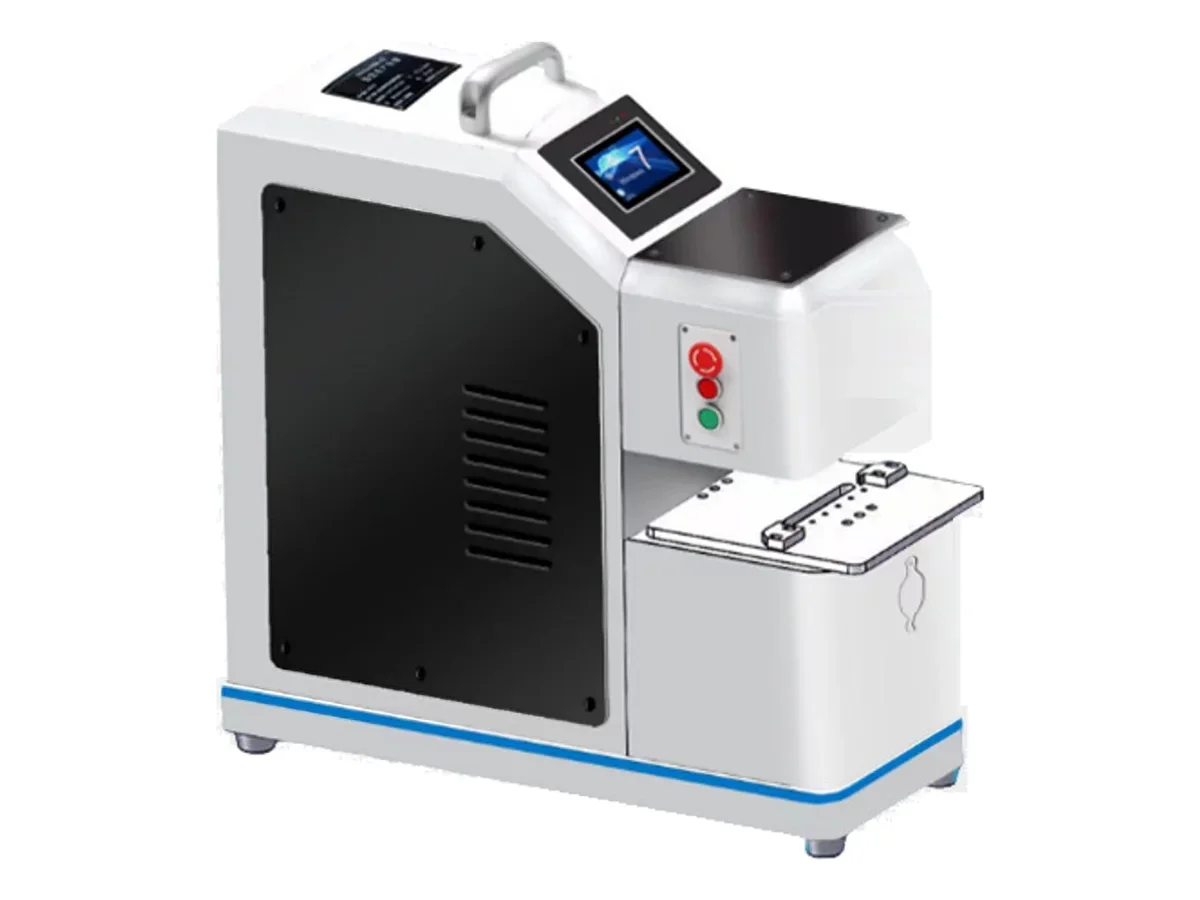
The WM-1239 is a compact 30 W CO2 laser wire stripper for fine-wire insulation and micro-coaxial cable preparation. Its metal RF laser source and single-source, dual-optical-path design process the stripping area without a cutting blade pressing against the conductor. We select the fixture and laser settings around your insulation, conductor and required strip pattern, then check the finished samples before quoting the production setup.
Specifications
| Laser source | Metal RF CO2 laser; single source with dual optical paths |
|---|---|
| Average laser power | 30 W |
| Laser wavelength | 10,640 nm |
| X-axis working travel | 100 mm |
| Cutting speed adjustment | 0–100 mm/s |
| Machine dimensions (L × W × H) | 220 × 540 × 540 mm (datasheet table); 219 × 500 × 574.46 mm (dimension drawing); confirm before ordering |
| Power consumption | 1,200 W |
| Power supply | 220 V, 50 Hz |
| Cooling | Air cooling |
| Optics protection and extraction | Optical contamination protection and smoke-exhaust provision |
| Wire size and strip pattern | Matched to the cable sample and fixture; confirmed on the quote |
| Certification | CE (certificate provided with shipment) |
Key features
- A non-contact stripping process addresses the blade-depth problem on delicate wire: we tune laser exposure to open the intended layer and inspect the conductor underneath.
- The compact benchtop format adds a dedicated stripping station beside your existing termination equipment without requiring a complete cut-and-strip line.
- Adjustable motion speed gives us a setting to tune when a new insulation or wall thickness leaves residue or an incomplete opening.
- Optics protection and smoke-exhaust provision help keep the processing area serviceable; we specify the extraction connection and maintenance items with your setup.
- Your sample review includes the smallest required stripping feature and the next operation, so a visually clean strip also needs to work for your crimp or solder joint.
What it processes
- Fine-wire insulation removal before crimping or soldering
- Micro-coaxial cable preparation and foil/film layer opening after sample validation
- Short production runs with a dedicated manually loaded stripping fixture
Check the strip that your next operation needs
A thin conductor can look acceptable from a distance while a remaining film prevents a reliable termination. Send the actual wire, the shortest required strip and the intended terminal or soldering process. We run the trial on video and agree how to inspect residue, exposed strands and strip position.
The 0–100 mm/s motion specification is not a pieces-per-hour rating. Loading, the stripping pattern and any sleeve-removal step determine the production cycle. The table dimensions are reproduced as specified; allow us to confirm the installation envelope with the fixture and extraction connection on the quote.
Compare the process in our laser, mechanical and thermal stripping guide. For conventional blade-based production, see our wire cutting and stripping machines.
Plan changeover and maintenance before delivery
We match the fixture to your actual insulation and conductor, not just the nominal gauge. For wear and service items, every quote lists them with unit price and the location they ship from. We set the voltage for your country and ship the English interface and manual.
The gallery shows the machine, its fixture and example processed wires. Sample photographs illustrate possible operations; acceptance is based on your own trial.
Engineering knowledge
Choose and troubleshoot this process
- Laser vs Mechanical vs Thermal Wire Stripping: Which Process Fits?Compare laser, blade and thermal wire stripping by insulation, conductor protection, strip geometry and sample evidence before choosing equipment.
- Automatic vs Semi-Automatic Wire Processing EquipmentCompare automatic lines and semi-automatic wire-processing cells using batch size, changeover, process integration, inspection and labor content.
- Cut Lengths Drifting on a Full Spool: Pay-Off Tension, Straightener Bearings and MisfeedWhy a cut-and-strip machine that held length on a loose coil walks 10–20 mm once a heavy reel goes on, how misfeed detection works, and how to check reel tension, straighteners, feed grip and encoder calibration.
WM-1239 — common questions
Does 100 mm mean it can strip any cable for a length of 100 mm?
No. It is the X-axis working travel. Achievable stripping length, wire diameter, fixture clearance and strip pattern are confirmed using your cable sample. Send the required end strip, window or cut pattern with dimensions.
Can it remove PTFE, PVC, PE or foil shielding?
These materials appear in the application specification, but their thickness, fillers, colors and layer stack change the laser settings. We trial the actual cable and check the exposed conductor and residue. A foil/film application is not a promise that every metal braid or shield can be cut.
Is laser stripping guaranteed to leave every strand undamaged?
The laser avoids blade contact, but the finished result still depends on material absorption, exposure and fixturing. We record a trial on your cable and agree the conductor and residue checks before ordering.
How does this differ from the rotary laser model?
The WM-1239 is a compact benchtop machine with a 100 mm X-axis travel specification. The WM-1240 rotary laser stripper specifies a 0–360° U axis for circumferential processing. We select between them from the stripping pattern and workholding.
What should I send for a quotation?
Send cable samples, insulation and conductor materials, outside diameter, the stripping drawing and your target output. We quote the fixture, extraction arrangement, delivery configuration and trial separately enough that you can see what is included.
Related machines in Wire Cutting & Stripping
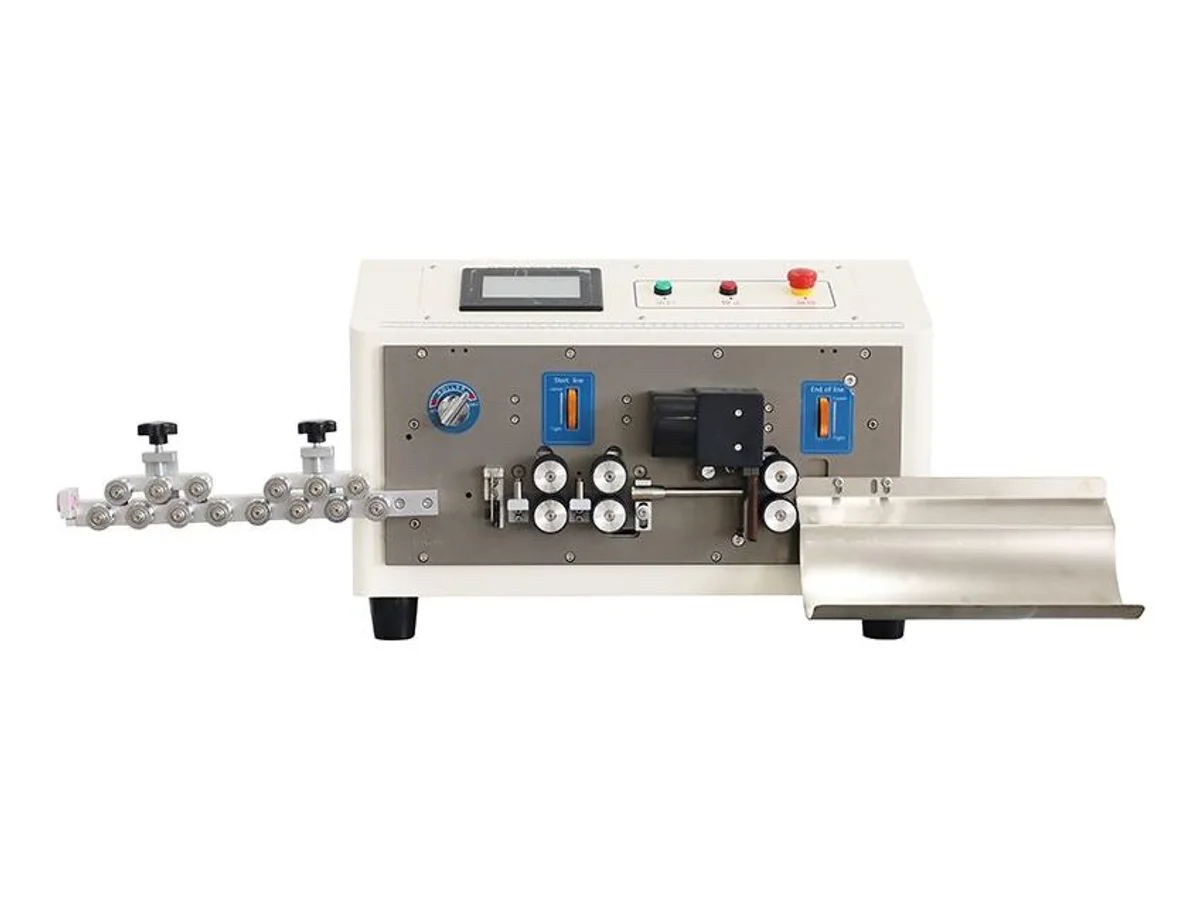
Automatic Cable Cutting and Stripping Machine for 1–12 mm Sheathed Cable
Model WM-1306
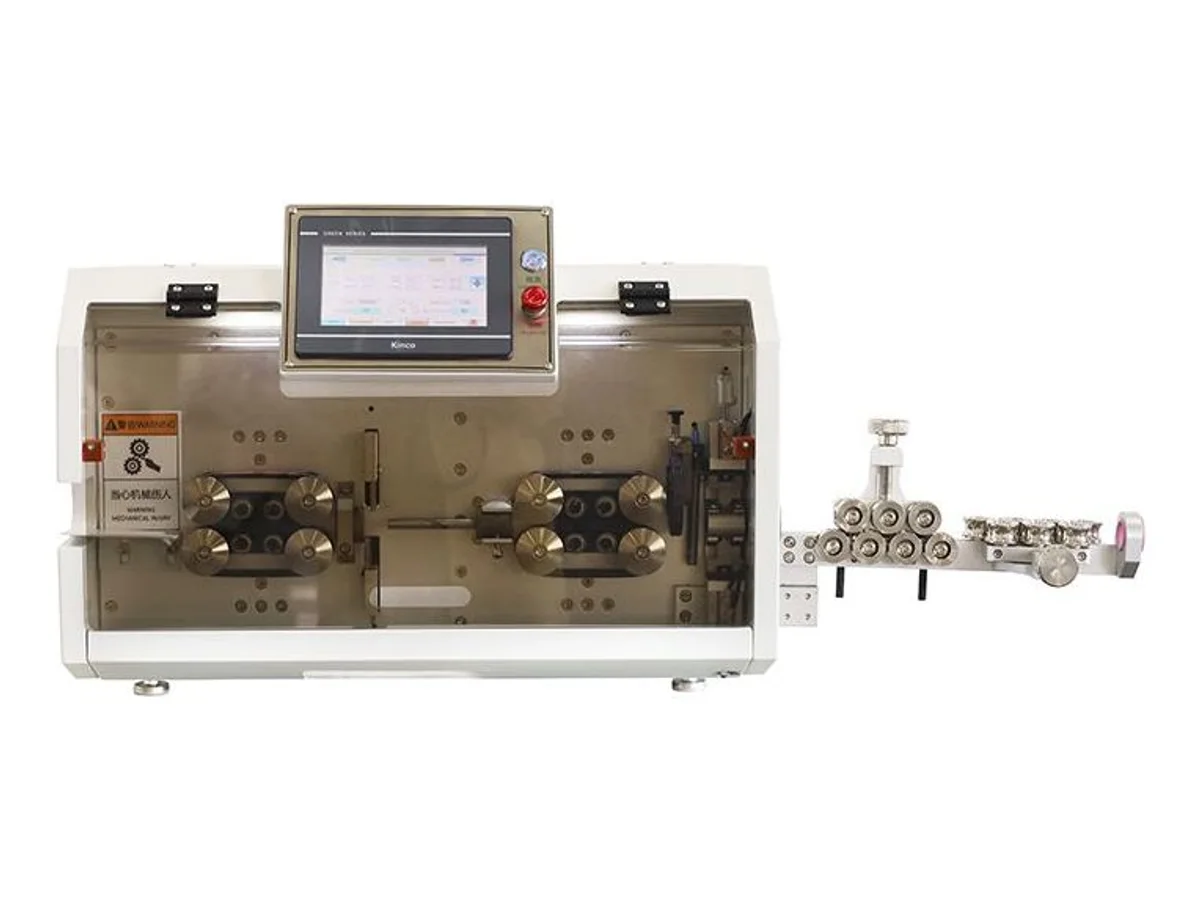
Automatic Cable Cut and Strip Machine with 50-Segment Middle Stripping
Model WM-190
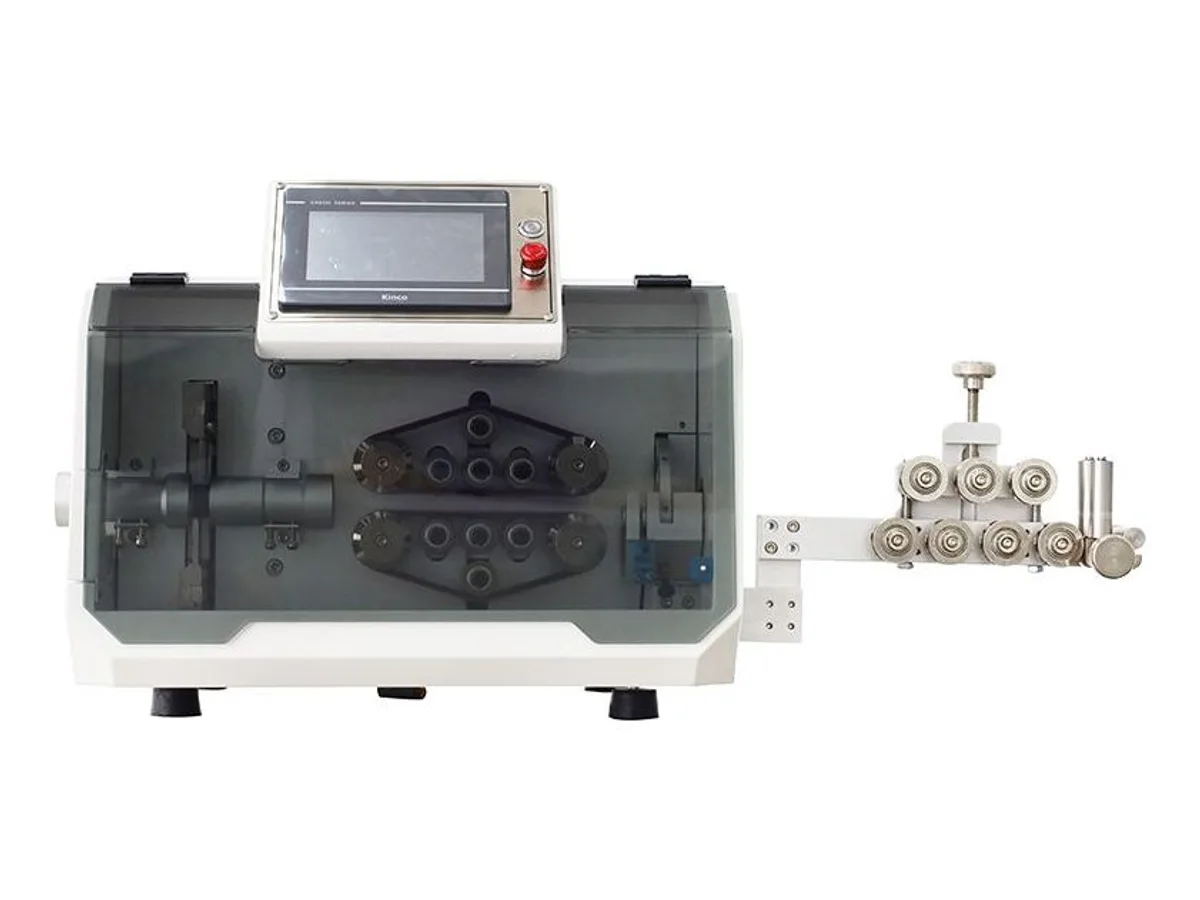
Automatic Cable Cutting Machine for 1–150 mm² Wire, Cable and Hose
Model WM-1222