Silent Copper Band Wire Splicing Machine with 4-Ton Crimp Force WM-716
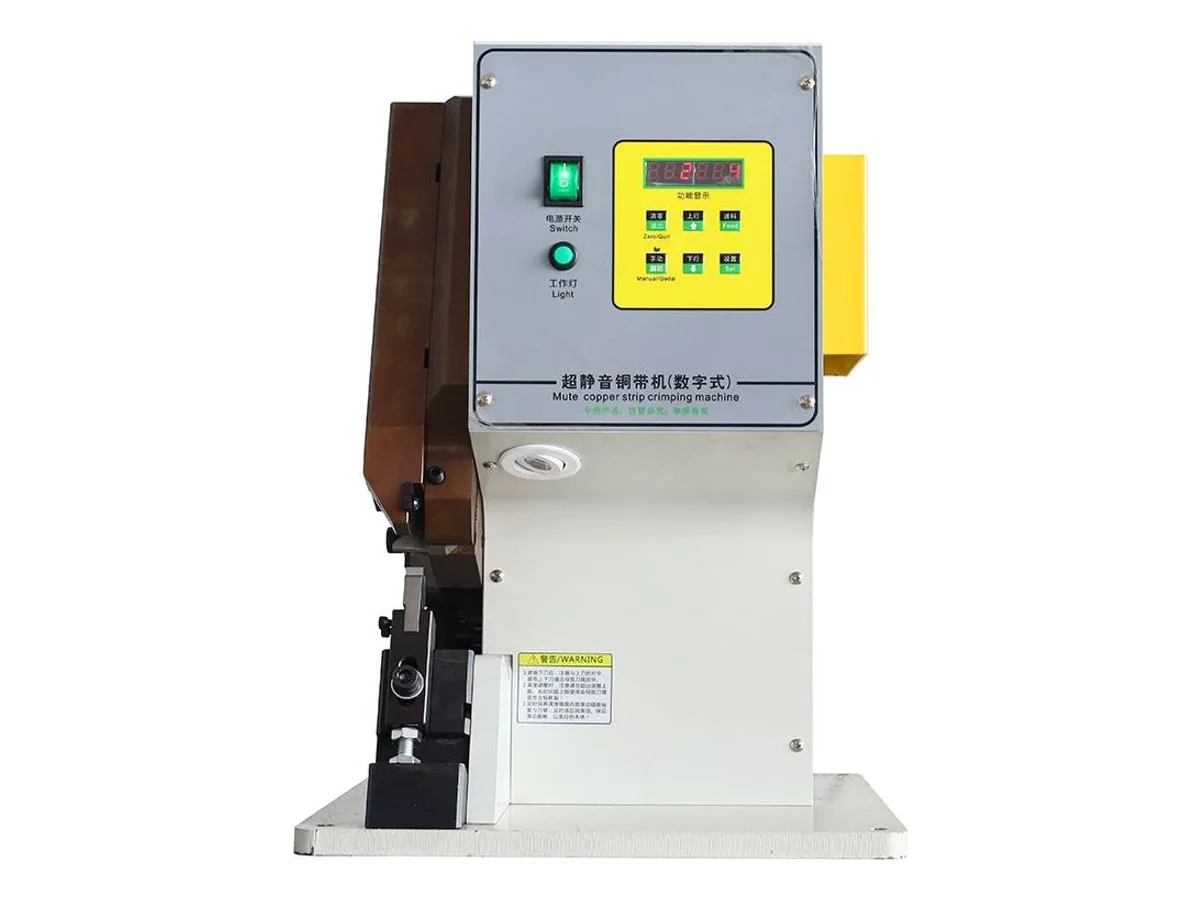
The WM-716 splices stripped wires by crimping a serrated copper band around the bundle — feeding, cutting, forming and closing the splice in one pedal-triggered action with 4 tons of crimp force. It runs continuous copper band from 1 to 10 mm wide and lists a maximum pulling force of 500 N, with the finished-joint requirement verified on your wire, replacing solder and splice welding on lamp, switch, heating-element and thermosensitive-element connections. An inverter motor keeps the cycle quiet, a stepper feed meters the band, and a digital counter tracks output. The frame measures 400 × 600 × 650 mm and weighs 170 kg.
Specifications
| Function | Copper band wire splicing — feed, cut, form and crimp in one action |
|---|---|
| Crimping force | 4 T |
| Applicable copper belt | 1 – 10 mm wide, continuous reel |
| Operation mode | Pedal switch — single action |
| Copper belt feeding | Stepper motor plus drive wheel |
| Maximum pulling force | 500 N |
| Motor power | 1.5 kW |
| Drive | Inverter motor for low-noise running |
| Counter | Digital piece counter with feed and set keys |
| Dimensions | 400 × 600 × 650 mm |
| Weight | 170 kg |
| HS Code | 8463.90 (common reference — final classification confirmed by your customs broker) |
| Certification | CE (certificate provided with shipment) |
Key features
- One pedal press feeds, cuts, forms and crimps the copper band — a finished splice every cycle with no pre-formed crimp terminals to stock
- Serration-treated band bites into the strands, to form the mechanical splice without solder heat or flux residue; validate the 500 N reference and required pull-off result on the actual joint
- Inverter-motor drive runs quietly enough to sit beside assembly benches instead of being banished to a press room
- Stepper-metered band feed and a digital counter keep band length consistent and the piece count honest across shifts
What it processes
- Splicing lamp, switch and sensor leads in appliance and lighting assembly
- Connections onto high-temperature heating elements and thermosensitive elements where solder cannot survive
- Multi-wire gathers in harness prefabrication that would otherwise need splice welding
Suited for: cold splicing of stripped wire bundles with continuous copper band — lamp, switch, sensor, heating-element and thermosensitive-element connections where solder heat or flux is unwelcome and pre-formed splice terminals cost too much. Not suited for: crimping standard insulated or open-barrel terminals or solder work — for terminals, pick from our terminal crimping machines; soldered joints run on the other wire soldering and welding machines beside this splicer.
Send 2–3 meters of each wire in your splice combination plus your band spec, and we crimp your actual joints on video — with a pull test in frame — before you commit.
Engineering knowledge
Choose and troubleshoot this process
- Ferrule Crimping: Strip Length, Terminal Fit and Chain-Fed vs Loose-Fed MachinesCompare chain-fed and loose-ferrule crimping machines by wire preparation, changeover, terminal fit and batch output. Check WM-3243 and WM-3246 specifications.
- How to Choose a Terminal Crimping MachineChoose a terminal crimping machine by terminal presentation, wire range, applicator standard, required process steps, inspection method and production mix.
- Terminal Crimp Defects: Causes, Inspection and Corrective ActionsTroubleshoot low pull force, incorrect crimp height, strand loss, bellmouth defects, insulation support problems and inconsistent terminal feeding.
WM-716 — common questions
How does copper band splicing compare with soldering or ultrasonic welding?
Copper band splicing is a cold mechanical process completed in one action, without solder heat or flux residue. The feed uses a continuous reel of copper band. The specification lists a maximum pulling force of 500 N; we verify the required pull-off result on your actual wire combination and joint. Ultrasonic welding makes a metallurgical bond. Choose between the processes by the connection design, electrical and mechanical requirements, sample results and quoted configuration.
What band and wire combinations does it take?
Continuous serration-treated copper band from 1 to 10 mm wide, loaded as a reel and metered by the stepper feed. Strip and gather your wires so the bundle suits the band width — typical work is two to several appliance-gauge leads. Send us your wire combination and band spec, and we confirm the die setup on your actual samples.
What is it not built for?
It does not crimp insulated or pre-formed terminals — that is a job for a terminal crimping machine — and it does not solder, tin or weld. For metallurgical splices on larger cross-sections, see the ultrasonic machines among our wire soldering and welding machines.
Related machines in Crimping & Connector Assembly
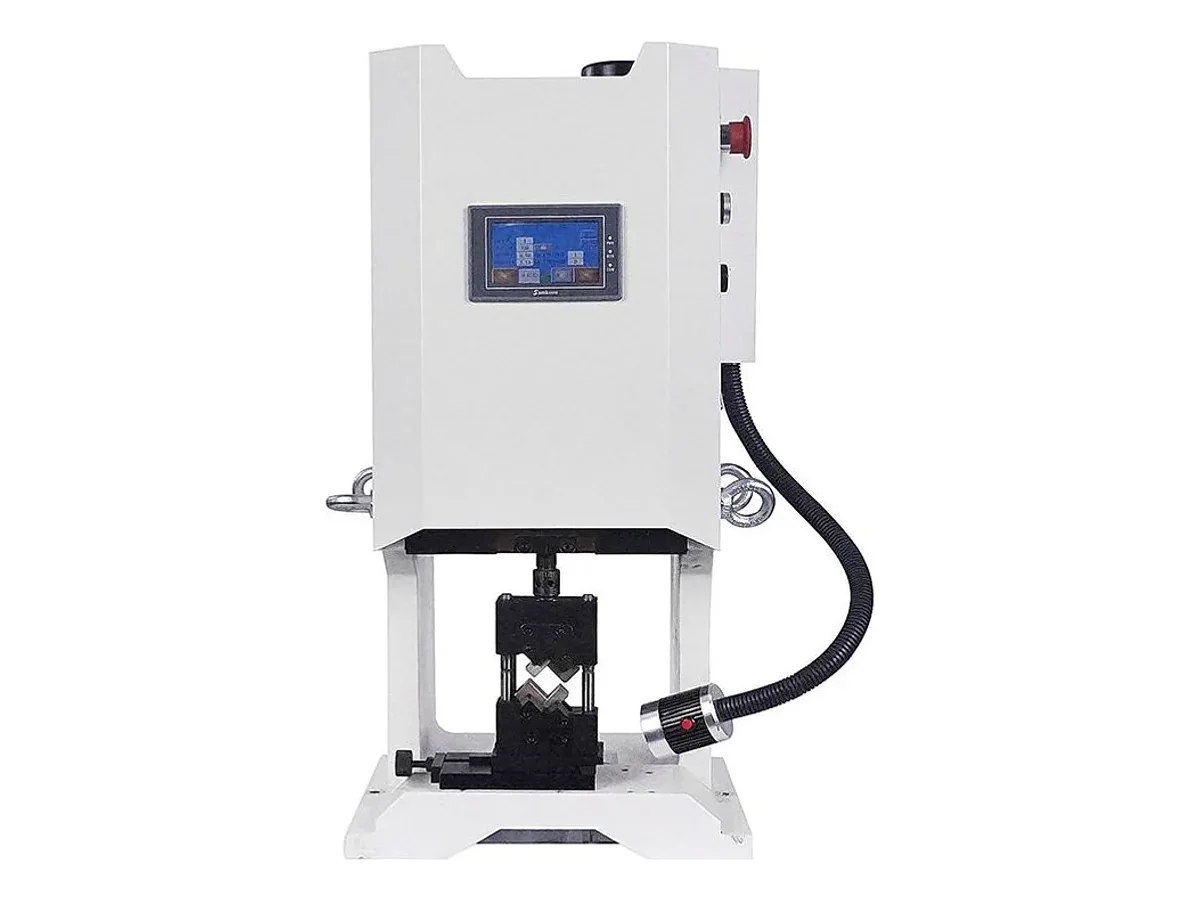
10-Ton Servo Terminal Crimping Machine, 100 kN Bench Press
Model WM-3110T
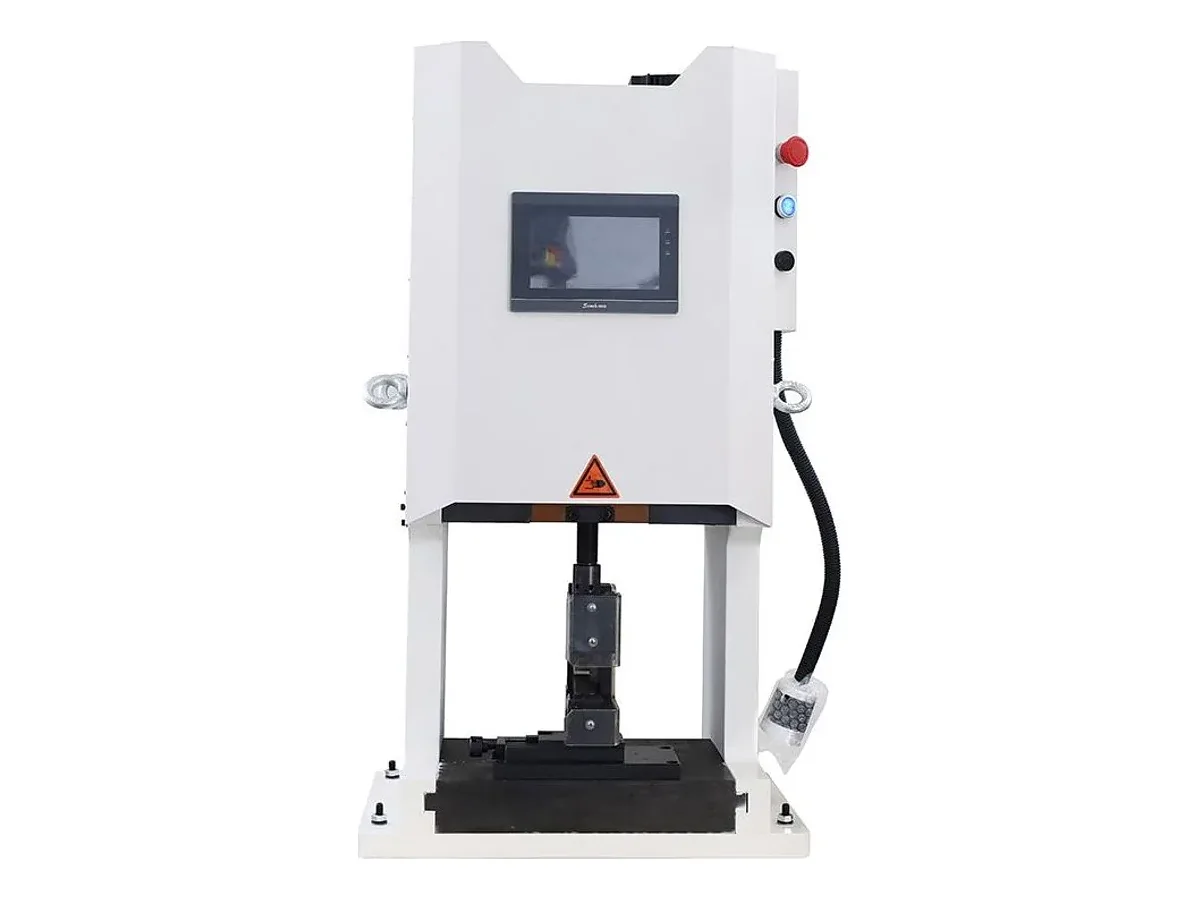
20-Ton Servo Cable Lug Crimping Machine, 200 kN and 40 mm Stroke
Model WM-3120T
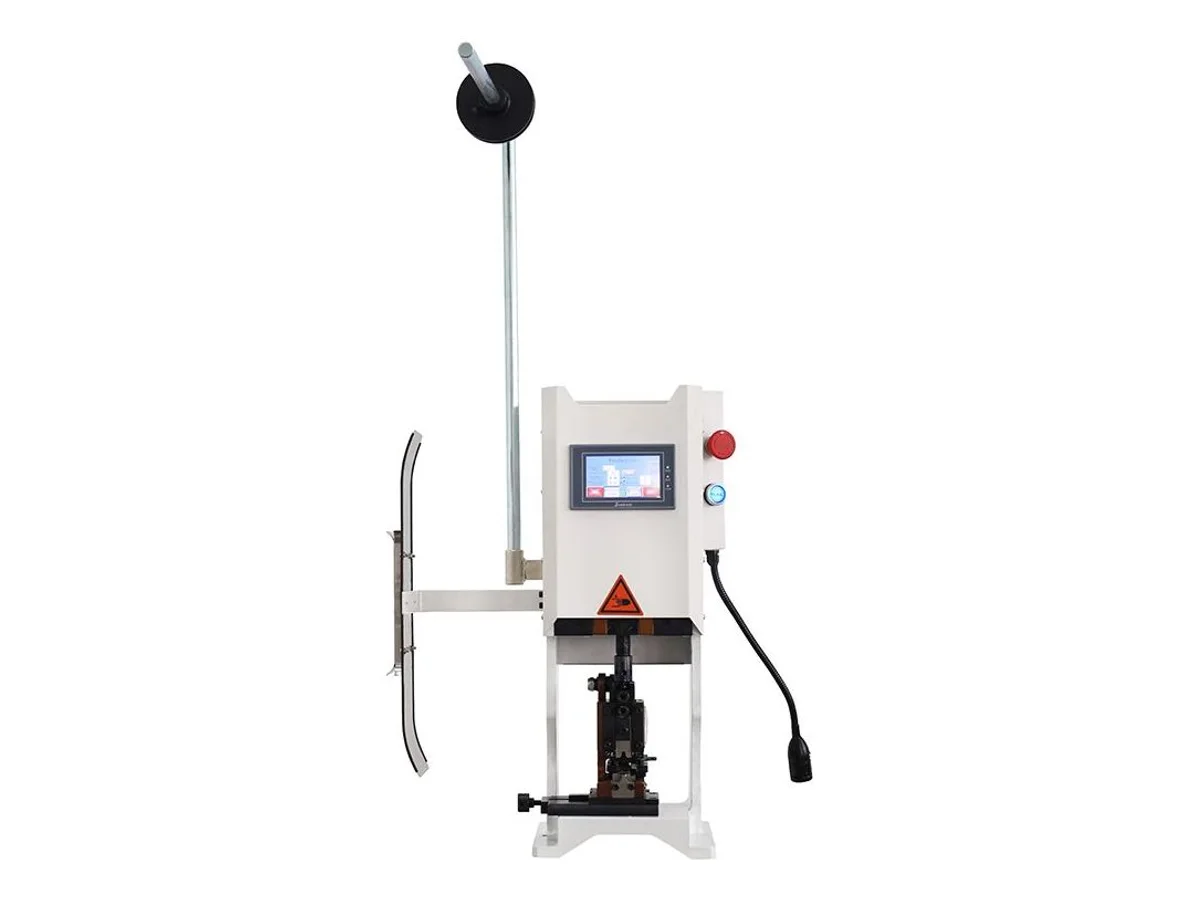
2-Ton Servo Terminal Crimping Machine, 20 kN Touchscreen Bench Press
Model WM-3102S