UV Laser Marking Machine for Nameplates, Connectors and Harness Components WM-9325
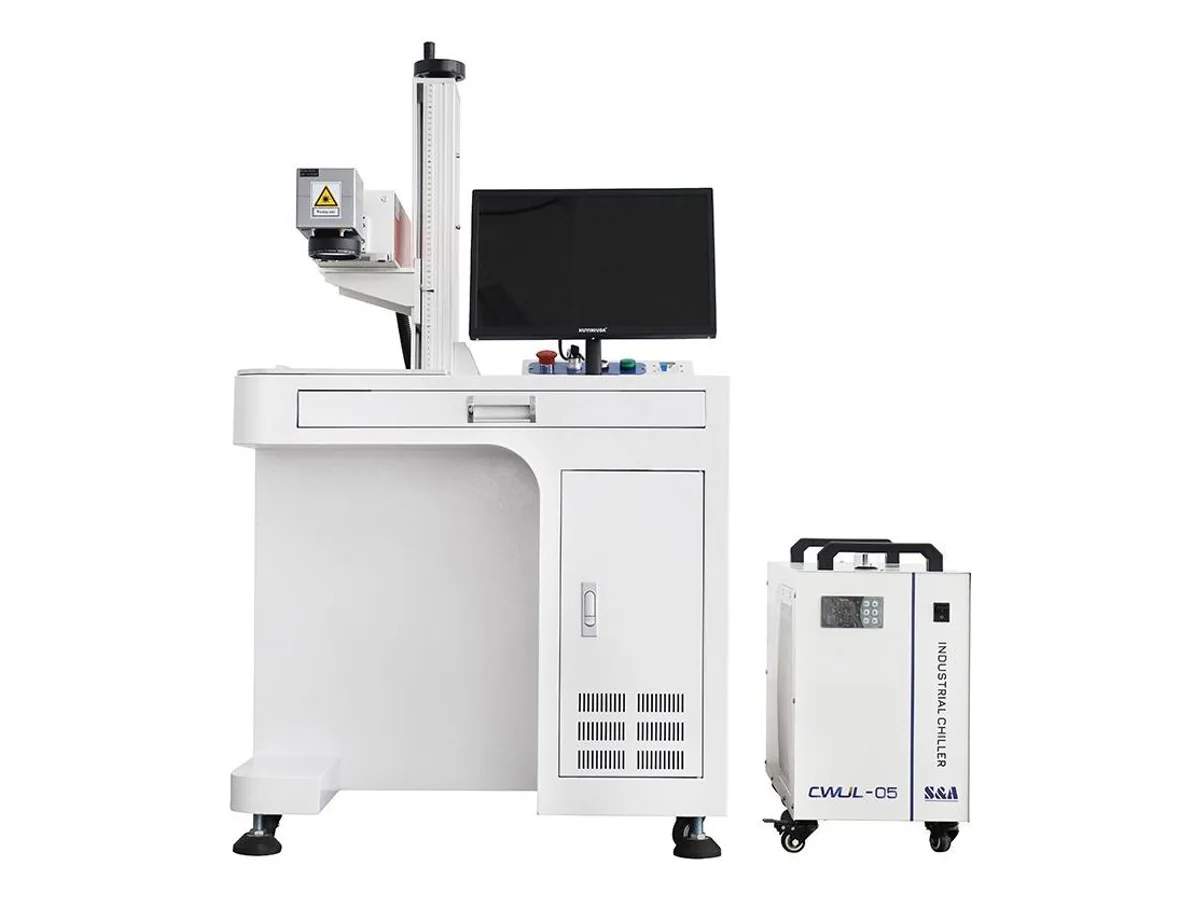
The WM-9325 is a benchtop UV laser marker for the rigid parts that carry identification around a wire harness — anodised aluminium nameplates, plastic connector housings and cable glands, terminal blocks, enclosure plates and equipment labels. The 355 nm ultraviolet source runs at 5 W with a 30–110 kHz repetition rate, resolves a minimum line width of 0.01 mm and repeats to ±0.003 mm positioning accuracy, with galvo marking speeds up to 7,000 mm/s. Artwork arrives as DXF, AI, PLT, SVG, BMP and seven other file types over USB 2.0 from a Windows PC, so serial numbers, 2D codes and logos change per part with no die, ribbon or ink to replace. The cabinet runs on 220 V with circulating water cooling and is rated for 24-hour continuous marking.
Specifications
| Function | Laser marking and engraving on metals, plastics, ceramics and other materials |
|---|---|
| Laser type | UV ultraviolet laser |
| Laser wavelength | 355 nm |
| Laser power | 5 W |
| Repetition frequency | 30 – 110 kHz |
| Q pulse width | 1 – 20 µs |
| Marking speed | 0 – 7,000 mm/s |
| Marking line width | Minimum 0.01 mm |
| Marking depth | Depends on the set power |
| Repeat positioning accuracy | ±0.003 mm |
| Cooling method | Circulating water cooling |
| Supported file formats | DXF / AI / PLT / DST / SVG / GBR / BOT / BMP / JPG / GIF / PNG |
| Operating system | Windows XP / 7 / 8 / 10 |
| Communication interface | USB 2.0 |
| Working voltage | AC 220 V ±10 %, 50/60 Hz (European standard power cord) |
| Daily working hours | 24 hours continuous marking |
| HS Code | 8456.11 (common reference — final classification confirmed by your customs broker) |
| Certification | CE (certificate provided with shipment) |
Key features
- 355 nm ultraviolet light is absorbed by most plastics instead of burning into them, so connector bodies, cable glands and PA/ABS housings take a legible mark without the scorch ring or melt edge a heat-based laser leaves
- Marks are ablated into the part itself — no ribbon, foil, ink cartridge or character die to buy, change or run out of mid-shift
- Content is a file, not tooling; serial numbers, date codes, Data Matrix and QR codes and logos can differ on every part straight from a Windows PC over USB 2.0
- Minimum line width of 0.01 mm and ±0.003 mm repeat positioning put readable 2D codes on nameplates and connector faces small enough to fit inside a harness bundle
- Height-adjustable Z column over a threaded fixture table — the red pilot beam shows the mark position before the laser fires, so a jig can be bolted down once and repeated all day
- Free sample test — send us your nameplates, connector shells or plates and the artwork, we mark them on this machine and send photos and video before you order
What it processes
- Anodised aluminium and stainless nameplates, rating plates and asset tags for control cabinets and harness assemblies
- Plastic connector housings, cable glands, junction box lids and terminal blocks that need part numbers or cavity IDs
- Serialised traceability marks — Data Matrix, QR and barcode — on harness ID plates for automotive and aerospace supply chains
- Panel and enclosure marking in a harness shop that already prints its own sleeves and labels but sends plates out for engraving
Suited for: permanent, per-part identification on the rigid components of a harness or control cabinet — nameplates and rating plates, plastic connector housings and cable glands, terminal blocks and enclosure panels — where the content changes from part to part and no consumable should be involved.
Not suited for: anything that has to be fed, cut or handled by the machine. It marks parts you place on a fixture table, one setup at a time. For laser printing on heat shrink marker tube, the WM-672 6-channel laser tube marking machine prints and cuts tube from Φ1.5 to Φ40 mm on up to six channels at once; if the sleeves also have to be threaded onto the wire and shrunk in the same cycle, the WM-671JG laser marking, inserting and shrinking machine does all three at 1,000–2,000 pcs/h. To put the legend on the wire insulation itself rather than on a plate or sleeve, the WM-9310 hot stamp wire marking machine stamps wire from Φ2 to 16 mm. For marking any other part we have not listed, describe it on the custom machine sourcing page and we will confirm whether this laser is the right route.
Send us the parts and the artwork before you buy. We mark your own nameplates or connector shells on this machine and send back photos and video, so the contrast and legibility you are judging come from your material, not from ours.
WM-9325 — common questions
Which harness parts can this machine actually mark?
The rigid, dimensionally stable ones — anodised aluminium and stainless nameplates, ID and rating plates, plastic connector housings and shells, cable glands, terminal blocks, junction box covers and enclosure panels. Marking quality on any given material depends on its surface and coating, which is exactly what the free sample test settles before you buy; send the actual part and we run it.
Why a UV laser rather than a fiber laser?
UV at 355 nm is a short wavelength that most plastics absorb directly, so material is removed with very little heat spreading into the part. On a connector housing or a coated plate that means a sharp mark without the melted edge, discolouration or raised burr a heat-driven marker can leave. On plastics it is the safer choice; on thick bare steel a higher-power fiber laser removes material faster.
Can it print a different serial number on every part?
Yes. Content comes from a file on the connected Windows PC, not from engraved dies or a ribbon, so serial numbers, date codes and 2D codes can increment or be pulled from a list part by part. Supported artwork formats are DXF, AI, PLT, DST, SVG, GBR, BOT, BMP, JPG, GIF and PNG.
What utilities does it need?
A single-phase 220 V ±10 % supply at 50/60 Hz, plus the external circulating water chiller shown beside the cabinet in the photos — cooling is by water rather than air, which is what supports the 24-hour continuous duty rating. Laser safety glasses matched to 355 nm and local extraction for marking fumes are the operator's responsibility and are not supplied with the machine. Confirm the chiller and any accessories with us when you inquire.
Can it mark the wire itself, or heat shrink sleeves?
No — this is a static benchtop marker for parts placed on a fixture table, with no tube or wire feeding, cutting or handling. Laser printing on heat shrink marker tube belongs on the WM-672, and marking directly on wire insulation belongs on the WM-9310. Both are linked below.
Related machines in Labeling & Marking
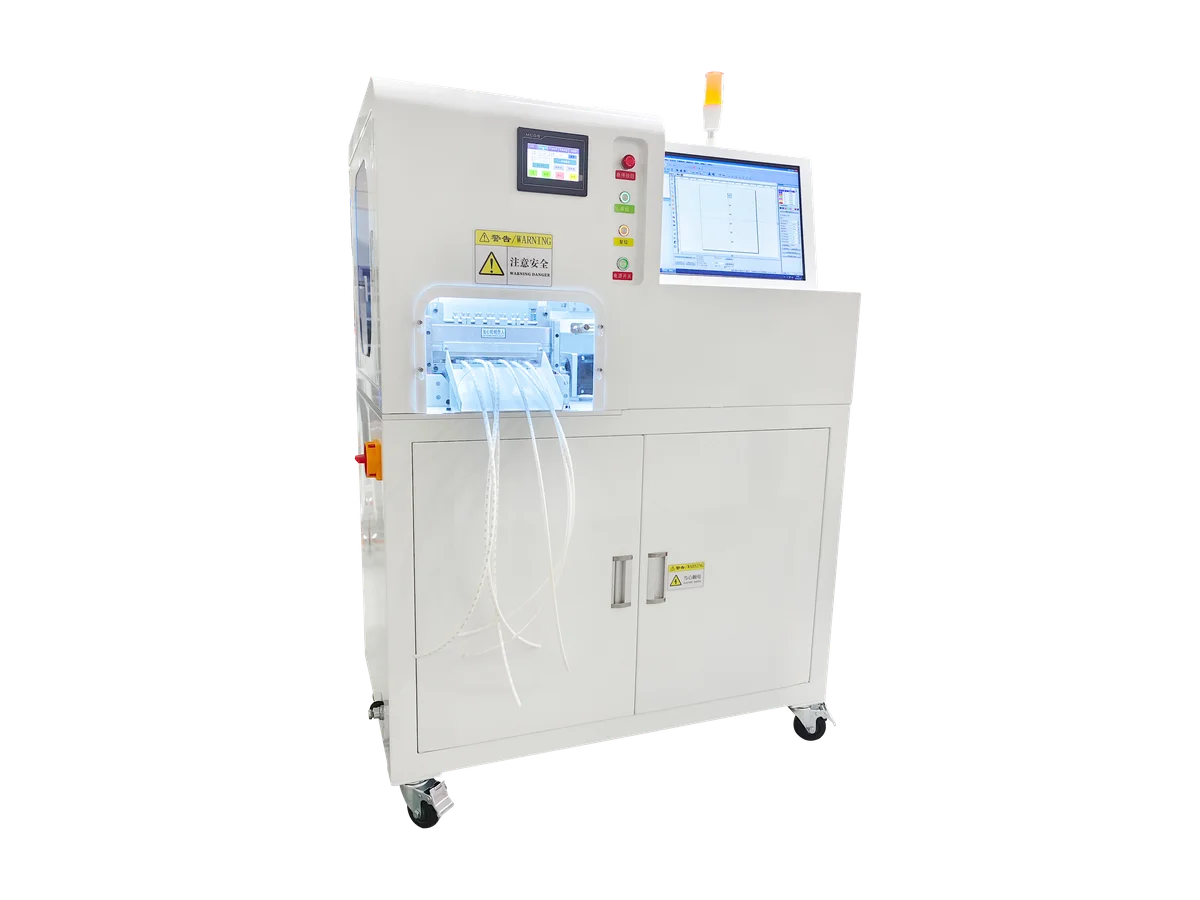
Automatic 6-Channel Laser Printing Machine for Heat Shrink Marker Tubes
Model WM-672
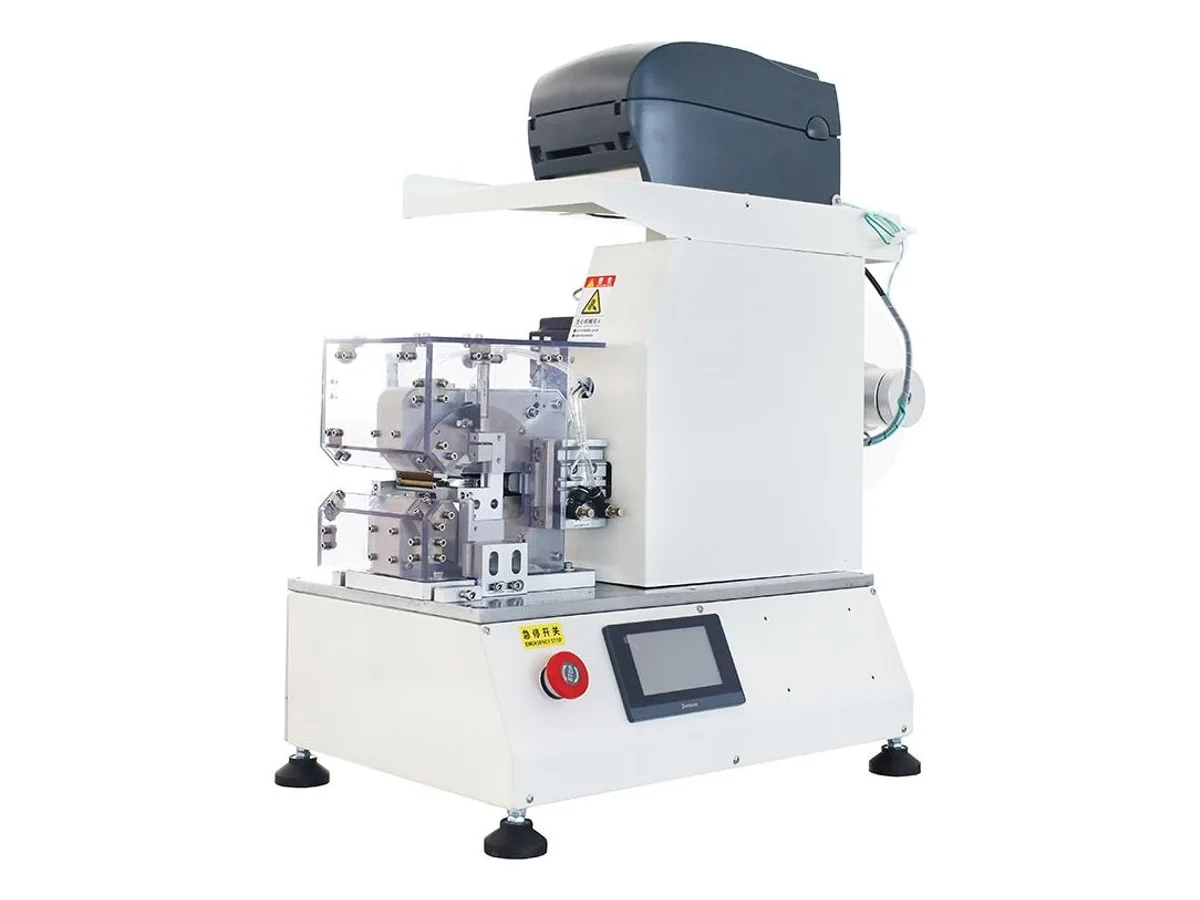
Desktop Wire Label Printing and Wrap-Around Applicator Machine
Model WM-9328
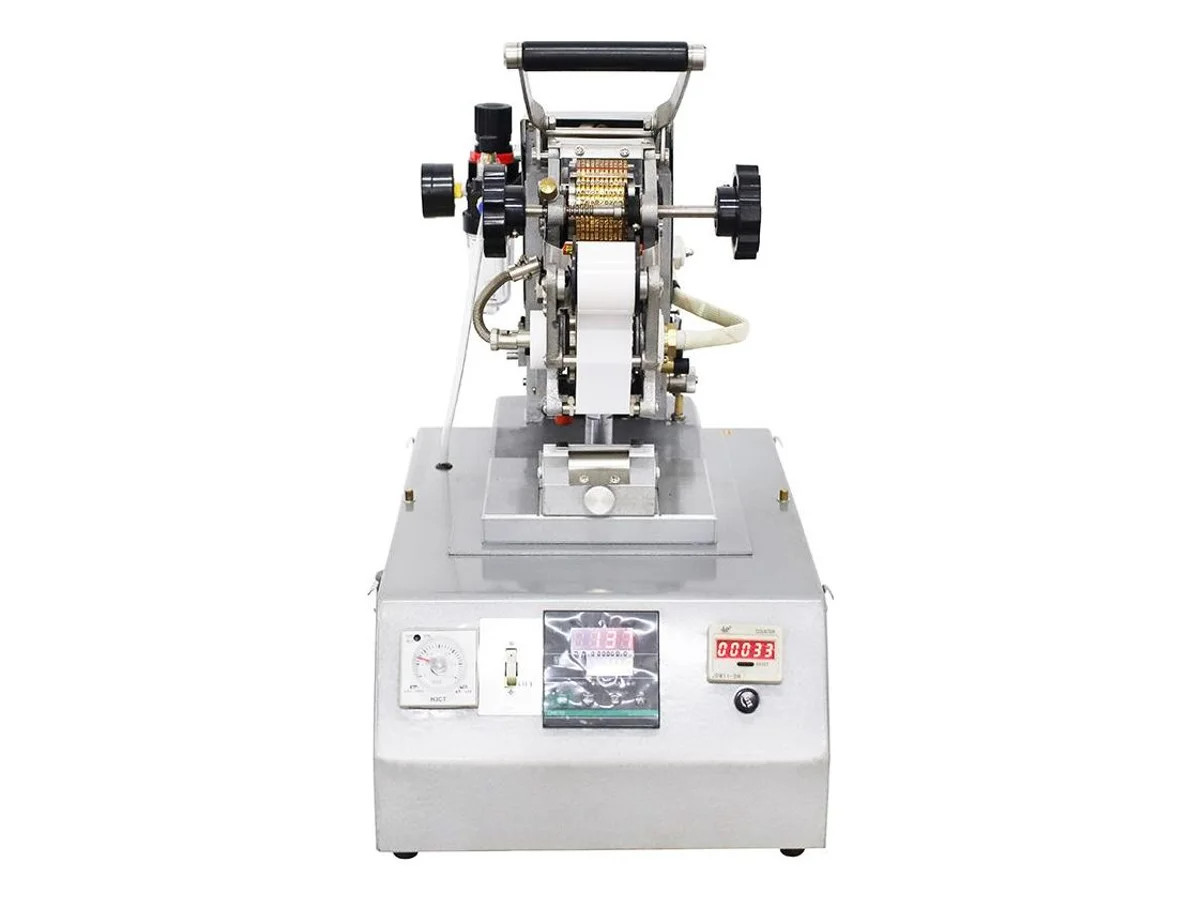
Hot Stamp Wire Marking Machine with Rotating Character Discs
Model WM-9310