Membrane Switch Terminal Crimping Machine for FPC and FFC Tails, 2P–20P WM-385
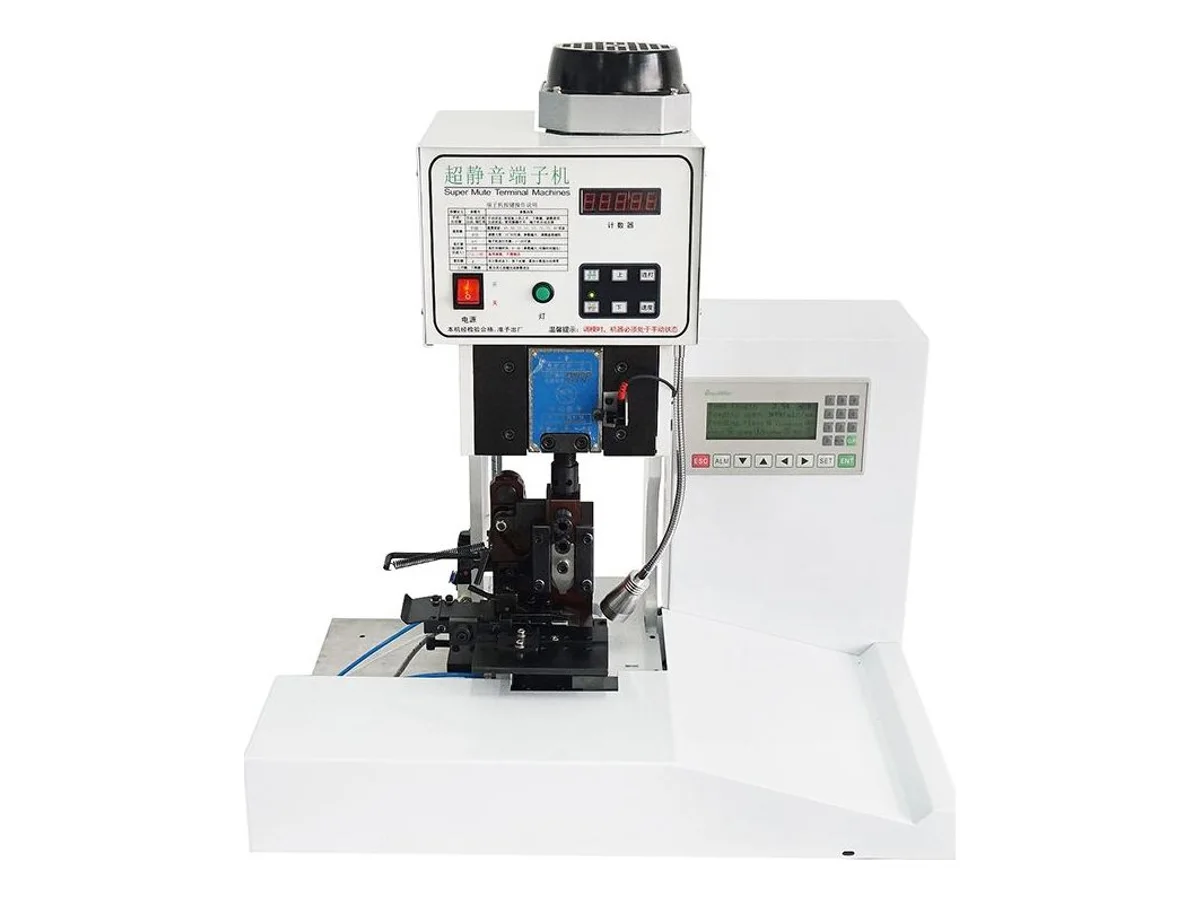
The WM-385 crimps terminals onto membrane-switch tails, FPC and FFC flex circuits — single-end crimping for 2P to 20P as standard. Its 2.0 ton press puts clean, even crimps on delicate flat conductors that hand presses tend to lift or skew. This is a true bench unit — 600 × 400 × 650 mm, 65 kg, AC220 V single phase at 750 W — so it drops into a membrane-switch or panel line next to the assembly cells rather than claiming floor space. Crimp tooling is matched to your terminal and conductor pitch, and you qualify it against your own circuit samples before committing.
Specifications
| Function | Membrane switch single-end crimping |
|---|---|
| Standard P number | 2P – 20P |
| Crimp force | 2.0 T |
| Power supply | AC220 V, 50/60 Hz |
| Power | 750 W |
| Dimensions | 600 × 400 × 650 mm |
| Weight | 65 kg |
| HS Code | 8463.90 (common reference — final classification confirmed by your customs broker) |
| Certification | CE (certificate provided with shipment) |
Key features
- Purpose-built for flat flexible conductors — membrane switch tails, FPC and FFC ends that round-wire crimpers cannot grip straight
- 2.0 T of controlled press force seats terminal rows evenly, avoiding the lifted-corner and skewed-pin defects of manual benches
- Compact 65 kg bench format brings the machine to the assembly cell instead of routing flex circuits across the shop
- 2P through 20P standard range covers most membrane keypads and display tails, with other configurations quotable
What it processes
- Membrane switch and keypad tail termination, 2P – 20P
- FPC and FFC connector-end crimping for displays and small modules
- Appliance control panels, industrial keypads and medical front-panel production
Suited for: terminating flat flexible circuits — membrane switch tails, FPC and FFC from 2P to 20P — in keypad, display and control-panel production. Not suited for: round wire or reel-fed harness terminals — for those, pick from the wire-fed models in the terminal crimping machines category. For ribbon cable made from individually insulated wires, such as DuPont-style leads, the wires have to be cut, separated and stripped before it is crimped, which is what the WM-3215 flat ribbon cable double-end crimping machine does — 3 to 20 pins, both ends in one cycle, 15,000 terminals per hour. For tails wider than 20P, send your specification through our custom machine inquiry; we confirm the required configuration.
Because die sets are matched to your terminal and pitch, acceptance runs on your real parts: send a batch of your actual membrane tails or flex circuits with your terminals, and we crimp them on this machine on video before you commit.
Engineering knowledge
Choose and troubleshoot this process
- Ferrule Crimping: Strip Length, Terminal Fit and Chain-Fed vs Loose-Fed MachinesCompare chain-fed and loose-ferrule crimping machines by wire preparation, changeover, terminal fit and batch output. Check WM-3243 and WM-3246 specifications.
- How to Choose a Terminal Crimping MachineChoose a terminal crimping machine by terminal presentation, wire range, applicator standard, required process steps, inspection method and production mix.
- Terminal Back-Out After Housing Insertion: What to CheckFind why a crimped terminal backs out of its connector housing. Check part matching, orientation, crimp shape, primary retention and secondary locks.
WM-385 — common questions
Which circuit types can the WM-385 terminate?
Flat flexible conductors — membrane switch tails, flexible printed circuits (FPC) and flat flexible cable (FFC). Standard capability runs 2P through 20P; the die set is matched to your terminal and conductor pitch, so send tail samples and terminal drawings for verification before ordering.
What does it need to run?
AC220 V single-phase power at 750 W. At 600 × 400 × 650 mm and 65 kg it sits on a standard workbench beside your assembly cells — no foundation, no floor space claim, and one operator loads tails and unloads crimped parts.
What is it not suitable for?
Round wire and reel-fed harness terminals — that work belongs to the wire-fed models in the terminal crimping machines category. It is also a single-end machine and tops out at 20P in standard form; wider tails need a custom quote.
Related machines in Crimping & Connector Assembly
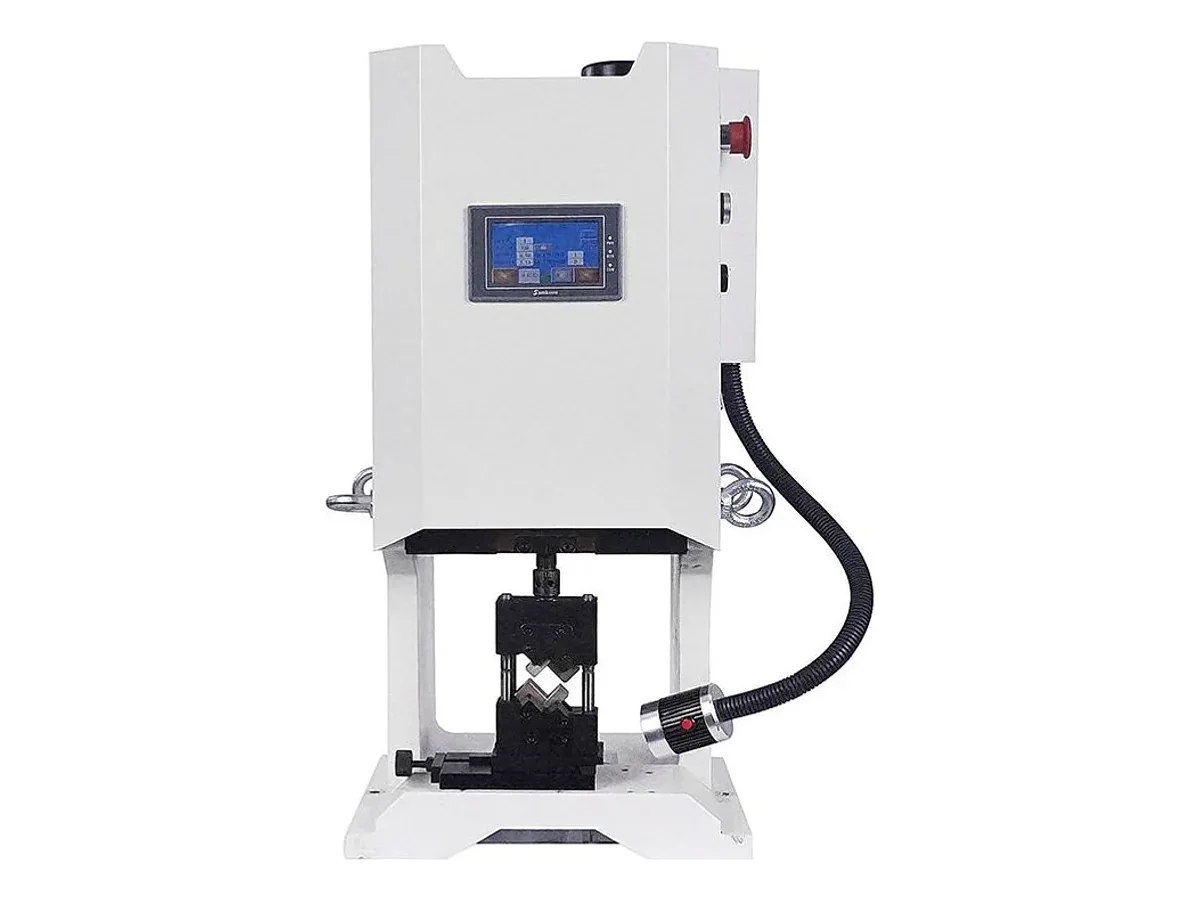
100 kN Semi-Automatic Servo Terminal Crimping Machine
Model WM-3110T
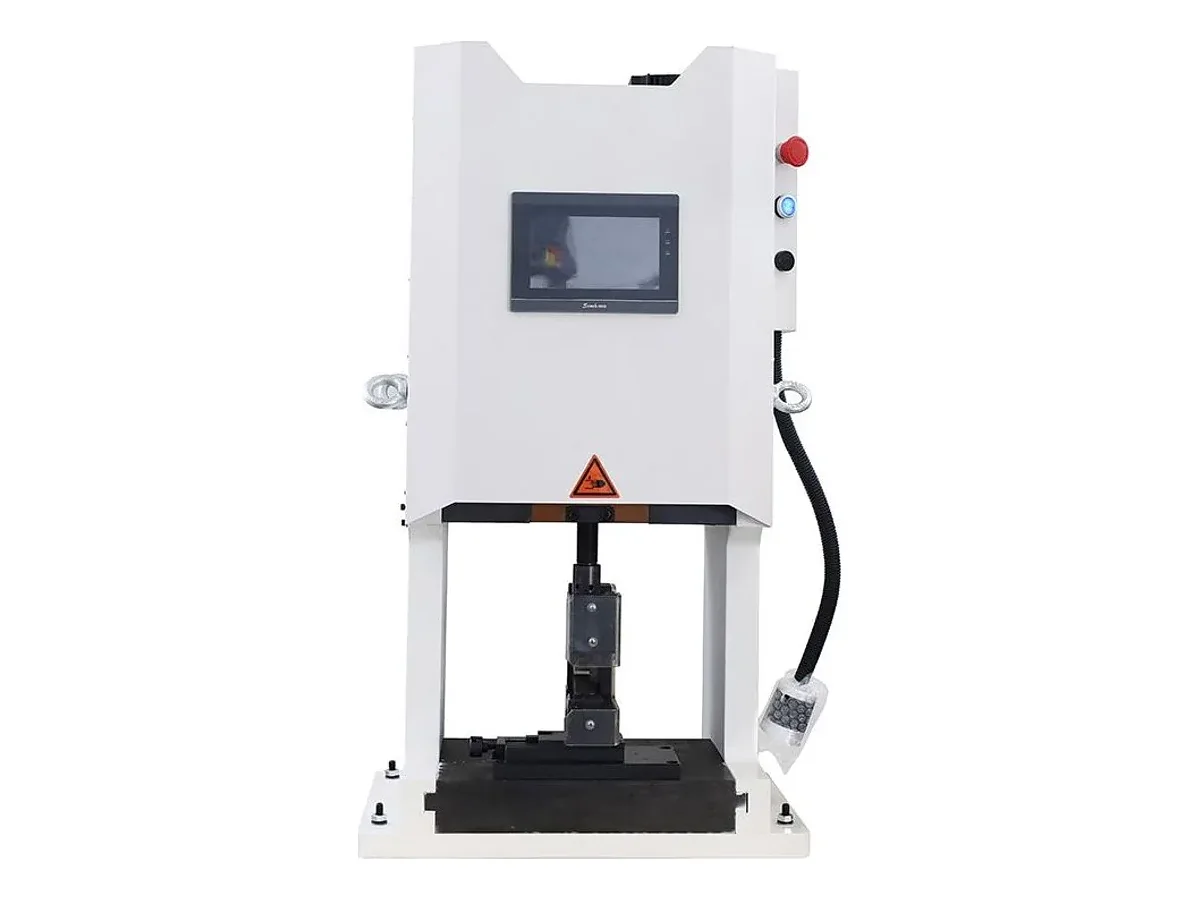
200 kN Semi-Automatic Servo Cable Lug Crimping Machine
Model WM-3120T
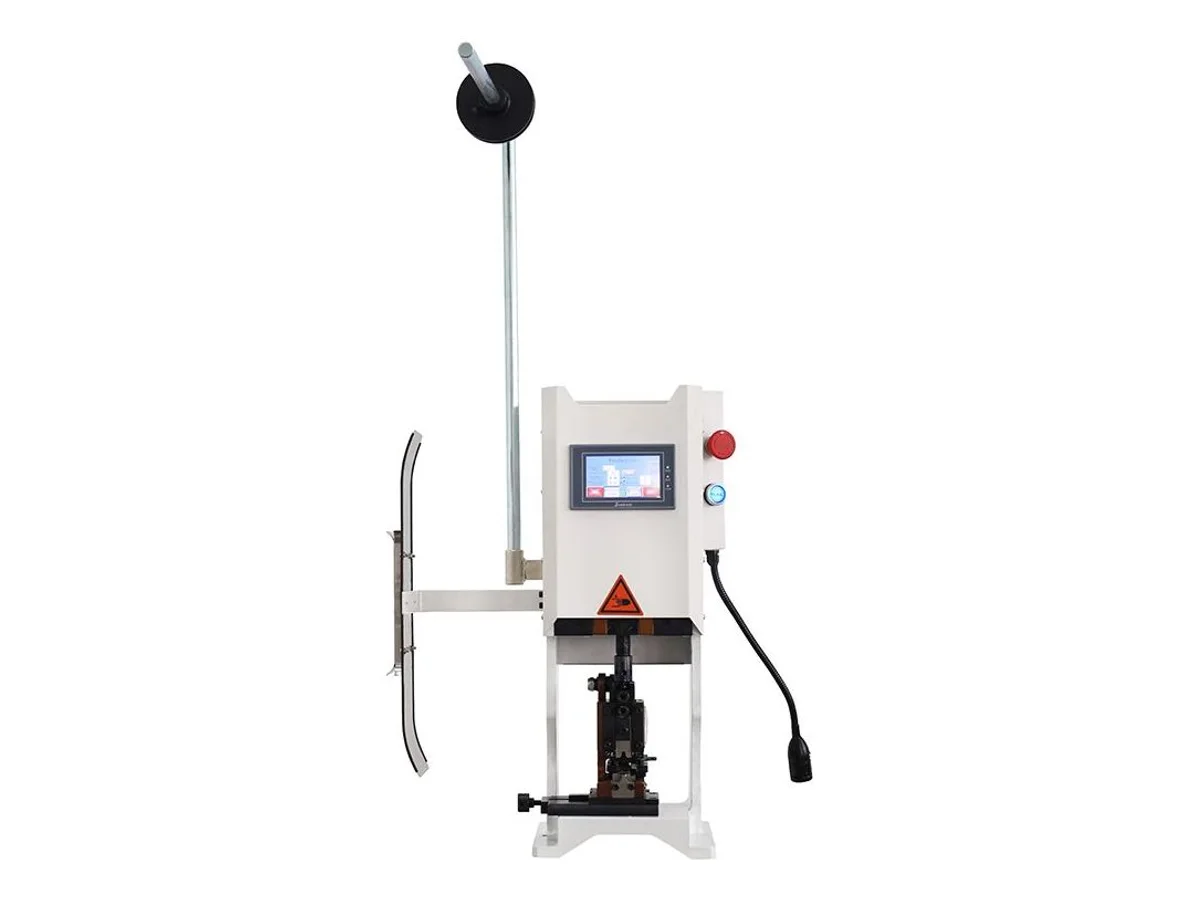
20 kN Semi-Automatic Servo Terminal Crimping Machine
Model WM-3102S