Double-End Terminal Crimping Machine for Cable Lugs and Ferrules, 4–6 mm² WM-371
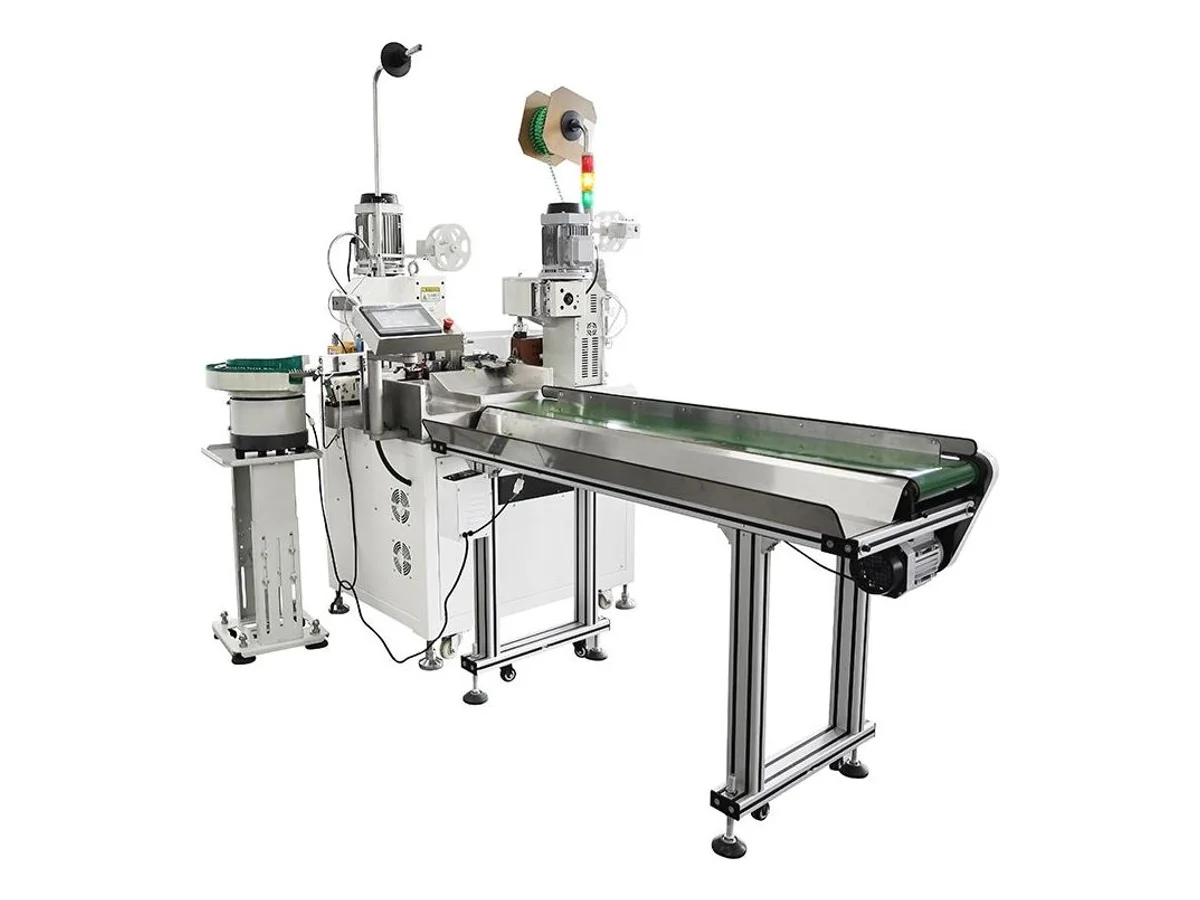
The WM-371 finishes both ends of a lead in one pass — it cuts the wire to length, strips and twists the strands, then crimps a different terminal on each end, pairing a loose copper cable lug with a pre-insulated tubular ferrule. It covers terminals for 4–6 mm² wire, the class used for earth bonding and panel power leads. Loose lugs feed from a vibratory bowl while chained ferrules run off the reel, a lack-of-material detector halts the cycle when either runs empty, and a belt conveyor carries finished leads out of the 580 kg cell.
Specifications
| Function | Cutting, stripping, twisting and double-end different-terminal crimping |
|---|---|
| Terminal size | 4 – 6 mm² |
| Terminal types | Pre-insulated tubular terminals, loose copper cable lugs |
| Detector | Lack-of-material detector |
| Air source | 0.5 – 0.8 MPa |
| Power supply | 220 V / 50 Hz |
| Dimensions | 155 × 96 × 175 cm |
| Weight | 580 kg |
| HS Code | 8463.90 (common reference — final classification confirmed by your customs broker) |
| Certification | CE (certificate provided with shipment) |
Key features
- A different terminal on each end in one cycle — copper cable lug for the busbar side, insulated ferrule for the terminal-block side, with no second press or hand tool afterwards
- Two independent terminal feeds — a vibratory bowl orients loose lugs onto a track while chained ferrules pay off the reel, so neither station needs an operator loading parts
- Strands are twisted before every crimp, so 4–6 mm² flexible conductor enters the barrel fully captured instead of splaying
- Lack-of-material detection stops the machine the moment wire, lugs or ferrules run out — no half-terminated leads hiding in a finished batch
What it processes
- Yellow-green earth bonding leads — ring lug on one end, ferrule on the other
- Control cabinet and switchgear power jumpers in 4 and 6 mm² flexible wire
- Energy-storage and appliance lines replacing two bench presses and a cutting station
Suited for: double-ended leads in 4–6 mm² flexible wire where each end takes a different terminal — earth bonding straps, cabinet power jumpers and switchgear leads with a copper lug on one end and a pre-insulated ferrule on the other. Not suited for: connector housing insertion or fine electronics wire — for both, pick the WM-376 double-end crimping and housing insertion machine, which crimps AWG 32–16 wire and seats both ends in housings.
Terminal fit decides everything on a double-end machine: send 2–3 meters of your wire plus samples of both terminals, and we run them on this machine on video before you commit.
Engineering knowledge
Choose and troubleshoot this process
- Ferrule Crimping: Strip Length, Terminal Fit and Chain-Fed vs Loose-Fed MachinesCompare chain-fed and loose-ferrule crimping machines by wire preparation, changeover, terminal fit and batch output. Check WM-3243 and WM-3246 specifications.
- How to Choose a Terminal Crimping MachineChoose a terminal crimping machine by terminal presentation, wire range, applicator standard, required process steps, inspection method and production mix.
- Terminal Back-Out After Housing Insertion: What to CheckFind why a crimped terminal backs out of its connector housing. Check part matching, orientation, crimp shape, primary retention and secondary locks.
WM-371 — common questions
Can it really crimp a different terminal type on each end?
Yes — that is the machine's whole layout. One station crimps loose copper cable lugs fed from the vibratory bowl, the other crimps pre-insulated tubular terminals fed as a chain from the reel. The finished lead comes out with, for example, a ring lug on one end and a ferrule on the other, as shown in the sample photos.
How are loose cable lugs fed without an operator?
A vibratory bowl feeder orients the lugs and lines them up on a rail into the crimping station — the same principle connector factories use for loose hardware. Combined with reel-fed ferrules and the lack-of-material detector, the machine keeps running until a feed is genuinely empty, then stops rather than producing bad pieces.
Does it handle connector housings or thin electronics wire?
No — it is built around 4–6 mm² wire and cable lugs and tubular ferrules, not plug-in housings or fine-gauge leads. For housing insertion or small-wire crimping, see the other terminal crimping machines in this category.
Related machines in Crimping & Connector Assembly
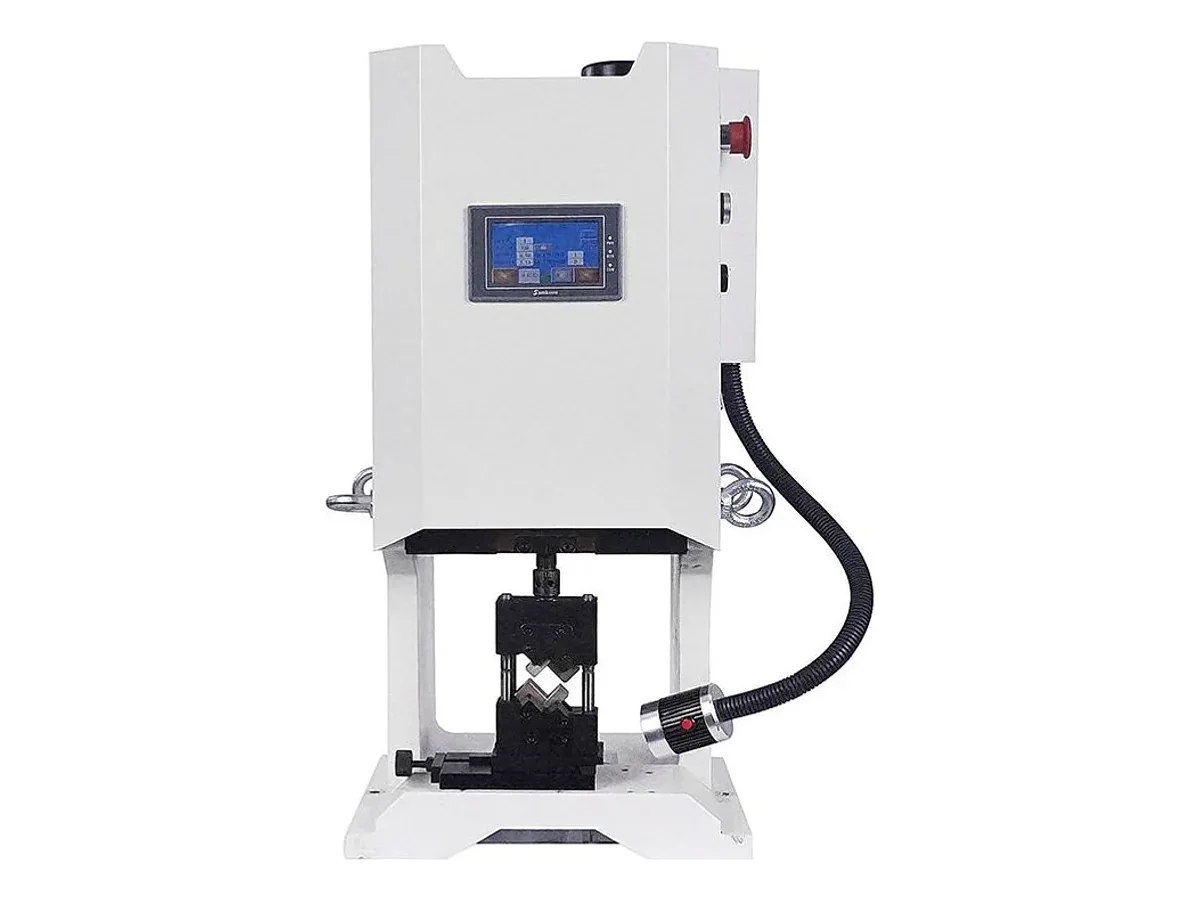
100 kN Semi-Automatic Servo Terminal Crimping Machine
Model WM-3110T
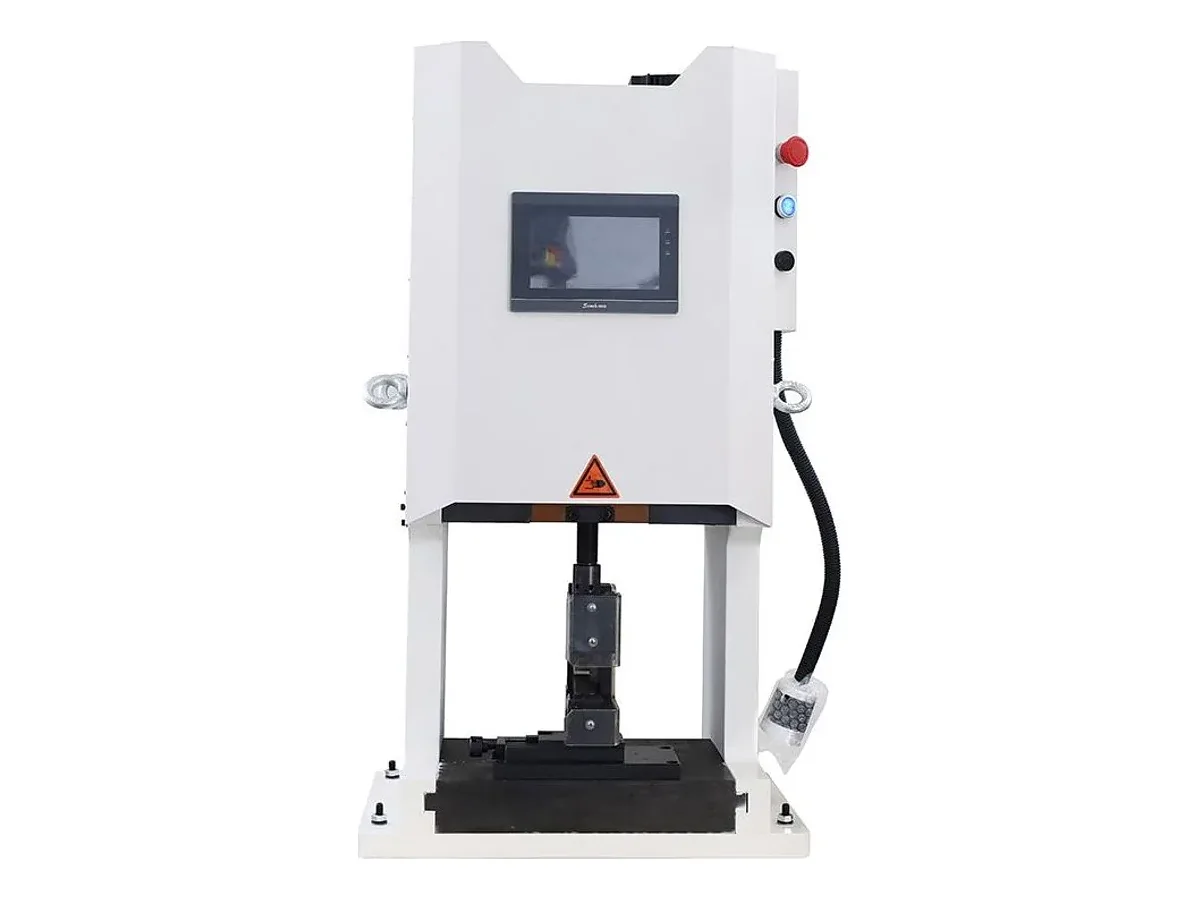
200 kN Semi-Automatic Servo Cable Lug Crimping Machine
Model WM-3120T
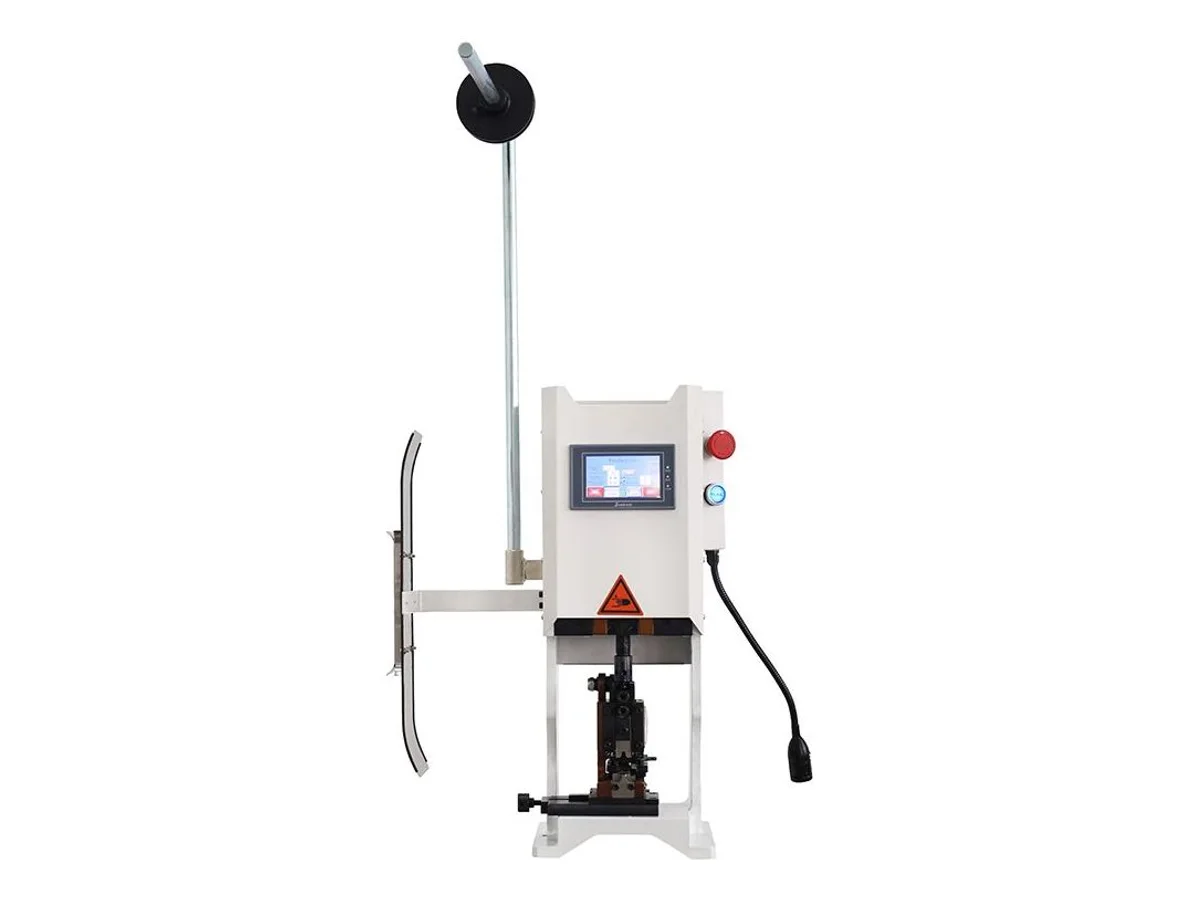
20 kN Semi-Automatic Servo Terminal Crimping Machine
Model WM-3102S