Automatic Double-End Loose-Terminal Crimping Machine with Gripper Feeding WM-3248
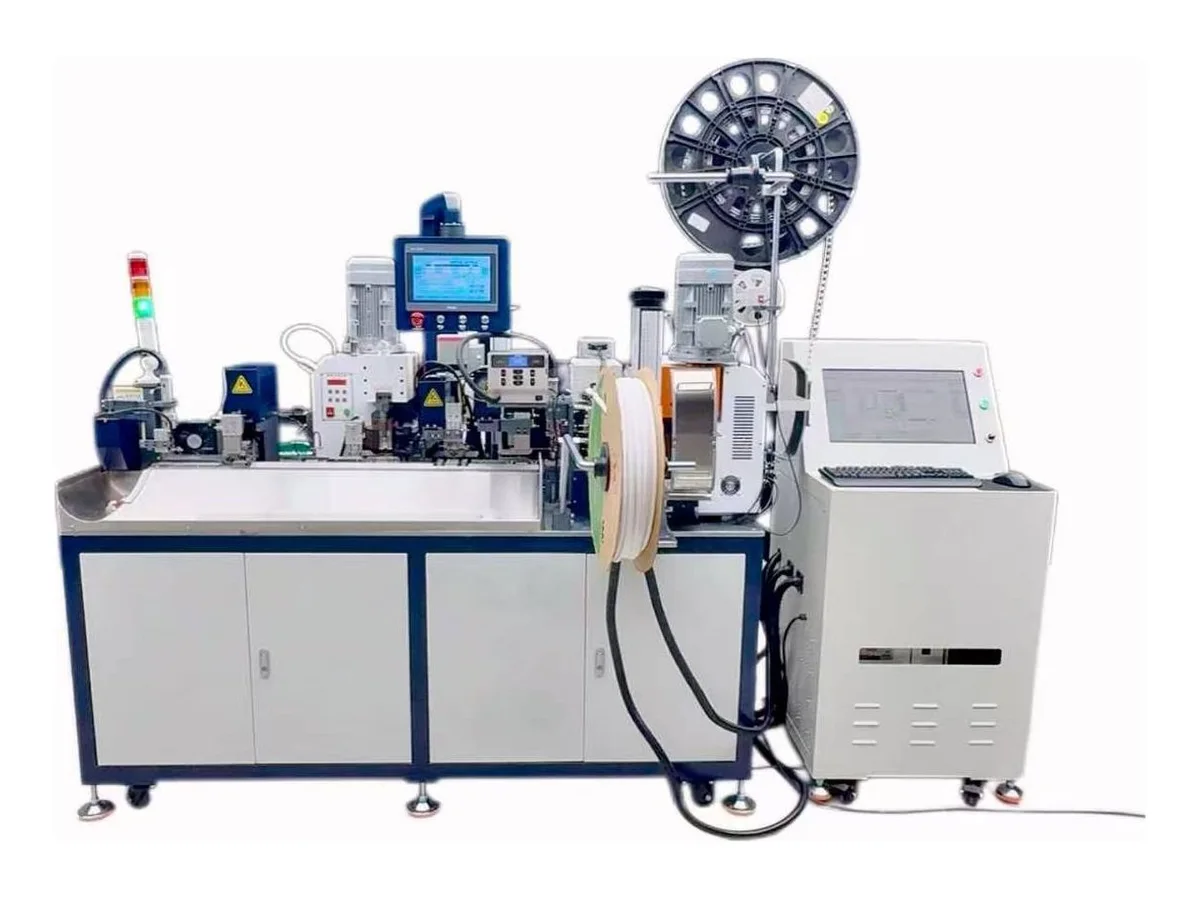
We configure the WM-3248 with two vibratory bowls and two terminal-gripper units to cut, strip, twist and terminate both ends of 0.3–4.0 mm² wire. The specified cutting range is 60–9999 mm, with 0–15 mm stripping at each end and a continuous-running output reference of 1200–1600 pieces per hour. The machine photos and full-length video show a mixed-feed demonstration build; we configure the supplied machine with loose-terminal feeding at both ends.
Specifications
| Model | WM-3248 |
|---|---|
| Process | Wire cutting; single- or double-end stripping, strand twisting and terminal crimping |
| Terminal feeding | Two vibratory bowls and two gripper-transfer units for loose terminals |
| Specified terminal type | Selected loose closed-barrel terminals; feeding, gripping and crimp tooling matched to the terminal sample |
| Wire range | 0.3–4.0 mm²; BVR, RV and low-smoke halogen-free wire, subject to sample setup |
| Cutting length | 60–9999 mm; setting increment 0.1 mm |
| Cutting-length error | Stated error: 1 mm + 0.001 × total length, with length in mm |
| Stripping length | Front and rear ends: 0–15 mm |
| Output reference | 1200–1600 pcs/h during continuous running; vision inspection reduces output |
| Evaluation reference | At least 1200 pcs/h at a 100 mm wire length is the stated evaluation target; sample-run output confirmed for the selected terminal and inspection sequence |
| Control | Motion control card and 7-inch touchscreen; front and rear functions set independently |
| Feed and transfer axes | Servo wire feed, front XY unit and rear XY unit |
| Cutting and stripping drive | Servo motor directly coupled to a C5-grade 1610 ball screw |
| Twisting units | Two coaxial strand-twisting units |
| Crimping stations | Two stations; 2 T press specification in the component schedule |
| Crimping drive configuration | 1500 W servo crimping included (unit schedule); servo terminal press optional (component schedule). Confirm the supplied drive configuration before ordering. |
| Standard detection | Air pressure, wire presence, terminal presence and crimped-terminal presence |
| Optional inspection | Crimp-force monitoring and vision inspection, quoted separately |
| Electrical supply | Reference configuration: Single-phase AC 220 V, 50/60 Hz, 32 A |
| Compressed air | 0.55–0.7 MPa; clean, dry air |
| Dimensions | Approximately 1100 × 1100 × 1600 mm, excluding protruding parts; installed footprint confirmed on the quote |
| Electrical configuration | We configure the machine’s electrical supply for your installation before shipment. Your quote confirms the voltage, phase, frequency, current and the power cord with plug or industrial connection for your site. Common site supplies are 120 V, 60 Hz with grounded Type B outlets in the US and Canada, with 208 V or 240 V also found at industrial sites. The UK and Ireland use 230 V, 50 Hz with Type G. Australia and New Zealand use nominal 230 V, 50 Hz with Type I, and some Australian sites list 240 V. Three-phase installations in the UK, Ireland, Australia and New Zealand commonly use 400 V at 50 Hz, with 415 V at some Australian sites. |
| Lead time | Your quote confirms the machine configuration, included accessories and dispatch date. |
| Warranty and support | One-year machine warranty and free remote video support for the life of the equipment. |
| Wear parts | For wear parts, every quote lists them with unit price and the location they ship from. |
| HS Code | 8463.90 (common reference — final classification confirmed by your customs broker) |
| Certification | CE (certificate provided with shipment) |
Key features
- Feed loose terminals at both ends from matched bowls and tracks. Grippers transfer each oriented terminal into position, reducing the manual handling needed between wire preparation and crimping.
- Set front and rear stripping, twisting and crimping functions independently, so an asymmetric lead can be prepared within the same configured production sequence.
- Use coaxial twisting to gather conductor strands before insertion into a closed barrel. We set the twisting and insertion steps with your actual wire and terminal.
- Check air pressure and material presence during the cycle; add crimp-force monitoring or vision inspection when the job needs additional process checks. The quote identifies the installed inspection functions.
- Send both terminal drawings, wire samples and the finished-lead drawing. We match both feed paths and tooling, record a sample run and show the finished terminations before you order.
What it processes
- Appliance and electrical-equipment leads with selected loose terminals at both ends
- Control-panel jumpers in 0.3–4.0 mm² flexible wire requiring automatic preparation and termination
- Repeat wire-harness jobs where terminal orientation and gripping tooling can be dedicated to the specified parts
Loose-terminal automation starts with reliable part orientation. Each bowl must present a terminal that the gripper can pick up, transfer and hold for wire insertion. We configure these steps for both ends of the finished lead, together with stripping, strand twisting and the matched crimp tooling.
The machine photos and full-length demonstration video show a mixed-feed build, including the loose-terminal feeding and processing mechanisms. We configure WM-3248 with loose-terminal feeding at both ends; the visible camera is an inspection option. We confirm the supplied configuration and record the sample-run results with your parts before shipment.
For a useful sample trial, send the wire specification, shortest and longest cut lengths, stripping lengths and both terminal drawings. Agree the checks for conductor insertion, crimp dimensions and pull strength, then review the measured sample-run time alongside the required inspection functions.
If the job only needs an operator-loaded loose-terminal press, compare our WM-3242 bowl-fed terminal crimping machine. For automatic handling of loose pre-insulated terminals, compare the specified wire range and tooling of our WM-3212 double-end pre-insulated terminal machine. To price the WM-3248 for your job, start with the wire size and a terminal part number or photo. We’ll check which tooling to quote.
Engineering knowledge
Choose and troubleshoot this process
- Ferrule Crimping: Strip Length, Terminal Fit and Chain-Fed vs Loose-Fed MachinesCompare chain-fed and loose-ferrule crimping machines by wire preparation, changeover, terminal fit and batch output. Check WM-3243 and WM-3246 specifications.
- Crimp Applicator Parts: Shut Height, Stroke and Tooling FitIdentify crimp applicator parts and separate shut height, press stroke and finished crimp height before reusing tooling or ordering a bench press.
- Can a Crimping Line Fit Different Terminals at Each End?Specify double-end crimping with separate end-A and end-B requirements, lead-length references, component feeds, changeover and finished-part inspection.
WM-3248 — common questions
Are both ends fed with loose terminals?
Yes. WM-3248 is offered here as the dual loose-terminal configuration, with two vibratory bowls and two gripper units. The machine photos and full-length video show a mixed-feed demonstration build. We confirm both loose-terminal feed units, tooling and the sample result for your order.
Will it process every loose ring, fork or pin terminal?
The specified scope is selected loose closed-barrel terminals. A matching wire size alone does not establish compatibility: the bowl track, gripper, insertion path and crimp tooling must suit the terminal geometry. Send the actual terminal and wire for both ends; we confirm the supplied tooling and sample result before you order.
Is 1200–1600 pieces per hour the finished output for my job?
That is the continuous-running reference. The evaluation target is at least 1200 pieces per hour with a 100 mm wire length. Longer wires, terminal handling, inspection and changeovers affect practical output; adding vision inspection also reduces the cycle rate. We time a run with your parts and agreed inspection sequence.
Are servo crimping presses included?
The unit schedule specifies two included 1500 W servo crimping stations. The component schedule specifies 2 T presses and lists the servo terminal press as an option. We confirm the drive type, press specification and included configuration on the quote before ordering.
Are pressure and vision monitoring standard?
Crimp-force monitoring and vision inspection are optional. Standard detection covers air pressure, wire presence, terminal presence and crimped-terminal presence. We define the inspection coverage and acceptance checks with your terminal drawing; presence detection alone does not verify crimp strength.
What does a terminal change require?
A different terminal can require new bowl tooling, a feed track, gripper fingers and crimp tooling. We evaluate the geometry of both ends and list the required change parts. Front and rear process settings can be adjusted independently on the touchscreen.
How are export setup and spare parts handled?
We set the voltage for your country and ship the English interface and manual. The listed electrical supply is single-phase 220 V, 50/60 Hz, 32 A; we confirm the delivered electrical configuration before installation. For blades, feed wheels and gripping or crimp-tool wear parts, every quote lists them with unit price and the location they ship from.
Related machines in Crimping & Connector Assembly
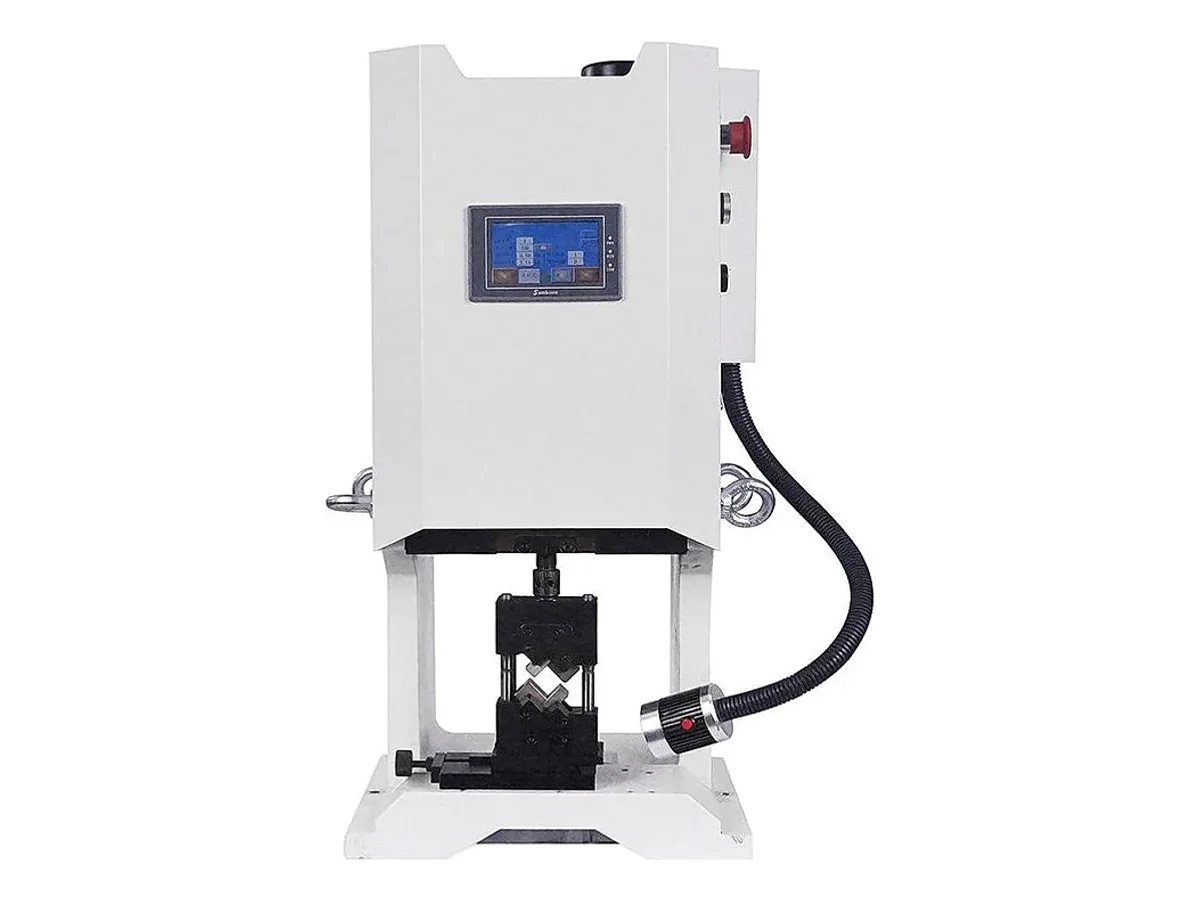
100 kN Semi-Automatic Servo Terminal Crimping Machine
Model WM-3110T
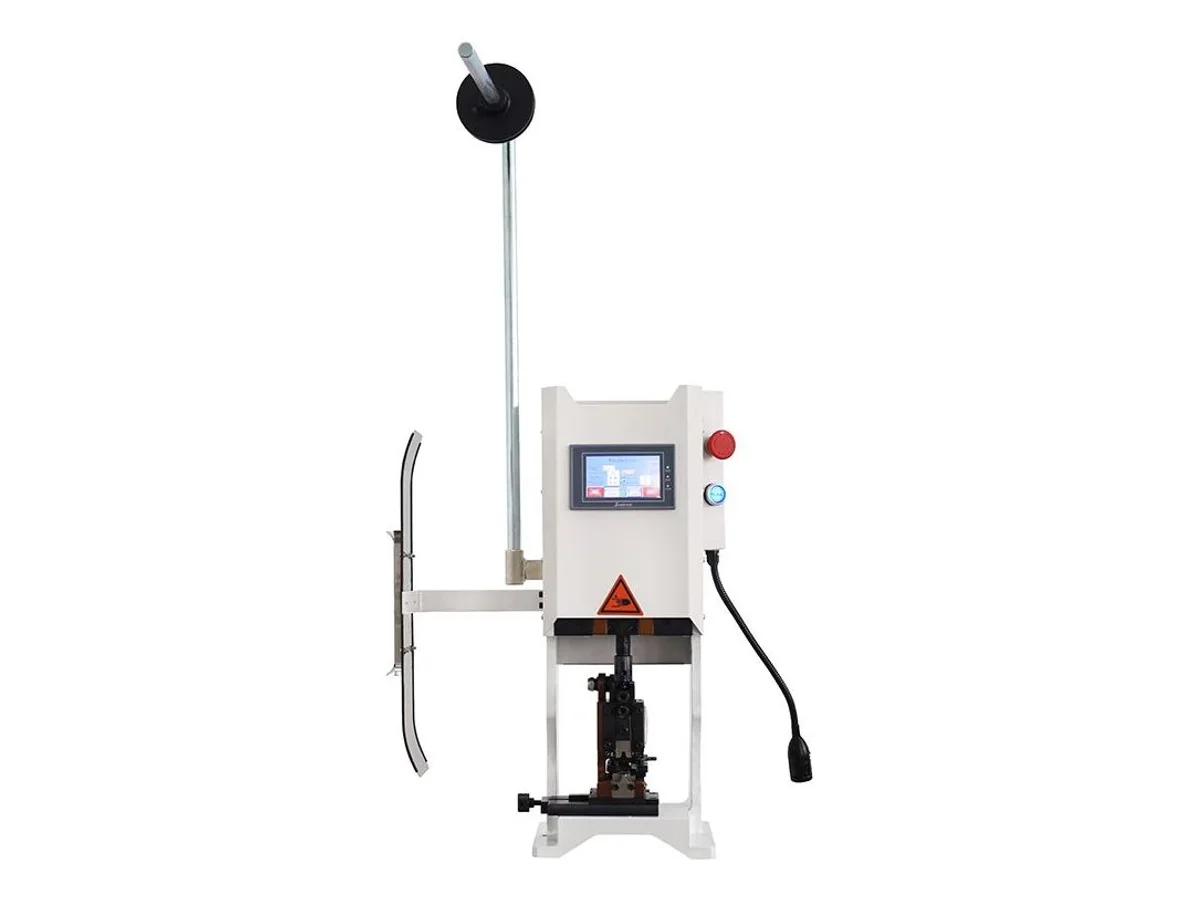
20 kN Semi-Automatic Servo Terminal Crimping Machine
Model WM-3102S
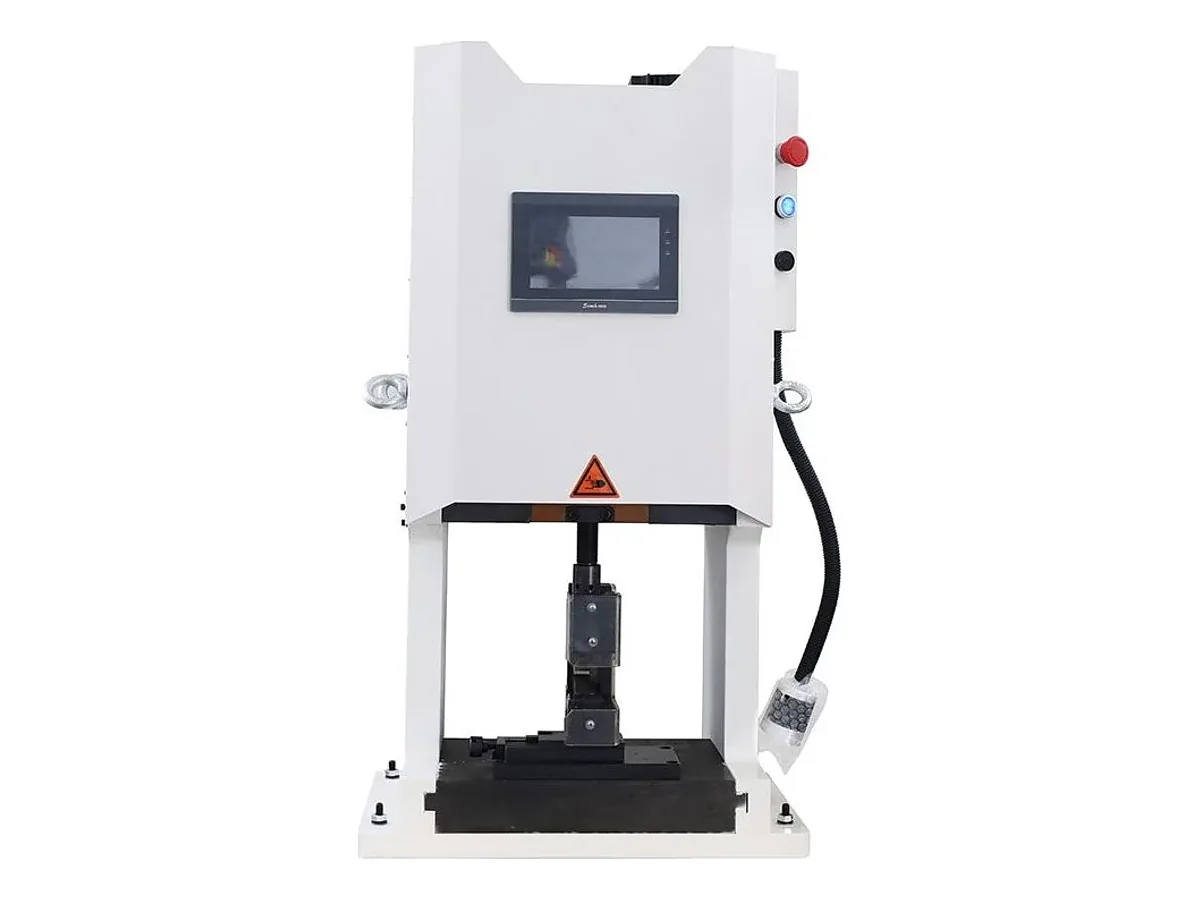
200 kN Semi-Automatic Servo Cable Lug Crimping Machine
Model WM-3120T