Powered Wire Spool Dereeler Machine for 250 kg Spools up to Ø450 mm WM-9334
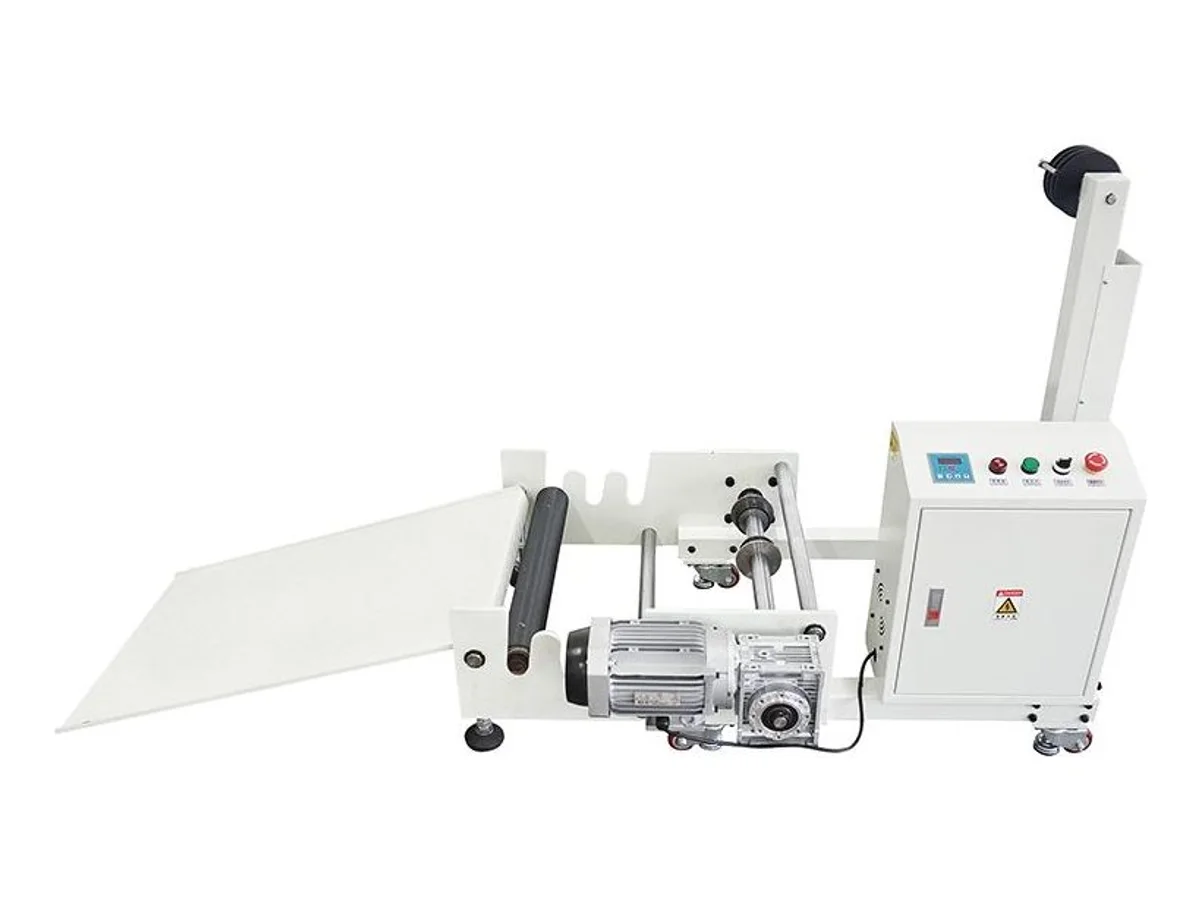
The WM-9334 is a motorised wire spool dereeler for spools up to Ø450 mm carrying 250 kg, feeding wire and cable up to 16 mm at speeds to 3 m/s. Instead of a through-shaft the spool sits in a notched roller cradle that is loaded from a tread-plate ramp, so a full spool is rolled into position rather than lifted. Speed is infinitely variable with no manual setting, and active feeding with automatic induction and a brake starts and stops the spool with the machine downstream. Supply is 220 V and the frame measures 800 × 600 × 1,000 mm.
Specifications
| Function | Automatic wire spool dereeling (powered pay-off / prefeeding) |
|---|---|
| Downstream machines | Fully automatic terminal crimping machine, wire cutting machine, wire stripping machine, wire soldering machine |
| Wire size | ≤ 16 mm |
| Spool diameter | 450 mm |
| Load-bearing | 250 kg |
| Speed | 3 m/s |
| Speed control | Infinitely variable — no manual speed adjustment needed |
| Feeding | Active wire feeding; automatic induction with brake; guide rail at constant speed, no resistance |
| Guide wheel | Adjustable to suit the wire diameter; low-noise operation |
| Power supply | 220 V |
| Dimensions | 800 × 600 × 1,000 mm |
| HS Code | 8479.89 (common reference — final classification confirmed by your customs broker) |
| Certification | On request |
Key features
- 250 kg spool rating on an ordinary 220 V single-phase supply — five times the 50 kg load of our next-largest 220 V pay-off, without moving up to a three-phase machine
- Takes spools up to Ø450 mm and pays off wire and cable up to 16 mm at speeds to 3 m/s
- Infinitely variable speed with automatic induction and brake, so the spool follows the downstream machine's demand instead of running at a fixed rate
- As pictured, the spool rests in a notched cradle on horizontal rollers rather than on a through-shaft — no shaft to thread through the hub and no sleeve set to keep in stock for different bores
- As pictured, a diamond-tread ramp plate on each side of the cradle, so a full spool is rolled up into position instead of lifted onto a shaft
- As pictured, a stacked multi-groove guide sheave on the outfeed shaft — pick the groove that matches the wire, no tooling change
- As pictured, the outfeed sheave rides on a vertical linear guide with a sensor bracket at the top of its travel, so the wire path can rise and fall between the spool's rotation and the cutter's intermittent pull
- Levelling feet and casters on the same frame, and a panel with inverter speed display, alarm, indicator, forward/reverse and mushroom-head power switch
What it processes
- Feeding automatic terminal crimping machines from full mill spools
- Prefeeding wire cutting and stripping machines that would otherwise have to drag a heavy spool
- Supplying automatic wire soldering and tinning cells
- Lines where cable arrives on Ø450 mm spools too heavy to lift onto a shaft-type stand but too small for a 1.5 t mill-spool pay-off
Suited for: powered pay-off of spools up to Ø450 mm and 250 kg, wire and cable up to 16 mm, at speeds to 3 m/s on a 220 V supply — standing in front of a wire cutting and stripping machine, a crimping cell or a soldering machine. Not suited for: mill spools of Ø600–1,250 mm carrying up to 1.5 t, which need the three-phase 380 V WM-9151 heavy-duty large cable prefeeder and its Φ3–45 mm cable range. Loose coils delivered without flanges will not sit in this cradle — they belong on the 550 mm flat turntable of the WM-9309 prefeeding machine at 50 kg, or between the closing flanges of the WM-9332 compact pre-feeder and dereeler stand for Ø200–300 mm reels at ≥15 kg. If your reels are light and your line is faster than 3 m/s, the WM-9150 variable-speed pay-off runs 50 kg reels at 4 m/s. Corrugated tube, hose and PVC tube run on the WM-9120T cable and tube prefeeder at 20 kg, and tension-sensitive Ø0.6–5 mm coaxial cable needs the dancer loop of the WM-9105C coax prefeeder at 25 kg.
The gap this machine fills
Powered pay-off equipment splits into two clusters. Below it sit the bench-class stands — 15 kg, 20 kg, 25 kg, 50 kg — built around a shaft or a turntable, loaded by one person lifting one reel. Above it sit the mill-spool machines: 1.5 t, three-phase 380 V, shaftless cone chucks, five-and-a-half kilowatts of drive, and a footprint to match.
Between the two is the spool a buyer actually receives most often from a cable mill: around Ø450 mm, a couple of hundred kilograms, and awkward in both directions. It is far too heavy for a 50 kg stand and its operator, and it is undersized for a machine whose smallest listed spool is Ø600 mm. The WM-9334 is built for exactly that band — 250 kg on a Ø450 mm spool, still on single-phase 220 V, still at 3 m/s.
Loading without a crane
The design consequence of 250 kg is visible in the gallery. There is no through-shaft. The spool lies in a cradle formed by two side plates cut with a row of notches; horizontal rollers drop into the notches, and the notch pair you choose sets the cradle width to the flange diameter in front of you. One roller is rubber-covered and driven through a worm gearbox, so the spool is turned by friction on its own flanges rather than by a mandrel through the hub.
Either side of the cradle is a hinged tread-plate ramp. A full spool is stood on edge and rolled up the ramp into the cradle — no forklift, no crane, no two-man lift, and no hunt for the sleeve that matches this month’s hub bore. Levelling feet take the load once the machine is positioned; casters let it be pushed to the next cell when it is not.
Following demand, then stopping
A pay-off matters most in the half-second after the cutter stops. Rotational inertia at 250 kg is unforgiving: an unbraked spool keeps turning, throws a loop of cable on the floor and hands the next cycle a length error.
Two mechanisms answer that. The drive is infinitely variable with no manual speed setting, so it tracks the rate the downstream machine is actually consuming rather than running at a preset. And the feed is active with automatic induction and a brake — the spool is driven up when wire is drawn and taken out of rotation when the line stops.
The buffer between them is the guide sheave at the outfeed end. It rides on a vertical linear guide with a sensor bracket at the top of its travel, so the wire path can rise and fall between the spool’s steady rotation and the cutter’s intermittent pull. The sheave itself is a stack of grooves of different widths: choose the groove that matches the wire and the pay-off point is set, without a tooling change. That is also what makes the 16 mm ceiling a working figure rather than a nominal one.
Reading the numbers before you order
Three of the published figures deserve a second look.
The 450 mm spool diameter is a hard limit set by the cradle geometry, not a guideline — a 600 mm spool will not sit between these side plates, whatever it weighs. The 250 kg rating and the 3 m/s speed are stated for the machine, not for your material: a 250 kg spool of stiff 16 mm cable and a 250 kg spool of fine wire accelerate very differently, and top speed is rarely the constraint on a heavy spool.
What the manufacturer does not publish is a net weight, a motor rating in watts and a feeding height, and we have left those rows out rather than estimate them. If any of the three affects your layout — mezzanine floor loading, infeed height into an existing machine, or the supply budget for the cell — send the question with your inquiry. It is a short conversation before quoting and an expensive one after delivery.
Engineering knowledge
Choose and troubleshoot this process
- How to Choose a Wire Prefeeder and Pay-Off SystemChoose a wire prefeeder or pay-off system by reel mass, line speed, acceleration, allowable tension, accumulation, dereeling control and downstream interface.
- Wire Feeding Problems: Causes and Corrective ActionsTroubleshoot cable tension spikes, reel overrun, loops, jerking, twist, feed slip, encoder mismatch and downstream cut-length variation.
WM-9334 — common questions
How large a spool does the WM-9334 take?
The stated limits are a spool diameter of 450 mm and a load of 250 kg, with wire up to 16 mm. Send the spool drawing with flange diameter, width, hub bore and full weight before ordering — two spools of the same weight can behave very differently during acceleration and braking, and the cradle notch positions have to suit your flange diameter.
Why a roller cradle instead of a shaft?
A 250 kg spool cannot reasonably be lifted onto a shaft by hand. In the cradle the spool lies on horizontal rollers between notched side plates and is turned by the drive roller, so it is rolled up the tread-plate ramp into position. It also removes the need to stock sleeves for different hub bores, because nothing passes through the hub.
How does it keep pace with my cutting machine?
Speed is infinitely variable and the drive uses automatic induction with a brake, so the spool accelerates when wire is drawn and is braked when the line stops. The guide sheave on its vertical rail carries the buffer between the two. There is no data connection to configure, so the machine can stand in front of most wire processing equipment that pulls from a loop.
What supply does it need?
220 V. Confirm your plant voltage before ordering. Note that the machine sits below the three-phase 380 V class — if your spools are Ø600 mm or larger, that is a different machine, linked at the top of this page.
What is not published for this model?
The manufacturer states no net weight, no motor rating in watts and no feeding height, and we have not filled those blanks with estimates. If floor loading, delivery height or the power draw of the cell matters to your layout, ask with the inquiry and we will get the figures confirmed before quoting.
Related machines in Custom Machines
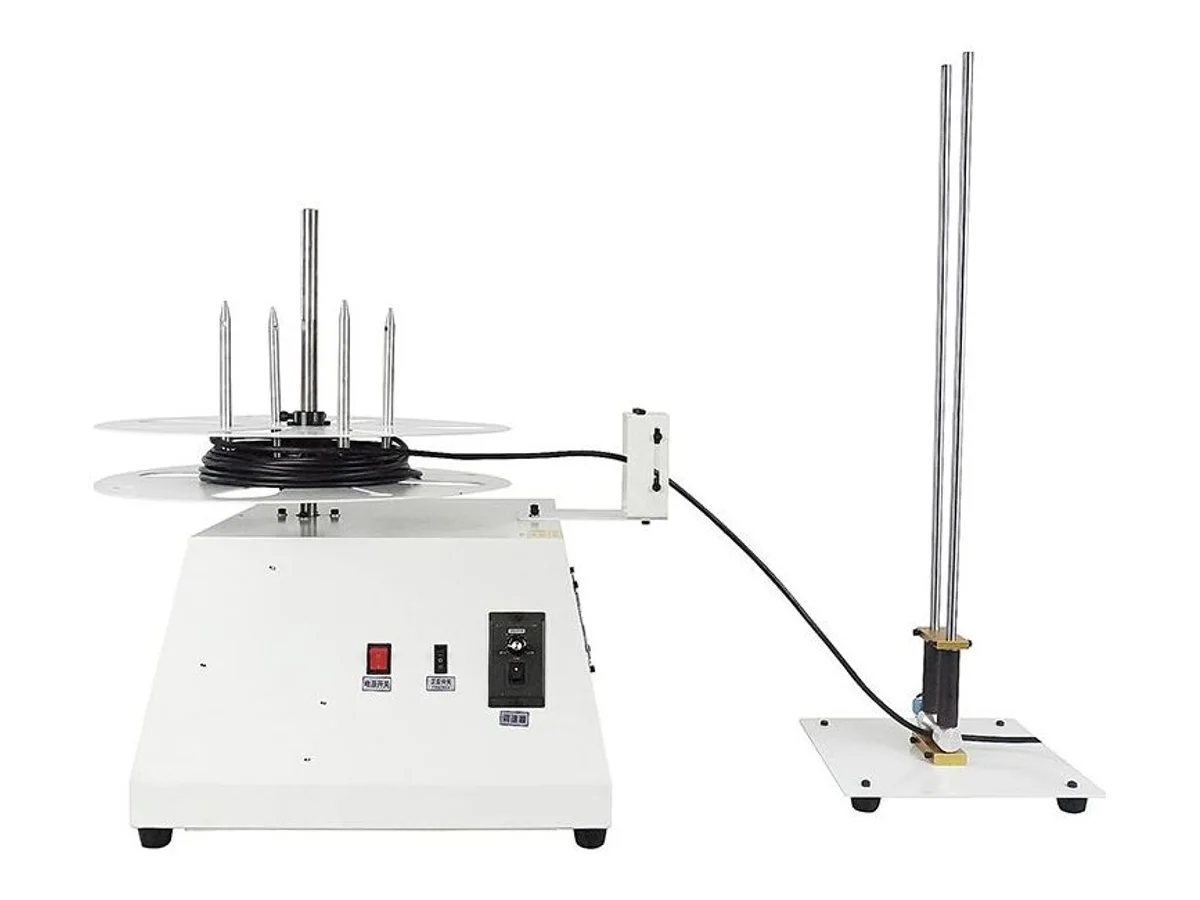
Automatic Cable and Tube Prefeeder with 20 kg Load Capacity
Model WM-9120T
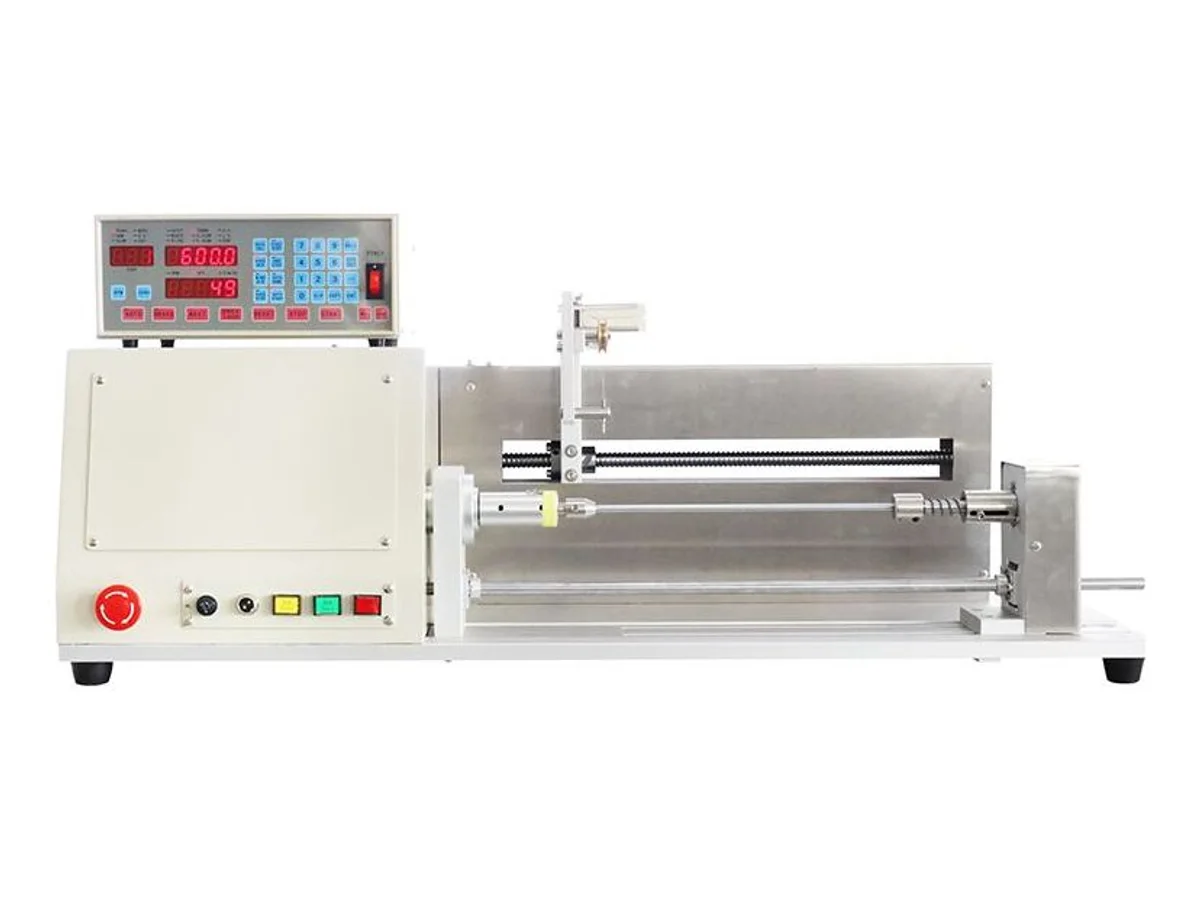
Automatic Magnet Wire Coil Winding Machine with 420 mm Programmable Traverse
Model WM-9324
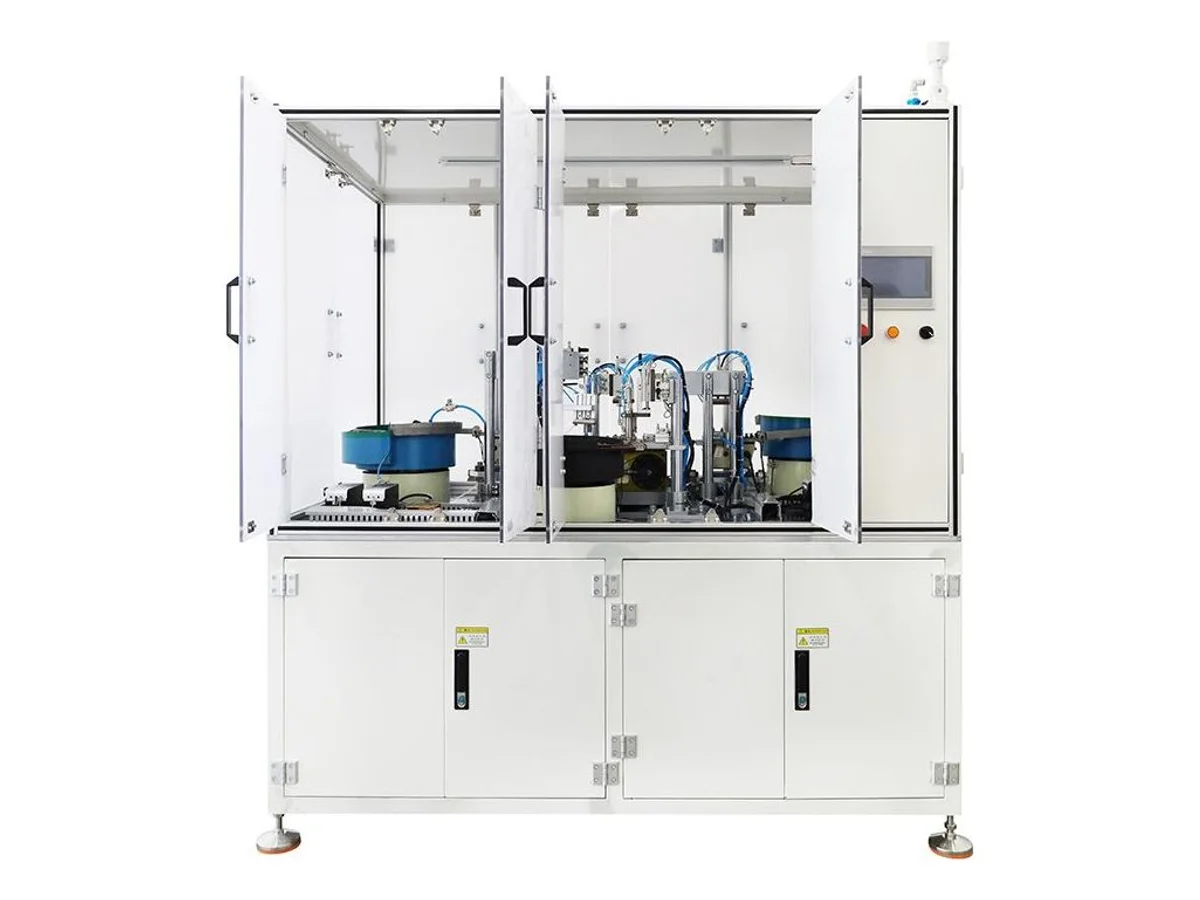
Fully Automatic O-Ring Assembly Machine with Rotary Indexing Table
Model WM-9311