Compact Wire Pre-Feeder and Cable Dereeler Stand for 20-30 cm Reels and Bare Coils WM-9332
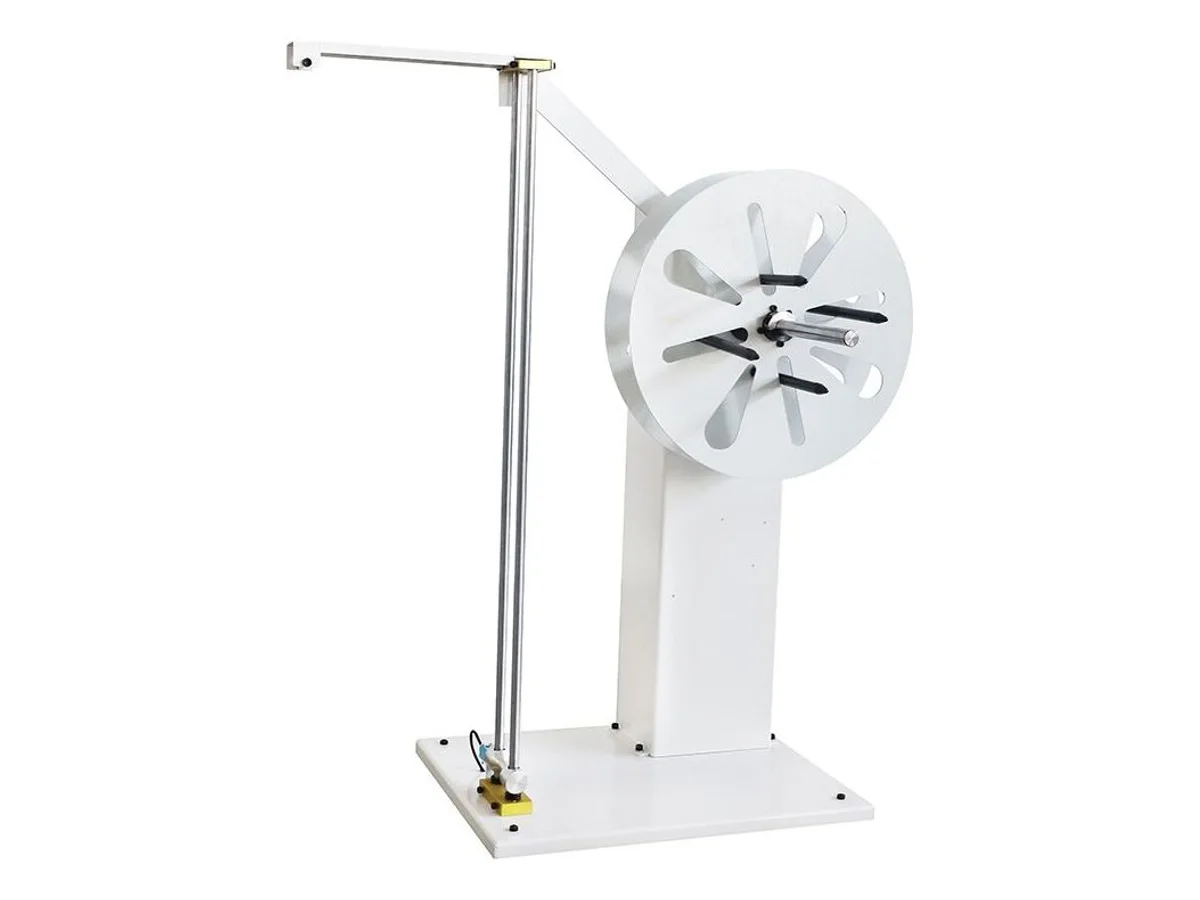
The WM-9332 is a powered wire pre-feeder that carries the reel upright on a horizontal shaft between two adjustable flanges, so a standard Ø20-30 cm spool goes on the way it arrives from the wire mill — and a bare coil with no reel at all clamps between the same two discs. Load capacity is ≥15 kg, the 120 W drive follows demand through a spring tension pole with an electronic induction brake, and the whole stand occupies a 37 × 48 cm footprint next to your cutting machine.
Specifications
| Function | Motorised wire and cable pre-feeding (dereeling) |
|---|---|
| Material | Electrical wire, flat cable, sheathed cable, steel wire — with or without reels |
| Load capacity | ≥ 15 kg |
| Reel diameter | Ø200 – 300 mm (20 – 30 cm) |
| Brake | Electronic induction brake |
| Speed control | 0 – 8 step torque/speed dial with forward-reverse |
| Power supply | 220 V |
| Power | 120 W |
| Dimensions | 370 × 480 × 800 mm (37 × 48 × 80 cm) |
| Weight | 51 kg |
| HS Code | 8479.89 (common reference — final classification confirmed by your customs broker) |
| Certification | On request |
Key features
- Upright reel on a horizontal shaft — the spool mounts the way it ships, with no re-coiling and no lifting a reel onto a flat turntable
- Two large slotted flanges close on the reel or coil from both sides, and four adjustable taper pegs grip the bore, so wire delivered as a bare coil runs without any reel at all
- Feed rate follows demand instead of running at a fixed rate — as the downstream machine pulls, the drive turns; when it stops, the electronic induction brake stops the reel before it can overrun into loose loops
- Spring-loaded tension pole with a sensor at its base carries the wire from the reel to the overhead boom, keeping pull-off tension off the wire itself
- 0-8 speed dial and a forward/reverse switch on an English-marked panel, so the same stand can pay off or take up
- 37 × 48 cm base plate and 120 W drive — a floor-standing pay-off that fits in the aisle space beside a benchtop cutter rather than needing its own bay
What it processes
- Paying off Ø20-30 cm spools of hook-up wire into automatic cutting and stripping machines
- Feeding bare coils delivered without a reel, which cannot be mounted on a shaft-only pay-off
- Flat cable and sheathed cable pre-feeding where a flat turntable would let the coil twist
- Steel wire and other springy material that needs braked, controlled release rather than free spin
- Small and mid-volume harness cells where floor space next to the machine is the constraint
Suited for: powered pay-off of Ø20-30 cm spools and bare coils up to ≥15 kg, feeding a wire cutting and stripping machine or a crimping cell where floor space beside the machine is tight. Not suited for: loads above 15 kg or reels wider than the flange window — for general reels to 50 kg at up to 4 m/s use the WM-9150 variable-speed pay-off; for tension-sensitive Ø0.6-5 mm coaxial cable, the dancer loop of the WM-9105C coax pre-feeder is the correct base; for corrugated tube and hose, use the WM-9120T cable and tube pre-feeder at 20 kg. Heavy loose coils that will not fit between the flanges belong on the 550 mm turntable of the WM-9309 prefeeding machine, and mill spools of Ø600-1,250 mm carrying up to 1.5 t need the WM-9151 heavy-duty pay-off stand.
Why the reel stands upright
Most powered pre-feeders in this class lay the coil flat on a rotating table. That works well for heavy cable delivered as a loose coil, and badly for wire delivered on a spool — the flanges foul the table, so somebody has to unwind the spool onto the turntable first, and re-coiled wire brings its own twist and tangles.
The WM-9332 turns the axis ninety degrees. The reel rides on a horizontal shaft between two slotted flanges that close in from either side, which is how the wire mill wound it and how your storeroom stacks it. Loading is one man lifting one spool onto a shaft at waist height.
The same geometry solves the opposite problem too. Four black taper pegs sit on a clamp collar on the shaft; they expand into the bore of a coil that has no reel, and the two flanges close on its faces. So the stand covers both delivery formats — spooled and bare coil — which is unusual at this size, and is the reason it is listed as suitable for flat cable, sheathed cable and steel wire rather than round hook-up wire alone.
Demand-following, then braked
A pre-feeder earns its place at the moment the cutting machine stops. A free-spinning reel carries on turning, throws a loop of wire onto the floor and hands the next cycle a length error. The WM-9332 answers that with two linked parts: the drive follows demand rather than running at a set rate, and an electronic induction brake takes the rotation out of the reel at stop.
Between the reel and your machine sits the spring-loaded tension pole visible in the gallery — a vertical guide rod on the base plate with a sensor at its pivot. The wire runs from the reel over the overhead boom and down past this pole, so the pole absorbs the difference between the cutter’s intermittent pulls and the reel’s continuous rotation. Pull-off tension is taken by the mechanism rather than by the wire, which matters most on fine or soft-jacket material where a hard pull stretches the conductor and spoils length accuracy.
Speed and torque are set on the panel dial from 0 to 8, with a forward/reverse switch beside it. The controller plate is marked in English, and reverse means the same stand can wind material back on rather than only pay it off.
Sizing it honestly
Two figures are worth reading carefully before you order. The load rating is ≥15 kg, which is deliberately at the light end — this is a stand for spools, not for mill drums, and the 50 kg and 1.5 t models above are linked at the top of this page for a reason. The reel window of Ø200-300 mm is likewise a real limit, not a guideline: a 400 mm spool will not close between these flanges.
What the manufacturer does not state is a maximum feeding speed or a wire outer diameter range, and we have not filled those blanks with estimates. If your line runs fast or your cable is at the heavy end, send the wire specification and the downstream machine model with your inquiry — a stand that cannot keep up is worse than no stand, and it is a five-minute question to settle before quoting rather than after delivery.
Engineering knowledge
Choose and troubleshoot this process
- How to Choose a Wire Prefeeder and Pay-Off SystemChoose a wire prefeeder or pay-off system by reel mass, line speed, acceleration, allowable tension, accumulation, dereeling control and downstream interface.
- Wire Feeding Problems: Causes and Corrective ActionsTroubleshoot cable tension spikes, reel overrun, loops, jerking, twist, feed slip, encoder mismatch and downstream cut-length variation.
WM-9332 — common questions
What size reel does the WM-9332 take?
The stated window is Ø200-300 mm reel diameter at ≥15 kg load. That covers the common 250 mm plastic and wooden hook-up wire spool. Because the two flanges close in from both sides, reel width is set by how far apart you space them rather than by a fixed hub, so send us your reel outside diameter, width and bore with the inquiry and we confirm the fit before shipment.
Can it run wire that comes as a coil with no reel?
Yes — that is what the two slotted discs and the four adjustable taper pegs are for. The pegs expand into the coil bore and the discs close on the coil faces, holding it like a reel. This is the difference between this stand and a plain shaft-type pay-off, which needs a flanged spool to work at all.
What feeding speed does it reach?
The manufacturer does not publish a metres-per-second figure for this model, and we will not invent one. What is specified is a 120 W drive with a 0-8 torque and speed dial and an electronic induction brake, sized for demand-following pre-feed rather than for high line rate. Tell us your downstream machine's throughput and wire outer diameter and we will say plainly whether this stand keeps up or whether you need a rated model.
How is this different from your turntable pre-feeders?
Orientation, and it decides which material you can run. On the WM-9150 and WM-9309 the coil lies flat on a rotating table — good for heavy loose coils, but a flanged spool cannot spin there. The WM-9332 turns the reel upright on a shaft, so spools go on as delivered. Choose by how your wire arrives, then by weight.
Does it stop when my cutting machine stops?
The drive follows demand rather than running continuously, and the electronic induction brake arrests the reel at stop so momentum does not throw loose loops onto the floor. The sensor position on the tension pole and the buffer loop length are set during line integration, and we ask for your feed direction and machine spacing in advance to get that right the first time.
What do you need from me to quote it?
Wire or cable outer diameter and construction (round, flat, sheathed, steel), how the material is delivered (spool or bare coil), reel outside diameter, width, bore and weight, your line speed and start-stop frequency, and the floor space available beside the receiving machine. A photo of your current pay-off setup usually answers half of these at once.
Related machines in Custom Machines
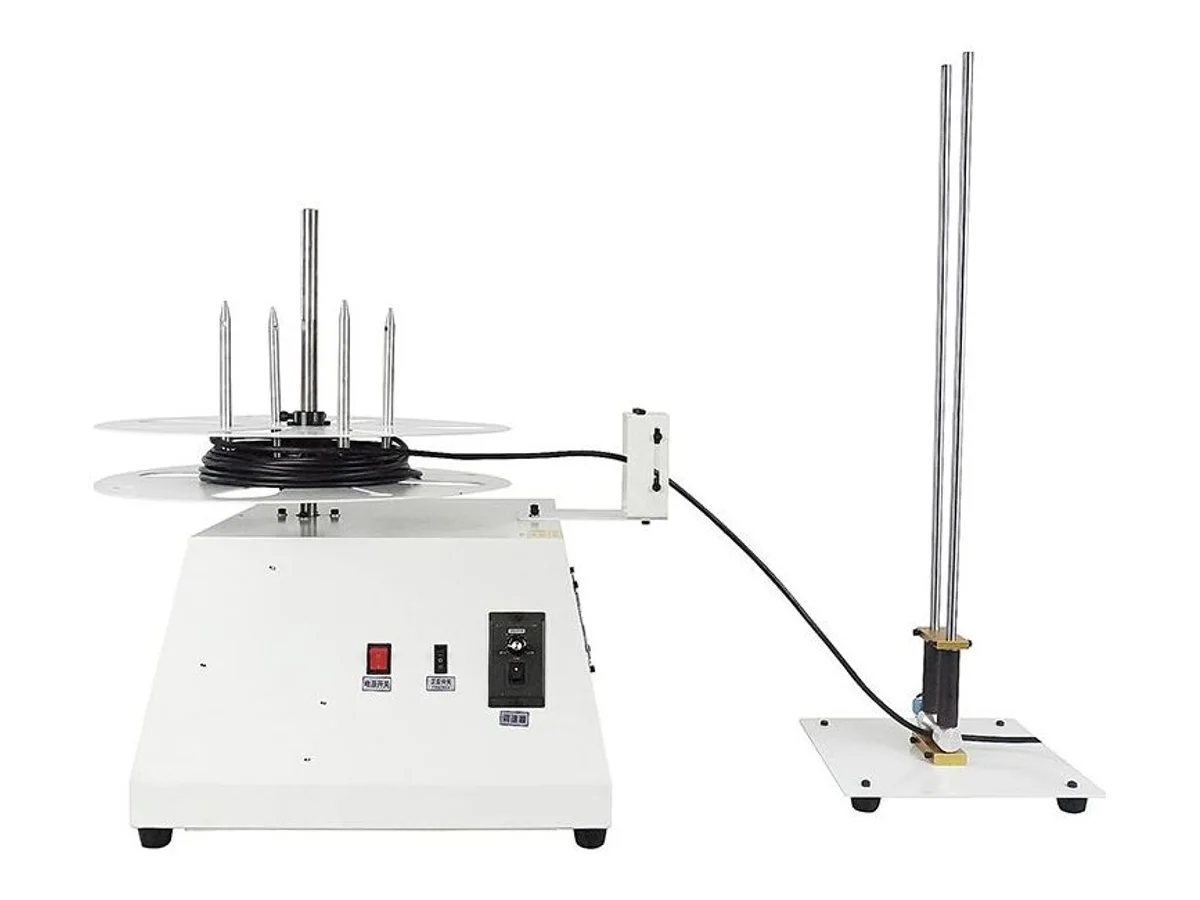
Automatic Cable and Tube Prefeeder with 20 kg Load Capacity
Model WM-9120T
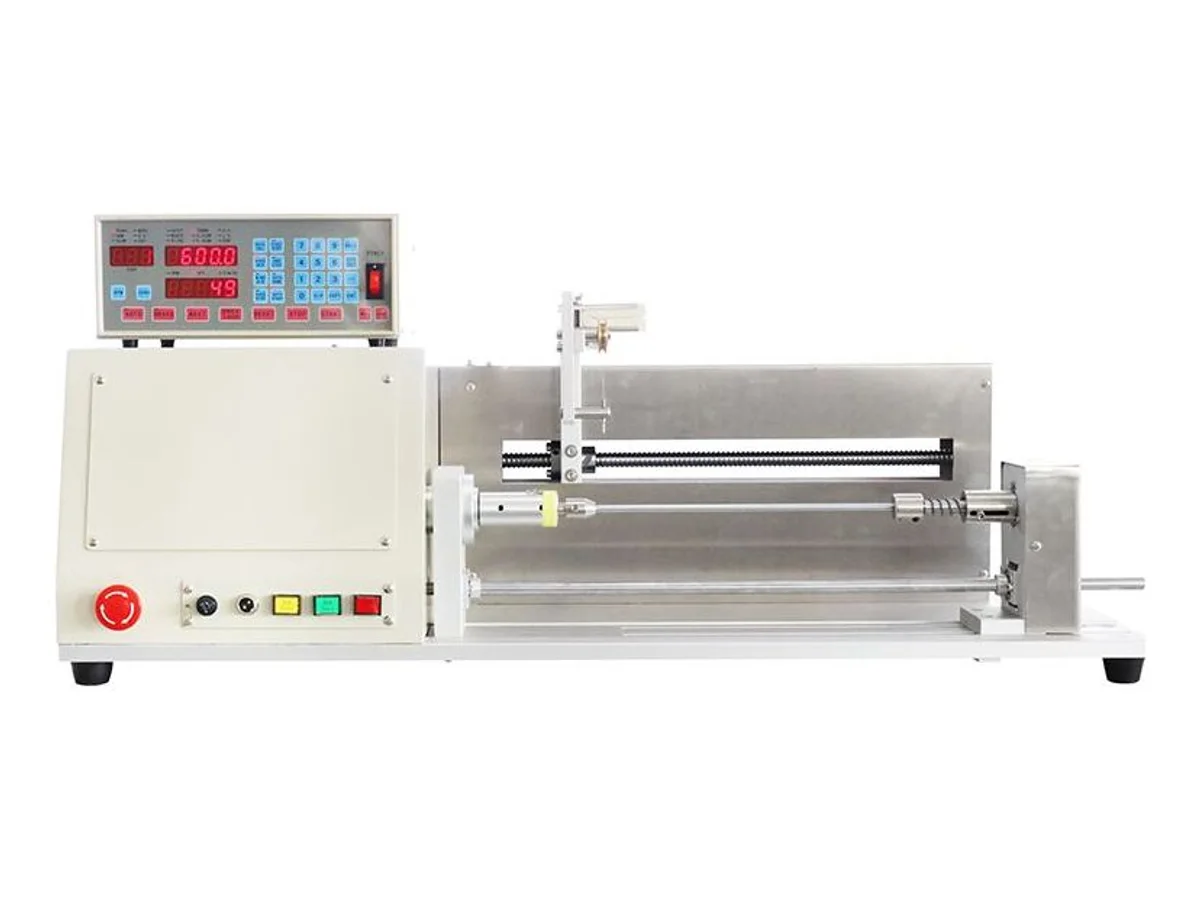
Automatic Magnet Wire Coil Winding Machine with 420 mm Programmable Traverse
Model WM-9324
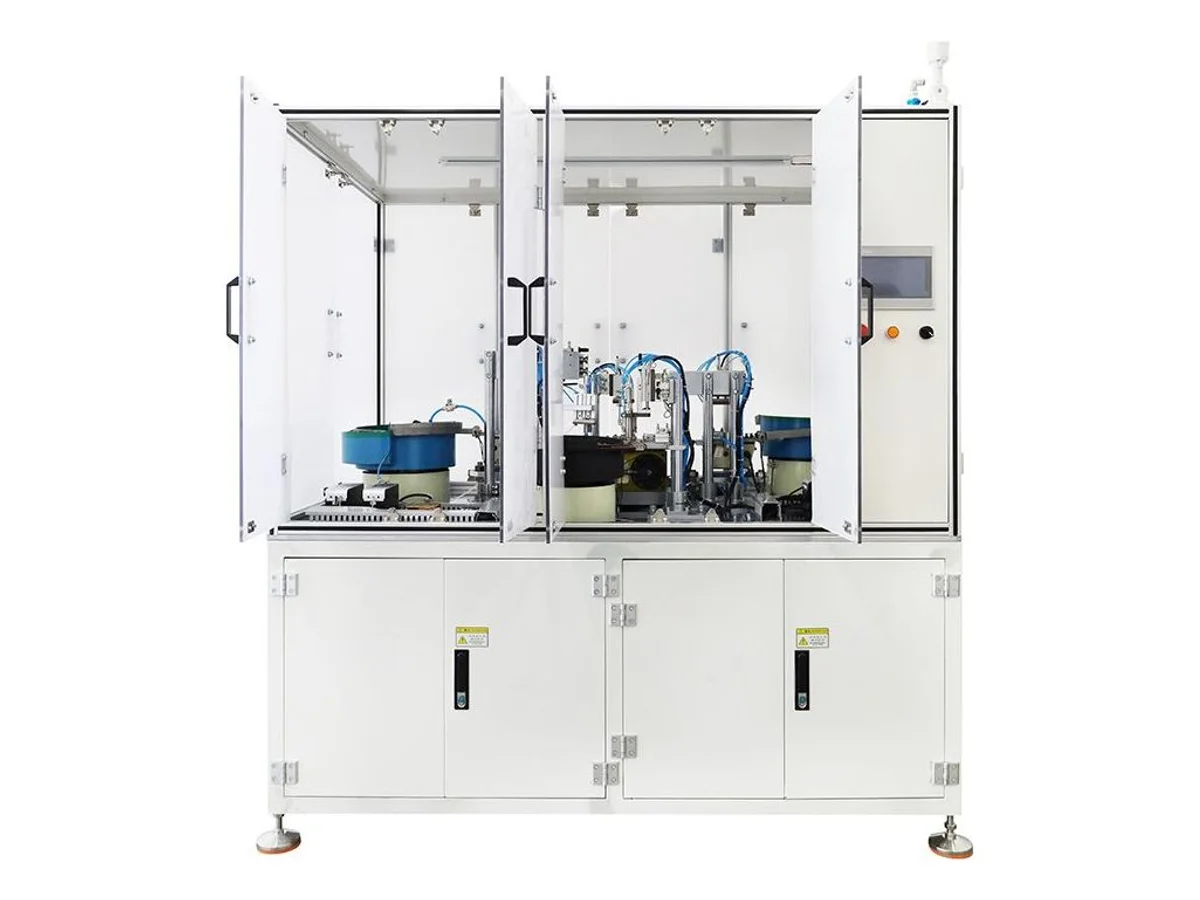
Fully Automatic O-Ring Assembly Machine with Rotary Indexing Table
Model WM-9311