Heavy-Duty Large Cable Prefeeder and Pay-Off Stand for 1.5 t Spools WM-9151
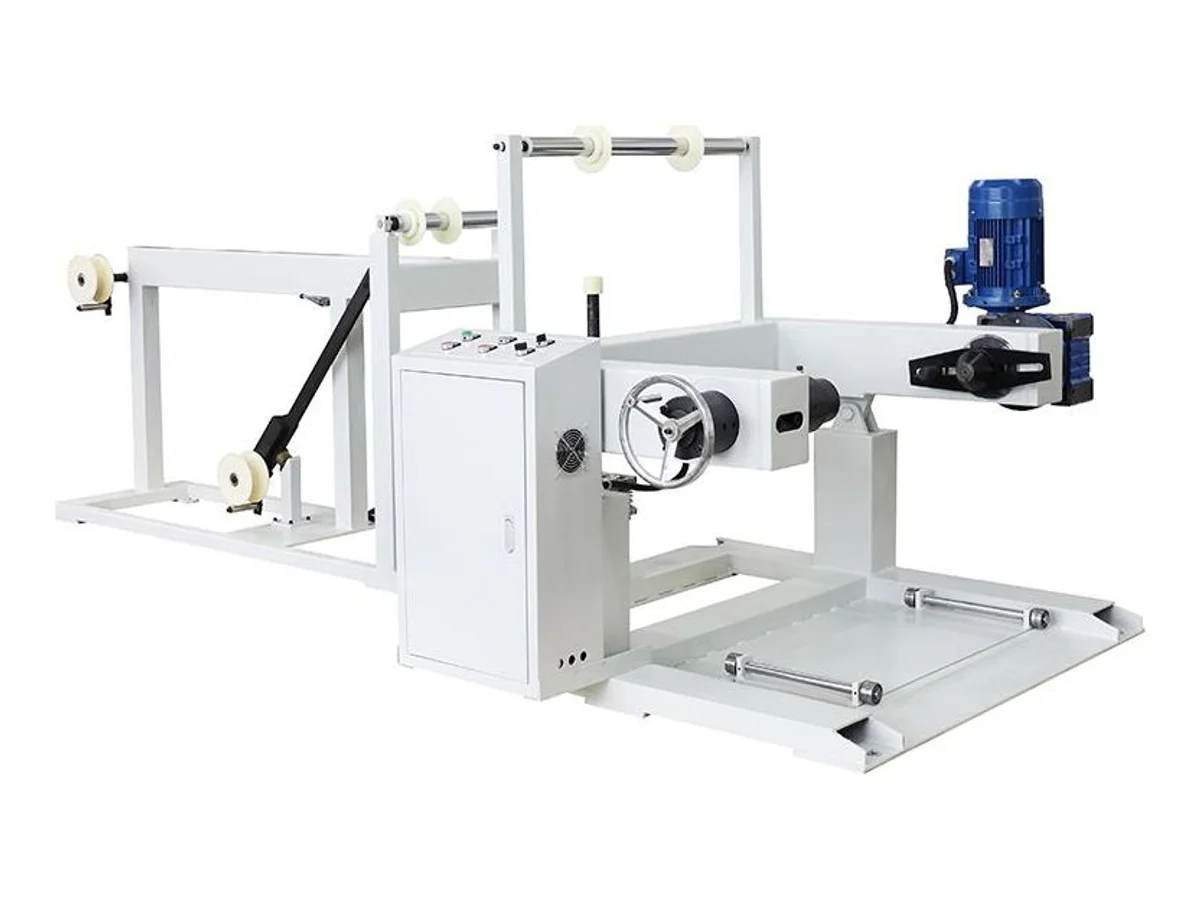
The WM-9151 is a heavy-duty cable prefeeder for large spools: it carries up to 1.5 t on spools of Φ600–1,250 mm outer diameter and 550–950 mm width, and pays off cable from Φ3 to Φ45 mm at up to 100 m/min. A shaftless powered pay-off driven by a 5.5 kW motor and a frequency inverter starts, tracks and stops the feed automatically, while a mechanical swing bar with a movable counterweight sets the pay-off tension. Power supply is three-phase four-wire AC 380 V, 50/60 Hz.
Specifications
| Function | Automatic pay-off (prefeeding) of large cable |
|---|---|
| Cable types | New energy vehicle cable, charging pile cable, power cable, photovoltaic cable, BV cable |
| Suitable cable diameter | Φ3 – 45 mm |
| Applicable spool | Outer diameter Φ600 – 1,250 mm; width 550 – 950 mm |
| Maximum load | 1.5 t (1,500 kg) |
| Maximum pay-off speed | 100 m/min |
| Pay-off method | Shaftless powered pay-off; frequency inverter controls pay-off speed automatically, with automatic feeding and automatic shutdown |
| Pay-off tension | Mechanical swing bar structure; move the counterweight to adjust the pay-off tension |
| Host power | 5.5 kW |
| Power supply | Three-phase four-wire AC 380 V, 50/60 Hz |
| Total weight | Approx. 700 kg |
| HS Code | 8479.89 (common reference — final classification confirmed by your customs broker) |
| Certification | On request |
Key features
- Rated for 1.5 t spools — thirty times the 50 kg reel load of our next-largest pay-off, and the size large power and EV charging cable actually ships on
- Shaftless clamping — as pictured, the spool is gripped between two opposed cones drawn together by a handwheel, so there is no shaft to thread through the hub and no sleeve set to keep in stock
- Swing bar tension control — sliding the counterweight along the arm changes pay-off tension mechanically, with no electronics to tune
- Frequency inverter drive follows the downstream machine's demand, starting the spool as the bar drops and shutting down when the line stops
- As pictured, a drive-in loading cradle with rollers so a full spool can be rolled into position instead of lifted onto a shaft
What it processes
- New energy vehicle (EV) cable and charging pile cable feeding
- Power cable and BV building wire pay-off ahead of cutting, stripping or coiling lines
- Photovoltaic (solar) cable prefeeding
- Any line where cable arrives on Φ600–1,250 mm mill spools too heavy to be pulled by the downstream machine
Suited for: heavy cable that arrives on mill spools — EV and charging pile cable, power cable, photovoltaic cable and BV wire, Φ3 to 45 mm, on spools up to Φ1,250 mm and 1.5 t. Not suited for: light reels run at high line speed — the WM-9150 variable-speed wire pay-off carries 50 kg reels at up to 4 m/s (240 m/min), well above this machine’s 100 m/min. For vertical coils rather than flanged spools, the WM-9309 prefeeder with coil turntable takes 550 mm coils up to 50 kg and cable under Φ15 mm; for corrugated tube and hose, the WM-9120T cable and tube prefeeder; and for Ø0.6–5 mm coaxial cable that must not see tension, the WM-9105C tension-free coax prefeeder.
The problem this machine solves is inertia, not speed. A cutting or coiling machine downstream can pull a 20 kg reel around by itself; it cannot turn a 1.5 t spool, and if it tries, the cable stretches, the length count drifts and the feed jams at every restart. Here the spool is driven, and the swing bar decides when. The bar rests on the loop of slack cable: as the downstream machine consumes cable the bar rises, the drive spins the spool until the loop is restored, then it stops. The counterweight on the bar sets how hard it presses, which is the tension the cable actually sees.
Two things need to be checked before this machine is quoted. First the spool: hub bore, flange diameter, width and true loaded weight, because the Φ600–1,250 mm and 1.5 t figures are limits, not a guarantee that a given spool clamps and balances correctly between the cones. Second the supply: three-phase 380 V and a 5.5 kW motor is not a socket-and-plug installation, and the loading cradle needs floor space in front of the machine so a full spool can be rolled in.
Tell us the cable construction, the spool drawing and the line speed the downstream machine runs at, and we will confirm whether this size of prefeeder is the right one or whether a lighter unit from the same family covers the job.
Engineering knowledge
Choose and troubleshoot this process
- How to Choose a Wire Prefeeder and Pay-Off SystemChoose a wire prefeeder or pay-off system by reel mass, line speed, acceleration, allowable tension, accumulation, dereeling control and downstream interface.
- Wire Feeding Problems: Causes and Corrective ActionsTroubleshoot cable tension spikes, reel overrun, loops, jerking, twist, feed slip, encoder mismatch and downstream cut-length variation.
WM-9151 — common questions
How large a spool does the WM-9151 take?
Outer diameter Φ600 to 1,250 mm, width 550 to 950 mm, and up to 1.5 t (1,500 kg) of load. Send the spool drawing with hub bore, flange diameter, width and full weight before ordering — two spools of the same weight can behave very differently during acceleration and braking.
What does "shaftless pay-off" mean in practice?
Instead of threading a shaft through the spool hub, the machine clamps the spool between two opposed cones that are drawn together by a handwheel. The spool is rolled into the cradle, centred and clamped. It removes the shaft handling step and the need to stock sleeves for different hub bores.
How is pay-off tension set?
Mechanically. The swing bar rides on the cable, and moving the counterweight along the arm changes how much force the bar applies. Bar position also tells the drive when to run and when to stop, so tension and start/stop behaviour are set together during commissioning.
Why is the maximum speed lower than on the small pay-off machines?
The stated maximum is 100 m/min. A 1.5 t spool has far more rotational inertia than a 50 kg reel, so start-up and braking dominate the design rather than top speed. If your line runs light reels at high speed, a lighter variable-speed pay-off is the better match — see the referral below.
What supply does it need?
Three-phase four-wire AC 380 V, 50/60 Hz, with a 5.5 kW host motor. Confirm your plant voltage before ordering; single-phase 220 V supply is not sufficient for this machine.
Related machines in Custom Machines
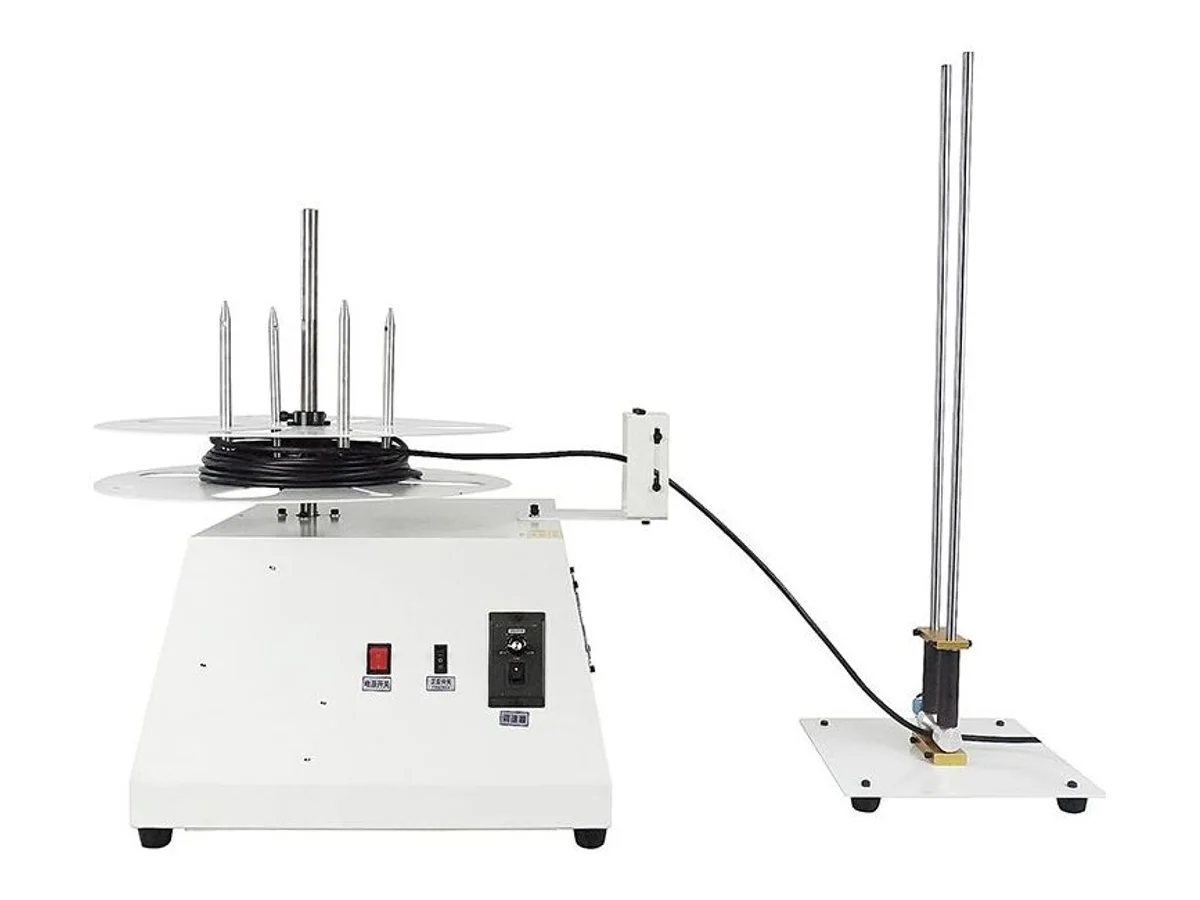
Automatic Cable and Tube Prefeeder with 20 kg Load Capacity
Model WM-9120T
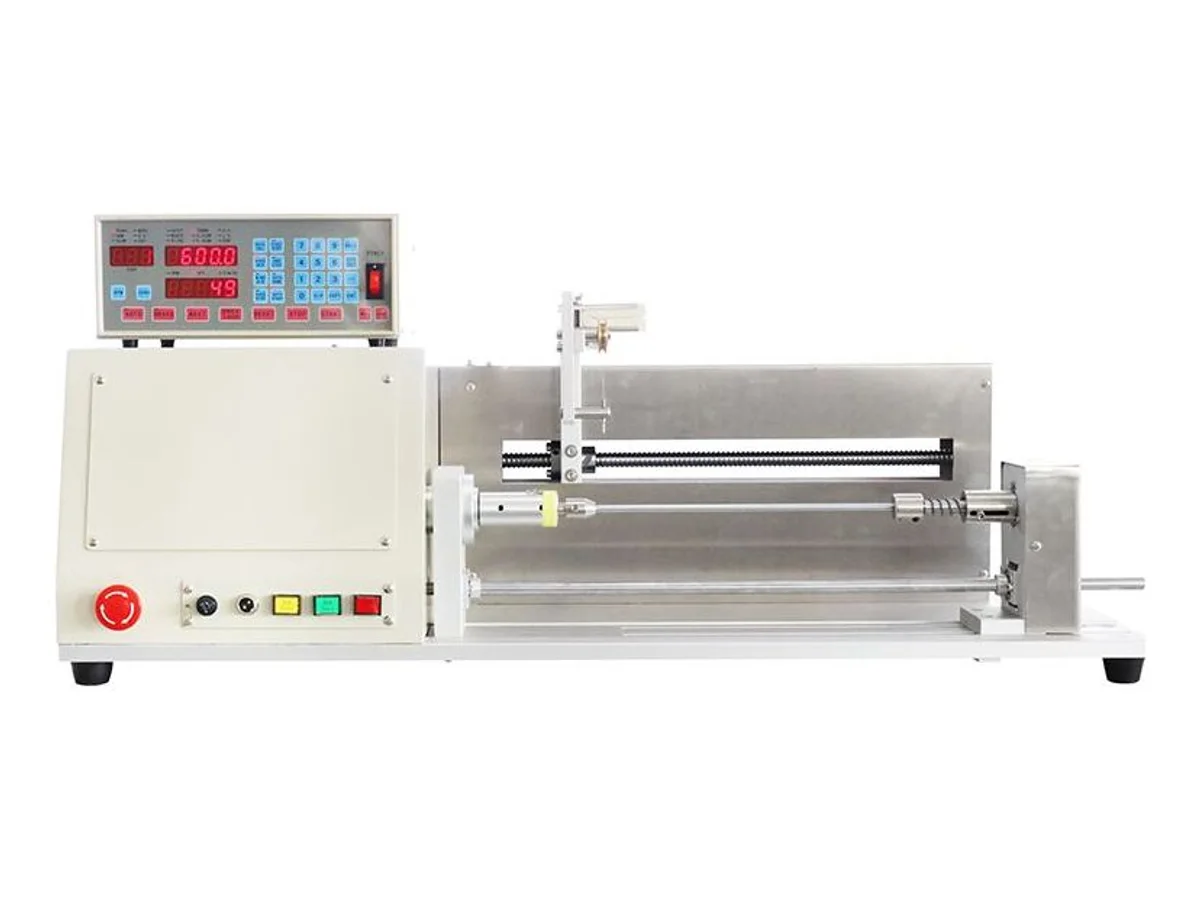
Automatic Magnet Wire Coil Winding Machine with 420 mm Programmable Traverse
Model WM-9324
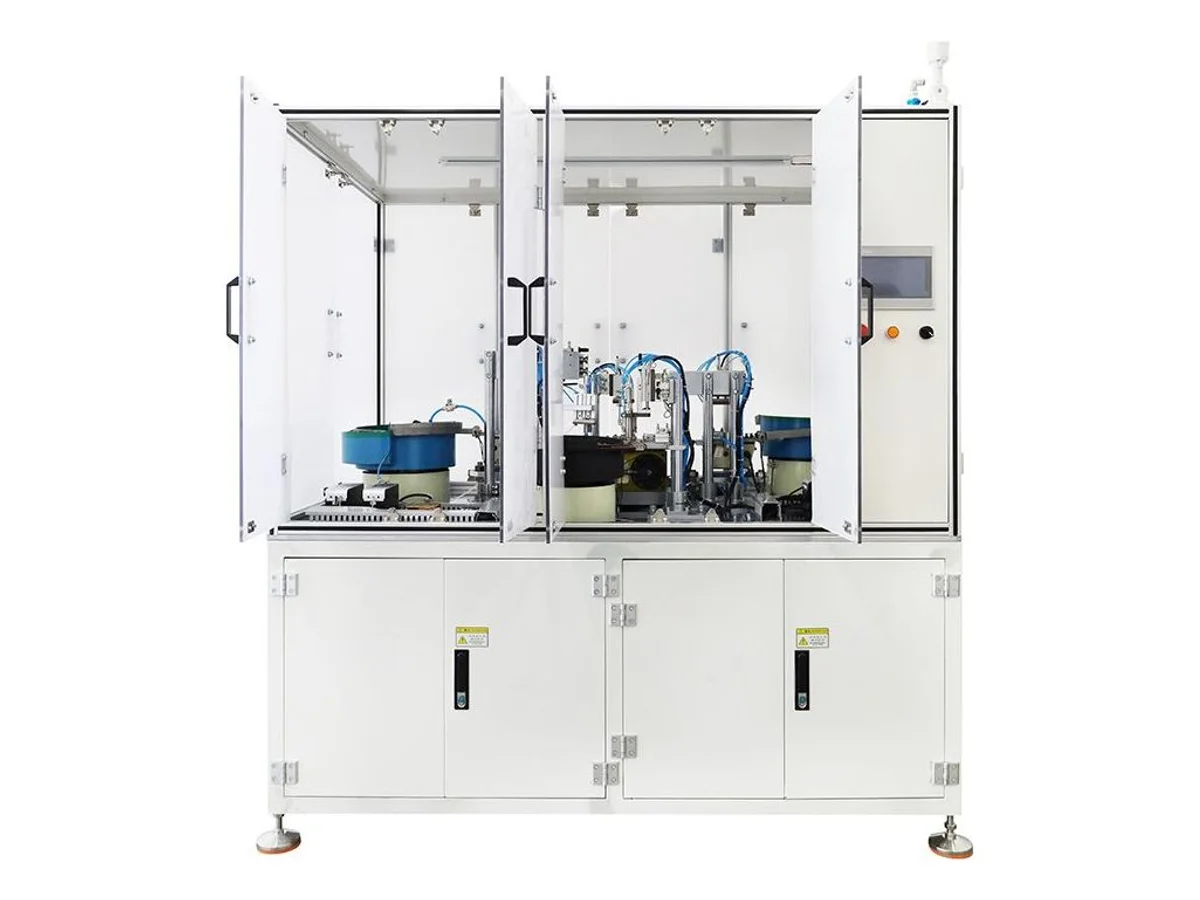
Fully Automatic O-Ring Assembly Machine with Rotary Indexing Table
Model WM-9311