Six-Axis Wire Twisting Machine for Twisted Pair Leads WM-4716
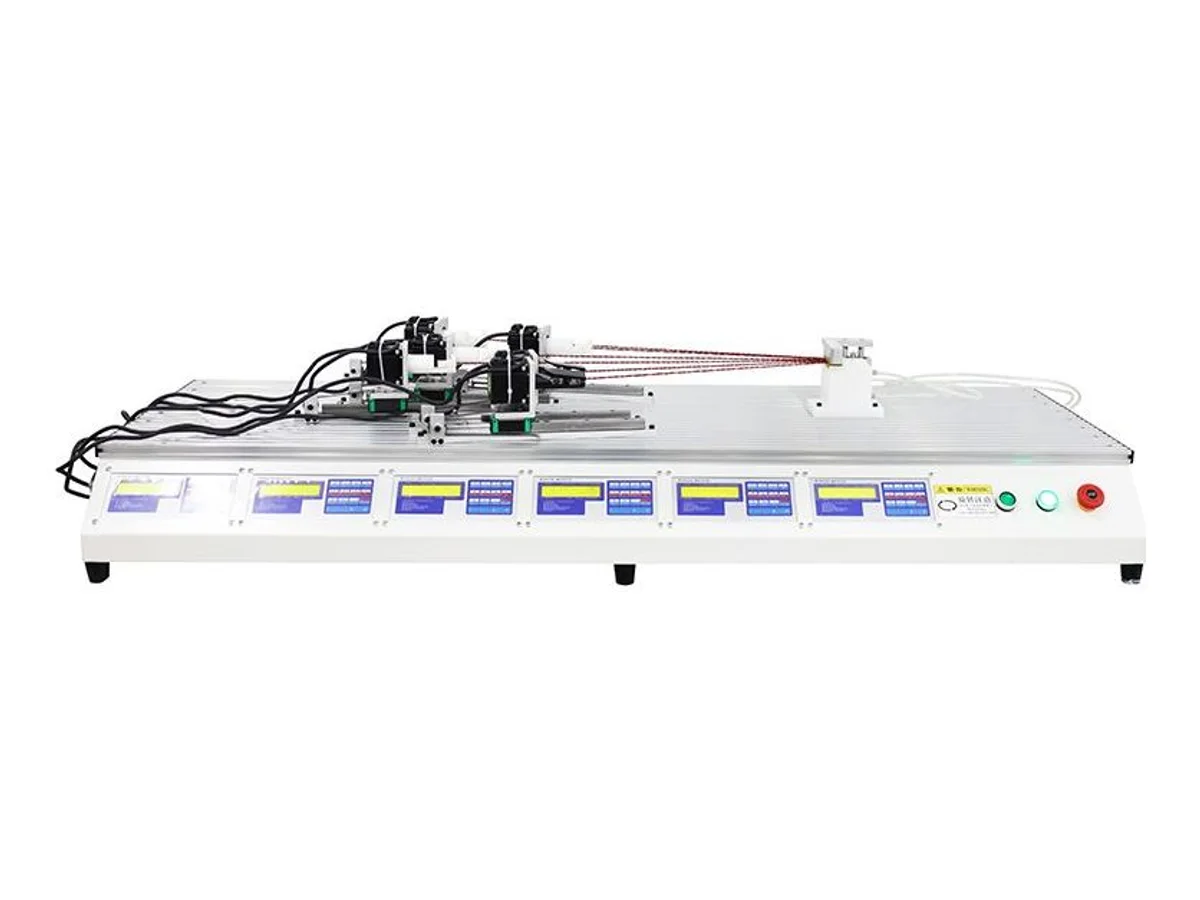
The WM-4716 lays six twisted pairs at the same time on six independent twisting axes, each driven by its own digital controller so turn count, direction, speed and delay are programmed station by station from an English keypad panel. One wire end is held in a common clamp bar while the powered spindle rotates the other, so the whole lead length comes out evenly laid — this is pair twisting along the wire, not the short strand twist that a stripping machine puts on a conductor end. The machine is built to order: wire gauge, pair length and twist pitch are set per project, and the manufacturer publishes no fixed wire-range or capacity table for this model.
Specifications
| Function | Twisting insulated wires into twisted-pair leads along the full lead length |
|---|---|
| Twisting axes | 6 independent twisting stations running in parallel |
| Station control | One digital controller per station — turn count, direction, speed and delay set individually |
| Control panel language | English |
| Spindle drive | Motor-driven hollow twisting spindles, each carried on its own linear guide rail |
| Clamping | Common clamp bar at the tail end, individual gripper at each twisting head |
| Air supply | Machine plumbed for compressed air, numbered inlet ports on the end panel |
| Operator controls | Start and run buttons with emergency stop on the main panel |
| Configuration | Built to order — the manufacturer lists this model as a customized machine |
| Wire range, twist pitch and output | Not published for this model — set and confirmed per build against your wire sample |
| HS Code | 8463.90 (common reference — final classification confirmed by your customs broker) |
| Certification | On request |
Key features
- Six pairs leave the machine per cycle instead of one — the six stations are mechanically independent, so a station can be idled without stopping the other five
- Turn count is programmed, not eyeballed: each controller counts revolutions, so twist pitch repeats from the first pair of the shift to the last
- Direction, speed and delay are set per station, which lets a stiff pair run slower on one axis while softer wire runs faster on the next
- English keypad and display on every station — no Chinese-only interface to translate on the shop floor
- Free sample test — send your wire and the pair length you want, we run it on this machine and send you the video before you order
What it processes
- Twisted-pair signal and sensor leads for appliance, lighting and instrument harnesses
- Red/black DC power pairs twisted down to a defined pitch to cut loop area and noise pickup
- Batch preparation of pre-twisted pairs that then feed stripping, crimping or tinning stations downstream
- Small and mid-size harness shops replacing hand-drill or single-spindle twisting benches
Suited for: making finished twisted pairs in batches — six at a time, at a programmed turn count, from wire you have already cut to length. Not suited for: cutting and stripping — this machine has no blades, so if you are starting from a reel the WM-187 cutting, stripping and twisting machine covers 0.1–4.5 mm² single wire and 0.1–2.5 mm² double wire at 4,000–10,000 pcs/h. It also does not solder: if the pair ends must come out tinned, the WM-4706W multi-wire stripping, twisting and tinning machine handles up to ten independent 18–28 AWG wires with 0.1–10 mm tinning, and for sheathed multi-core cable that must be jacket-stripped and tinned at both ends the WM-4715 double-end twisting and tinning line runs cable of 3.0–8.0 mm outer diameter at 2,000–5,000 pcs/h. And if six stations are more machine than your volume needs, or you want a published wire-range and turn-count table to plan against, the single-spindle WM-4717 benchtop wire twisting and stranding machine does the same full-length pair twisting on 12–36 AWG wire, up to 6 m per lead at 1,500 pcs/h.
Twisting is the step harness shops keep doing by hand long after everything else has been automated — a cordless drill, a hook, and a pitch that drifts with whoever is holding it. The cost of that is not the labour so much as the inconsistency: a pair twisted at 90 turns and a pair twisted at 140 turns behave differently in a routing channel and look different in a customer’s incoming inspection. Here the turn count is a number on a display, entered once per station.
Because this is a build-to-order machine, we would rather show you a run than quote a specification we cannot source. Send us two to three metres of the wire you actually use and the pitch you want, and we will return the trial video and the measured cycle time.
Engineering knowledge
Choose and troubleshoot this process
- Wire Tinning Defects: Causes and Process AdjustmentsDiagnose poor solder wetting, excessive wicking, solder bridges, uneven tin length, oxidation and strand deformation in wire tinning.
- How to Choose a Wire Twisting and Tinning MachineChoose wire twisting and tinning equipment by conductor construction, strip condition, tinning specification, flux control, finished-end geometry and automation level.
WM-4716 — common questions
Does this machine twist a pair of wires, or twist the strands on a stripped end?
It twists the pair. Two insulated wires are held at one end and rotated at the other, so the finished lead is laid along its whole length. That is a different job from the strand twisting a cut-and-strip machine performs on the exposed conductor tip before crimping or tinning — if strand twisting is what you need, a cut-strip-twist machine is the right tool, not this one.
What wire sizes and twist pitch can it run?
The manufacturer does not publish a wire-range or pitch table for this model because it is built to order, and we will not invent one. Tell us your conductor size, insulation type, finished pair length and the pitch or turns-per-metre you need, and we will confirm the build and prove it on your own wire before you order.
Does it cut or strip the wire first?
No. The WM-4716 is a twisting machine only — wires arrive pre-cut and, where the ends need it, pre-stripped. Pair it with a cut-and-strip machine upstream if you are starting from a reel.
What output can I expect per hour?
No hourly figure is published for this model, and we do not advertise one. What we can say from the machine layout is that six pairs are produced per cycle rather than one, so the practical rate is six times a single-spindle bench plus the operator's load and unload time. We report a measured rate from your own trial run.
What should I send to get a quote?
Two to three metres of each wire in the pair, the conductor size and insulation type, the finished pair length, the twist pitch or turn count you want, whether the ends stay bare or get stripped elsewhere, and your monthly volume. That is enough for us to confirm the station count and run a sample.
Related machines in Twisting & Tinning
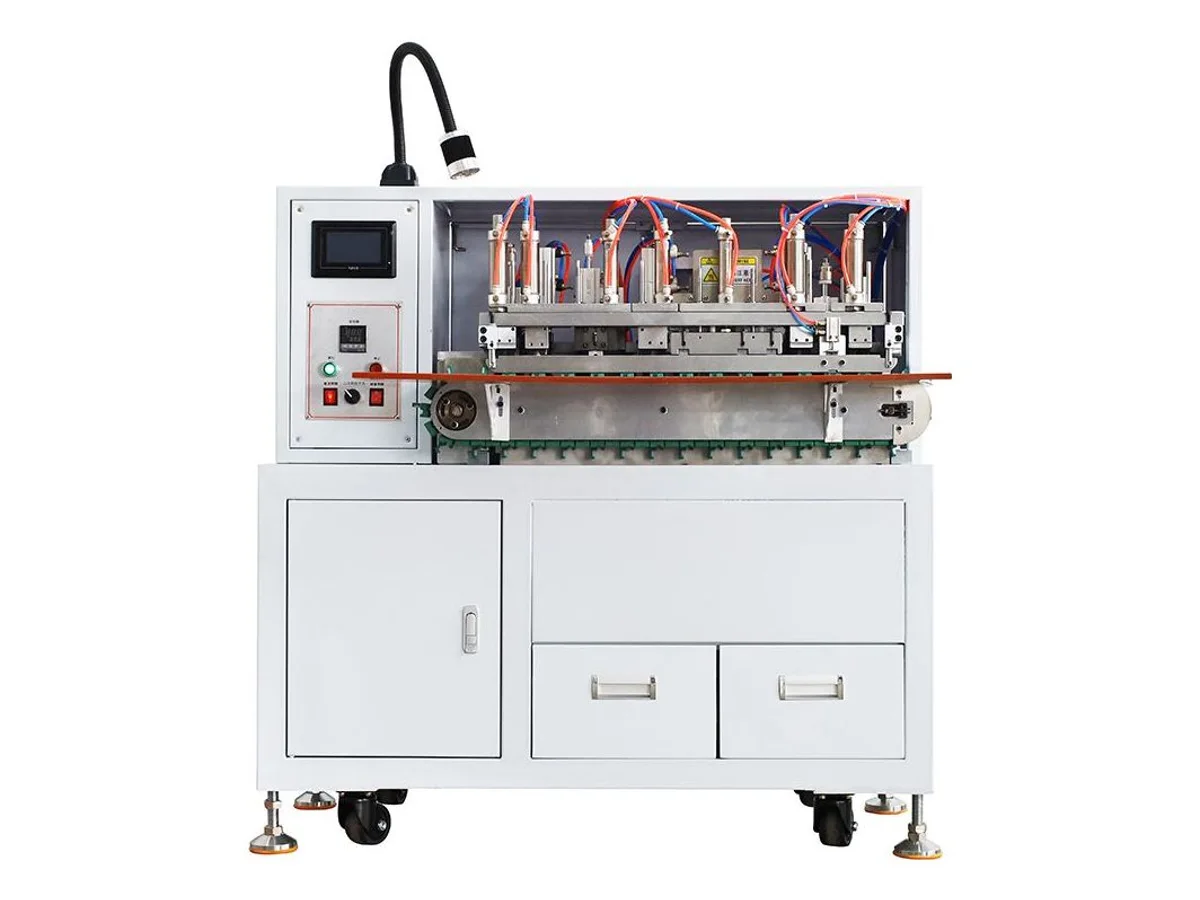
Automatic 3-Core Cable Cutting Stripping Twisting and Tinning Machine
Model WM-4710T
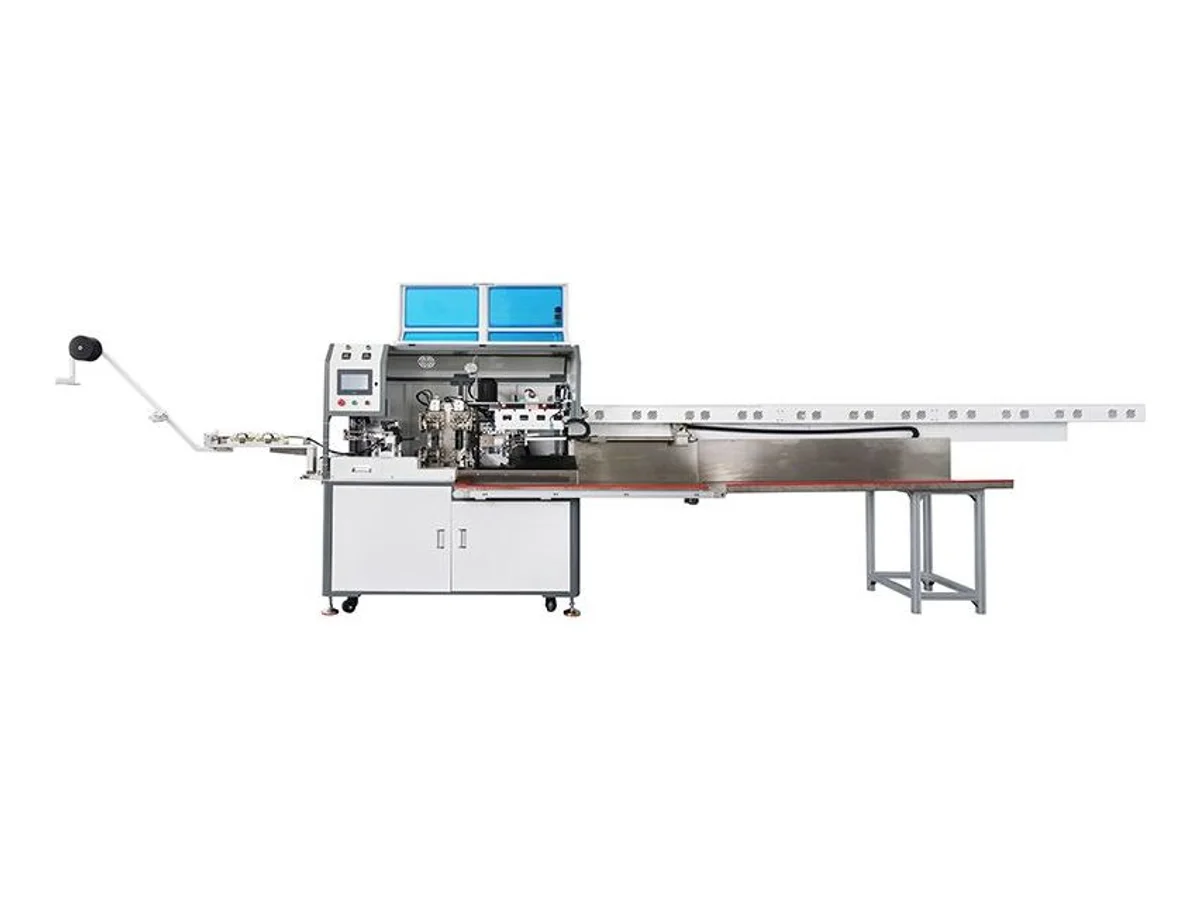
Automatic Multicore Cable Cutting Stripping and Two-End Tinning Machine
Model WM-4706S
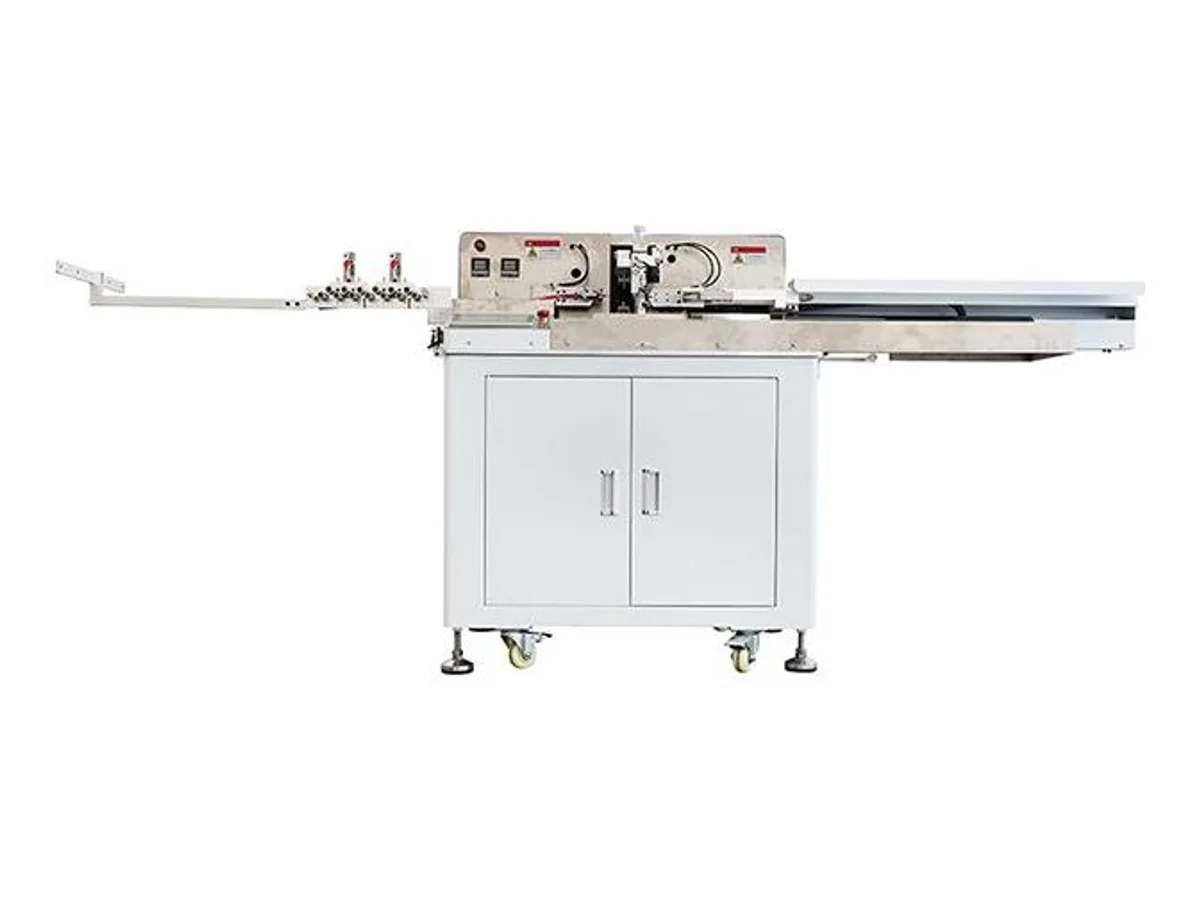
Automatic Multiple-Wire Stripping Twisting and Tinning Machine for 18–28 AWG
Model WM-4706W