Automatic Sheathed Multi-Core Cable Double-End Twisting and Tinning Machine WM-4715
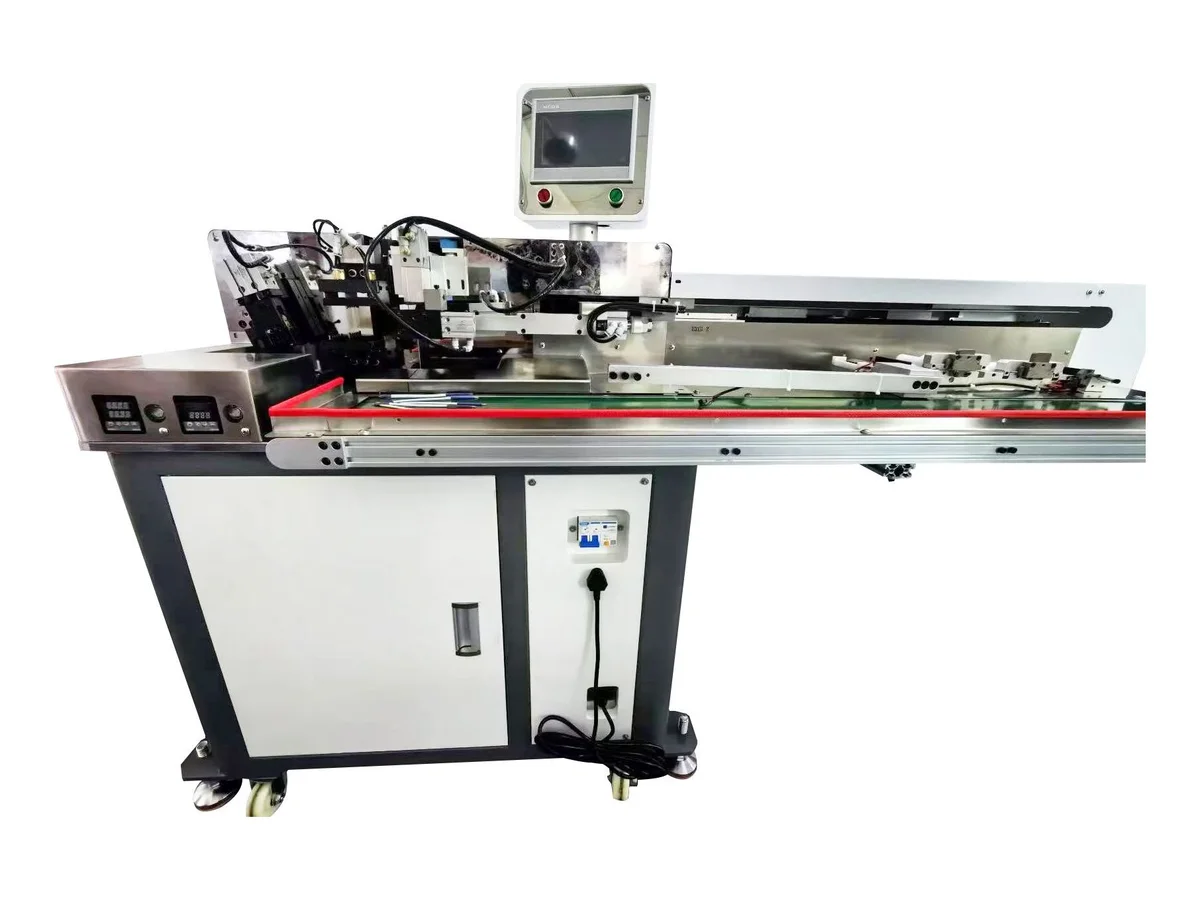
The WM-4715 is an inline production system that takes sheathed multi-core cable from the reel and delivers both ends jacket-stripped, core-stripped, servo-twisted and solder-tinned — cutting, double-end jacket stripping, double-end core stripping and double-end twist-tinning in one automatic pass. It handles cable outer diameters from 3.0 to 8.0 mm at 2,000 – 5,000 pieces per hour depending on the cable, with cut lengths up to 2,000 mm standard. Twelve servo axes run the line under an in-house motion control system, set from a bilingual Chinese/English touchscreen.
Specifications
| Function | Cable cutting, double-end jacket stripping, double-end core stripping, double-end twisting and solder tinning — fully automatic line |
|---|---|
| Wire type | Sheathed multi-core cable |
| Cable range | Outer diameter 3.0 – 8.0 mm |
| Capacity | 2,000 – 5,000 pcs/hour depending on cable |
| Cutting length | Up to 2,000 mm standard (longer by custom build) |
| Jacket stripping | Front end 0 – 60 mm, rear end 0 – 170 mm |
| Core stripping | 0 – 15 mm both ends (longer by custom build) |
| Tinning length | 0 – 10 mm, adjustable to the cable |
| Twisting length | 5 – 10 mm, servo-driven twisting |
| Display | Chinese/English LCD touchscreen |
| Motion system | 12 servo motors with planetary reducers, in-house motion control system |
| Linear components | German-brand ball screws and linear guides |
| Temperature control | Dual-zone solder pot temperature controllers |
| Air supply | 0.6 kPa pneumatic circuit, brand-name pneumatic components |
| Power | AC 220 V / 50 Hz |
| Dimensions & weight | 4,500 × 850 × 1,500 mm (L × W × H), approx. 600 kg |
| HS Code | 8479.89 (common reference — final classification confirmed by your customs broker) |
| Certification | On request |
Key features
- Both cable ends leave the line twisted and tinned in one pass — no second fixture, no re-feeding the opposite end through a benchtop tinning station
- Twelve servo axes with planetary reducers handle feeding, stripping and twisting, so strip windows and twist quality stay repeatable across a 2,000 – 5,000 pcs/h shift
- Rear-end jacket strip up to 170 mm opens long core fan-outs for multi-core cable that must break out inside an enclosure
- German-brand ball screws and linear guides on the motion axes — the wear parts that decide whether an automatic line still holds tolerance in year three
- Free sample test — send 2–3 meters of your cable, we run it on this machine and send you the video before you order
What it processes
- Sheathed multi-core power and signal cables tinned on both ends for screw-terminal and solder assembly
- Appliance and equipment cordage prepared in production volume with long rear-end jacket strip for internal wiring runs
- Harness plants replacing manual double-handling on benchtop tinning pots with one automatic line
Suited for: sheathed multi-core cable that must leave the line with both ends twisted and tinned — a 4.5-meter automatic system built for production volume, not bench work. Not suited for: loose discrete wires — for stripping, twisting and tinning up to ten separate small wires at once, the WM-4706W automatic multi-wire twisting and tinning machine covers 18–28 AWG — and if your sheathed cable ends need crimped terminals instead of tinned strands, the WM-391 sheathed cable crimping and tinning machine combines both processes on OD 2.0–6.5 mm cable. And if the job is not tinning at all but laying two loose wires into a twisted pair along the full lead, the WM-4716 six-axis wire twisting machine twists six pairs at a time at a programmed turn count. Finally, if your volume does not justify a 4.5-meter line — prototypes, service parts, short job-shop batches — the WM-4718 semi-automatic multi-core cable stripping and tinning machine strips, twists and tins one pre-cut cable end per operator cycle at 500 pcs/h on a 95 kg benchtop frame.
Double-end tinning is where manual lines quietly bleed labor: every cable gets picked up twice, flipped, and dipped against a clock nobody times. This line’s answer is structural — both ends are processed in the same pass, with servo twisting before the solder pot so strands enter tight and leave uniformly wetted. Send 2–3 meters of your cable and we will run it on camera before you order.
Engineering knowledge
Choose and troubleshoot this process
- Wire Tinning Defects: Causes and Process AdjustmentsDiagnose poor solder wetting, excessive wicking, solder bridges, uneven tin length, oxidation and strand deformation in wire tinning.
- How to Choose a Wire Twisting and Tinning MachineChoose wire twisting and tinning equipment by conductor construction, strip condition, tinning specification, flux control, finished-end geometry and automation level.
WM-4715 — common questions
What decides where in the 2,000–5,000 pcs/hour range my cable will run?
Cut length, core count and how much jacket must be stripped dominate the cycle. Short leads with modest strip windows run near the top of the range; 2-meter cuts with 170 mm rear fan-outs run near the bottom. Send us your cable drawing and we will quote a realistic rate for your exact job rather than the headline figure.
Can it strip and tin only one end?
Yes — each end's jacket strip, core strip, twist and tinning parameters are set independently on the touchscreen, so single-end processing or asymmetric strip lengths (front 0–60 mm, rear 0–170 mm) are normal recipes, not special builds.
How do I know my cable will feed and strip cleanly?
Sheathed cable behavior varies with jacket hardness and core lay, so we prove it on your material — send 2–3 meters of your actual cable, we set up the line, run it and return the video showing both stripped, twisted, tinned ends before you commit to the order.
Related machines in Twisting & Tinning
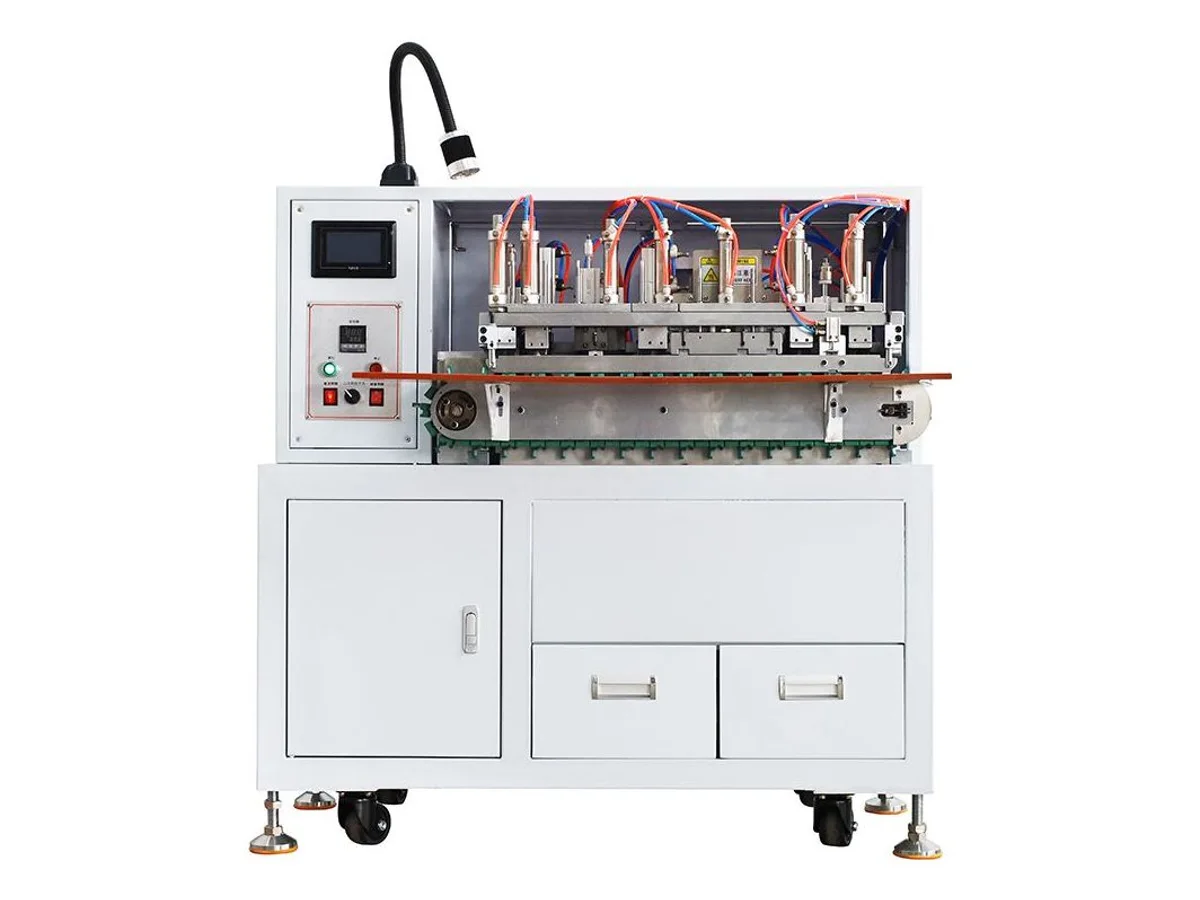
Automatic 3-Core Cable Cutting Stripping Twisting and Tinning Machine
Model WM-4710T
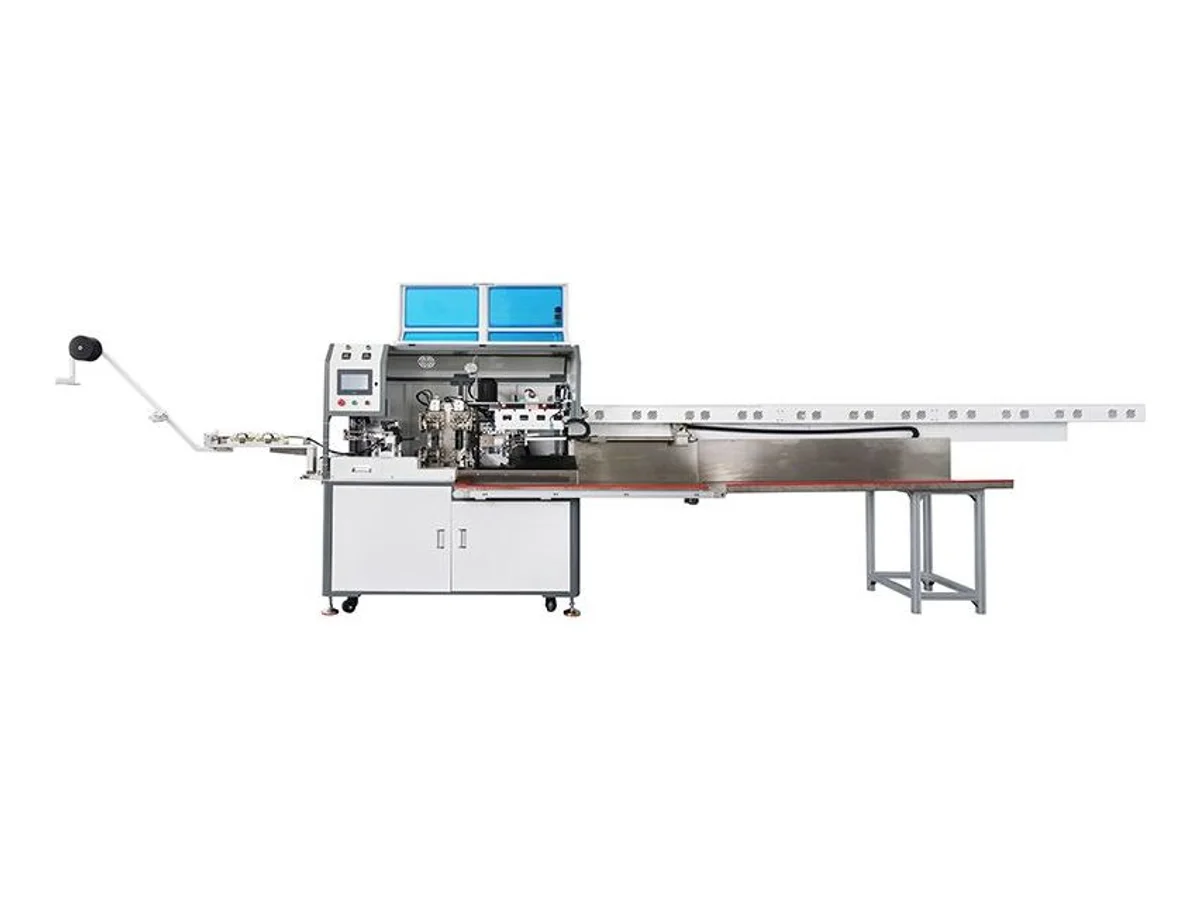
Automatic Multicore Cable Cutting Stripping and Two-End Tinning Machine
Model WM-4706S
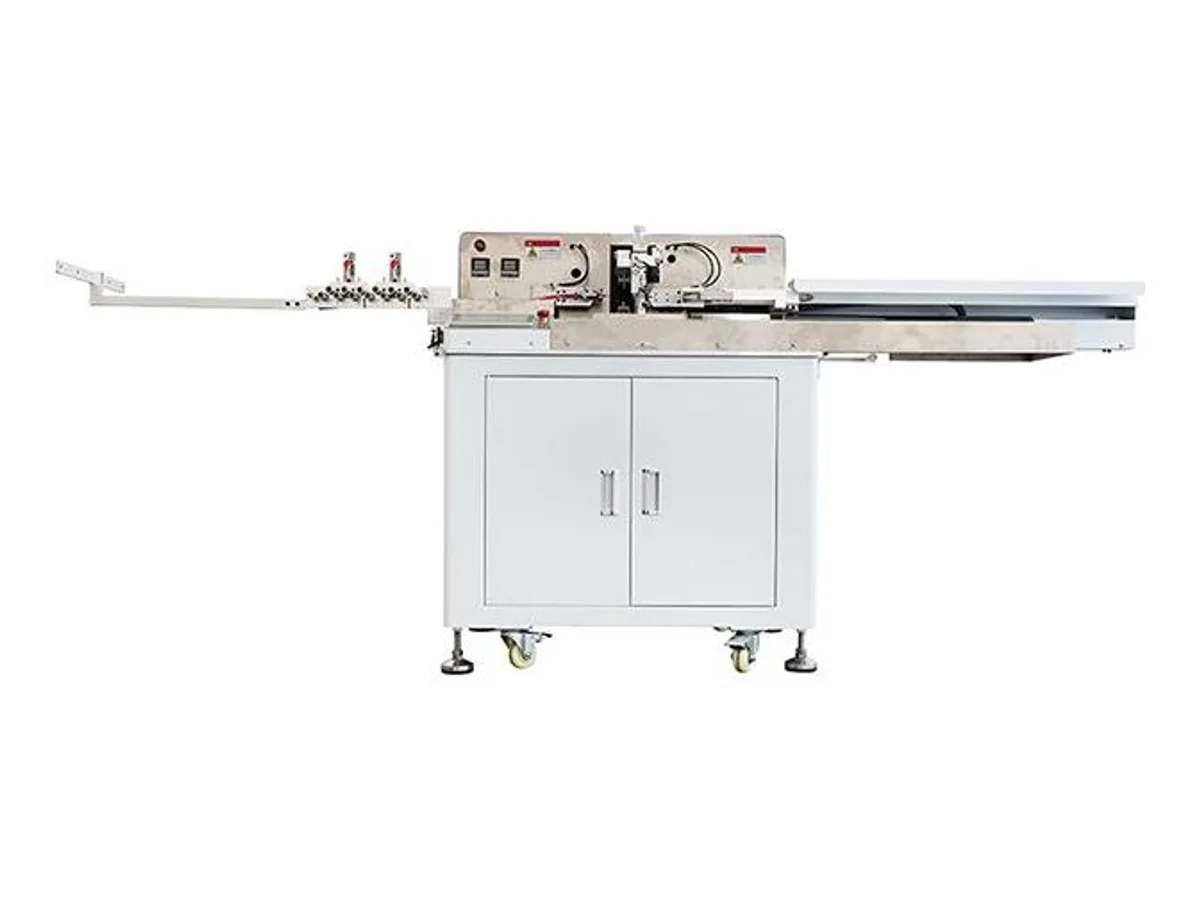
Automatic Multiple-Wire Stripping Twisting and Tinning Machine for 18–28 AWG
Model WM-4706W