Semi-Automatic Multi-Core Cable Stripping and Tinning Machine WM-4718
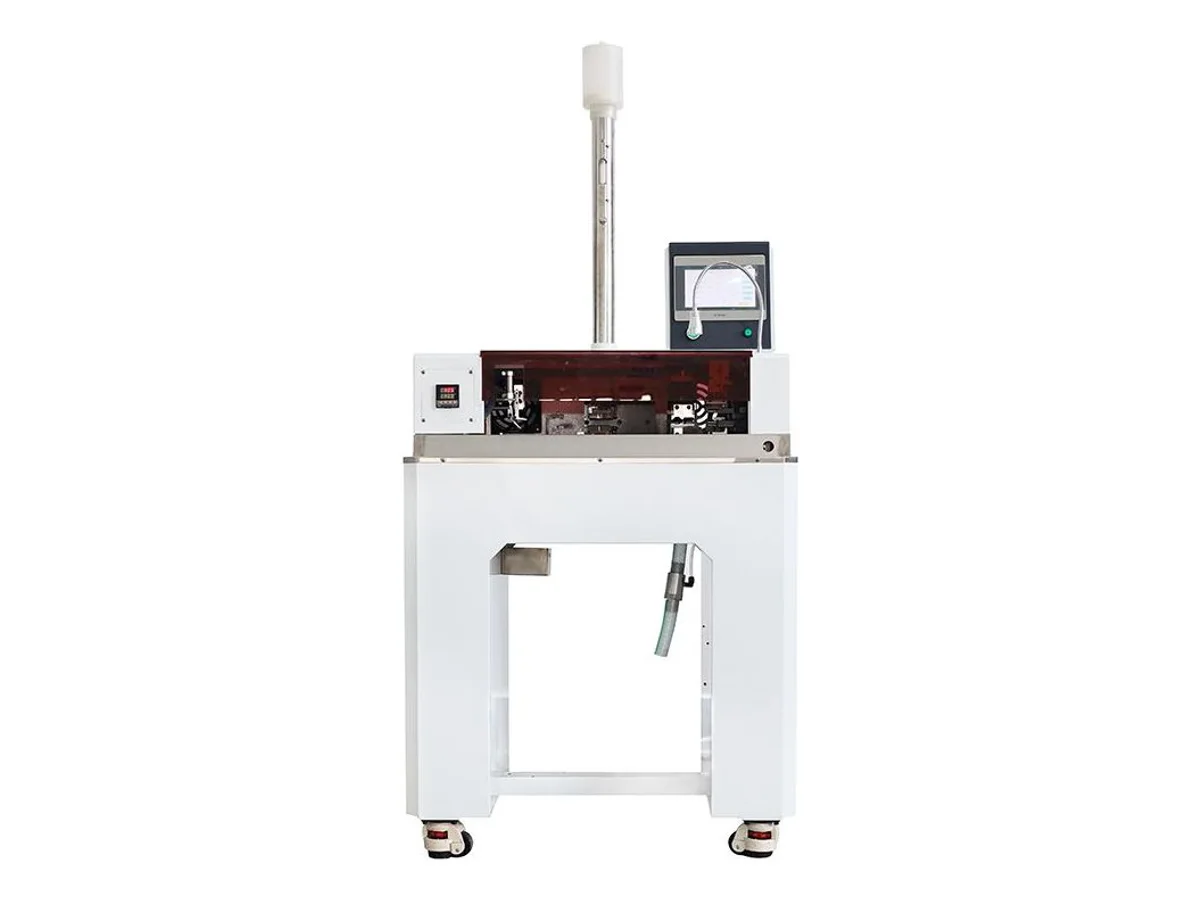
The WM-4718 is a semi-automatic benchtop machine that takes one pre-cut multi-core cable end at a time, removes the outer jacket, strips and twists the inner core wires and dips them in the solder pot in a single operator-loaded cycle. It handles single core wires from 0.8 to 3.0 mm diameter with a jacket strip of 20 mm and up, twists the cores up to 15 mm, and runs 500 pieces per hour. The machine measures 650 x 850 x 1,250 mm and weighs 95 kg on a wheeled frame, drawing 700 W from a single-phase 220 V supply.
Specifications
| Function | Semi-automatic stripping and solder tinning of the inner core wires of multi-core cable |
|---|---|
| Cable type | Multi-core sheathed cable — inner core wires stripped and tinned |
| Core wire size | Single core wire 0.8 – 3.0 mm diameter |
| Jacket stripping length | 20 mm and above |
| Core wire twisting length | Up to 15 mm |
| Tin dipping | Dipping depth adjustable |
| Production capacity | 500 pcs/hour |
| Air pressure | 5 kg/cm² |
| Power supply | AC 220 V, 50/60 Hz, single phase |
| Rated power | 700 W |
| Dimensions | 650 × 850 × 1,250 mm (L × W × H) |
| Weight | 95 kg |
| HS Code | 8463.90 (common reference — final classification confirmed by your customs broker) |
| Certification | On request |
Key features
- One operator-loaded cycle covers jacket removal, core stripping, core twisting and solder dipping — the four steps a bench worker otherwise does with a hand stripper and a hand-held pot
- Adjustable tin dipping depth, so the solder stops where the drawing says it stops instead of wicking up under the core insulation
- Core wires are twisted before the dip, so strands enter the solder closed and come out as one wetted pin rather than a splayed brush
- Digital solder pot temperature controller holds the bath at the setpoint through the shift — the variable that decides whether joint after joint looks the same
- 95 kg on castors and a 650 mm footprint — it rolls to wherever the cable is, and needs only a 220 V outlet and shop air
- Free sample test — send 2–3 meters of your cable, we run it on this machine and send you the video before you order
What it processes
- Multi-core appliance, control and signal cable prepared for solder or screw-terminal assembly in small and medium batches
- Prototype, pilot and service-part runs where an automatic line cannot be justified but hand tinning is too inconsistent
- Repair and rework benches that need production-grade tinned ends without a production-grade machine
- Job shops running many different multi-core cable types in short batches, changing setup several times a day
Suited for: multi-core sheathed cable that arrives already cut, whose inner cores must come out stripped, twisted and tinned to a repeatable depth — at bench volumes, one end at a time, on a 95 kg machine that fits beside the assembly table. Not suited for: production volume — at 500 pieces per hour this is a bench machine, and if you are running thousands of leads a shift the WM-4715 automatic sheathed cable double-end twisting and tinning machine does both ends from the reel at 2,000–5,000 pcs/h on OD 3.0–8.0 mm cable. It also does not cut cable to length; for automatic cutting plus both ends stripped and tinned in one pass on cable under Ø8 mm, the WM-4706S automatic multicore cable cutting, stripping and two-end tinning machine is the smaller automatic option. And if your work is loose discrete wires rather than jacketed cable, the WM-4706W automatic multiple-wire stripping, twisting and tinning machine takes up to ten separate 18–28 AWG wires side by side. And if the cores have to end in a crimped terminal rather than a tinned tip, the WM-3226 semi-automatic core wire stripping and crimping machine is the same operator-loaded bench format — jacket opened beforehand, then 1 to 12 cores cut, stripped 1–7 mm and crimped with reel-fed terminals at 700–800 pcs/h on 6-core cable.
Most workshops that tin multi-core cable by hand are not losing money on the dipping — they are losing it on the spread. A hand-held pot with no depth stop gives you a different tin length on every core, and once the solder wicks under the insulation the end is scrap. This machine’s answer is a fixed geometry: the cable is clamped in one position, the blades strip to a set value, the cores are twisted before they touch the bath, and the dip depth is set on the machine rather than in the operator’s wrist. What you give up is throughput; what you get back is that the hundredth end looks like the first.
Buying a benchtop machine is also the cheap way to find out whether your cable behaves. Jacket hardness, core lay and insulation type decide how cleanly cores separate — send 2–3 meters of your actual cable and we will run it on this machine and send you the video of the stripped, twisted, tinned ends before you commit to anything.
Engineering knowledge
Choose and troubleshoot this process
- How to Choose a Wire Twisting and Tinning MachineChoose wire twisting and tinning equipment by conductor construction, strip condition, tinning specification, flux control, finished-end geometry and automation level.
- Wire Tinning Defects: Causes and Process AdjustmentsDiagnose poor solder wetting, excessive wicking, solder bridges, uneven tin length, oxidation and strand deformation in wire tinning.
WM-4718 — common questions
Is this machine automatic or does an operator load every cable?
An operator loads it. The WM-4718 is semi-automatic — you present one pre-cut cable end to the clamp, the machine strips the jacket, strips and twists the cores and dips them in the solder pot, and you take the finished end out and load the next. That is why it is rated at 500 pieces per hour rather than the thousands an automatic line produces.
Does it cut cable to length?
No. The WM-4718 processes cable that has already been cut, and it processes one end per cycle. If you need cut-to-length plus both ends finished from the reel in one pass, that is a different class of machine — see the referrals below.
How many cores can it handle at once?
The published specification limits the individual core wire to 0.8 – 3.0 mm diameter and the jacket strip to 20 mm and up, but does not state a core count. Core count, jacket hardness and how tightly the cores are laid all affect whether they separate and present cleanly, so we confirm the core count on your actual cable during the sample trial rather than quoting a number.
What tin length will I get?
The dipping depth is adjustable, which is what sets tin length on the core. The exact usable range depends on your core diameter, insulation type and how deep you can go before the solder wicks under the insulation — we set it during the sample run and show you the result on video.
What do I need to supply on site?
A single-phase 220 V, 50/60 Hz outlet for the 700 W load, compressed air at 5 kg/cm², solder and flux, and about 650 x 850 mm of floor space. The machine is on castors, so it does not need to be bolted down.
Related machines in Twisting & Tinning
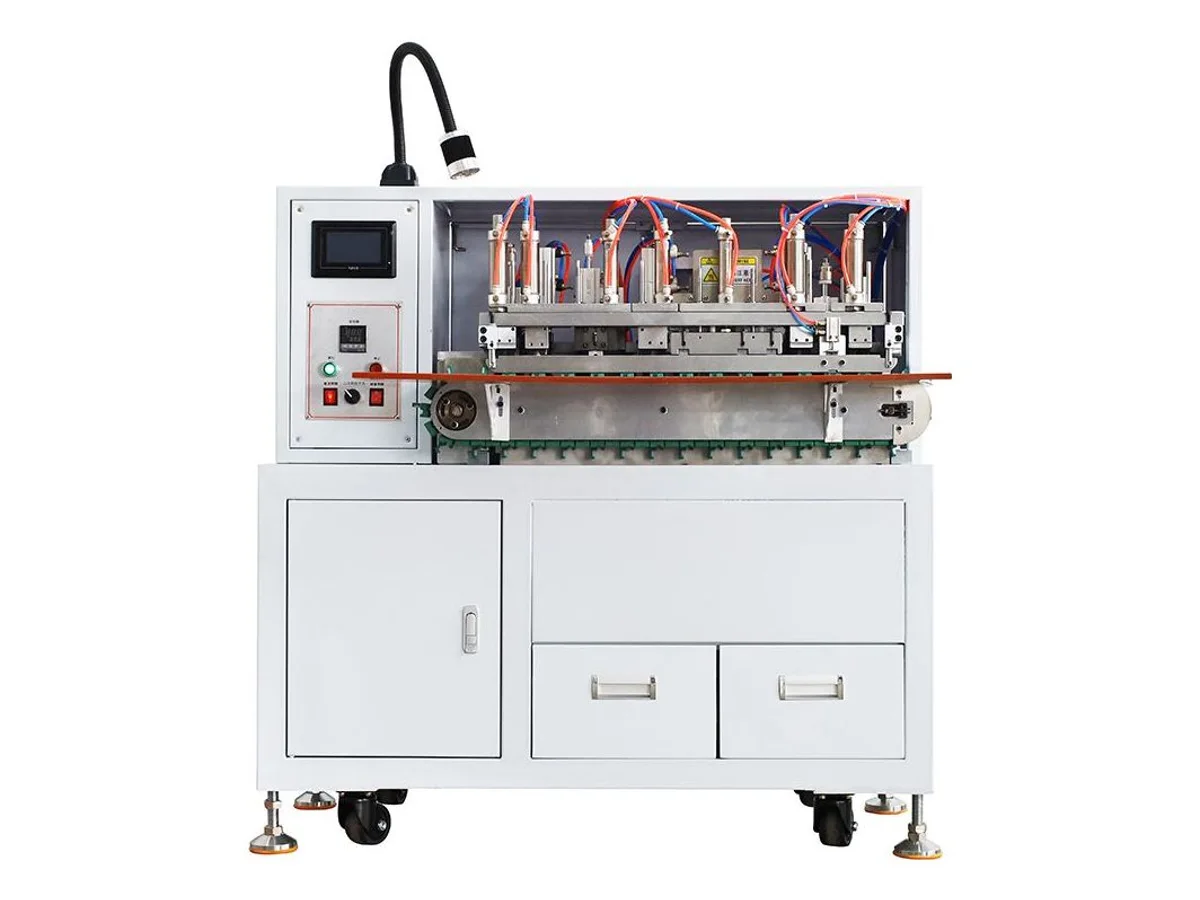
Automatic 3-Core Cable Cutting Stripping Twisting and Tinning Machine
Model WM-4710T
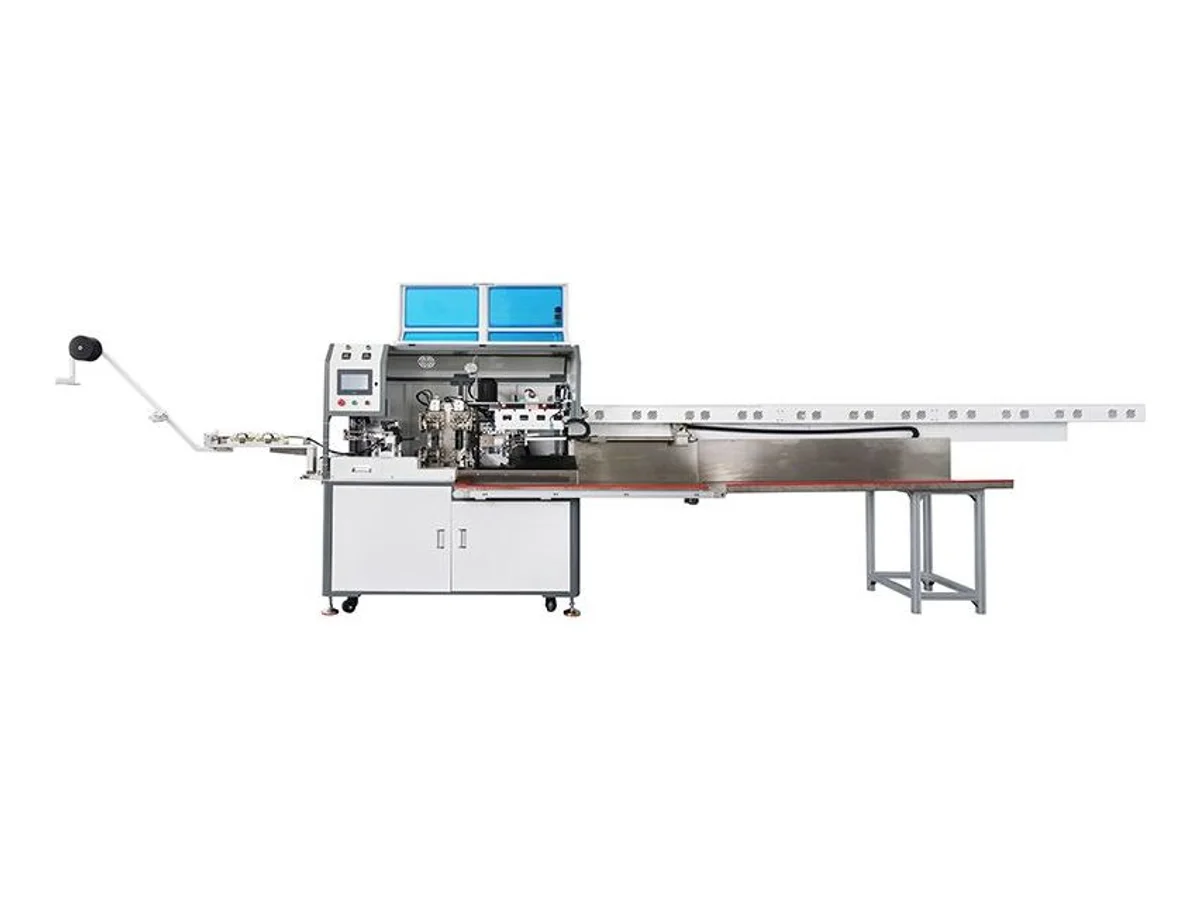
Automatic Multicore Cable Cutting Stripping and Two-End Tinning Machine
Model WM-4706S
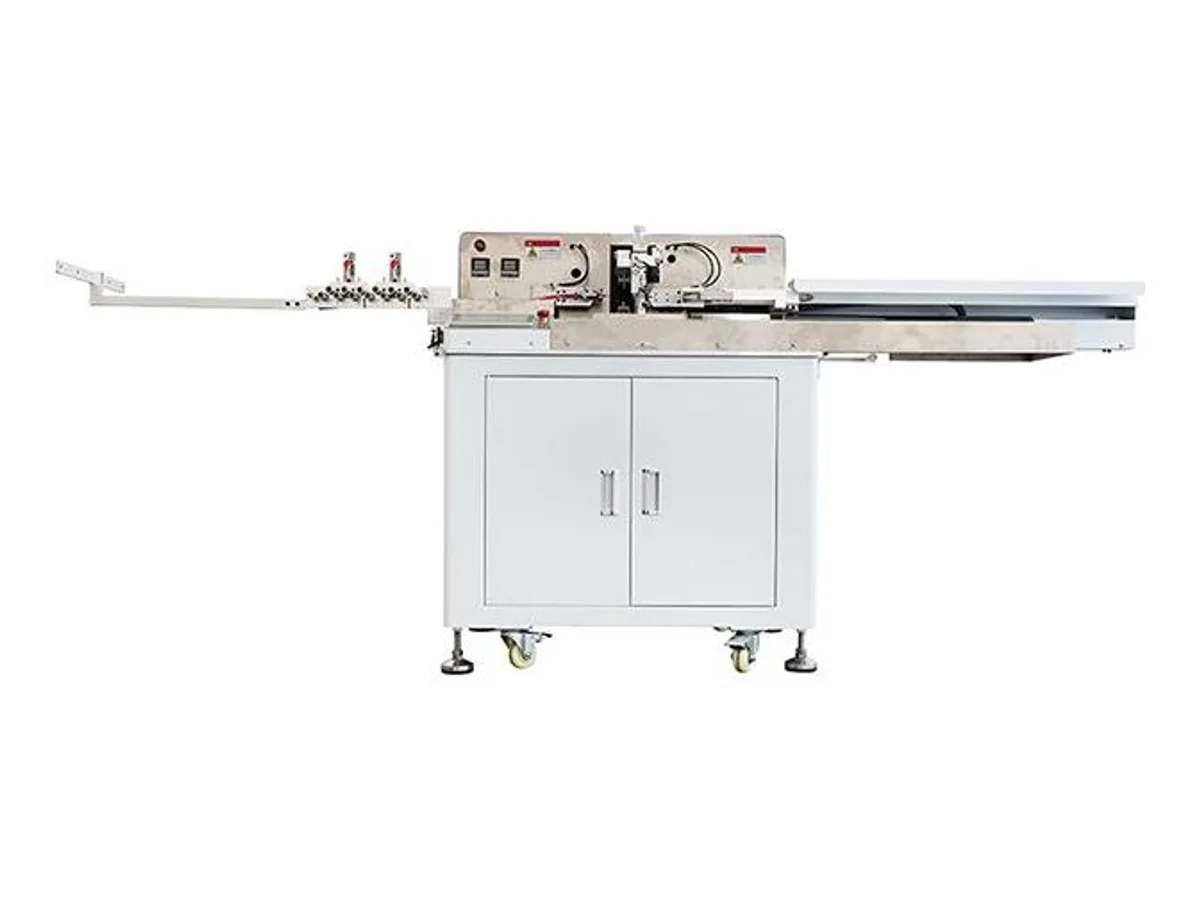
Automatic Multiple-Wire Stripping Twisting and Tinning Machine for 18–28 AWG
Model WM-4706W