Automatic Multiple-Wire Stripping Twisting and Tinning Machine for 18–28 AWG WM-4706W
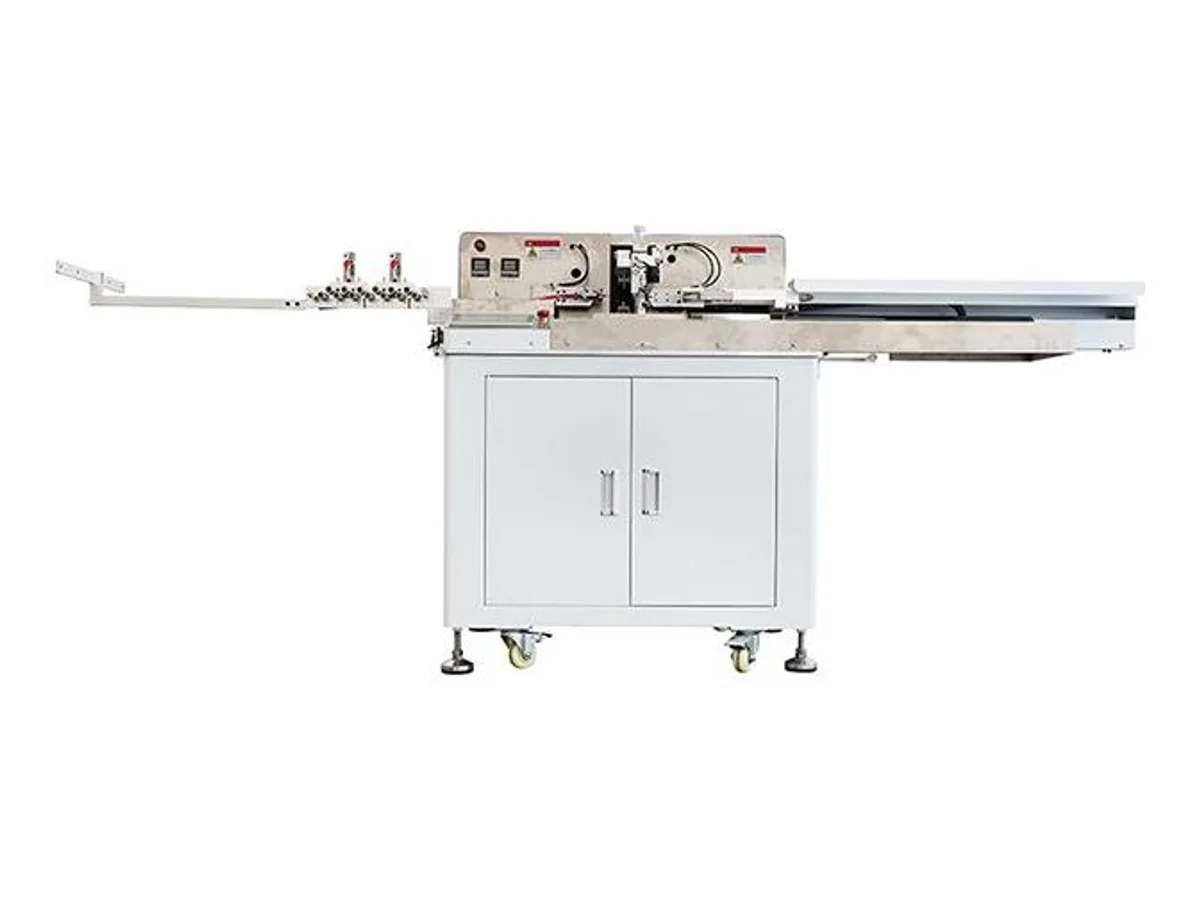
The WM-4706W runs up to ten independent 18–28 AWG wires through cutting, full or half stripping, twisting and single- or double-end tinning. It supports 8–1,000 mm cut lengths and 0.1–10 mm stripping and tinning ranges; production output must be confirmed against the wire count and process setup.
Specifications
| Function | Automatic cutting, full or half stripping, twisting and single- or double-end tinning |
|---|---|
| Wire count | Up to 10 independent wires |
| Wire range | 18–28 AWG |
| Cutting length | 8–1,000 mm |
| Stripping length | 0.1–10 mm |
| Twisting length | 3–10 mm |
| Tinning length | 0.1–10 mm |
| Air pressure | 7 kgf |
| Published productivity line | 2,000 pcs/h |
| Published capacity line | 20K/hour — confirm against sample configuration |
| Dimensions | 600 × 800 × 1,100 mm |
| Machine weight | 280 kg |
| HS Code | 8463.90 (common reference — final classification confirmed by your customs broker) |
| Certification | CE (certificate provided with shipment) |
Key features
- Feeds as many as ten independent wires through parallel processing lanes
- Selects single- or double-end tinning and full- or half-strip preparation
- Covers cut lengths from 8 to 1,000 mm for short internal leads and longer jumpers
- Sets stripping and tinning from 0.1 to 10 mm, with 3–10 mm strand twisting
- Separates the wire guides, stripping tooling and solder station for accessible setup checks
What it processes
- Parallel production of color-coded loose leads for electronic assemblies
- Independent 18–28 AWG wires prepared for PCB, switch or terminal-block soldering
- Short jumper sets requiring the same cut length and end treatment across several colors
- Single- or double-ended tinned leads supplied as a grouped production batch
Suited for: cutting and preparing up to ten independent 18–28 AWG wires in parallel, with selectable full or half stripping, twisting and single- or double-end tinning. Not suited for: a sheathed cable that must first be opened and split into cores — compare the WM-4710T three-core line and the WM-4706S multicore two-end line. The twisting on this machine is strand twisting at the wire end, ahead of the solder pot — if what you need is two wires laid into a twisted pair along the whole lead, that is a different process and the WM-4716 six-axis wire twisting machine does it six pairs at a time.
The parallel lanes reduce repeated handling when a harness needs the same family of loose leads in several colors. Each wire still has to stay inside the 18–28 AWG range and share a compatible program. Wire stiffness, insulation friction and the number of active lanes are verified together rather than assumed from gauge alone.
Published output statements for this machine are inconsistent, so neither figure is used as a sales promise. Our acceptance result records the tested wire count, piece length, one- or two-end process and measured batch time. That gives the buyer a useful production number tied to the actual job instead of a catalog maximum with unknown conditions.
Engineering knowledge
Choose and troubleshoot this process
- Wire Tinning Defects: Causes and Process AdjustmentsDiagnose poor solder wetting, excessive wicking, solder bridges, uneven tin length, oxidation and strand deformation in wire tinning.
- How to Choose a Wire Twisting and Tinning MachineChoose wire twisting and tinning equipment by conductor construction, strip condition, tinning specification, flux control, finished-end geometry and automation level.
WM-4706W — common questions
Does the WM-4706W process multicore sheathed cable?
No. Its input is up to ten independent wires, each guided through a parallel lane. Use the WM-4710T for three-core round or flat cable, or the WM-4706S for multicore sheathed cable under Ø8 mm.
Why is there no guaranteed capacity in the page badge?
The source publishes two different output lines, 2,000 pcs/h and 20K/hour, without enough context to reconcile them. We therefore do not advertise a guaranteed rate. The trial result is reported for your actual wire count, cut length and selected end processes.
Can it half-strip the insulation for transport?
The source lists full or half stripping. Confirm which end retains the insulation slug, the required pull-off condition and whether tinning happens immediately or at a later station so the program and tooling match the intended workflow.
What samples and data are needed?
Send every wire color and construction, 2–3 meters per wire, AWG size, conductor material, cut length, both end drawings, solder requirement, number of simultaneous wires and target batch size. A video trial confirms feed alignment and finished tin length.
Related machines in Twisting & Tinning
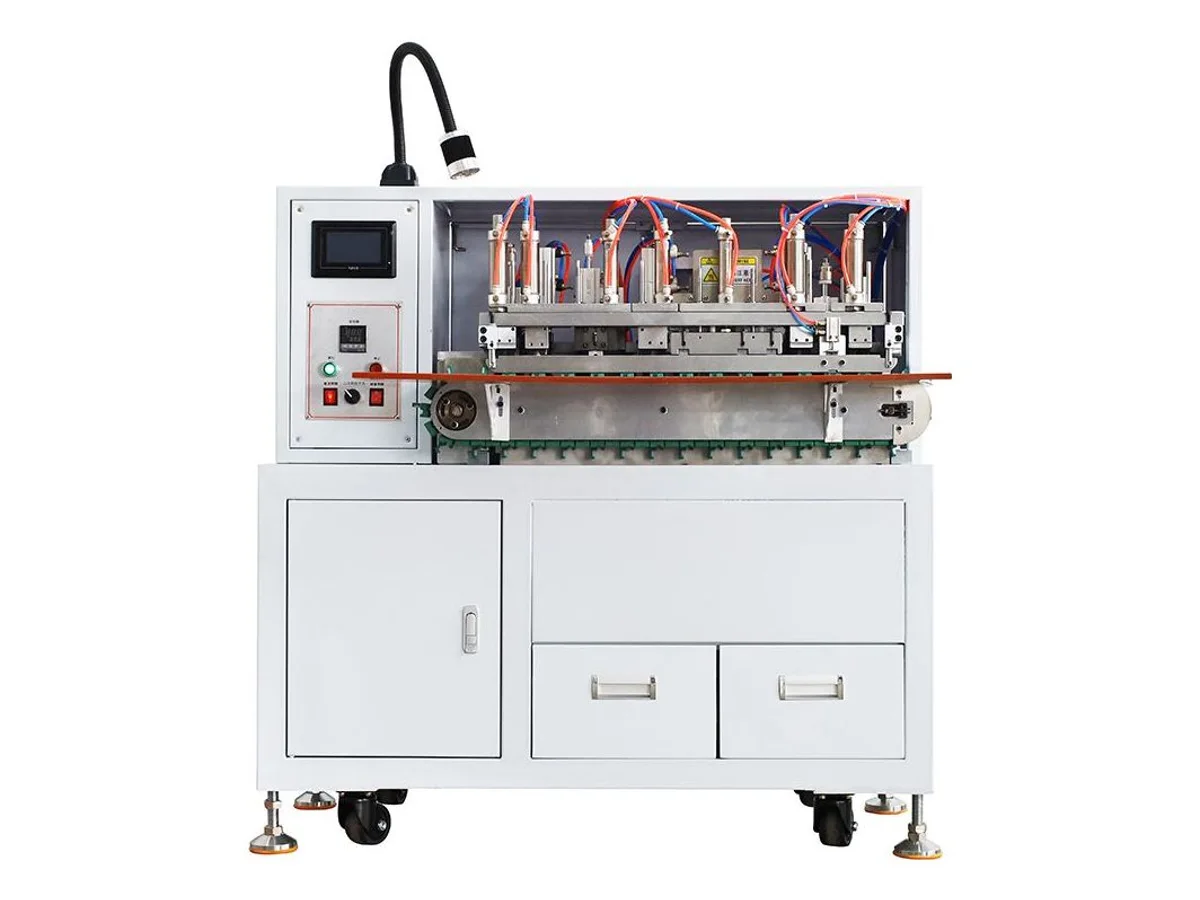
Automatic 3-Core Cable Cutting Stripping Twisting and Tinning Machine
Model WM-4710T
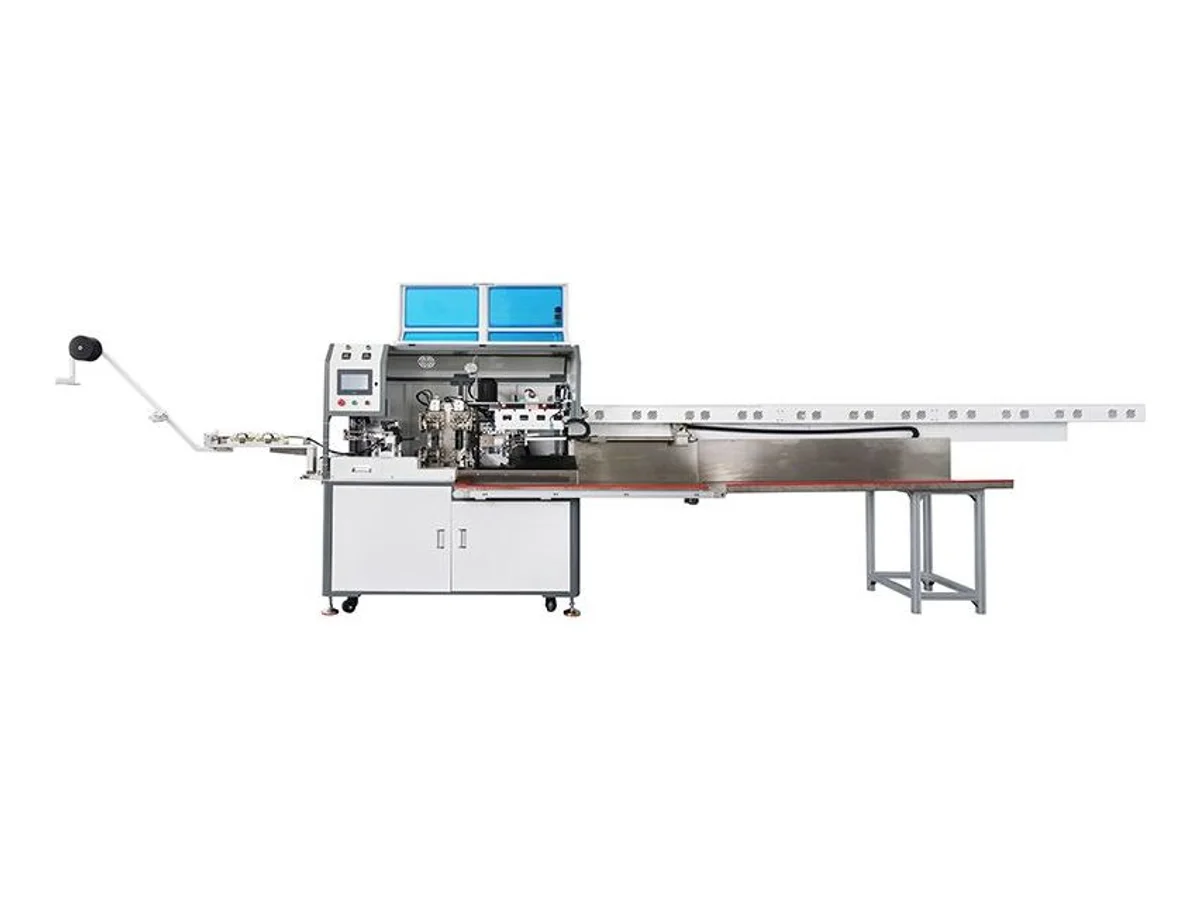
Automatic Multicore Cable Cutting Stripping and Two-End Tinning Machine
Model WM-4706S
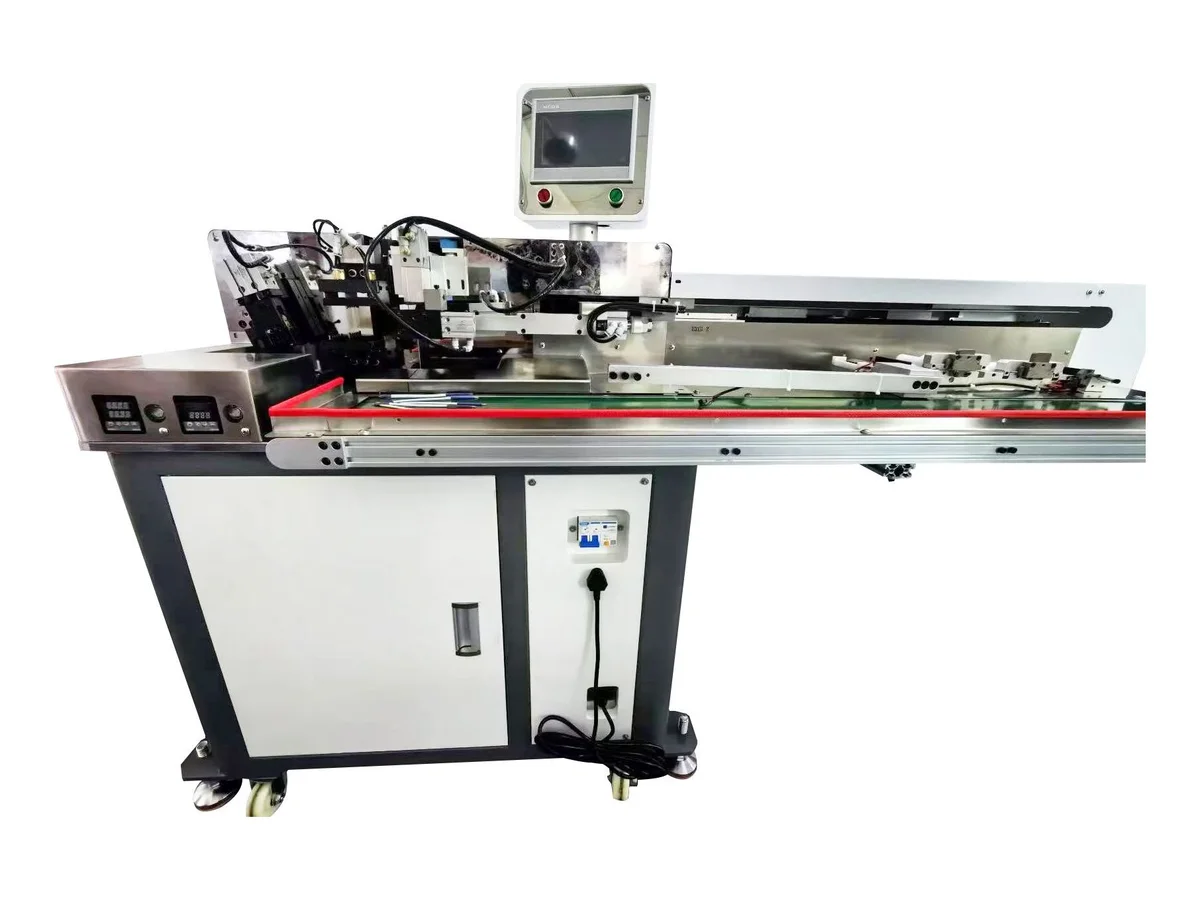
Automatic Sheathed Multi-Core Cable Double-End Twisting and Tinning Machine
Model WM-4715