High Speed Benchtop Wire Twisting and Stranding Machine WM-4717
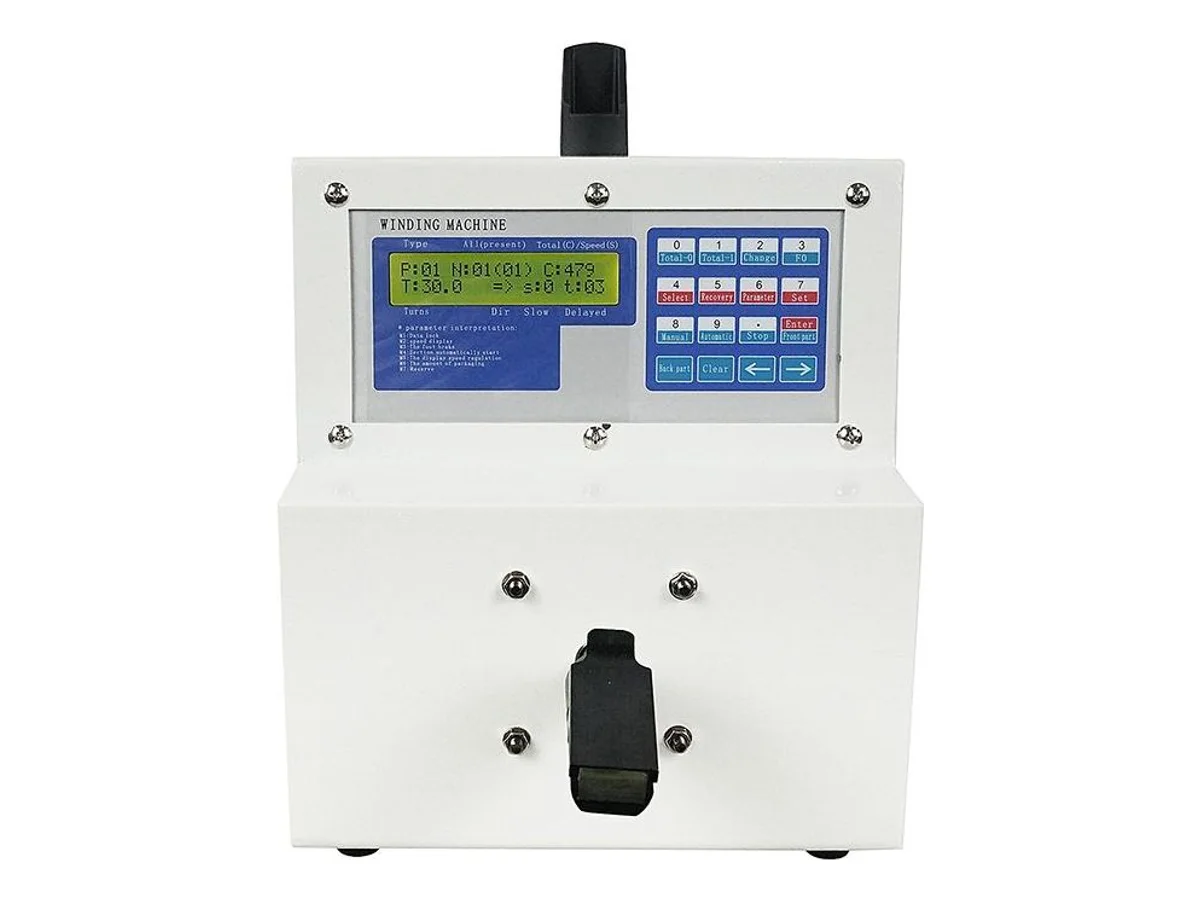
The WM-4717 is a single-spindle benchtop machine that twists two or more insulated wires into one laid strand along the whole lead — up to 6 m of finished length per run, on wire from 12 to 36 AWG. Turn count is keyed in from 0.5 to 9,999.9 turns on an English keypad, spindle direction is reversible, and up to 99 recipes and 20 winding processes are stored in the controller. The manufacturer rates it at 1,500 pcs/hour. It weighs 25 kg and occupies 200 × 300 × 300 mm of bench, running on AC 220 V or AC 110 V.
Specifications
| Function | Twisting and stranding insulated wires into one laid strand along the lead |
|---|---|
| Wire range | 12 – 36 AWG |
| Max. strand length | 6 m |
| Turn count | 0.5 – 9,999.9 turns |
| Spindle speed | 300 – 7,500, adjustable |
| Spindle direction | Forward and reverse, selectable |
| Winding error | 0 |
| Output | 1,500 pcs/hour |
| Program storage | 99 sets |
| Winding processes | 20 kinds |
| Power supply | AC 220 V / AC 110 V |
| Motor power | 60 W |
| Dimensions | 200 × 300 × 300 mm |
| Weight | 25 kg |
| HS Code | 8463.90 (common reference — final classification confirmed by your customs broker) |
| Certification | On request |
Key features
- Turn count is a number, not a feel — key in anything from half a turn to 9,999.9 turns and every lead in the batch comes out at the same lay
- Reversible spindle: S-lay or Z-lay is a setting, not a rebuild, so a pair can be matched to whatever the drawing or the mating harness already uses
- 99 stored recipes and 20 winding processes — recurring part numbers are recalled instead of re-entered at every changeover
- Twisting speed and twisting force are both adjustable, so soft silicone lead and stiff PVC hookup wire can each be run at a setting that lays evenly without stretching the insulation
- 25 kg on a 200 × 300 mm footprint — it sits on a workbench next to the operator rather than needing floor space and a forklift
- Free sample test — send your wire and the pitch you want, we run it on this machine and send you the video before you order
What it processes
- Twisted pairs and stranded leads for electronic wire, hook-up wire and appliance harnesses
- Winding wire and braided shielded wire that has to be laid before assembly
- Computer and data cable leads where a defined lay length controls crosstalk and loop area
- Automotive wiring where signal pairs are twisted down to a specified turn count
- Prototype, sample and short-run work in harness shops that still twist pairs with a cordless drill
Suited for: laying twisted pairs and stranded leads up to 6 m long from 12–36 AWG wire you have already cut to length, at a turn count you set once and repeat exactly. Not suited for: high-volume production off one spindle — at a rated 1,500 pcs/hour the WM-4716 six-axis wire twisting machine lays six pairs per cycle instead of one and is the better answer above a few thousand leads a shift. It also has no blades and no solder pot: if you are starting from a reel, the WM-187 cutting, stripping and twisting machine covers 0.1–4.5 mm² single wire and 0.1–2.5 mm² double wire at 4,000–10,000 pcs/h, and if the ends must come out tinned the WM-4706W multi-wire stripping, twisting and tinning machine handles up to ten independent 18–28 AWG wires with 0.1–10 mm tinning. And if the job is not a twisted pair at all but simply tightening the loose strands on one stripped end, the WM-4720 benchtop wire strand twisting machine does that alone on 1–3 mm wire with a twist of 20 mm or less, at 3,000 pcs/h.
A twisted pair is only as good as its consistency. Hand-twisting with a drill gives you a lay that tightens when the operator is fresh and loosens by the end of the shift, and the difference shows up twice: in how the lead sits in a routing channel, and in what an incoming-inspection gauge says about pitch. On this machine the number of turns is entered on the keypad and counted by the controller, so lead number one and lead number four hundred come out the same. Direction is a setting too, which matters more often than people expect — a pair laid the wrong way round fights the lay of everything it is bundled with.
Because the platform is also offered in two-, three- and five-spindle versions, the sensible way to buy it is to run your own wire first. Send us two to three metres of each conductor and the pitch you want, and we will return the trial video, the measured lay length, and an honest read on whether one spindle covers your volume.
Engineering knowledge
Choose and troubleshoot this process
- How to Choose a Wire Twisting and Tinning MachineChoose wire twisting and tinning equipment by conductor construction, strip condition, tinning specification, flux control, finished-end geometry and automation level.
- Wire Tinning Defects: Causes and Process AdjustmentsDiagnose poor solder wetting, excessive wicking, solder bridges, uneven tin length, oxidation and strand deformation in wire tinning.
WM-4717 — common questions
Does the WM-4717 twist the whole lead, or just the strands on a stripped end?
It twists the whole lead. Two or more insulated wires are clamped and rotated so the finished lead is laid along its full length, up to 6 m per run. That is a different operation from the short strand twist a cut-and-strip machine puts on an exposed conductor tip before crimping or tinning — if that is the job you have, a cut-strip-twist machine is the right tool, not this one.
What unit is the 300 – 7,500 spindle speed figure in?
The manufacturer publishes the range as a bare number without a unit, and we will not attach one we cannot source. In practice it is the spindle's rotation rate, and what matters for your part is the resulting lay length, so we set the speed and turn count on your own wire during the sample run and report the pitch we measured.
How does it compare with the six-axis twisting machine?
Same craft, different tier. The WM-4717 is one spindle on a benchtop with a published specification table — wire range, turn count, speed and output are all numbers you can plan against, and it suits sample work, short runs and mixed part numbers. The six-axis machine lays six pairs per cycle for volume production but is built to order with no published wire-range or capacity table. Pick this one for flexibility and a known spec, the six-axis one for throughput.
Does it cut, strip or tin the wire?
No. The WM-4717 twists only. Wires arrive already cut to length and, where the ends need it, already stripped. Put a cut-and-strip machine upstream if you are starting from a reel, and a tinning machine downstream if the ends must come out soldered.
Can it be built with more than one spindle?
The manufacturer lists two-axis, three-axis and five-axis versions of this platform as customization options. No specification table is published for those variants, so tell us how many stations you want and we will confirm the build and the price before you commit.
What should I send to get a quote?
Two to three metres of each wire that goes into the strand, the AWG size and insulation type, how many wires per strand, the finished length, and the turn count or lay length you need. Add your monthly volume and we will tell you honestly whether one spindle is enough or whether you should be looking at a multi-station machine.
Related machines in Twisting & Tinning
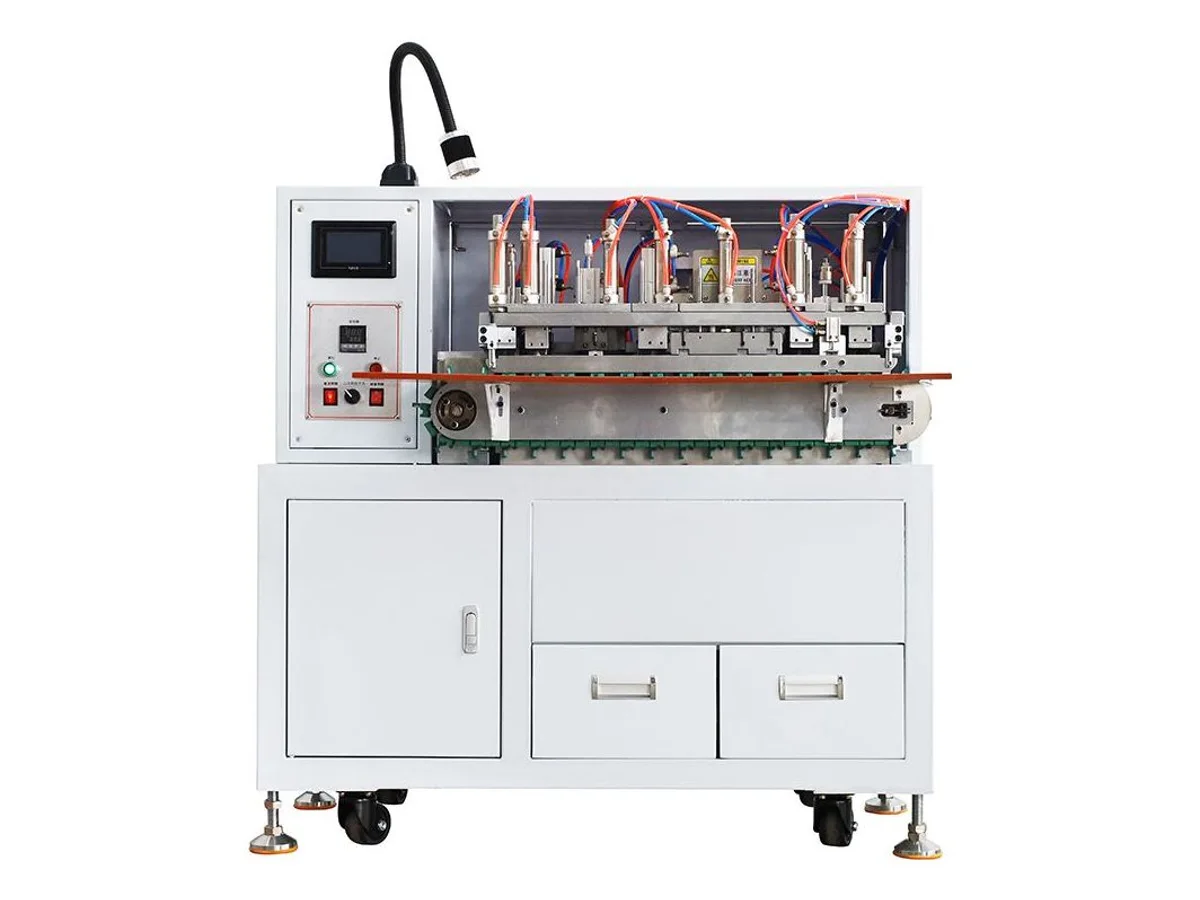
Automatic 3-Core Cable Cutting Stripping Twisting and Tinning Machine
Model WM-4710T
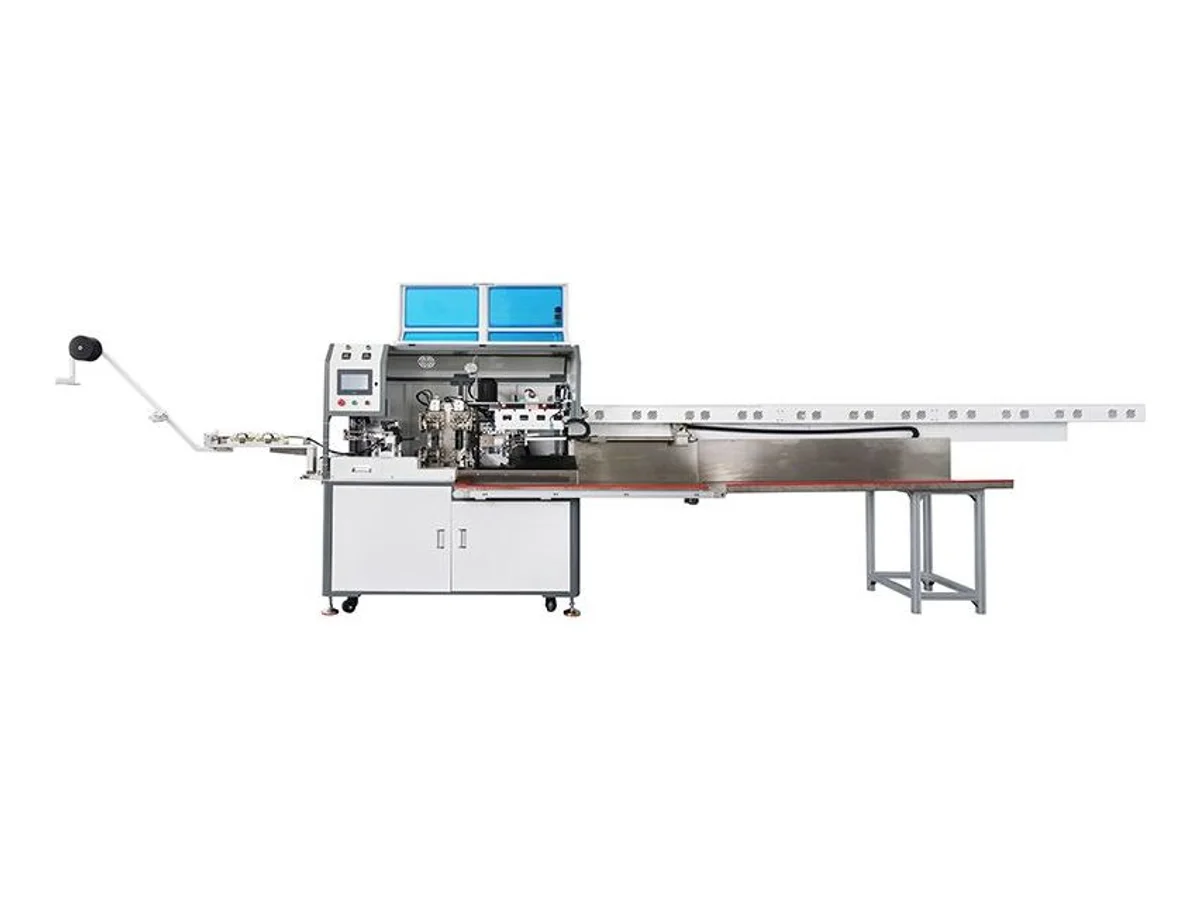
Automatic Multicore Cable Cutting Stripping and Two-End Tinning Machine
Model WM-4706S
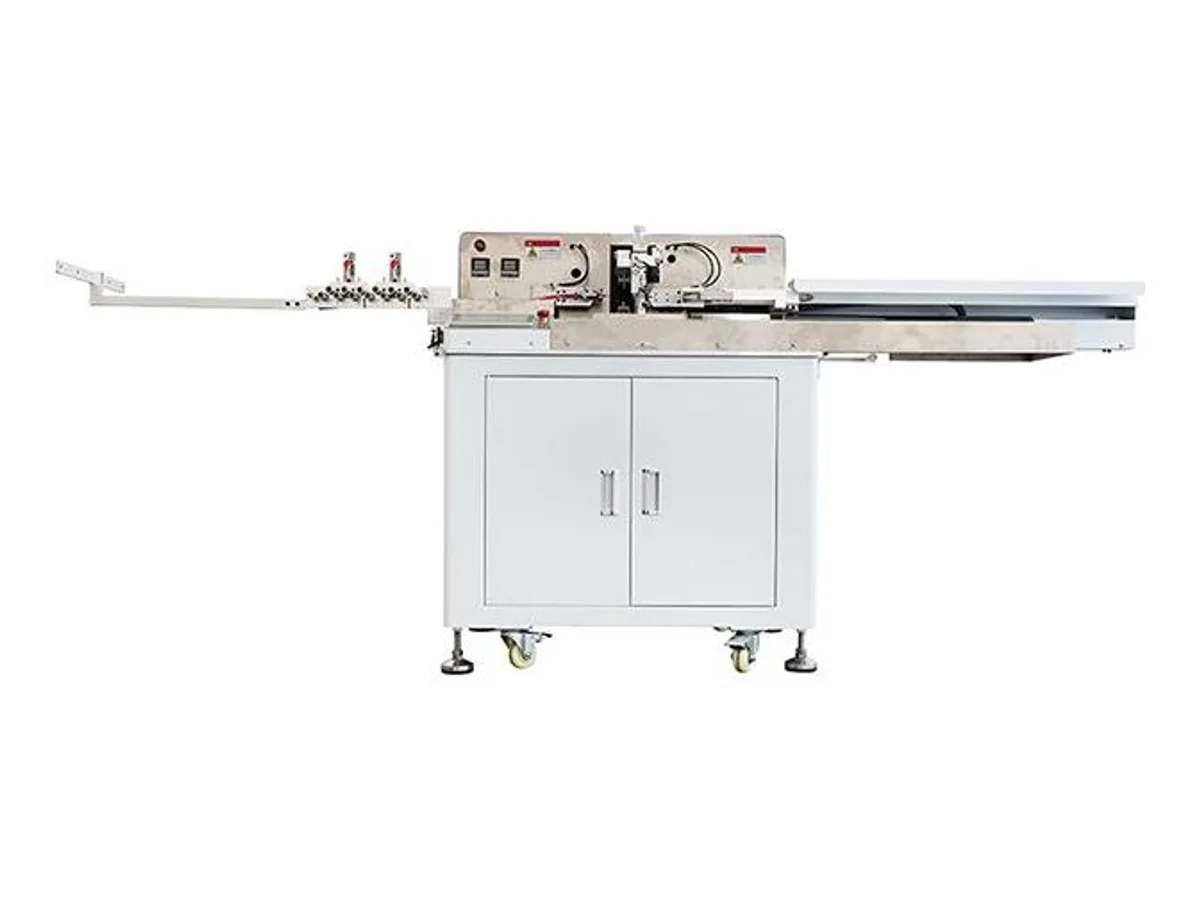
Automatic Multiple-Wire Stripping Twisting and Tinning Machine for 18–28 AWG
Model WM-4706W