Silent Copper Band Wire Splicing Machine with 4-Ton Crimp Force WM-716
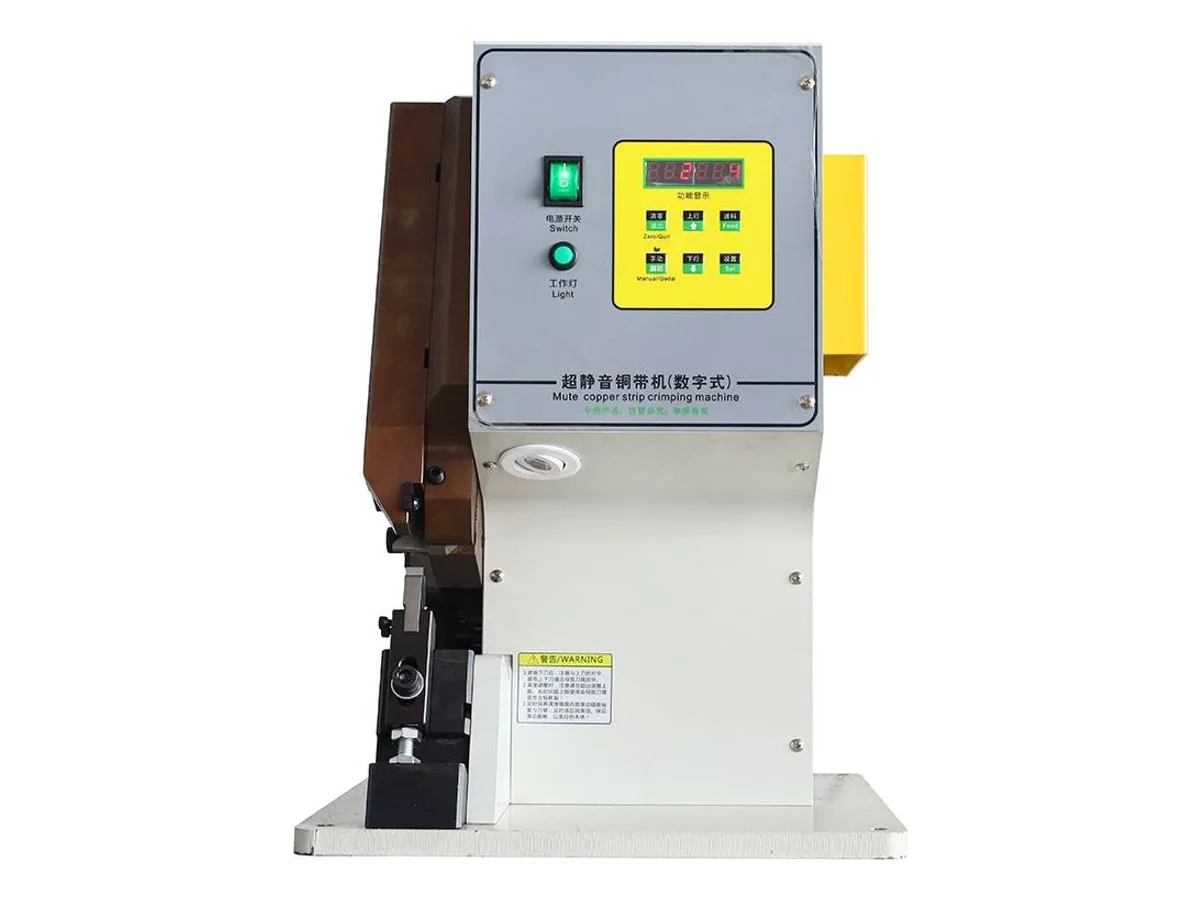
The WM-716 splices stripped wires by crimping a serrated copper band around the bundle — feeding, cutting, forming and closing the splice in one pedal-triggered action with 4 tons of crimp force. It runs continuous copper band from 1 to 10 mm wide and produces joints rated to 500 N pull-off, replacing solder and splice welding on lamp, switch, heating-element and thermosensitive-element connections. An inverter motor keeps the cycle quiet, a stepper feed meters the band, and a digital counter tracks output. The frame measures 400 × 600 × 650 mm and weighs 170 kg.
Specifications
| Function | Copper band wire splicing — feed, cut, form and crimp in one action |
|---|---|
| Crimping force | 4 T |
| Applicable copper belt | 1 – 10 mm wide, continuous reel |
| Operation mode | Pedal switch — single action |
| Copper belt feeding | Stepper motor plus drive wheel |
| Maximum pulling force | 500 N |
| Motor power | 1.5 kW |
| Drive | Inverter motor for low-noise running |
| Counter | Digital piece counter with feed and set keys |
| Dimensions | 400 × 600 × 650 mm |
| Weight | 170 kg |
| HS Code | 8463.90 (common reference — final classification confirmed by your customs broker) |
| Certification | CE (certificate provided with shipment) |
Key features
- One pedal press feeds, cuts, forms and crimps the copper band — a finished splice every cycle with no pre-formed crimp terminals to stock
- Serration-treated band bites into the strands, so splices hold to the 500 N pull rating without solder heat or flux residue
- Inverter-motor drive runs quietly enough to sit beside assembly benches instead of being banished to a press room
- Stepper-metered band feed and a digital counter keep band length consistent and the piece count honest across shifts
What it processes
- Splicing lamp, switch and sensor leads in appliance and lighting assembly
- Connections onto high-temperature heating elements and thermosensitive elements where solder cannot survive
- Multi-wire gathers in harness prefabrication that would otherwise need splice welding
Suited for: cold splicing of stripped wire bundles with continuous copper band — lamp, switch, sensor, heating-element and thermosensitive-element connections where solder heat or flux is unwelcome and pre-formed splice terminals cost too much. Not suited for: crimping standard insulated or open-barrel terminals or solder work — for terminals, pick from our terminal crimping machines; soldered joints run on the other wire soldering and welding machines beside this splicer.
Send 2–3 meters of each wire in your splice combination plus your band spec, and we crimp your actual joints on video — with a pull test in frame — before you commit.
Engineering knowledge
Choose and troubleshoot this process
- Ultrasonic Wire Welding Defects: Causes and Corrective ActionsTroubleshoot weak wire splices, cut strands, excessive flash, incomplete bonding, unstable weld energy, tool marking and conductor contamination.
- How to Choose an Ultrasonic Wire Welding MachineChoose ultrasonic wire welding equipment by conductor material, gathered cross-section, splice geometry, weld power, tooling, recipe control and acceptance testing.
- Wire Soldering Defects: Causes and Corrective ActionsTroubleshoot non-wetting, excessive solder wicking, bridging, burnt insulation, unstable tinning depth, residue and contaminated wire solder joints.
WM-716 — common questions
How does copper band splicing compare with soldering or ultrasonic welding?
It is a cold, one-action mechanical process — no solder heat that damages heat-sensitive components, no flux residue, and the only consumable is a reel of copper band instead of pre-formed splice terminals. Joints hold to a 500 N pull rating. Ultrasonic welding gives a metallurgical bond but costs considerably more per station; band splicing is the economical middle ground for most appliance-class joints.
What band and wire combinations does it take?
Continuous serration-treated copper band from 1 to 10 mm wide, loaded as a reel and metered by the stepper feed. Strip and gather your wires so the bundle suits the band width — typical work is two to several appliance-gauge leads. Send us your wire combination and band spec, and we confirm the die setup on your actual samples.
What is it not built for?
It does not crimp insulated or pre-formed terminals — that is a job for a terminal crimping machine — and it does not solder, tin or weld. For metallurgical splices on larger cross-sections, see the ultrasonic machines among our wire soldering and welding machines.
Related machines in Soldering & Welding
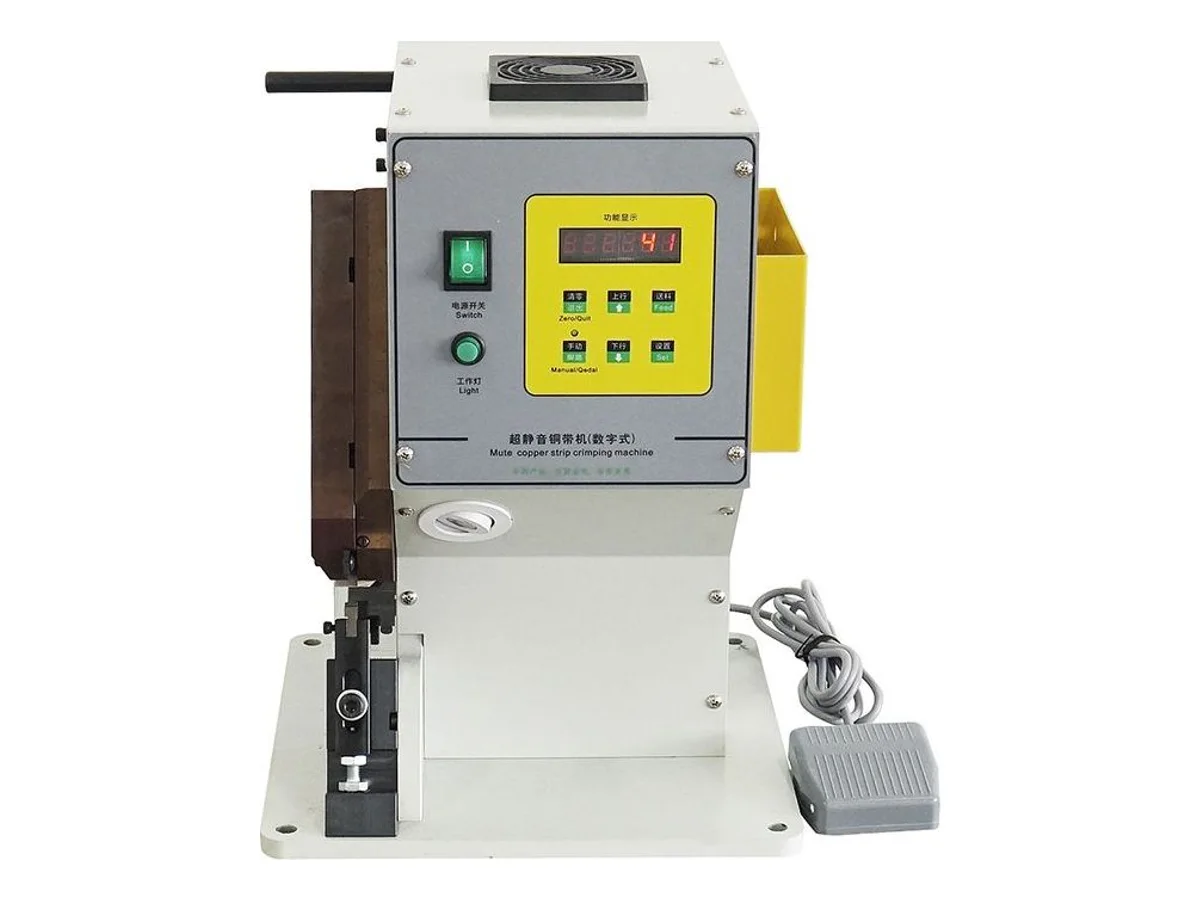
Compact Copper Tape Wire Splicing Machine with 3-Ton Crimp Force
Model WM-715
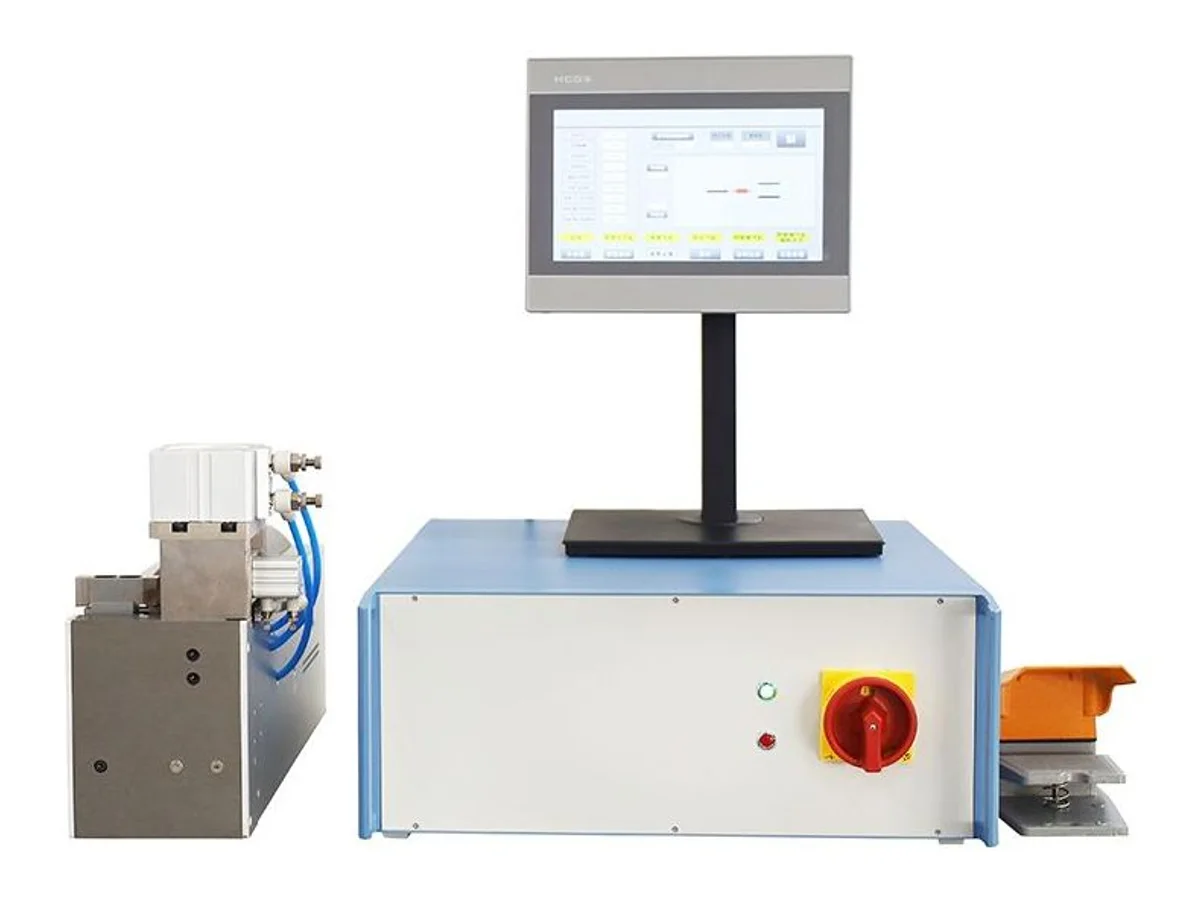
High-Power Ultrasonic Wire Splicer for Copper Splices up to 50 mm²
Model WM-718
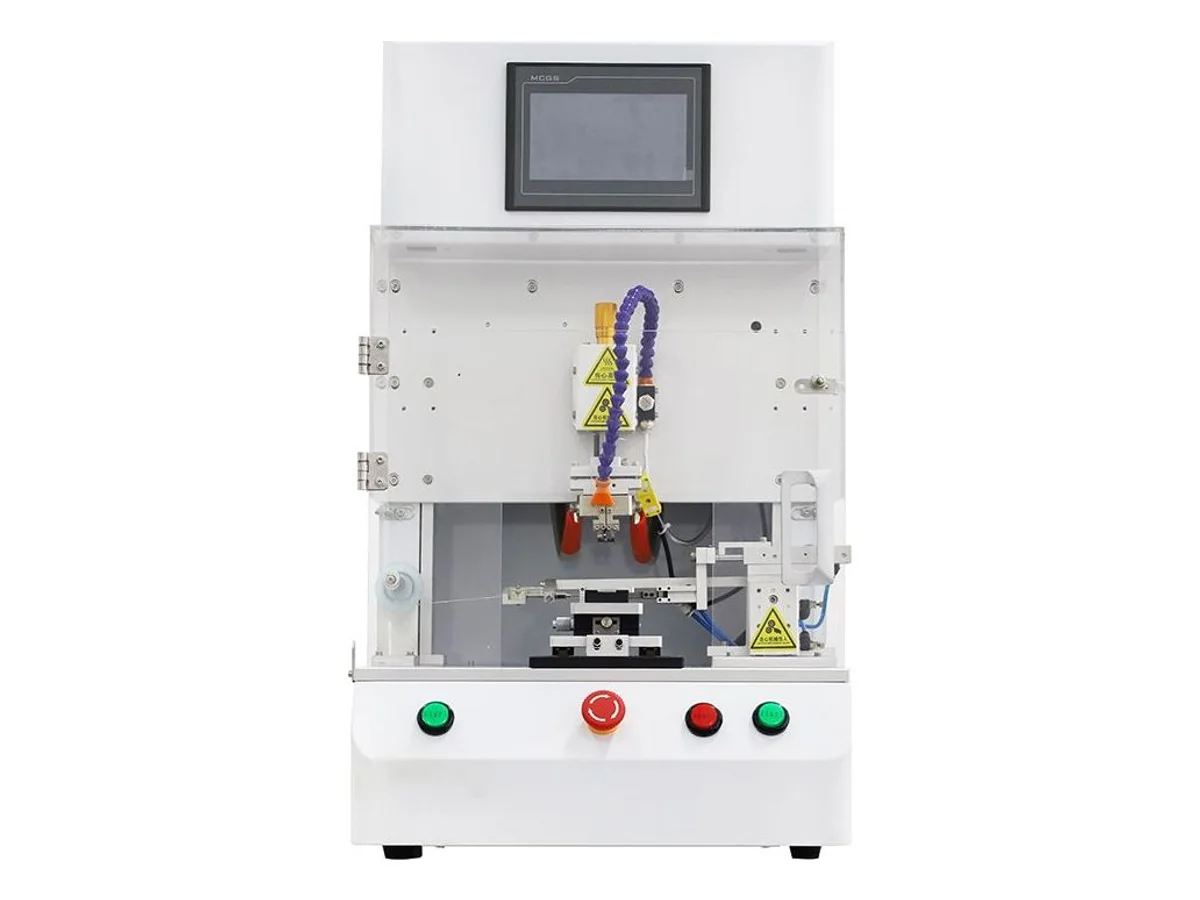
Hot Bar Soldering Machine for FFC, FPC and Connectors, 50–600 °C Pulse Heat
Model WM-721