Shielded Cable Braid Brushing Machine with Twin Rotating Brush Tracks WM-819
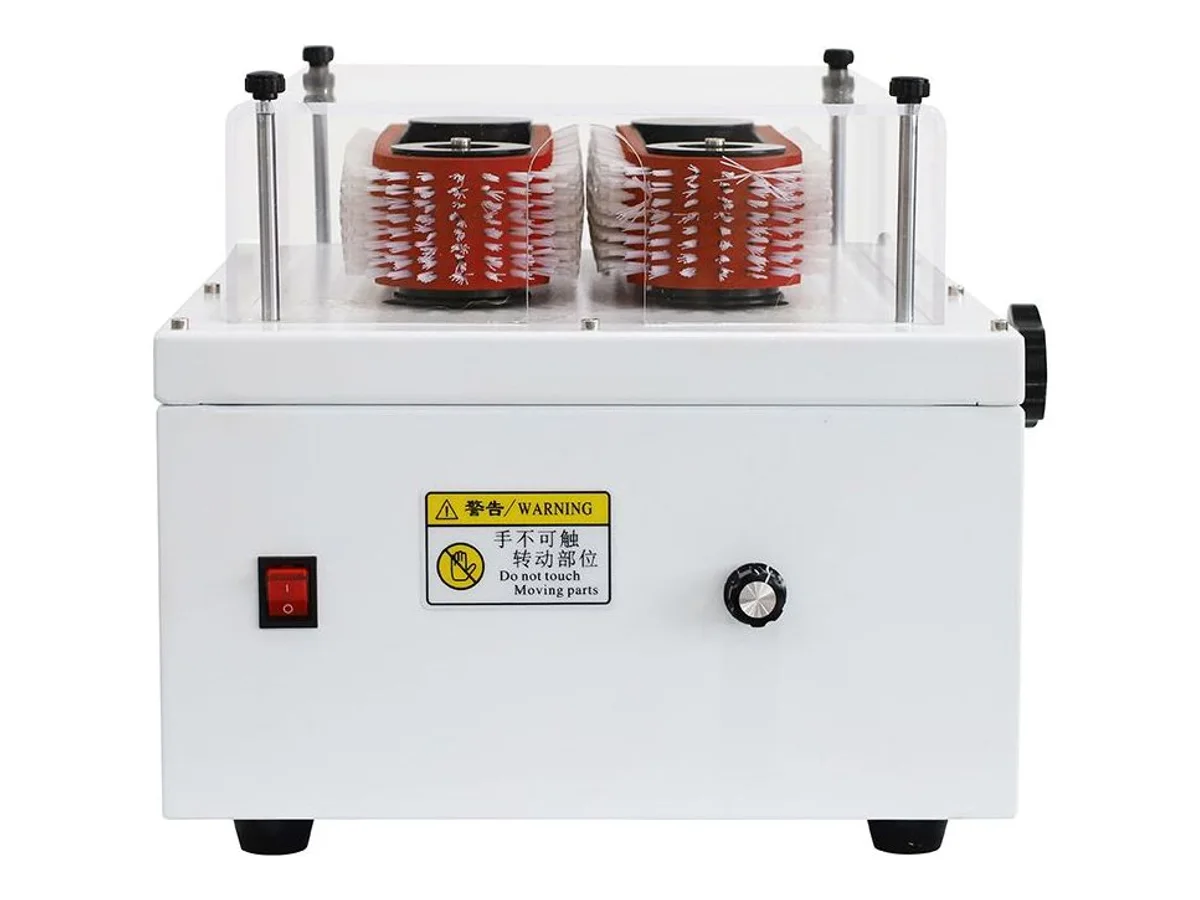
The WM-819 brushes open the braided shield of screened cable so the mesh can be folded back or terminated cleanly. Two rotating brush tracks comb the braid straight over a brushing length of 10–200 mm, on shielded cable up to 100 mm², at 100–200 pieces per hour depending on cable type and program. Rotation is electronically controlled and adjustable from 0 to 1800, the bench unit measures 420 × 480 × 320 mm and weighs 48 kg, and it runs on ordinary 220–240 V single-phase power with no air supply.
Specifications
| Function | Brushing open the braided shield mesh of screened cable |
|---|---|
| Brushing wire length | 10 – 200 mm |
| Applicable wire size | Up to 100 mm² |
| Productivity | 100 – 200 pcs/h (depending on cable type and program) |
| Brushing structure | Rotating belt wheel (pulley) |
| Rotation mode | Electronic control, 0 – 1800 adjustable |
| Belt wheel (pulley) | 2 pieces (circumference 750 × width 62) |
| Torque | 12.5 kg |
| Drive | Electric |
| Power supply | AC 220 – 240 V, 50 – 60 Hz |
| Dimensions | 420 × 480 × 320 mm |
| Weight | 48 kg |
| HS Code | 8479.89 (common reference — final classification confirmed by your customs broker) |
| Certification | CE (certificate provided with shipment) |
Key features
- Twin rotating brush tracks comb the braid open evenly around the cable, replacing hand picking that snaps strands and birdcages the mesh
- Electronically adjustable rotation lets the action stay gentle on fine signal braid and firm on heavy EV-cable shield, set per program
- Brushing length from 10 to 200 mm covers short pigtails through long fold-back preparations, repeatable piece after piece
- Bench format at 48 kg with electric drive only — plug into 220–240 V beside the stripping station, no compressed air line needed
What it processes
- Braid fold-back and 360-degree shield terminations on EV high-voltage cable
- Screened signal and data cable pigtails prepared before ferrule crimping
- Shielded control cable in industrial and appliance harnesses after jacket stripping
Suited for: brushing open the braided shield on screened and EV high-voltage cable up to 100 mm² — 10 to 200 mm of mesh combed straight for fold-back, ferrule and 360-degree shield terminations. Not suited for: stripping the outer jacket or trimming the braid to length — for that stage, pick the WM-2320 semi-automatic coaxial cable stripping machine, which strips Ø2–23 mm screened cable with strip lengths to 200 mm ahead of this brusher. And if the braid has to be folded back over the jacket rather than combed open, the WM-199 high voltage EV cable stripping and shield folding machine strips, trims and folds the shield on 2.5–150 mm² cable in one cycle.
Send 2–3 meters of your shielded cable and we brush your actual braid on video before you commit. See where shield preparation fits an EV wire harness line.
Engineering knowledge
Choose and troubleshoot this process
- Wire Stripping Defects: Causes and Corrective ActionsDiagnose conductor nicks, incomplete strips, pulled strands, insulation stretch, length variation and feed marks in wire stripping operations.
- Wire Harness Electrical Test Failures: Causes and Corrective ActionsDiagnose open circuits, shorts, high resistance, insulation failures, intermittent contacts, wrong cavity insertion and unstable harness test fixtures.
- How to Choose Wire Harness Testing EquipmentChoose harness testing equipment by circuit count, continuity limits, insulation and withstand requirements, connector fixtures, traceability and production workflow.
WM-819 — common questions
Why brush the braid by machine instead of by hand?
Hand picking with a scribe breaks strands, leaves kinks and takes minutes per end. The twin brush tracks comb every strand straight over the full programmed length in one cycle, so ferrules slide on and fold-backs lie flat — at 100 to 200 pieces per hour with the same result on the first and the last cable.
What cable will it take?
Shielded cable up to 100 mm² conductor size, with the brushing length set anywhere from 10 to 200 mm. The outer jacket must already be stripped back so the braid is exposed — the machine then combs the free mesh without cutting into it.
Does it strip the jacket or cut the braid to length?
No — it only brushes the exposed braid open. Jacket stripping and shield trimming happen upstream on our coaxial cable processing machines, and the brushed mesh is then folded or terminated at your next station.
Related machines in Harness Testing
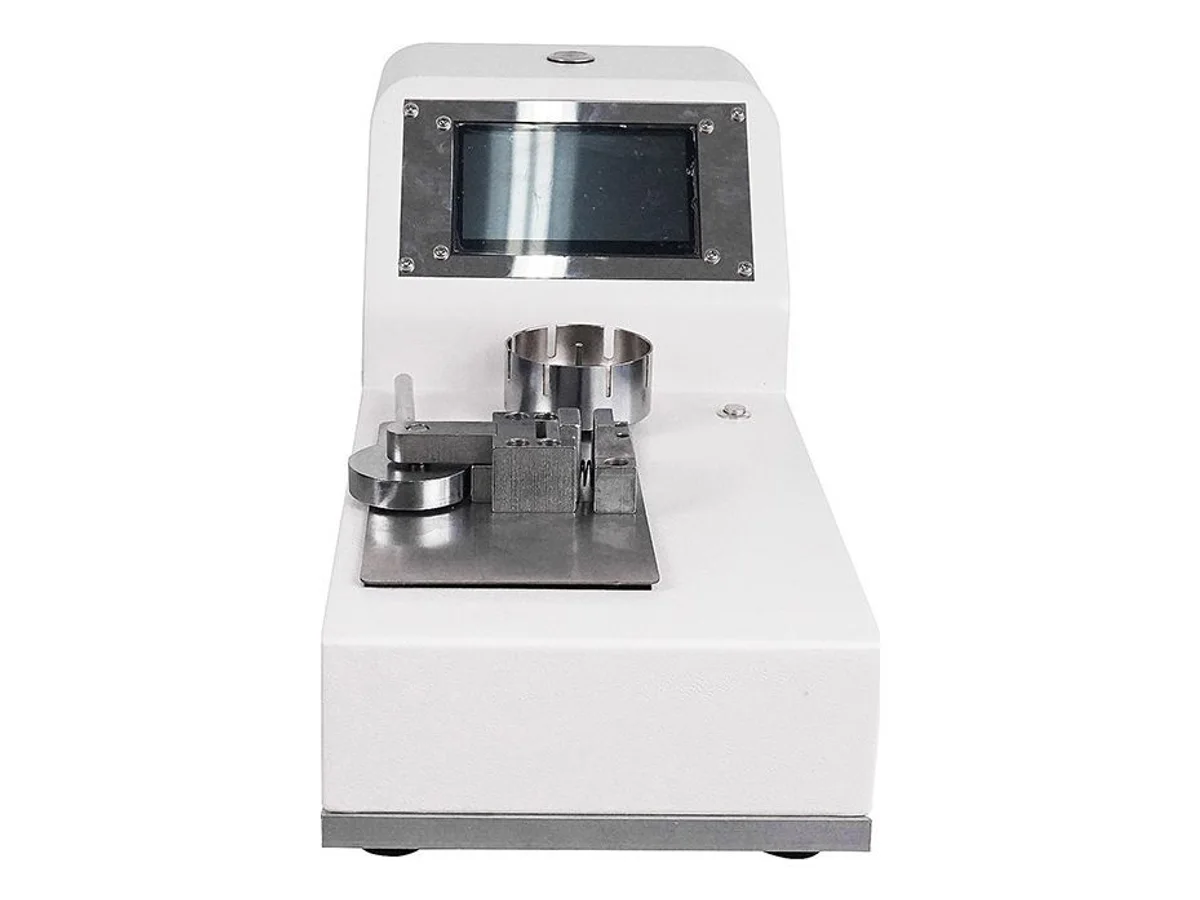
Automatic Wire Crimp Pull Tester with Touch Screen, 500 N
Model WM-820
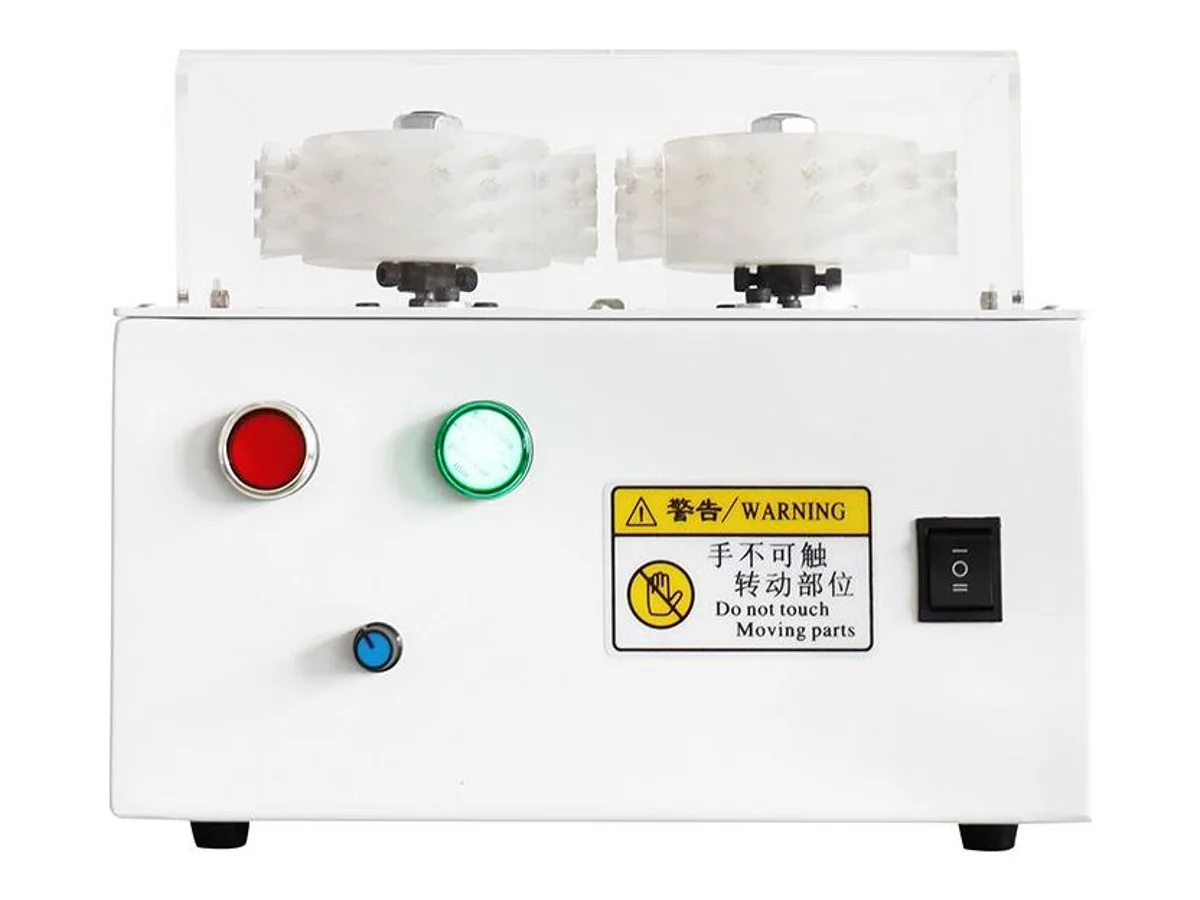
Benchtop Cable Shield Brushing Machine with Forward and Reverse Rotation
Model WM-821
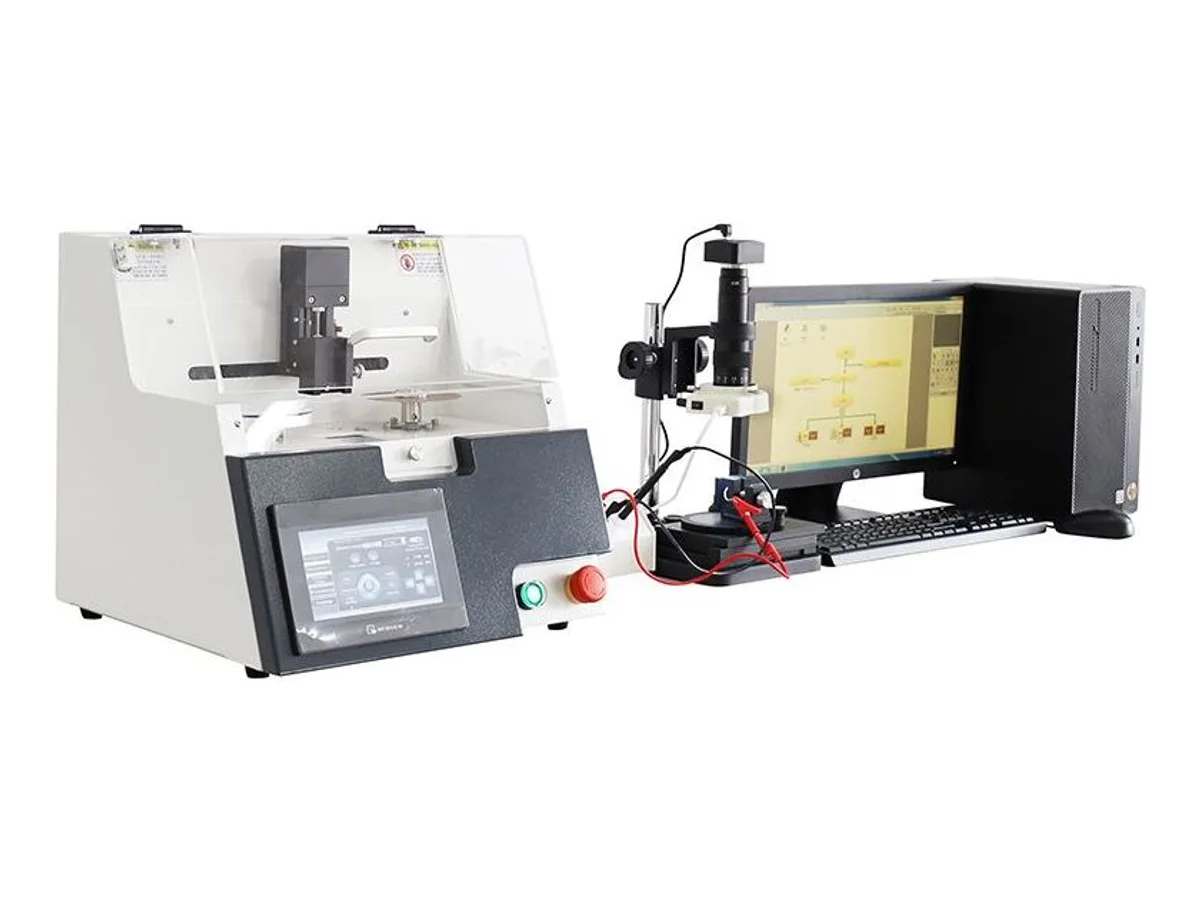
Crimp Cross-Section Analysis System with 30–312X Zoom for Terminal Quality Audits
Model WM-813