Shield Braid Brushing, Cutting and Fold-Back Machine for 3–9 mm Shielded Cable WM-181
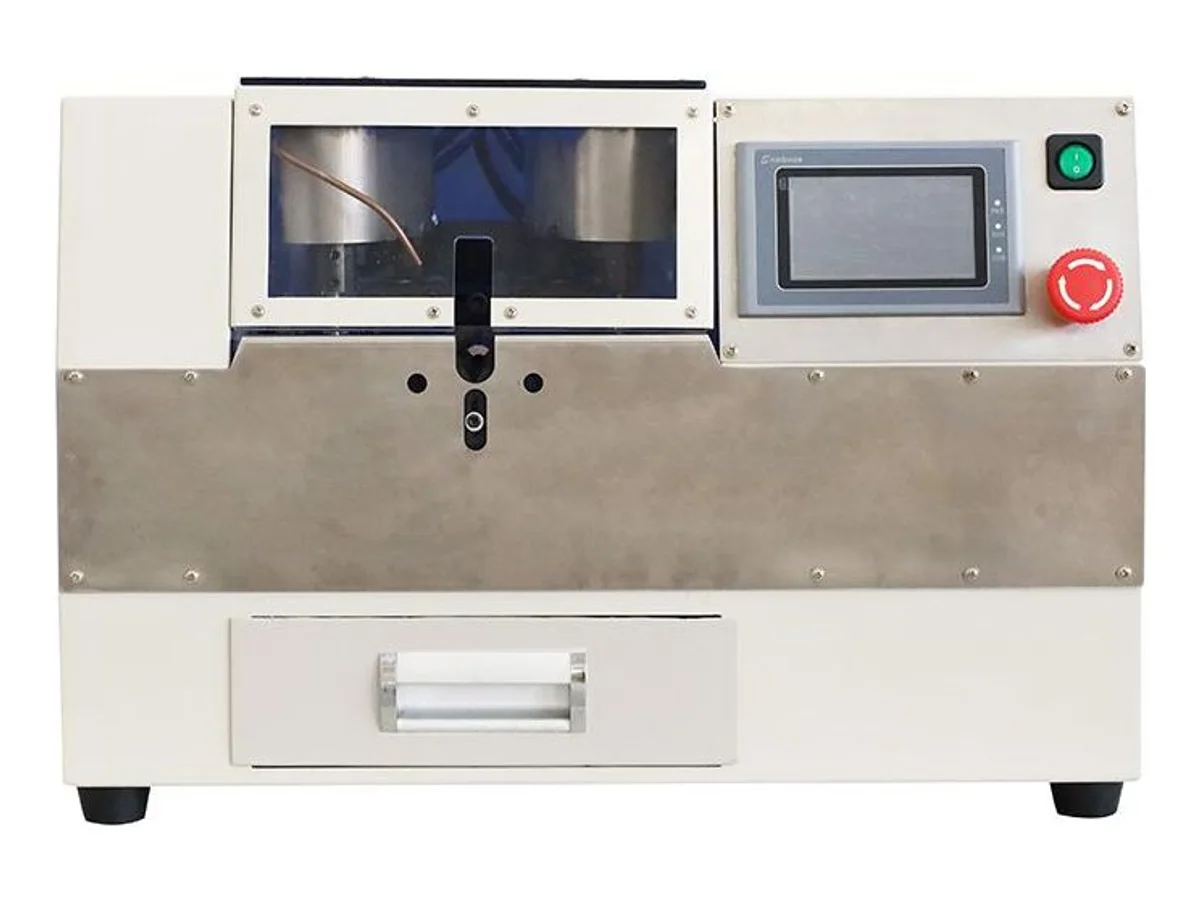
The WM-181 prepares the braided shield on cable ends from 3.0 to 9.0 mm OD — rotating steel brushes open and comb the braid, the blade trims it to a set remaining length of 3 to 10 mm, and the machine folds it back over the jacket, ready for a 360° shield termination. It works on strip windows from 8 to 35 mm at 700–1,000 pieces per hour, needs 220 V (600 W) and 0.4–0.6 MPa of air, and sits on a bench at 580 × 500 × 400 mm. Blades and brushes are the only consumables.
Specifications
| Applicable cable diameter | OD 3.0 – 9.0 mm |
|---|---|
| Stripping length | 8 – 35 mm |
| Shield remaining length | 3 – 10 mm |
| Work efficiency | 700 – 1,000 pcs/h |
| Air pressure | 0.4 – 0.6 MPa |
| Power supply | 220 V, 60 Hz, 600 W |
| Dimensions | 580 × 500 × 400 mm |
| Consumables | Cutting blades and brushes |
| HS Code | 8463.90 (common reference — final classification confirmed by your customs broker) |
| Certification | CE (certificate provided with shipment) |
Key features
- Steel wire brushes open and comb the braid without nicking the insulation underneath — gentler than pulling it apart with blades or hand picks
- Trims the shield to a repeatable 3–10 mm remaining length and folds it back over the jacket in one clamp cycle
- One operator loads pre-stripped ends and takes out finished, fold-backed shields at 700–1,000 pieces per hour
- Blades and brushes are the only wear parts, listed as standard consumables and swapped without special tools
What it processes
- Shielded cable prepared for EMC glands, ferrules and 360° shield contacts
- Sensor, signal and camera harnesses with 3–9 mm OD shielded cable
- New-energy and industrial assemblies where hand-combed braid is too slow and too inconsistent
Suited for: shielded cable from 3.0 to 9.0 mm OD whose braid must be opened, trimmed to 3–10 mm and folded back over the jacket — the end state EMC glands and 360° shield ferrules expect. Not suited for: cutting to length, jacket stripping or foil-only shields — for the upstream cut and jacket work, pair it with the WM-184X rotary blade cut and strip machine, built for the same braided and shielded constructions; foil shields are a job for the coaxial cable processing machines.
Braid density and lay length vary between cable makes: send 2–3 meters of your actual shielded cable and we run it on this machine on video before you order.
Engineering knowledge
Choose and troubleshoot this process
- Wire Harness Electrical Test Failures: Causes and Corrective ActionsDiagnose open circuits, shorts, high resistance, insulation failures, intermittent contacts, wrong cavity insertion and unstable harness test fixtures.
- How to Choose Wire Harness Testing EquipmentChoose harness testing equipment by circuit count, continuity limits, insulation and withstand requirements, connector fixtures, traceability and production workflow.
WM-181 — common questions
What exactly does the WM-181 do to the braid?
In one cycle it brushes the exposed braid open, combs the strands straight, cuts them to a set remaining length between 3 and 10 mm, and folds the stub back over the jacket. The gallery shows the stages on real samples — combed, gathered and folded back.
What condition must the cable arrive in?
Cut to length with the outer jacket already removed over an 8–35 mm window, exposing the braid. Cable outer diameter must be between 3.0 and 9.0 mm; the machine then needs only 220 V (600 W) and 0.4–0.6 MPa of compressed air.
Does it cut cable to length or strip the jacket itself?
No — shield work is its whole job. Do the cutting and jacket stripping upstream on one of the automatic cut and strip machines in this category, then feed the exposed braid ends to the WM-181.
Related machines in Harness Testing
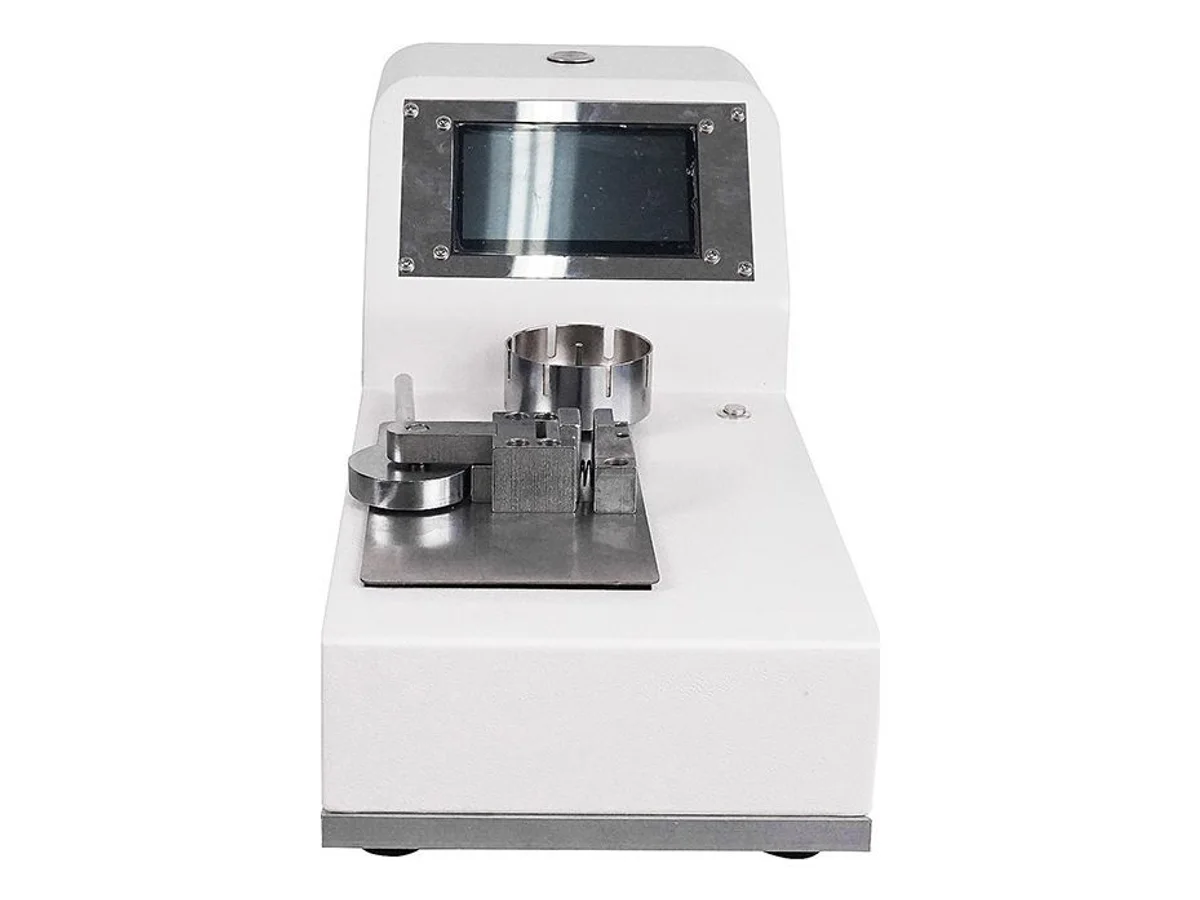
Automatic Wire Crimp Pull Tester with Touch Screen, 500 N
Model WM-820
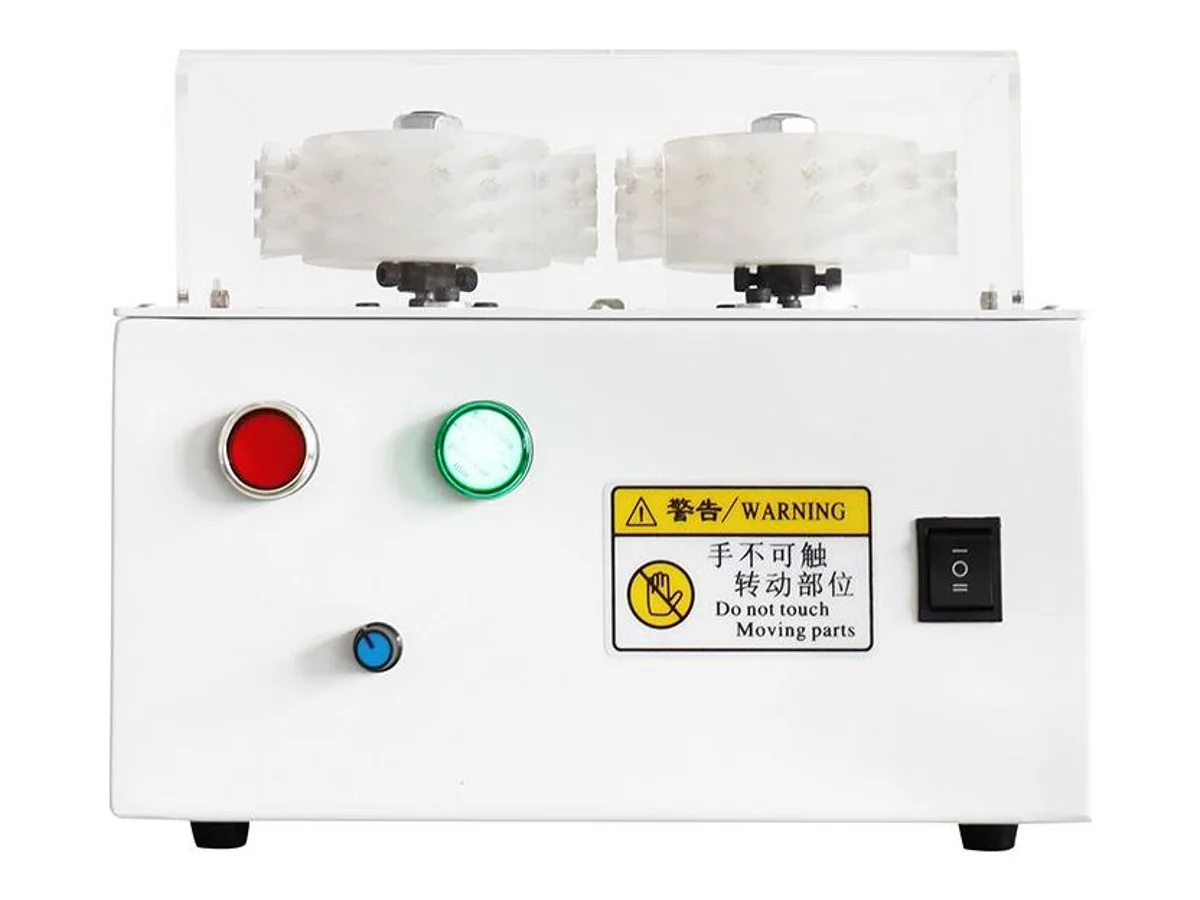
Benchtop Cable Shield Brushing Machine with Forward and Reverse Rotation
Model WM-821
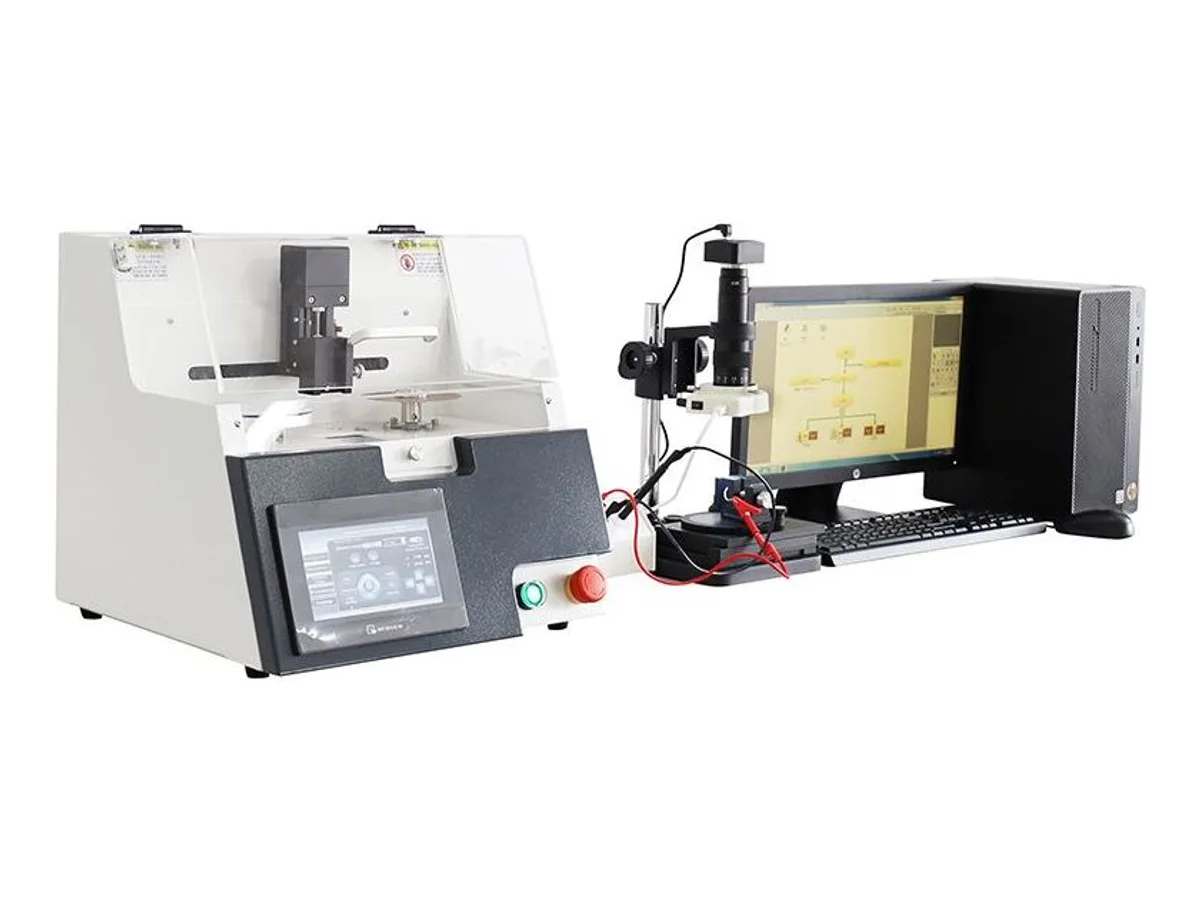
Crimp Cross-Section Analysis System with 30–312X Zoom for Terminal Quality Audits
Model WM-813